Scientists are pioneering the use of 3D printers to create drugs and other chemicals at the University of Glasgow.
Researchers have used a £1,250 system to create a range of organic compounds and inorganic clusters - some of which are used to create cancer treatments.
Longer term, the scientists say the process could be used to make customised medicines.
They predict the technique will be used by pharmaceutical firms within five years, and by the public within 20.
The 3D printing process involves the use of a robotically controlled syringe which builds an object out of a gel-based "ink", into which chemicals and catalysts are mixed.
[Philip Lelyveld comment: these head mounted displays can be used for viewing 3D content and for augmented reality. This may help them gain broader acceptance among all consumers.]
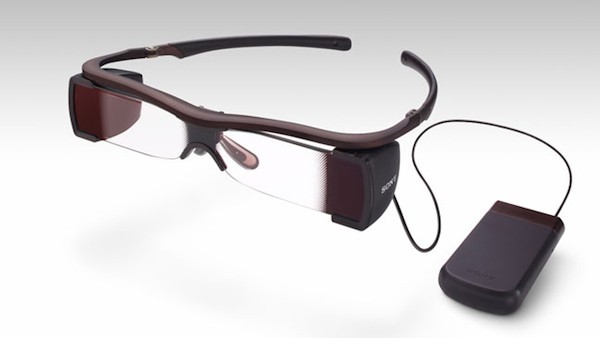
We've been hearing about glasses that only display subtitles to those who need them for years (most recently with a trial run in the UK), but it looks like they're now finally about to enter the US market in a fairly big way. Regal Entertainment Group announced today that it's partnered with Sony Entertainment to bring the company's Access Glasses to "practically all" of its digital theaters in the US (that includes the vast majority of its 500+ theaters and more than 4,700 screens in all). Those glasses work with both 2D and 3D movies (the latter courtesy of a clip-on filter), and can provide closed-captioned text in up to six different languages for the hearing impaired, as well as descriptive audio for the visually impaired when they're paired with headphones. According to Regal, the glasses are already rolling out to some theaters this month, and it says they should be everywhere by the first quarter of 2013.
...Now in its 13th year—yes, indeed, it was way back in 1999 when the first DLP Cinema® solutions were introduced to the industry with Star Wars Episode 1—digital cinema is now deployed on more than 50 percent of the world’s 140,000+ screens. ...
Sound from all around
Combining various directional sound sources in an auditorium to recreate sounds as experienced in nature augments the realism of a film’s soundtrack. This concept recognizes the subconscious’s ability to determine the origin of a sound without necessarily seeing the physical occurrence.
A three-layer approach to recreating 3D sound more precisely achieves this effect than the current configurations of 5.1 and 7.1 found in most of today’s cinemas. The lower layer built on traditional 5.1 delivers directs sounds from actions in a horizontal plane around the listener. The second height layer adds important acoustical reflections from around and above the listener…just like we experience in real life. Adding a third layer to relay sounds emanating directly above patrons (used mostly for effects like birds chirping, plane fly-bys, etc.), completes the 3D experience to create a sense of full immersion. ...
Driving is becoming less about getting from one place to another and more about an expression of freedom, social interaction and independence. ...
Games and Experimental Entertainment Laboratory (GEElab)
GEElab could completely revolutionise in-car entertainment and change the experience of driving for good. Designed by researchers at Royal Melbourne Institute of Technology (RMIT) in Australia and Germany, the in-car entertainment system presents the user with information with the aid of motion controls and holographic displays. ...
3D technology on the move
Executive Vice President and General Manager of 3D Display at MasterImage Roy Taylor confirmed that there is a great deal of interest on the market regarding in-car 3D entertainment. He said that within three years "most models of cars will have Wi-Fi — that means that car owners will have the ability to download 3D movies and passengers could watch them on long trips.”
Glasses free 3D would revolutionise in-car entertainment but the possibilities extend far beyond the realm of 3D films. The use of 3D in-car would make gaming far more engaging and further to this 3D satellite navigation and video calling would make social interaction in car more appealing.
Nissan and Mitsubishi lead the way
The Nissan Pivo and the concept Mitsubishi take in-car technology to the next level, with interactive, social technology which lets the driver know when they are close to their favourite coffee house, ...
PLAYING a 3D computer game could be just as effective at treating young people with depression as face-to-face counselling, research has suggested.
The study, published on the British Medical Journal website, found that many adolescents are loathe to seek help for mental health issues.
To tackle that problem, researchers developed an interactive fantasy game called Sparx which sees each player choose an avatar and then face challenges to restore balance in a virtual world overrun by Gnats (Gloomy Negative Automatic Thoughts).
They found the self-help game, which uses cognitive behavioural therapy techniques to help young users, had as much benefit as more traditional treatments, reducing symptoms of depression and anxiety by at least one-third.
Of the 187 young people in New Zealand studied as part of the trial, significantly more recovered completely in the group playing the computer game.
A total of 44% of those who completed at least four of the seven modules in Sparx recovered, compared to 26% of those who were receiving face-to-face treatment.
In the Sparx group, 95% of the adolescents said they felt the game would appeal to other teenagers and 81% would recommend it to a friend.
[Philip Lelyveld comment: I know the founder of TourWrist]
Is 3D where photography is going? Two companies at the Demo conferencehere today are betting on it.
ArqBall makes a mobile app that creates 3D images, or "spins," of physical objects. Designed for commerce initially, it lets you quickly create a 3D spinning model of an object for sale and embed it in a sales page. ...
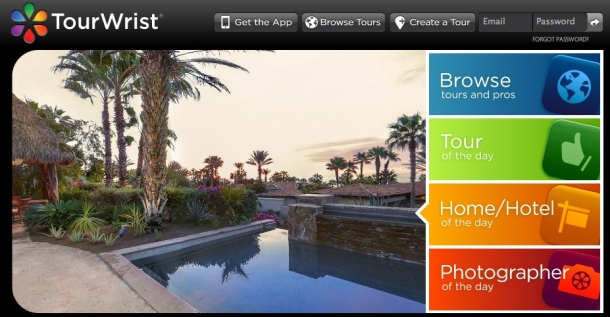
Then there's TourWrist, a mobile app that lets you create panoramas of places you visit. The iPad viewing app that was showed was stunning: It makes your iPad a virtual window into the visual bubbles the app creates. And as you walk with the app held up in front of you, you move into the image. ...
But it is cool to see innovation in apps that build a 3D data and photography layer on top of the world. It's been flat for too long. We are seeing good creativity but I'm not sure the killer interface for 3D data has yet arrived. Perhaps Google Glasses will help it along.
We asked Pizzo what his team did for the 3D film industry as far as gear for 3D filming and productions. [Have a peek at our report on the new Helix 3D camera rig to see what they're presenting this week at NAB.] The products created by Element Technica, the group that late last year was combined with 3ality Digital to create the super-group known as 3ality Technica we know now, was instrumental in making all Prometheus 3D sequences a reality. Literally instrumental, no less, as it’s 3ality Technica rigs that the crew’s cameras sit on throughout the film.
The OPL is also applying for a grant to build an adjoining fabrication lab that will allow patrons to make anything from 3D models to jewelry. Renovations will begin immediately and are intended to be completed within one year. ...
A revolution in surround sound might be one step closer to reality as the combination of DTS and SRS could accelerate the creation of a next-generation audio format delivering surround sound in a completely new way.
The paradigms of entertainment delivery are changing — there may never be another generation of physical media to deliver movies and music. And with the evolution to cloud-based media, new ways of delivering sound might be possible.
The $148 million purchase of Santa Ana-based SRS Labs by DTS Tuesday comes after the release of a next generation audio format developed by SRS that could deliver immersive 3D audio.
Multi-dimensional audio (MDA) is an audio format being developed by SRS Labs that thinks of pieces of audio as objects in 3D space. The format recently hit version 1.0 with tools being developed for audio mixers that could allow professional movies and music to be created in the new format.
With MDA an audio mix would no longer be built for specific channels. No more thinking about 2, 5 or 7 specific speaker setups because instead of audio mixers splitting audio to the left, right, back or side channels they would place sounds at X, Y and Z coordinates. The format could mean the more speakers added to a room — even some in the room or floor — and the more immersive sound begins to feel as more speakers provide additional detail. ...
Truth be told, we haven't been wildly impressed with the glasses-free 3D solutions we've seen to date, be it because of the limited viewing angles, unconvincing picture or lack of availability here in the US. That could soon change, however, if Dolby's version of the three-dimensional experience makes its way to a production-ready television set. Best known for its audio technologies, the company just launched its own 3D standard in cooperation with Philips, called Dolby 3D. The platform-agnostic solution is far from ready to make its way into your living room, but it's conceptually sound, and the prototype 4K 3D TV and mobile versions being demonstrated at Dolby's NAB booth make us hopeful for the future. As with all displays -- especially those that support 3D -- you'll really need to see to believe, but we had an opportunity to do just that, and walked away very impressed.
The 56-inch 4K prototype display is viewable from nearly any angle, with 24 different viewpoints, though you'll really need to be front and center for the greatest 3D effect. Side viewing is certainly possible; you'll just sacrifice some depth in the process. Even from the front, 3D appears slightly muted compared to what we've seen with passive- and active-glasses equivalents, though we can't say that we mind much, considering that the image is still dramatic enough when you need it to be, such as when displaying scenes with significant depth. The company was also demonstrating Dolby 3D on an HTC Evo 3D along with a nondescript tablet, where an on-screen slider lets you dim the three-dimensional intensity just as you would adjust the volume, enabling you to customize the experience to suit your needs. Since Dolby 3D is merely a display standard, we won't be seeing any branded televisions or smartphones, though perhaps we'll see some third-party adaptations come CES 2013. Jump past the break to see it in action.