Sharp Aquos Phone SH80F (review)

It's finally here! Well, not quite. After last May's Japanese launch of the Aquos SH-12C, Sharp is making its first foray into the European 3D smartphone market by releasing the device, this time dubbed the Aquos Phone SH80F, as its very first glasses-free autostereoscopic smartphone. There's just one hitch—it only seems to be coming out in France, and whether or not we can expect a wider European release is anybody's guess.
...the Aquos Phone is equipped with a 4.2-inch qHD screen with a resolution of up to 960 x 540 pixels. The display is fully autostereoscopic, but it disappointingly lacks the multiple 3D angles you get with the HTC Evo 3D....
The Aquos Phone SH80F is currently only available in France, from the French telecom company Orange, starting at €149, or €639 without a contract. ...
See the full story here:
History of the World in Two Hours
 ... Granted, this isn't a big-budget production, so the majority of CGI on display here won't blow you away. At worst, it can be almost painfully distracting. But History of the World in Two Hours makes up for this with rapid-fire editing and clean, concise narration...so even if some of the visuals don't float your boat, at least they don't stick out for too long. From the Big Bang to the Iron Age, from violent combinations of matter and energy to the first appearances of grass, this "Cliff's Notes for the Universe" covers plenty of ground during its brisk running time, and only mild amounts of repetition (bookends between commercial breaks, for the most part) threaten to break its momentum. Everything is laid out quite clearly in layman's terms, though younger audiences may have trouble keeping up at times. ...
History of the World in Two Hours offers a compact, entertaining history lesson...and for the most part, it's accessible and flows nicely. The film's condensed, commercial-free running time may irritate those looking for a full 120-minute show, and it's a shame more detail couldn't have been added to spice up this home video release. An optional Blu-Ray (and Blu-Ray 3D) version is also available at a higher price point, but this DVD already seems a bit skimpy for the asking price. ...
See the full story here:
James Cameron Headed for Ocean’s Deepest Point in 3D Documentary DEEPEST CHALLENGE
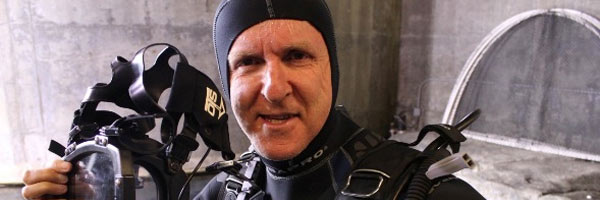 When you’re James Cameron, you get to do pretty much whatever you want. That’s why instead of working away like a madman on Avatar 2 and 3 in order to meet a studio deadline, Cameron is out doing fun, hobby stuff like trying to reach the ocean’s deepest point; you know, for giggles. The Titanicdirector is teaming up with the National Geographic Society and Rolex (naturally) to “conduct deep-ocean research and exploration to expand our knowledge and understanding of these largely unknown parts of the planet.” The Deepsea Challenge expedition will be filmed for a 3D documentary, and marks the first extensive scientific exploration by a manned vehicle of the Mariana Trench’s lowest point in the Pacific Ocean, nearly 7 miles beneath the ocean surface. ...
We’ll be getting high-resolution 3D video from one of the least explored places on Earth. ...
See the full story here:
Most Leading Surgeons Now Rely on 3D Powered Consultations
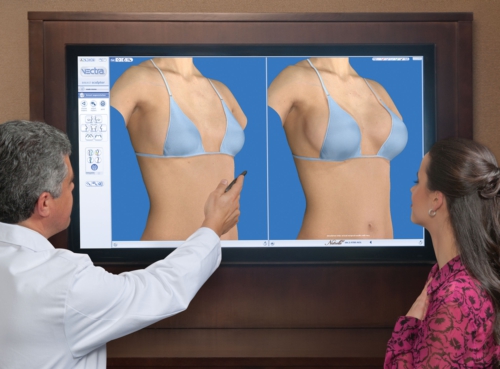 At the 28th Annual Atlanta Breast Surgery Symposium, speakers included some of the most prominent names in aesthetic medicine. And this year, 9 of the 11 speakers at the Breast Augmentation Forum had one thing in common; their practices rely on 3D photography for patient consultations. These leading surgeons represent the vanguard of the growing numbers that have made VECTRA® 3D aesthetic simulation the gold standard for patient consultations.
Read the original post here:
Nurse, the screens! Doctors to build 3D computer ‘avatars’ of patients to ‘test’ treatments before prescribing
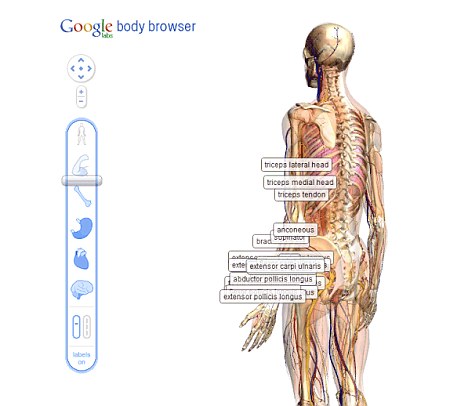 Professor Alejandro Frangi of Sheffield University said: ‘There is a lot of data about us in the healthcare system, but it is fragmented. I think the modelling framework gives us a mechanism - I like to see it as Google Earth, putting all of these different layers of information together.’
What is different about INSIGNEO is the direct link between engineers, computer scientists, clinical researchers and practising clinicians. ‘This ensures the models we develop will be relevant to, and therefore will be used in, the clinic.’
Read the full story here:
To 3D Or Not To 3D: Buy The Right John Carter Ticket
Final Verdict: 19 out of 35 is pretty much right down the middle for a 3D score, and that's really where John Carter falls. The 3D is not so egregious that it'll make you sick, and not so great that it enhances the action-- it's so competently put together but also useless that you probably won't notice it at all. You kind of understand why Andrew Stanton felt kind of ambivalent about 3D being applied to his film, and get the feeling that given the chance, he'd pick the 2D version too.
Read the full, detailed review of the 3D here: http://www.cinemablend.com/new/3D-Or-3D-Buy-Right-John-Carter-Ticket-29878.html
The best (relatively) cheap 3D TVs
Leading-edge technology nearly always carries a hefty price tag, and 3D TVs are no exception. A set with this capability can easily run well over $1,000 -- and most of the time that doesn’t even include the glasses. That said, these top picks from Cheapism.com can satisfy early adopters as economically as possible.
- The Samsung PND8000 (starting at $1,250 for a 51-inch) also comes in more expensive 59- and 64-inch models with the same technology and feature set. This plasma series earns praise in online reviews for its crisp, clear 3D display and minimal “crosstalk,” where an image intended for one eye appears in front of the other. (Where to buy)
- The Sony Bravia KDL NX720 (starting at $1,080 for a 46-inch) is available in pricier 55- and 60-inch models ...
- The LG Infinia LW5600 (starting at $1,000 for a 47-inch) also comes in a 55-inch model and includes four pairs of 3D glasses. ...
- The Panasonic Viera TC-PST30 (starting at $1,200 for a 42-inch) is available in myriad other screen sizes: 46, 50, 55, 60, and 65 inches. The plasma display delivers solid performance. ...
Plasma screens are a favorite of expert reviewers and generally offer excellent picture quality in both 2D and 3D, with very deep black levels. Low-cost LED TVs use light-emitting diodes around the edges of an LCD screen to improve black levels and color accuracy. Like other TVs with liquid crystal displays, these 3D TVs are best viewed straight on, rather than at an angle. To figure out...
Read the full post here:
Screen Digest 3D market research report
Total 3D revenues equated to 19.0 per cent of total domestic box office revenues in 2011, representing a decline from the share the previous year (20.6 per cent), despite a 66 per cent surge in dedicated releases. However, the year was always going to be difficult given the comparison with the runaway success of Avatar, first released in December 2009 but still on release in 2010. The after-effects of Avatar could also go some way to explaining a 36 per cent drop in average 3D BO by title year on year.
Tables and charts included:
- Total box office split by 2D and 3D screens 2011
- 3D titles' box office by movie format 2011
- 3D titles' revenue split by 2D and 3D screens 2011
- 3D Box office revenue by month in North America 2011
- 3D Box office market revenue by Studio 2011
- 3D market share by theatrical distributor North America 2011
- Average 3D title split in North America 2005-2011
- 3D box office revenue in North America 2005-2011
- Top ten 3D titles 2011 - ranked by 3D revenues
Pages: 6
Tables & charts: 9
See the full post and to purchase the report: here:
How the Nintendo 3DS went from flop to sleeper hit
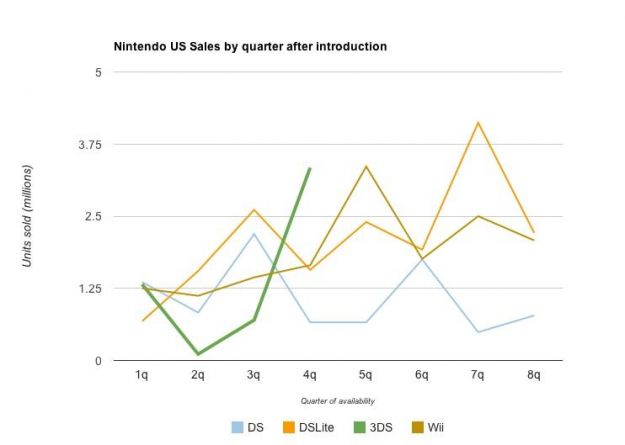 ... Nintendo surprised industry watchers today by announcing it has sold 4.5 million units of the Nintendo 3DS in the United States in the first year since its introduction. The figure itself isn’t all that impressive in the context of a company that has sold hundreds of millions of handheld gaming systems around the world — what’s a few million more over the span of a year? However, the figure marks a very impressive turnaround for the the company’s latest handheld gaming system. ...
How bad was it?
The Nintendo 3DS got off to a reasonably strong launch. ...
But is 3D really all that?
The real cloud hanging over the future of the Nintendo 3DS is whether consumers are really all that excited about 3D content, even if they don’t have to wear glasses. Although some of the 3DS’s top-selling titles (Mario, Zelda, and nintendogs + cats) make reasonable use of the handheld’s 3D technology, others are essentially re-releases of Nintendo 64 titles. Anecdotal evidence seems to reveal what while many 3DS owners make some use of the 3DS’s 3D capabilities, many turn the 3D features off altogether because of difficulties or eyestrain. Users might not need 3D glasses, but that doesn’t make the 3D feature easy on the eyes. As users embrace the 3DS, they may not embrace 3D. Instead, the devices might mainly be used for older games (many top 3DS titles are old Nintendo 64 games, and Sega’s upcoming Game Gear titles are all re-issues) or watching standard 2D video.
That said, the analog joystick, improved graphics, a genuine online component, and rapidly improving content options now make the Nintendo 3DS a solid choice for portable gaming fans…with or without 3D.
Read the full story here:
Shipments of 3D LCD TV Panels Reach 21M in 2011, Reaching 10% Penetration
Shipments of 3D LCD TV panels spiked to 7.8 million in Q411, up 26% Q/Q. As a result, total 3D TV panel shipments in 2011 reached 21.2 million, accounting for 10% of all LCD TV panels shipped According to the NPD DisplaySearch Quarterly Large-Area TFT LCD Shipment Report Advanced LED + 3D, panel makers are targeting very strong growth of 138% for 2012, which would lead to 3D LCD TV panel shipments of 50 million units, for a penetration rate of 21.6% of all LCD TV panel shipments. ...
See the original post here: