Today second screen and social TV guide company Dijitannounced they are acquiringMiso, an early pioneer in the social TV space. While the terms of the deal were not announced, it’s a quite an ending for a company which had raised $6 million since 2009.
See the full story here: http://www.forbes.com/sites/michaelwolf/2013/02/01/dijit-acquires-miso-the-just-the-facts-version/
A new NOVA special, “Rise of the Drones,” features the Autonomous Real-Time Ground Ubiquitous Surveillance Imaging System, or ARGUS-IS. The sensor uses 368 imaging chips similar to those found in cell phones to capture separate videos and piece them together to form a 1.8 billion pixel video. This means that the surveillance drone can capture images of birds flying, people walking on streets and cars traveling — all from 17,500 feet above the earth.
ARGUS-IS designer Yiannis Antoniades explains that his device can store 5,000 hours of footage a day, or a million terabytes of high definition video.
Antoniades can click on any part of his screen to open a new zoomed-in window. This allows him to isolate areas while also keeping a larger perspective.
See the full story here:
It’s also more closely tied to the cloud, saving documents to Microsoft’s SkyDrive storage system by default, so your documents and personal settings are remotely accessible. With that, Microsoft aims to stave off Office challengers like Google Drive, which gives people a way to create and store documents online, as well as share documents and edit with multiple people.
Along with these broader features, there are significant changes to Office 365’s programs, which include Word, PowerPoint, Excel, Outlook, OneNote, Publisher and Access. It does a nice job of bringing to the surface some features that were too far buried in menus for people to use. It also packs in many new features, some of which were made for touchscreens and new devices designed to run the touch-centric Windows 8. And Microsoft has updated its Office Web Apps, stripped-down programs that offer free editing, via a Web browser, of files stored online.
See the full story here: http://allthingsd.com/20130129/a-fresh-new-office-finds-a-place-in-the-cloud/
Is 4K the future of television or is it just another CES pipe dream? A three-part debate is taking place on ZDNetbetween proponent Steven Vaughan-Nichols, who suggests the future of broadcasting involves 4K, and opponent Jason Perlow, who believes the technology will be gone before it really gets started. As of Wednesday morning, 39 percent of voting readers support Vaughan-Nichols, while 61 percent back Perlow.
See the full story here: http://www.zdnet.com/debate/4k-television-the-future-of-content-broadcasting-or-a-ces-pipe-dream/10113113/
HBO’s new chief executive Richard Plepler alluded to the fact that a standalone HBO broadband option could potentially exist somewhere down the road. “We recognize that there’s a piece of the audience out there that, if they could get HBO without going through a pay package, we would get it,” he noted, adding that he is hesitant to alienate HBO’s distributors by taking the channel directly to consumers online right now.
“he dropped a subtle hint that HBO is internally debating the issue, mentioning that he wants to foster a corporate culture that allows for debate — including ‘an environment that challenges the status quo.’”
See the full story here: http://blogs.wsj.com/digits/2013/01/25/could-cord-cutters-and-lena-dunham-fans-one-day-get-a-crack-at-hbo/
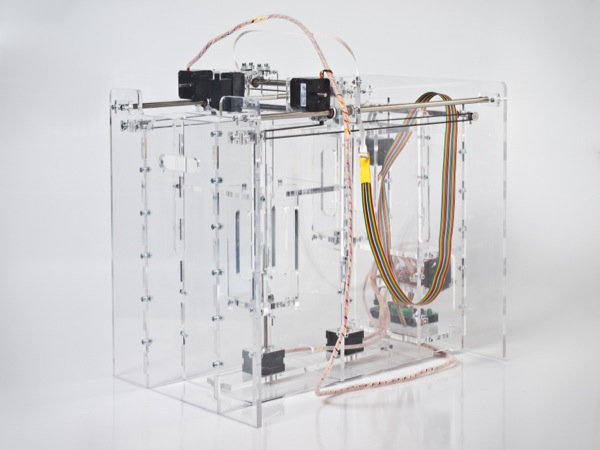 “Unlike the MakerBot and RepRap printers that build objects by melting plastic, or the Form 1 that uses a laser to cure resin, Pwdr works just like a desktop printer,” explains Wired. “An HP inkjet deposits a liquid binder, mixed with ink, onto a layer of white gypsum powder. After the printhead passes, a roller bar drags a thin layer of powder across the surface and the process repeats a couple hundred, or thousand, times.”
“When completed,” the article continues, “the printer looks like a fish tank full of baby powder and the model needs to be carefully removed, dusted off, and dipped in clear glue that infiltrates the part and solidifies it. This process is essentially the same as what ZCorp 3D printers offer and opens the potential for hobbyists to create models featuring thousands of colors using a CMYK process, not the two or three offered by newer home user systems.”
See the full story here: http://www.wired.com/design/2013/01/pwdr-3d-printer-open-source/
 [Philip Lelyveld comment: I'm having trouble understanding how the recording element is a "pixel" as opposed to a volume.]
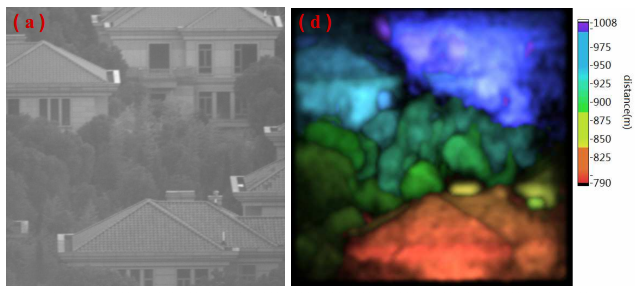
Ghost imaging is the extraordinary technique of bouncing a laser beam off an object and making high quality images from the reflected light using a single pixel. This single pixel records many data points which must be stitched together to create the image.
But there is no scanning involved (which would be equivalent to taking an ordinary picture very slowly).
Instead, the data from the single pixel is compared against the intensity of the original laser beam, which must be randomised by passing it through frosted glass. Then any correlations between the original and reflected beam reveal information about the object in the image.
It is these correlations that physicists use to assemble the picture, known as a ghost image.
That may sound rather fiddly and time consuming but it is actually hugely efficient.
See the full story here: http://www.technologyreview.com/view/510411/first-3d-images-created-with-single-pixel-sensor/
In an attempt to circumvent what prying eyes see (and perhaps get themselves out of potential future issues), Kent State University students Daniel Gur, Camden Fullmer, and David Steinberg spent a weekend together at a Hackathon at the University of Pennsylvania, and came up with a way to make the very public face of your Facebook stream at least look more professional.
Called FaceWash, the website will search your Facebook posts, tags, photos and more to find things that might prove controversial or downright embarrassing, should a prospective employer decide to take the time to scan your publicly shared posts. And these days, more and more bosses do...
See the full story here: http://technorati.com/social-media/article/got-a-job-interview-new-site/
Although the idea of networking machinery isn’t new, GE thinks that cheaper computing power and sensors are now poised to usher in a new era of big data for industry. Jeff Immelt, GE’s CEO, has called the idea arevolution, and the company’s top economist has suggested it could help increase worker productivity by as much as 1.5 percent a year.
With its push for the industrial Internet, GE may find it’s selling an idea that some manufacturers aren’t convinced is really new. Down the road from GE’s Schenectady plant, in Cohoes, New York, manufacturer Mohawk Fine Papers already monitors how much energy its machines use, pulling together the data in an analytics program it bought from a company called OSISoft. “A lot of the basics of what we’re talking about have been available to companies for years,” says Kim E. Osgood, Mohawk’s director of engineering and energy services.
See the full story here: http://www.technologyreview.com/news/509331/an-internet-for-manufacturing/?utm_campaign=newsletters&utm_source=newsletter-daily-all&utm_medium=email&utm_content=20130128
Google is seeking an experimental license to operate radio frequency gear in the airwaves of its Bay Area headquarters. The search giant filed an application with the Federal Communications Commission for a two-year license to run experimental equipment on 2 GHz frequencies in Mountain View at a 3.2 mile radius.
[Philip Lelyveld comment: is this, coupled with their St Louis experiment, part of a larger plan to create a walled garden fully integrated service?]
Google is seeking an experimental license to operate radio frequency gear in the airwaves of its Bay Area headquarters. The search giant filed an application with the Federal Communications Commission for a two-year license to run experimental equipment on 2 GHz frequencies in Mountain View at a 3.2 mile radius.
Google’s game plan isn’t specified in the filing, but bloggers for both The Atlantic and The Wall Street Journal surmise that the company is creating its own wireless network. However, the Mountain View filing is for a “new or modified radio station,” where previous filings specified experimental Wi-Fi operations.
Another of Google’s experimental licenses covers 2 GHz frequencies in Cambridge, Mass., New York, Mountain View and Los Angeles, where the company is testing next-generation Wi-Fi devices. The company was originally granted Special Temporary Authority to test the devices on Jan. 26, 2012, and has since received an extension for operations through Jan. 31, 2013.
See the full story here: http://www.tvtechnology.com/news/0086/google-files-to-transmit-on-home-turf-airwaves/217418