The Sony Entertainment Network debuted on Friday in North America. Available to European territories since December, the new content hub has expanded to Canada, Mexico, Brazil and the U.S. The network collates all of Sony’s media offerings into a single online storefront, featuring full PS3 games, downloadable games, music, movies, TV shows, avatars, add-ons, season passes, special deals and more.
“Between the PlayStation division, Sony Pictures, and the record labels the company owns, Sony has a massive amount of entertainment content to offer its fans, but prior to SEN, the company had no real unified strategy for delivering this content to prospective buyers,” reports Digital Trends. This initiative changes that.
See the full story here: http://www.digitaltrends.com/computing/sony-entertainment-network-now-offers-americans-new-ways-to-spend-their-cash/
Mark Ury came up with the concept for the storytelling site Storybird in 2010 after working on a storybook with his young son. The website, for “art-inspired storytelling,” now has more than two million members. It “works with artists from around the world, who upload their portfolios onto Storybird’s platform. Users choose their art, sequence the images any way they like and add text to turn them into a story,” explains paidContent.
 The content is then shareable on social networks and can be embedded into blogs. According to the article, the HTML5Storybird site looks good on an iPad.
Originally envisioned for the family, Storybird is now in more than 125,000 schools, “with teachers issuing assignments to students and using the site in the classroom to help kids with their writing skills,” writes paidContent.
Read the full story here: http://paidcontent.org/2013/01/24/with-2-million-members-storybird-is-reverse-engineering-the-picture-book/
[Philip Lelyveld comment: this article contains good brief update descriptions of the different display options available to consumers.]
IT ISN'T YOUR IMAGINATION—television has become bewildering. We're not talking about the dizzying number of channels. We mean the televisions themselves: the technology that drives them and the features that differentiate one expanse of sprawling glass from the next. There are more acronyms than ever to decipher. LCD begot LED, which, in turn, spawned OLED. And just when "high-definition" seemed to be reaching the physical limit of resolution, along comes Ultra HD, a new standard so confusing that even the industry can't agree on what to call it (is it 4K, Ultra HD or 4K Ultra HD?). But these are exciting times, too. Images are sharper and bigger than ever before—and great displays are more affordable. If you're in the market for a new TV, there are a few key terms worth learning, whether you're looking to screen effects-laden blockbusters or just want to tune in to "Downton Abbey." From panels that are barely out of the prototype stage to the industry's steadfast push for 3-D, here's what you need to know to navigate the state-of-the-art in displays.
Read the full story here: http://online.wsj.com/article/SB10001424127887323468604578249643077519374.html
According to an infographic created and sponsored by Uberflip, 81% of Americans use a smartphone and watch TV simultaneously. The biggest use of the second screen appears to be social networking, and watching TV, it’s easy enough to see networks strive to make the connection. Nearly every reality show has related hashtags flash by occasionally, encouraging viewers to weigh in on Twitter, which is the biggest driver of social TV, with 33% of users tweeting about it last June.

See the full story here: http://www.uberflip.com/blog/infographic-the-rise-of-multi-screen-content-consumption
 Pest Control, the tongue-in-cheek-titled organization set up by the artist to authenticate the real Banksy artwork, also protects him from prying outsiders. Hiding behind a paper bag, or, more commonly, e-mail, Banksy relentlessly controls his own narrative. His last face-to-face interview took place in 2003.
While he may shelter behind a concealed identity, he advocates a direct connection between an artist and his constituency. “There’s a whole new audience out there, and it’s never been easier to sell [one’s art],” Banksy has maintained. “You don’t have to go to college, drag ’round a portfolio, mail off transparencies to snooty galleries or sleep with someone powerful, all you need now is a few ideas and a broadband connection. This is the first time the essentially bourgeois world of art has belonged to the people. We need to make it count.”
Read the full story here; http://www.smithsonianmag.com/arts-culture/The-Story-Behind-Banksy-187953941.html?utm_source=feedburner&utm_medium=email&utm_campaign=Feed%3A+smithsonianmag%2Farts-culture%2Fart-artists+%28Art+%26+Artists+%7C+Smithsonian.com%29
At the annual meeting of the Congressional Internet Caucus, the only issue that appeared likely to appear soon on lawmakers' agenda was an old one -- Net neutrality.
...But let's not kid ourselves. These are already fast lanes on the Internet, and Netflix its right to be deploying technologies to expand them as fast as possible. Critics who reflexively point to such developments as violating the spirit if not the letter of the FCC's Open Internet rules dangerously oversimplify a complex technical and business architecture. They aren't helping anyone, and certainly not consumers.
As U.S. Rep. Steve Scalise (R-La.) said in the closing keynote at State of the Net, "Our response to this newly converged marketplace should not be to level the playing field by extending legacy regulations to new entrants and technologies, but rather to let the Internet work and repeal the archaic and obsolete rules now on the books."
Scalise was talking about regulations that are unintentionally constraining the ability of legacy phone companies to replace their switched networks with new IP-based technologies. But, it seems, the FCC's more recent efforts to "preserve" the open Internet may have aged even more quickly.
Even if the FCC's Net neutrality rules survive the impending court challenge, they may prove to have little to offer Internet users -- little, that is, except for unfortunate and unintended consequences.
Read the full story here: http://news.cnet.com/8301-13578_3-57565561-38/the-strange-resurrection-of-net-neutrality/?part=rss&subj=news&tag=title
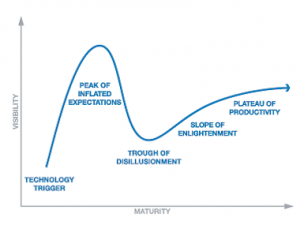 One source of that disillusionment, she writes, is that companies are struggling with a basic problem: What questions do you attempt to answer with your data in the first place? “Several days ago, a financial industry client told me that framing a right question to express a game-changing idea is extremely challenging,” Sicular wrote. “First, selecting a question from multiple candidates; second, breaking it down to many sub-questions; and, third, answering even one of them reliably. It is hard.”
Hadoop doesn’t exactly make that process any easier. Once you’ve decided to use it, getting anything useful out of it requires some pretty specialized knowledge and training, and finding the right people to do that isn’t easy. But the industry is beginning to respond to that need: Startups like Mortar Data have sought to make Hadoop more readily accessible to mainstream programmers, while another called Trifacta makes the resulting data easier to manipulate.
And versions of Hadoop itself are getting incrementally easier to work with.
Read the full article here: http://allthingsd.com/20130124/has-big-data-reached-its-moment-of-disillusionment/?utm_source=feedburner&utm_medium=email&utm_campaign=Feed%3A+mediaredef+%28jason+hirschhorn%27s+Media+ReDEFined%29
In 2011, a Corning researcher named Terry Ott faced a problem that nobody else had needed to solve in the company’s 160-year history: how to make sheets of glass that could be rolled onto spools.
The way Corning solved the problem of mass-producing Willow helps illustrate the extent to which technological innovation depends on close connections between R&D and manufacturing.
Chowdhury says the first devices that use Willow glass will appear in 2013.
See the full story here: http://www.technologyreview.com/news/509321/glass-that-bends-the-rules-of-manufacturing/?utm_campaign=newsletters&utm_source=newsletter-daily-all&utm_medium=email&utm_content=20130123
According to a new study from research firm GfK Media, consumers are streaming online video more than ever before, but only a reported 17 percent of pay TV subscribers have watched cable programming online using TV Everywhere services. The study represents the “latest bad news” for the TV Everywhere initiative, reports theWall Street Journal.
See the full story here: http://blogs.wsj.com/digits/2013/01/18/despite-cable-companies-best-efforts-tv-everywhere-is-nowhere/
 What's the mix of your clients?
Walter Grieves: We have 20 percent entertainment and about 50 percent tech startups.
How are you working with the universities?
Walter Grieves: We partnered with USC, UCLA, and Pepperdine, Loyola Marymount, Anderson, Annenberg Center, we have an internship program. Most of the companies here take interns, and we've organized things like that. We also hackathons and other events. We had the AT&T hackathon here in April, UCLA hackathon. The goal is to help the universities and students connect with companies.
See the full story here: http://www.socaltech.com/how_google_s_old_offices_are_becoming_a_tech_hub_with_roc_s_walter_grieves/s-0047346.html

 Pest Control, the tongue-in-cheek-titled organization set up by the artist to authenticate the real Banksy artwork, also protects him from prying outsiders. Hiding behind a paper bag, or, more commonly, e-mail, Banksy relentlessly controls his own narrative. His last face-to-face interview took place in 2003.
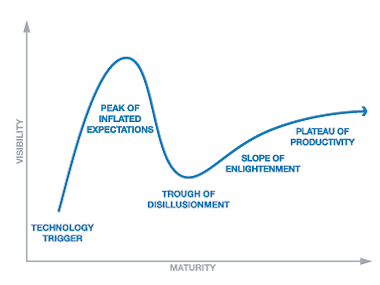 One source of that disillusionment, she writes, is that companies are struggling with a basic problem: What questions do you attempt to answer with your data in the first place? “Several days ago, a financial industry client told me that framing a right question to express a game-changing idea is extremely challenging,” Sicular wrote. “First, selecting a question from multiple candidates; second, breaking it down to many sub-questions; and, third, answering even one of them reliably. It is hard.”