Like an infant opening her eyes for the first time, the software is trained to recognize actors' faces and objects on the screen. It uses these visual cues to identify a show in real time by comparing it with a database of hundreds of channels of content.
Once Samba determines what a viewer is watching, it delivers contextually relevant content, such as casting information or social media conversations, directly to the TV — as well as to other screens in the room. The software synchronizes the devices automatically, via the Internet, so the consumer doesn't need to download a special application. The supplemental material is available through a Web browser running on a tablet, smartphone or the TV itself.
Companies such as Zeebox, Yahoo Inc.'s IntoNow and Shazam Entertainment Ltd. offer smartphone and tablet applications that identify TV shows and deliver supplementary content to this second, smaller screen — including cast lists, a plot synopsis and interactive features such as polling.
Flingo's Navin is placing his bet on a different screen: the TV. Announcements of partnerships with device makers are expected next month at the Consumer Electronics Show in Las Vegas.
See the full story here: http://www.latimes.com/entertainment/envelope/cotown/la-fi-ct-flingo-20121225,0,4648569.story
- Ultra high-definition TV
- Smart cars
- Telehealth: fitness technology and remote health monitoring
- A mobile applications avalanche
- 3D printing for producing products
- Convertible PCs
Read the full story with descriptions of each here: http://tinyurl.com/create.php?source=indexpage&url=http%3A%2F%2Fwww.homemediamagazine.com%2F3d%2Fihs-3d-home-market-thriving-29172&submit=Make+TinyURL%21&alias=
What do I like most about video games? They always strive to do more, to be better.
Games we judged as the best of the best a few years ago might seem dated now. Some feature such tight, timeless designs that they do hold up over the long term, but these fall into a very small category. Otherwise, and in every way, this is the industry status quo: Nearly every game competes not only to outdo past iterations but to also completely dwarf every other title on the market. They don’t always succeed. But one way or another, gamers always benefit from the effort.
The industry moves forward, always forward. So we look back to applaud the new directions it took in 2012 and how they might influence what comes next.
See the full story here: http://venturebeat.com/2012/12/23/2012s-most-innovative-game-ideas/
 [Philip Lelyveld comment: There is no question that laws and regulations lag technology developments. But start-ups claiming that regulations "stifle innovation" ignore the reasons that originally justified the regulations (I'm not talking about regulatory creep here) and they completely downplay the unintended consequence of their innovations - which could seriously burn them.]
While the new companies say they are creating jobs by disrupting legacy industries that have fallen behind the technological curve, established industries -- from hotels to taxi cabs -- complain the newcomers are taking unfair competitive advantage and in some cases endangering the public by sidestepping safety, tax and labor rules.
Government agencies, meanwhile, are under mounting pressure both to enforce existing rules and regulations and to update them for new business models that didn't exist five years ago.
See the full story here: http://www.siliconvalley.com/ci_22243932/so-called-sharing-economy-comes-under-regulatory-scrutiny?source=rss_viewed&utm_source=feedburner&utm_medium=email&utm_campaign=Feed%3A+mediaredef+%28jason+hirschhorn%27s+Media+ReDEFined%29
Founded in 1985, the MIT Media Lab has established itself as one of the world's most influential technology incubators - home to a motley collection of scientists, engineers, designers, and artists. From Guitar Hero to LEGO Mindstorms; E Ink to glanceable information displays, they have transformed the Lab into a factory of innovation. Overseeing it all is entrepreneur and venture capitalist Joi Ito, who sees four big trends on the horizon for 2013. Here he explains how hardware start-ups, gene printing, disruptive education, and agile processes are set to shape the future.
"I'm calling myself a 'nowist,' and I'm trying to figure out how to build up the ability to react to anything."
Read the full story here: http://www.thinkwithgoogle.com/insights/featured/joi-itos-trends-to-watch-in-2013/?utm_source=feedburner&utm_medium=email&utm_campaign=Feed%3A+mediaredef+%28jason+hirschhorn%27s+Media+ReDEFined%29
 The new and improved Stratasys has three major technologies: Fused Deposit Modeling (FDM) for quick and cheap prototype design, inkjet-based PolyJet for prototypes that require higher-level of detail and a finer surface finish, and Solidscape Drop-on-Demand (“DoD”) 3D wax printers for investment casting. The company now stands alone in being able to manufacture objects out of more than 120 different materials.
See the full story here: http://singularityhub.com/2012/12/18/after-merger-3d-printing-industry-has-a-new-leader/
 If the gunshots and whipcracks in Django Unchained sound strange, it's because director Quentin Tarantino ordered his team to make everything about the film feel "analog and spirited."
See the full story here: http://www.hollywoodreporter.com/news/django-unchained-director-quentin-tarantino-404162
Tugg.com allows people to set up movie screenings where customers pay for reserved tickets, and the screenings only happen after the advanced sales cover expenses. Indie filmmakers are using the online booking site to organize screenings of their projects.
See the full story here: http://www.wired.com/underwire/2012/12/tugg-custom-cinema/all/
When people reference the number of pixels on movie cameras, they are not literally saying the number of pixels, but rather the type of camera, explains Panavision senior VP of Advanced Digital Imaging John Galt. For example, 4K means the camera has 4096 red, 4096 green and 4096 blue photo sites.
However, he is also in favor of frame rates faster than 24 fps. He explains that at 24 fps you can sometimes see a flicker from the projector. "That's why I subscribe to Jim Cameron's argument, which is we would get much better image quality by doubling the frame rate than by adding more pixel resolution," Galt notes.
Read the full story here: http://magazine.creativecow.net/article/the-truth-about-2k-4k-the-future-of-pixels
Cosumer electronics giant LG is readying the launch of a two-screen API for its content partners, allowing users to manage and interact with programming on the big screen using an app on their tablet or phone, says Matthew Durgin, Director of Smart TV Sponsorships at LG, in this interview with Beet.TV
The use of an app to manage the big screen will likely take a big leap forward with the introduction of the Apple TV, writes Brightcove CEO Jeremy Allaire in a guest column on AllThingsD.
Read the full story and watch the video here: http://www.huffingtonpost.com/andy-plesser/lg-readies-second-screen_b_2315729.html?utm_source=2nd+Screen+Authority&utm_campaign=60ff1c1a19-my_google_analytics_key&utm_medium=email
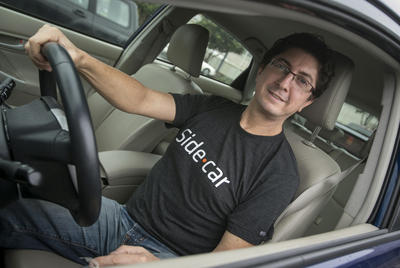 [Philip Lelyveld comment: There is no question that laws and regulations lag technology developments. But start-ups claiming that regulations "stifle innovation" ignore the reasons that originally justified the regulations (I'm not talking about regulatory creep here) and they completely downplay the unintended consequence of their innovations - which could seriously burn them.]
 The new and improved Stratasys has three major technologies: Fused Deposit Modeling (FDM) for quick and cheap prototype design, inkjet-based PolyJet for prototypes that require higher-level of detail and a finer surface finish, and Solidscape Drop-on-Demand (“DoD”) 3D wax printers for investment casting. The company now stands alone in being able to manufacture objects out of more than 120 different materials.
 If the gunshots and whipcracks in Django Unchained sound strange, it's because director Quentin Tarantino ordered his team to make everything about the film feel "analog and spirited."