 Ann Arbor's All Hands Activemembership pool was a little smaller than usual the day of a recent visit to their basement "makerspace" under East Liberty Street in downtown Ann Arbor. Four of their members had just been scouted by technology companies in San Francisco and hired away to California for full-time positions. ...
As co-founder and current board member Xander Honkala tells it, AHA started as a loose group of hobbyists and tech enthusiasts who would crowd into barrooms and around coffee shop tables a couple times a week to show off the things that they had made. Or to brainstorm the problems they had come across. ...
Read the full story here:
...
Entertainment will always be the heart of our industry, but I would also note the growing awareness that exists about the positive impact games have on improving other top priorities for the American people, including our economy, our education and healthcare systems, the workplace and the arts. Consider just a few examples from this year:
- Art: Video games gained new appreciation as works of art, as their stunning graphics and captivating soundtracks attracted the art community's attention. The Smithsonian Institution announced that it will unveil a new exhibit dedicated to showcasing the incredible artistry within games at its American Art Museum in Washington, D.C. ESA is proud to sponsor the exhibit, titled "The Art of Video Games," which opens March 16, 2012.
- The Economy: As many of you know, video game companies continue to post strong sales, with sales of game content, hardware and accessories generating $25.1 billion in revenue in 2010. Gamers' increasing interest in mobile, social and online play is a key component of this success, and we recognize The NPD Group's decision to begin reporting digital game sales on a monthly basis and the firm's new partnership with EEDAR that will help it do so. Their decision recognizes the significance of digital games to our business, and will provide a more complete picture of industry sales.
- Healthcare: Using an online game called Foldit, designed by Professor Zoran Popovic at the University of Washington, online gamers deciphered the protein that helps the HIV gene multiply. The protein stumped scientists for more than a decade, but the gamers unlocked it in just 10 days. While this is certainly a major breakthrough in the ongoing battle against AIDS, it also shows the unique power of our medium to solve incredibly difficult and complex problems.
- Education: In September, the White House launched Digital Promise, a public-private partnership aimed at incorporating technological tools, including games, into American classrooms. The program will support research and development efforts to identify effective teaching technologies, develop new approaches for rapid evaluation of new products and explore ways to expand the market for learning software.
I am proud to report that, in partnership with this initiative, ESA is once again sponsoring the National STEM Video Game Challenge in collaboration with The Joan Ganz Cooney Center at Sesame Workshop, E-Line Media, and the Corporation for Public Broadcasting/PBS KIDS' Ready to Learn initiative. The competition challenges students and developers to create original games that stimulate interest in science, technology, engineering and math (STEM) learning. ...
Researchers from the Broad Institute and Harvard University have developed a tool that can tackle large data sets in a way that no other software program can. Part of a suite of statistical tools called MINE, it can tease out multiple patterns hidden in health information from around the globe, statistics amassed from a season of major league baseball, data on the changing bacterial landscape of the gut, and much more. The researchers report their findings in apaper appearing in the December 16 issue of the journal Science.
Read the full story here:
If you're the administrator of a jail, it's never a good day when you release the wrong prisoner. Unfortunately, the dirty little secret among the correction facilities is that it happens, according to Steve Morrison, chief deputy of Alabama's Madison County Jail.
Read the full story here:
Apple's personal digital assistant Siri can help you find gifts at Best Buy thanks to a recent feature added to Wolfram Alpha. The so-called computational knowledge engine has tapped into Best Buy's public data of over 35,000 products to help you find and compare products. For example, you could use Wolfram Alpha to compare specs and user ratings for tablets such as theBlackberry Playbook and the Asus Transformer Prime just by asking Siri.
See the full story here:
 More passive 3D, cheaper active glasses with a universal standard, better 3D PQ. Even with passive 3D's picture quality issues, its cheap glasses and practicality advantages over active mean that more TV makers than just LG, Vizio, and Toshiba will sign on to the passive bandwagon in 2012. Meanwhile active glasses will get cheaper and we'll hear about the Full HD 3D Glasses Initiative, a universal 3D glasses standard that allows interoperability between different makers' active specs. Finally I expect 3D picture quality for both active and passive technologies to improve, although I'm doubtful anybody will announce "full-resolution passive" at the show. ...
Bezel-less TVs. ...TVs such as this year's Samsung D7000 have shown the way with an incredibly slim bezel, ...
OLED. OLED won't be a viable technology until about 2015, but this year we'll see more bendy, wacky, and see-through OLED panels. Samsung and LG ...
1080p passive 3D. ... I think there will be 1080p passive TVs at the show, where the TV performs the shutter effect...
Read the full story here:
 For years we've been promised that 3D, the clunky, expensive method of jazzing up images that are usually pretty impressive on their own, was the future of moviegoing. ...
Studios have clung to 3D as a liferaft of cash in an era of declining audiences, but this week a new contender might have presented itself as the future of moves-- a contender that's more than 40 years old.
If you see even a frame of Mission: Impossible - Ghost Protocol on the largest screen possible, you'll know what I mean-- and if you see it on IMAX, you might be too busy scraping yourself up off the floor to read this. The new film from Pixar veteran Brad Bird, which opens today on IMAX screens and everywhere next Wednesday, is the most spectacular narrative use of the large-screen format maybe ever, and has a power to thrill audiences that comes directly from its enormous screen. ...
Read the full story here;
10. Research bolsters the case for 3D learning.
Two years ago, the first projectors and glasses for delivering stereoscopic 3D images in the classroom emerged, and last year saw a sharp rise in the amount of 3D content available for schools. This year, 3D learning took another huge step forward with a pair of new developments.
In June, Colorado’s Boulder Valley School District (BVSD), an early adopter of 3D technology, released the results of a pilot project showing that the use of 3D content helped increase student engagement and led to better achievement in some cases—with the lowest-performing students seeing the greatest benefits. A few weeks later, the American Optometric Association issued a public health report saying the use of 3D images in school can help diagnose vision problems among students at an earlier age and can enhance teaching and learning.
...
5. iPads help turbo-charge the digital textbook revolution.
3. Social media helps rewrite the rules of internet search.
1. “Bring Your Own Device” spells salvation for budget-strapped schools.
Read the full story here:
BBC R&D's audio team is looking at potential next generation audio formats. It already outputs mono, stereo and 5.1 surround sound, but the organisation is keen to investigate 3D sound.
Ambisonics -- which refers to truly three-dimensional sound -- is an area of particular interest. Ambisonics is different from other surround sound formats, such as 5.1 because it doesn't rely on a specific speaker layout. Ambisonics captures the entire 3D sound field as a set of spherical harmonics which can then be decoded for a wide variety of speaker layouts, including stereo and 5.1. This means the audience can pick the sound profile that best suits their listening environment.
See the full story and watch the video here:
 Ann Arbor's All Hands Activemembership pool was a little smaller than usual the day of a recent visit to their basement "makerspace" under East Liberty Street in downtown Ann Arbor. Four of their members had just been scouted by technology companies in San Francisco and hired away to California for full-time positions. ...
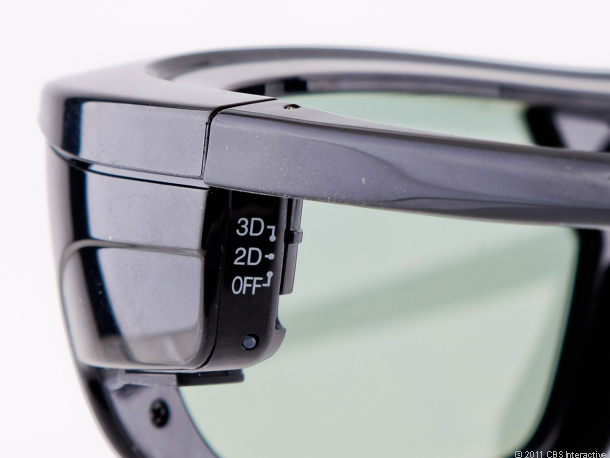 More passive 3D, cheaper active glasses with a universal standard, better 3D PQ. Even with passive 3D's picture quality issues, its cheap glasses and practicality advantages over active mean that more TV makers than just LG, Vizio, and Toshiba will sign on to the passive bandwagon in 2012. Meanwhile active glasses will get cheaper and we'll hear about the Full HD 3D Glasses Initiative, a universal 3D glasses standard that allows interoperability between different makers' active specs. Finally I expect 3D picture quality for both active and passive technologies to improve, although I'm doubtful anybody will announce "full-resolution passive" at the show. ...
 For years we've been promised that 3D, the clunky, expensive method of jazzing up images that are usually pretty impressive on their own, was the future of moviegoing. ...