After three months in classrooms, iPads eliminate excuses and change learning
 Ben White asked his sixth-grade students if his hair looked OK.
As he prepared to be on camera, his Webb School of Knoxville students opened video apps on their iPads to record White giving them their homework assignment.
At home, students could watch their teacher explaining exactly how to diagram nouns and verbs. The assignment was also loaded on iCalendar.
White said the iPad takes away excuses for not doing homework. ...
White uses an app called Join.Me, which allows students to see what is on his computer and chat with him when they are in the hallway working. ...
See the full story here.
Tobii EyeAsteroids: The future of gaming is eye control
 Eye tracking and control specialist company Tobii Techology has dismissed the idea of using joypads, joysticks or flailing your arms around like a whirligig in order to play games; it sees the future of gaming controls being focused around your mince pies (eyes, for those not conversant in the Cockney tongue).
The organisation, which also develops technologies to aid communication for those with special needs, has created a one-off arcade machine that's entirely controllable using a player's peepers. EyeAsteroids is similar to the classic arcade unit from 1979, but with no physical control mechanism.
As asteroids move towards an on-screen Earth, threatening an ELE (an Extinction-Level Event), the player can fire lasers to blow them up by simply looking in each 'roid's direction. And, as hands are removed form the equation, Tobii boasts that response time is much improved. The speed eyes can move to each target is far quicker than the movement of a joystick, trackball or press of a button.
See the full story here.
Why Science Majors Change Their Minds
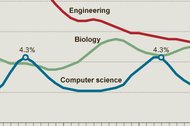 But, it turns out, middle and high school students are having most of the fun, building their erector sets and dropping eggs into water to test the first law of motion. The excitement quickly fades as students brush up against the reality of what David E. Goldberg, an emeritus engineering professor, calls “the math-science death march.” Freshmen in college wade through a blizzard of calculus, physics and chemistry in lecture halls with hundreds of other students. And then many wash out.
Studies have found that roughly 40 percent of students planning engineering and science majors end up switching to other subjects or failing to get any degree. That increases to as much as 60 percent when pre-medical students, who typically have the strongest SAT scores and high school science preparation, are included, according to new data from the University of California at Los Angeles. That is twice the combined attrition rate of all other majors.
Read the full New York Times story here:
Augmented reality blooms with smart devices
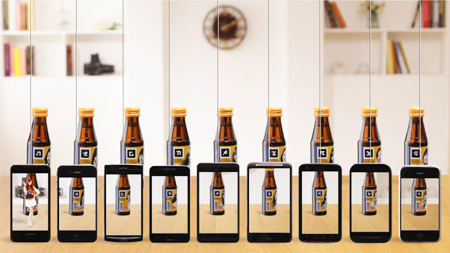 According to the report by KT, the new technology is being employed in industries to enhance productivity and quality. BMW provides its technicians with details of car repairs through text, 3D content and voice through head-mounted displays.
Read the full story here
CIA actively monitors 5 million tweets every day
 The arduous task, carried out by a team known as the “Vengeful Librarians,” includes sifting through more than 5 million tweets a day. (In total, Twitter’s 100 million users publishapproximately 140 million tweets every day.) Doing so has enabled the CIA to view how events in the US are being received overseas — like, say, the assassination of Osama bin Laden — as well as allowing the agency to keep tabs on international events, like the uprising in Egypt this spring.
Read the full story here.
Disney’s “The Muppets” Come Alive on the Small (iPhone) Screen with Viddy
 .Available via the iPhone Viddy app, the easy to use one-click effects and soundtrack give fans the opportunity to interact with the Muppets on film and get creative with producing their own video content. ...Special effects include graphics, color correction and audio tracks. [Viddy] Production Pack options include: Solarize, Red, Exposed, Retro, Glam, Black & White, Crystal, Hued, Vintage, Junkd, & 3D.
See the full press release here
Digital art presents preservation challenges for museums
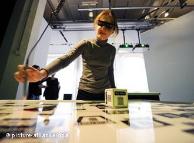
Digital artworks have been part of museum collections for years, and it's a trend likely to expand. But when old software or hardware faces compatibility issues or breaks, what can museums do?
See the full story here