Is It Time to Call the Xbox Kinect a Smash Hit?
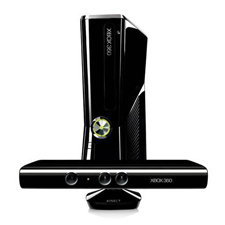 Microsoft has now sold 2.5 million units of the Xbox Kinect in less than a month. ...
A good place to start is the 2006 launch of the Nintendo Wii, which has gone from underdog to undisputed champion of the seventh generation console wars. In the first eight days of its U.S. launch, the Wii sold 600,000 units.
While not exactly an apples to apples comparison (the Wii had a $250 price tag vs. the Kinect’s $150), it’s still beating the pace set by the Wii during its debut. More importantly, the Kinect is driving the sale of new motion-based games and has given the Xbox 360 fresh blood that should keep it competitive with the Wii and the PlayStation Move for the next few years.
full story here: http://mashable.com/2010/11/30/xbox-kinect-2-5-million/
Also,
How Many PlayStation Moves Has Sony Moved?
On Tuesday morning, Sony issued a press release headlined: “PlayStation Move Motion Controller Sales Reach Over 4.1 million Units Worldwide.” That followed an announcement from Microsoft on Monday evening boasting that it has sold 2.5 million units worldwide of Kinect... Sony spokesman, however, confirms that the company’s 4.1 million refers to sales of Move controllers to retailers, not to consumers.
Full story here: http://blogs.wsj.com/digits/2010/11/30/how-many-playstation-moves-has-sony-moved/
Watch out Disney. China’s Fantawild looks to become a copycat entertainment powerhouse
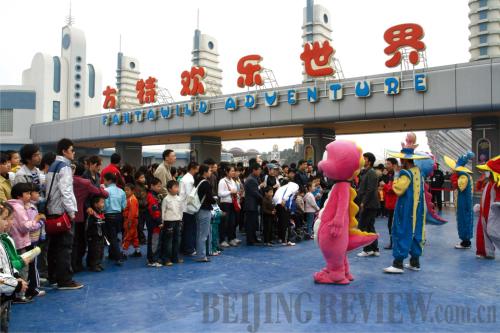
Spirits were high in Wuhu, an old industrial city in east China's Anhui Province, as fun-seeking crowds descended on Fantawild Adventure Theme Park during the National Day holiday. More than 165,100 visitors—a record for the park and a 25-percent year-on-year increase—rode thrill rides, ate fun foods and enjoyed interactive games and stage performances.
Fantawild fills its theme parks—four are operational and five will launch soon in China—with independently developed content and technology. From its cartoons, animated films and digital games to its 3-D imaging technologies, all are on display at Fantawild's fun themed centers.
...
The company also has namesake theme parks in Iran, Ukraine and South Africa.
4G theme park network
Like Disney and Universal Studios parks, Fantawild is a fourth-generation theme park focusing on visitor participation, interaction and overall experience, said Shang Linlin, Vice President of Fantawild.
...
Fantawild's technology is "as good as Disney's, if not better," said Shang.
"It is the company's ultimate goal to match and surpass Disney in every facet imaginable," said Liang Guangwei, President of Huaqiang Holdings.
...
For its overseas projects, Fantawild has cooperated with its partners familiar with local cultures, legal and business environments and the managing authorities. As the intellectual copyright holder of core technologies and equipment, Fantawild requires its partners to purchase equipment, just as Disney does. But compared with Disney theme parks, Fantawild's are less expensive. The Johannesburg Fantawild Park in South Africa, which is 770,000 square meters, will cost $250 million and take three years to complete. The Disney project in Shanghai, which is still being discussed, is reportedly worth 40 billion yuan ($6 billion).
...
China became the second country after the United States capable of exporting an entire theme park operation when Fantawild's Iran project, worth about $111 million, was inked in 2007.
...
To add versatility to its core competitiveness, Huaqiang bought a technology company with about 50 employees in 1998, and that company became Fantawild. With parental investment, Fantawild set out to make 4-D theaters with cylindrical screens in 2000. In 2002, Fantawild registered a patent in the United States for 3-D film imaging on cylindrical screens and has since developed and exported 4-D theater systems to more than 40 countries. The company also leased films tailored to the systems of overseas cinema operators.
...
Currently, Fantawild holds about 100 patents and 150 trademarks in special film, cartoon and digital game production, software design and equipment manufacturing. Half of its employees are R&D personnel, including creative designers, said Shang.
"Compared with the Hong Kong Disneyland, we have much lower operating costs, thanks to a number of intellectual property rights we have," Shang said. "While the Disneyland operator in Hong Kong will need at least an annual flow of 8 million visitors to make both ends meet, we will lead a cozy life with 2 million visitors every year." ...
full story here. http://www.bjreview.com/16th_Asian_Games/2010-11/16/content_312853.htm