... While the ability to remove watermarks or other unwanted objects from a photo has long existed using tools like Adobe Photoshop or Google’s Magic Eraser, Watermark.io takes it to another level, with the AI reconstructing the image that would have been under watermark. Some photographic enterprises have embraced AI.
“Stock image giant Shutterstock recently introduced its own text-to-image generator based on OpenAI’s DALL-E 2, and Adobe Stock has also welcomed the technology by accepting AI-generated content for sale on its platform,” The Verge writes, explaining “this is despite criticism from creatives that their content is often scraped from the web without compensation or consent to train these same systems.”
The situation is rife with moral and ethical concerns. “AI technology is calling out for strong, clear regulation,” writes Creative Bloq, adding that “right now, no-one is really sure what’s allowed and what isn’t, as was proven recently when a user got suspended on Reddit for posting their own AI artwork.” A blockchain record of ownership, such as is used for NFTs, could be a helpful step, the outlet concludes.
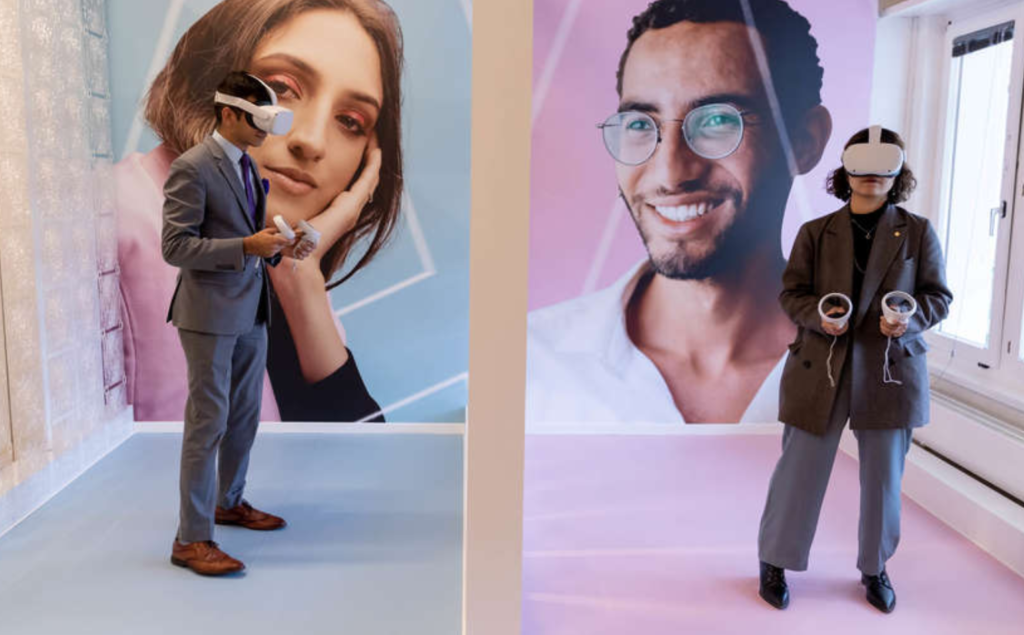
We specialize in virtual reality without glasses. Through our immersion rooms, consumers can experience a location in different seasons. They can explore destinations virtually and be completely reassured that they’re making the right purchase. For travel agents, this technology can help them identify potential services and business opportunities, and better understand purchasing decisions. Moreover, the software is completely web based and runs on most mobile or fixed devices without any installation. ...
Some of the milestones we had in the project were first getting the students doing in-depth research, often for the first time. We then broadened the scope of the research into multiple countries and analysed the data to discover the outcomes. The final milestone was presenting the findings to Inside Reality. The students were nervous, but they had solid data and the team was impressed. I was able to look at new tech from the perspective of both a developer and an end user. ...
Les Roches ranks among the world’s top 5 higher education institutions for hospitality and leisure management and for Employer Reputation (QS World University Rankings by Subject, 2022).
Looking ahead, AI tools such as ChatGPT will soon have a deeper impact throughout the business world. Far from replacing human judgment, combinations of executives and purpose-built AI systems will work together to enhance strategy formulation. The AI systems will provide executives with real-time data, analysis, and insights that they can use to make better decisions, while the leaders will provide context, creativity, and emotional intelligence to put that insight into practice.
A Nigerian artist is using artificial intelligence to re-imagine life for African elderly people by showcasing near real-life pictures and videos of them walking down the fashion ramp and on the beach. Malik Afegbua, who is also a film maker, said because many elderly people were marginalised in society, especially in the fashion world, he began to imagine how they would look if they were models. ...
He came up with "Elders Series", a catalogue of pictures and videos showing white-haired women and bearded men strutting the runway for a virtual fashion show in Afrocentric attire, including ornamental neck and arm bands. "So I wanted to ... imagine the elderly people in a place that is not either in a sad space or in a suppressed state," Afegbua told Reuters.
"However, when I was making it, I kind of knew there was something there. I was like this is dope. I'm loving what I'm seeing." ...
You are reading a Jewish take on artificial intelligence. Normally I would not start a piece with a sentence like that, but I want to confuse the bots that are being asked to replicate my style, especially the bots I work on. ...
... Jewish traditions can be useful in these times. We humans are often consumed by a fetish for seemingly transcendent baubles, for golden calves. The problem wasn’t that Israelites wanted to craft a calf, but that they worshipped it, even though it was a thing they had just made. The calf was social narcissism and amnesia. Jews have always had a problem of getting bored, of not getting enough of a charge from whatever is going on. The Israelites waiting for Moses to come back down were bored enough to go nuts.
We people, not just Jews, still make golden calves all the time. Adam Smith’s invisible hand, corporations-as-persons, the Chinese Communist Party, Wikipedia, the latest AI programs. All the same. All a bunch of people being subsumed to create an imaginary superhero. ...
The Talmud was perhaps the first accumulator of human communication into an explicitly compound artifact, the prototype for structures like the Wikipedia, much of social media, and AI systems like ChatGPT. There is a huge difference, however. The Talmud doesn’t hide people. ...
Why is Wikipedia designed to hide people and to create a perspective from nowhere, as if there was only one truth? ...
... While Musk chimed in to praise the chatbot and tweeted saying, “ChatGPT is scary good. We are not far from dangerously strong AI,” he later took to the microblogging site and said that OpenAI has access to Twitter’s database, which it used to train the tool. He added, “OpenAI was started as open-source & non-profit. Neither are still true.” ...
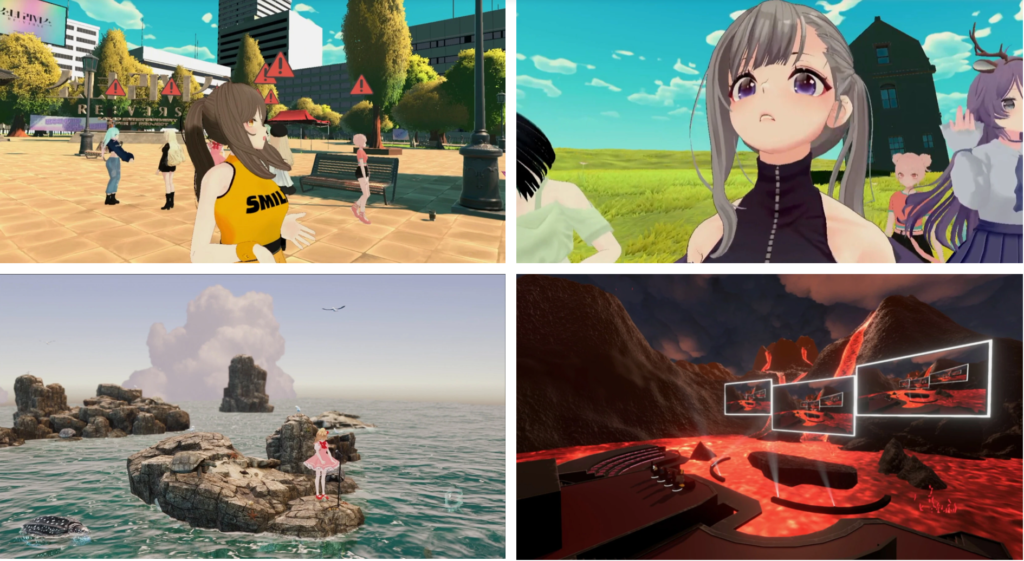
... Everyone onscreen was real, sort of. The singers had human counterparts in the studio, isolated in cubicles, with headsets on their faces and joysticks in both hands. Immersed in a virtual world, they were competing to become part of (hopefully) the next big Korean girl band.
The stakes were high. A few of their competitors, after failing to make the cut, had been dropped into bubbling lava.
This, some say, is the future of entertainment in the metaverse, brought to you by South Korea, the world’s testing ground for all things technological. ...
The Korean company Kakao Entertainment wants to take things further. It’s working with a mobile gaming company, Netmarble, to develop a K-pop band called Mave that exists only in cyberspace, where its four artificial members will interact with real-life fans around the world. ...
The contestants were involved in creating their avatars, said Son Su-jung, a producer for the show. She said part of the point was to give K-pop singers — “idols,” as they are called — a break from the industry’s relentless beauty standards, letting them be judged by their talent, not their looks. (Though the avatars, it should perhaps be said, all have big eyes and heart-shaped faces.) ...
The show also lets them drop their polished public personas, relax and crack jokes. “Idols in the real world are expected to be a product of perfection, but we hope that through this show, they can let go of those pressures,” Ms. Son said. ...
Google researchers have made an AI that can generate minutes-long musical pieces from text prompts, and can even transform a whistled or hummed melody into other instruments, similar to how systems like DALL-E generate images from written prompts (via TechCrunch). The model is called MusicLM, and while you can’t play around with it for yourself, the company has uploaded a bunch of samples that it produced using the model. ...
The paper says that MusicLM can outperform other systems in terms of its “quality and adherence to the caption,” as well as the fact that it can take in audio and copy the melody. ...
Like with other forays into this type of AI, Google is being significantly more cautious with MusicLM than some of its peers may be with similar tech. “We have no plans to release models at this point,” concludes the paper, citing risks of “potential misappropriation of creative content” (read: plagiarism) and potential cultural appropriation or misrepresentation. ...
... In a recent interview with Maeil Business Newspaper, SM Entertainment CEO Lee Sung-soo revealed the label’s plans to reframe Nævis as an “AI artist”. Nævis was previously introduced as the AI system that, within the girl group’s lore, connects aespa to their virtual counterparts, or ‘æ’s. She was previously thought to have sacrificed herself to help aespa, following the events that transpired in the music video and lyrics of ‘Savage’.
Now, it seems that Nævis will make her own musical debut during aespa’s VR concert at this year’s South By Southwest (SXSW) festival, a 20-minute experience set in Kwangya, an infinite, lawless virtual space that features in SM Entertainment’s and in particular aespa’s lore. ...
Niantic, the National Basketball Association (NBA) and the National Basketball Players Association (NBPA) today launched NBA All-World, a free-to-play officially licensed geolocation augmented reality basketball game where players can find, challenge, and compete against today’s NBA ballers in their neighborhoods, then recruit them to their team before proving themselves on the court. NBA All-World extends the world of basketball into new augmented reality territory and is free to play globally on the App Store and Google Play. ...
As Niantic’s first officially licensed sports title, NBA All-World inspires people to explore the world to experience everything the game has to offer:
Explore Your World: Get out and move in the real world to discover NBA players to compete against and recruit to your roster, as well as Gear, Boosts, Challenges, and more.
Build Your Team: Go head-to-head against today’s NBA stars in a variety of challenges to recruit new players. If you’ve already recruited a player, challenge them again in your next encounter to practice your shot and earn more Cred. Recruit stronger players as your Team Level increases.
Push Your Limits: Power up players with Offense, Defense and Fitness Boosts. Make sure you keep Energy high with Energy Drinks.
Rule the Court: Compete in leaderboard challenges at more than 100,000 basketball courts in the real world with Rule the Court. Challenge friends and other players for the top spot.
Rep the Lifestyle: Pick up rare Gear from some of your favorite brands at Drop Zones. Look out for special Gear that improves player stats and outfit your team with sneakers and accessories that help you stand out from the crowd.