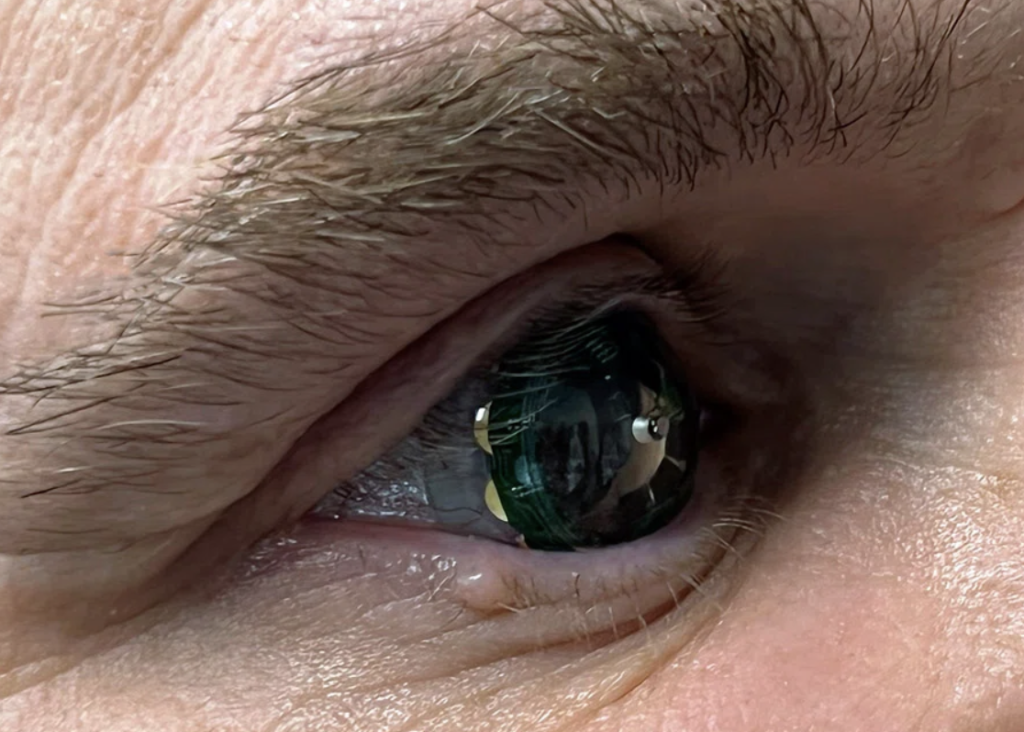
Today I report news that I’m pretty excited to write about: the CEO of Mojo Vision has worn in his eye a functioning smart contact lens and used it for around one hour. ...
Artificial intelligence poses a lot of ethical risks to businesses: It may promote bias, lead to invasions of privacy, and in the case of self-driving cars, even cause deadly accidents. Because AI is built to operate at scale, when a problem occurs, the impact is huge. Consider the AI that many health systems were using to spot high-risk patients in need of follow-up care. Researchers found that only 18% of the patients identified by the AI were Black—even though Black people accounted for 46% of the sickest patients. And the discriminatory AI was applied to at least 100 million patients.
The sources of problems in AI are many. For starters, the data used to train it may reflect historical bias. The health systems’ AI was trained with data showing that Black people received fewer health care resources, leading the algorithm to infer that they needed less help. The data may undersample certain subpopulations. Or the wrong goal may be set for the AI. Such issues aren’t easy to address, and they can’t be remedied with a technical fix. You need a committee—comprising ethicists, lawyers, technologists, business strategists, and bias scouts—to review any AI your firm develops or buys to identify the ethical risks it presents and address how to mitigate them. This article describes how to set up such a committee effectively.
... Research teams at the University of Tokyo, Keio University and Toyohashi University of Technology in Japan have developed a virtual robotic limb system which can be operated by users’ feet in a virtual environment as extra, or supernumerary, limbs. After training, users reported feeling like the virtual robotic arms had become part of their own body. This study focused on the perceptual changes of the participants, understanding of which can contribute to designing real physical robotic supernumerary limb systems that people can use naturally and freely just like our own bodies. ...
... this research as a way to explore the limits of human “plasticity” — in other words, our brain’s ability to alter and adapt to external and internal changes. ...
Participants wore a head-mounted display to give them a first-person view of their own arms represented in VR, as well as the additional virtual robotic arms. They then had to perform tasks using only the virtual robotic arms, which were controlled by moving their toes. Tactile devices returned sensations from the virtual robotic arms to the tops and soles of their feet when they touched an object, like a virtual ball. ...
The team also found that the participant’s “peripersonal space” (the area around our bodies which we perceive as being our personal space) extended to include the area around the virtual robotic arms. ...
Next, the team wants to look at the potential for cooperative behavior between participants’ own arms in virtual reality and the virtual robotic arms. ...
... Earlier studies have shown that facial micro-expressions are more reliable than facial macro-expressions for revealing emotions. They are subtle, involuntary movements responding to external stimuli that cannot be controlled. This paper proposes using facial micro-expressions combined with brain and physiological signals to more reliably detect underlying emotions. We describe our models for measuring arousal and valence levels from a combination of facial micro-expressions, Electroencephalography (EEG) signals, galvanic skin responses (GSR), and Photoplethysmography (PPG) signals. We then evaluate our model using the DEAP dataset and our own dataset based on a subject-independent approach. Lastly, we discuss our results, the limitations of our work, and how these limitations could be overcome. We also discuss future directions for using facial micro-expressions and physiological signals in emotion recognition. ...
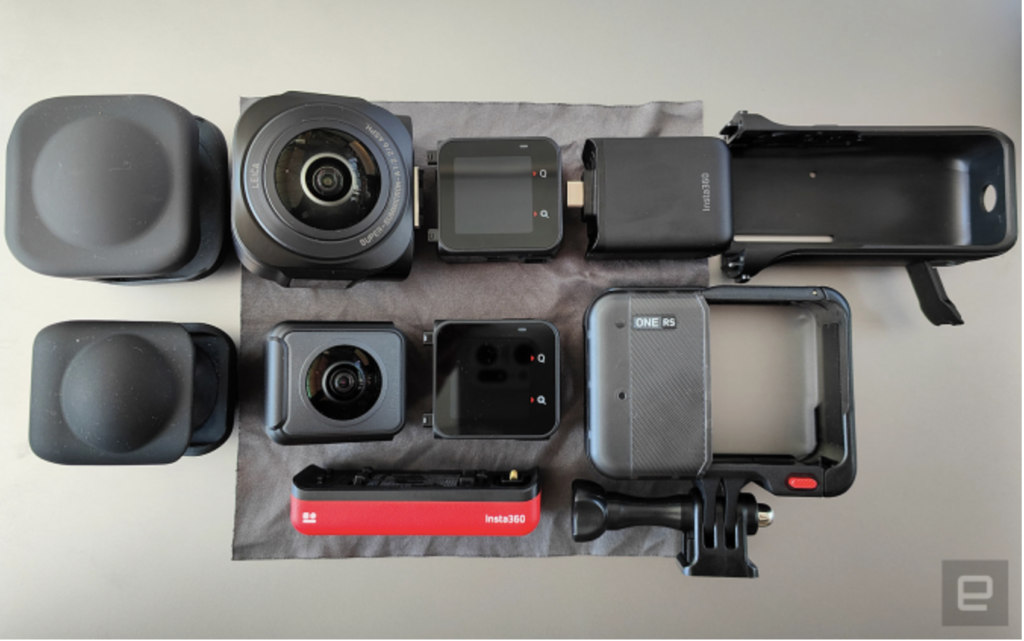
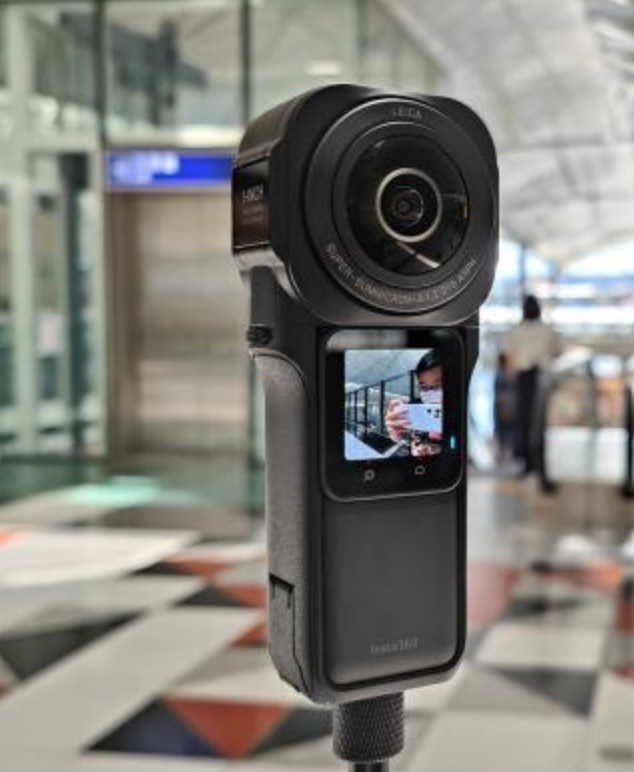
... As the name implies, this new kit comes with a chunkier 360 lens module powered by two 1-inch CMOS sensors, and these are capable of capturing at higher resolutions — up to 6K for 360 videos, or up to 21 megapixels for 360 photos. This should guarantee a boost in image quality, especially in low light. This also happens to be the world's first 360 camera to be "co-engineered with Leica," following the two companies' earlier collaboration on the One R's 1-inch Wide Angle Mod. ...
The Insta360 One RS "1-inch 360 Edition" is now available for $800, which is quite a jump from the $550 "Twin Edition" (which comes with a "4K Boost Lens" and a "360 Lens" instead). A company rep explained that this new kit is targeting the prosumer market, such as users who want to create virtual tours for museums or real estate properties. ...
The centerpiece of the new approach is a neural network that can learn to view the world at different levels of detail. Ditching the need for pixel-perfect predictions, this network would focus only on those features in a scene that are relevant for the task at hand. LeCun pairs this core network with another, called the configurator, which determines what level of detail is required and tweaks the overall system accordingly. ...
He says that in 10 or 15 years people won’t be carrying smartphones in their pockets, but augmented-reality glasses fitted with virtual assistants that will guide humans through their day. “For those to be most useful to us, they basically have to have more or less human-level intelligence,” he says. ...
Bengio thinks that LeCun asks the right questions. He also thinks it’s great that LeCun is willing to put out a document that has so few answers. It’s a research proposal rather than a set of clean results, he says. ...
LeCun thinks that animal brains run a kind of simulation of the world, which he calls a world model. Learned in infancy, it’s the way animals (including humans) make good guesses about what’s going on around them. ...
In short, common sense tells us what events are possible and impossible, and which events are more likely than others. It lets us foresee the consequences of our actions and make plans—and ignore irrelevant details. ...
In LeCun’s vision, the world model and configurator are two key pieces in a larger system, known as a cognitive architecture, that includes other neural networks—such as a perception model that senses the world and a model that uses rewards to motivate the AI to explore or curb its behavior. ...
If they were to work, LeCun’s ideas would create a powerful technology that could be as transformative as the internet. ...
And yet his proposal doesn’t discuss how his model’s behavior and motivations would be controlled, or who would control them. This is a weird omission, says Abhishek Gupta, the founder of the Montreal AI Ethics Institute and a responsible-AI expert at Boston Consulting Group. ...
OpenAI have trained an AI to play Minecraft by watching Youtube videos. They took 2,000 hours of footage which also contained the keyboard and mouse input, which is used to determine the actions from 70,000 hours of Youtube videos to enable the AI to learn how to chop down trees and craft various items. It's all open-sourced and people can compete for $100,000+ in prizes for getting it to perform the more complex tasks.https://openai.com/blog/vpt/
Facebook Comment by Edward Saatchi, Fable Studios and the Admin of the Facebook Virtual Beings group I think this really validates a lot of our focus in the simulation - that we could in the virtual beings space consider moving away from ‘brain-in-jar’ chatbots (even one’s with bodies) to AIs that can do things in worlds - robots are not the place for this for decades most likely but videogames and the metaverse provide us with the ability to have AIs in simulated worlds having lives, doing things alongside you and - aside from being way more fun - that serves as a more coherent, persistent prompt for language models which lose coherence so fast. It also provides a hint at memory - another huge failing for language models - simply by using the game database of actions taken. Finally this opens up a new area beyond the text, image data from the 2D web toward data of users playing videogames and mimicking their physical behavior - which were very excited about in the simulation. Overall I’m much more excited about this than DALL•E - that demos well and will definitely help ideation but this gets us closer to a metaverse where the majority of avatars are rich, characterful AIs and for the first time we’re interacting with AI virtual beings on a level playing field. Amazing !
... When the dealer opened the box, "I was really blown away," Watts recalls. A block by block, building by building sequence of photographs depicting early 20th century Los Angeles were, she knew, as "rare as hen's teeth." What's more, she quickly surmised, nothing that the pictures depicted remains. It is all gone, obliterated. This version of L.A.'s Chinatown got demolished right after these pictures were made in order to make way for the Union Station railroad depot. Every bit as amazing was the fact that the images were meticulously addressed. The photographer took care to note, on the images themselves, where he was on this or that street, writing the house or building number on the printed photograph. ...
Then, a chance meeting with Professor Scott Fisher of the USC Cinema school happened. ...
Fisher knew that he could place the 1930s photographs in space by way of augmented reality. He knew that commuters in route to and from their trains in Union Station could, by way of their phones or tablets, "see" the old neighborhood that had once been right there at their feet. Travelers laid over and awaiting departure could do so as well. ...