Voice AI Predictions for 2022 from 25 Industry Leaders
VIRTUAL BEINGS, METAVERSE, AND GPT-3
CHITHRA DURGAM, DDS AND FOUNDER, BLUE CHECK SKILL
2022 will see an increased use of voice with chatbots in the Metaverse, avatars using synthetic voices, synthetic voices increasingly reading audiobooks, and more interactive Alexa/Google Home technology platforms adding more discoverability to voice content. As optimistic as I am, there are still questions in regards to the Metaverse involving the long-term rights to the use of another’s voice, maintaining customer service as companies utilize more technology, and authenticating avatars to prevent fraud. With certainty, companies will be leveraging Conversation AI technology in spaces it hasn’t before to offer more continuity to their branding.
EDWARD SAATCHI, CO-FOUNDER, FABLE
The battle for the soul of the metaverse will commence – Web3 and Free and Open Source Software like Sandbox and Blender vs the centralized companies of Meta, Epic, Roblox, Adobe.
See the full story here: https://voicebot.ai/2022/01/01/voice-ai-predictions-for-2022-from-25-industry-leaders/
These are the 6 hottest crypto tokens you can use to buy real estate in the metaverse
1. Ether
Symbol: ETH
YTD Returns: 401%
Market Cap: $448 billion
2. Axie Infinity
Symbol: AXS
YTD Returns: 18,016%
Market Cap: $6.5 billion
3. Sandbox
Symbol: SAND
YTD Returns: 16,853%
Market Cap: $5.6 billion
4. Decentraland
Symbol: MANA
YTD Returns: 4,219%
Market Cap: $4.4 billion
5. Gala
Symbol: GALA
YTD Returns: 28,477%
Market Cap: $3.5 billion
6. Enjin Coin
Symbol: ENJ
YTD Returns: 1,971%
Market Cap: $2.5 billion
See the full story here: https://markets.businessinsider.com/news/currencies/metaverse-crypto-popular-tokens-digital-land-real-estate-investing-tips-2021-12

The biggest tech trends to watch for in 2022
Tech companies want you to trust them more
People now trust companies more than traditional institutions like government and religious organizations, according to Forrester analyst Enza Iannopollo, but companies still tend to overestimate how much customers trust them.
And customers have good reason to be skeptical. In 2021, security breaches, data privacy problems and AI whistleblowers dominated technology news.
In 2022, companies will try to regain lost trust with a variety of tactics, like creating high-ranking roles in charge of “digital trust,” offering cash rewards to people who identify bias in AI systems and adopting technologies that partially anonymize personal data, Forrester research predicts.
See the full story here: https://www.washingtonpost.com/technology/2022/01/03/personal-tech-trends-2022-metaverse-chip-shortage/
Brains on a chip: Why startups are combining cells and silicon
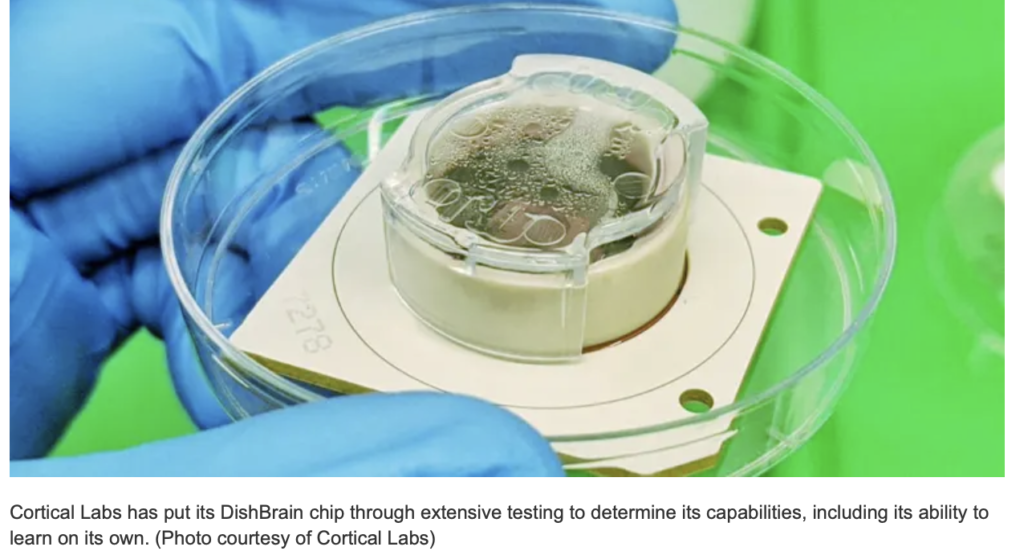
... An ambitious startup from Australia is now throwing a novel ingredient into the mix: human brain cells.
Cortical Labs, a Melbourne-based company backed by one of the country's largest venture capital investors, Blackbird Ventures, recently published a paper describing their new chip. When connected to a computer, the cells on the chip -- dubbed DishBrain -- learned to play the classic arcade game Pong. Even better, the neurons improved their performance after receiving feedback on their play. ...
Such devices could also help scientists better understand the mysteries of the brain and develop drugs to treat neurological diseases. ...
"It occurred to us that biology might have the solution to unlock the holy grail of the AI research landscape, which is artificial general intelligence," Chong said. ...
To create DishBrain, the team at Cortical Labs first converted stem cells -- those that can be transformed into any type of cell -- into brain cells. They then transferred up to a million neurons onto a fingertip-sized microelectrode array made up of more than 26,000 sensors.
When hooked up to an external computer, the sensors transmitted electrical signals to the neurons to simulate Pong's game environment. "The neurons believe that they are a paddle and they live in a world where there's a ball that bounces around in this space," Chong said. "We then trained it in order to stop at the right spot in order to keep the ball bouncing and the game running." ...
See the full story here: https://asia.nikkei.com/Business/Business-Spotlight/Brains-on-a-chip-Why-startups-are-combining-cells-and-silicon
10 of the weirdest experiments of 2021
Inventing an otherworldly time crystal
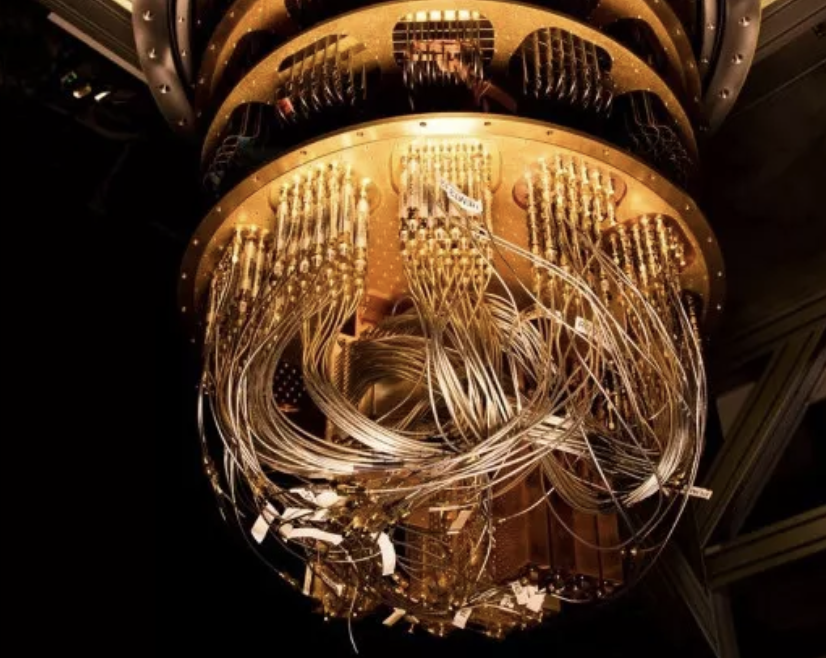
In July, researchers working with Google revealed that they had created a time crystal inside the heart of the tech giant's quantum computer, Sycamore. The crystal was a completely new phase of matter that the researchers claimed was able to evade the second law of thermodynamics, which dictates that entropy, or the disorder of a system, must always increase. Unlike other systems, which see their entropy increase over time, the time crystal's entropy did not increase no matter how many times it was pulsed with a laser. The truly remarkable thing about the weird quantum crystals is that they are the first objects to break a fundamental symmetry of the universe, called discrete time-translation symmetry. Scientists are hoping to use the otherworldly crystals to test the boundaries of quantum mechanics — the strange rules that govern the world of the very small.
See the full story here: https://www.livescience.com/10-weirdest-experiments-of-2021
How AI, VR, AR, 5G, and blockchain may converge to power the metaverse
Even at the current stage of development, Boeing has committed to designing its next-generation aircraftwithin the metaverse, using digital twins and Microsoft HoloLens headsets.
Kirby Winfield, Founding General Partner of VC firm Ascend, sees the metaverse as “the latest evolution of [an] ongoing shift to an increasingly digital life.” When it arrives in full, that shift will achieve the immersive sci-fi visions of many.
See the full story here: https://venturebeat.com/2021/12/26/how-ai-vr-ar-5g-and-blockchain-may-converge-to-power-the-metaverse/