Embodying an opposite-sex virtual reality avatar appears to alter perceptions of touch
... Heterosexual individuals tend to find intimate touch from a same-sex virtual avatar to be more pleasant when they are “wearing” a virtual body of the opposite sex, according to new research that used immersive VR technology to induce a body swap illusion among participants. ...
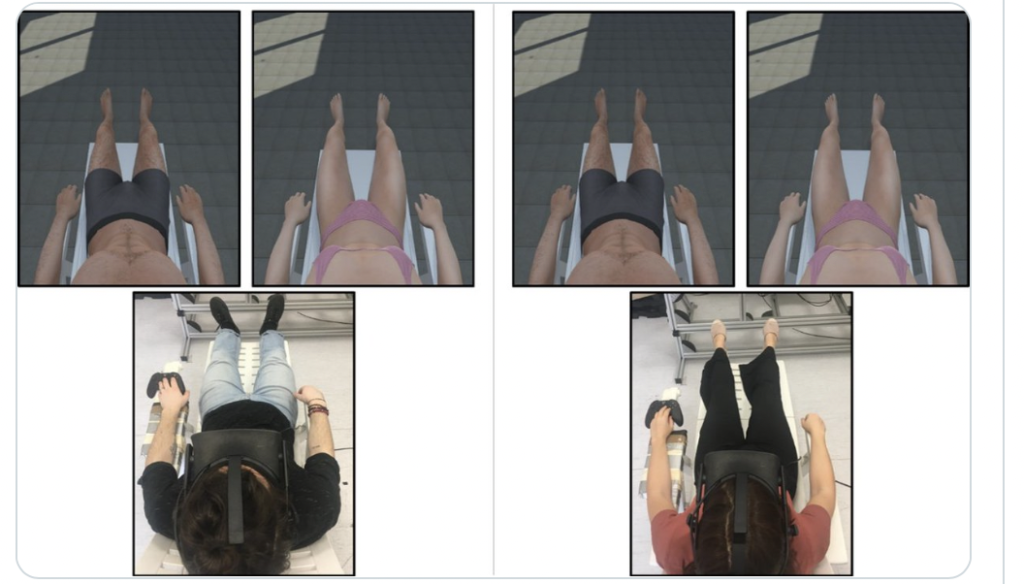
In the study, participants reclined in a chair as they wore an Oculus Rift virtual reality headset. They passively observed from a first person perspective as a male or female virtual avatar delivered caresses to their foot, knee, pelvis, chest, head, and hand. The participants were not physically touched. Instead, the caresses were only delivered to the participants’ virtual body. ...
Moreover, we also focused on intimate touch, which would be unethical in normal circumstances.” ...
See the full story here: https://www.psypost.org/2021/12/embodying-an-opposite-sex-virtual-reality-avatar-appears-to-alter-perceptions-of-touch-62254
Research: How AR Filters Impact People’s Self-Image
Abstract: ... New research suggests that AR apps designed to let customers virtually try on makeup or other products can have a significant, negative impact on psychological wellbeing. Moreover, that impact can vary widely depending on the customer. While people with lower baseline levels of self-esteem may feel better about themselves after using an AR filter, those with higher pre-existing self-esteem are more likely to feel worse about themselves after using AR. In light of these findings, the authors offer five strategies to help firms responsibly deploy AR technologies, including avoiding promoting unrealistic beauty standards, proactively educating customers about the potential harms of using AR, and working with regulators and industry leaders to develop a code of ethics to guide development going forward.
See the full story here: https://hbr.org/2021/12/research-how-ar-filters-impact-peoples-self-image

Commentary: The Ethical Use of AI in the Security, Defense Industry
While competitive advantages and reduced collateral damage are valid arguments for allowing a machine to decide to kill a human in combat, war is a human endeavor and there must be a human cost to undertaking it. It must always be difficult to kill another human being, lest we risk losing what makes us human to begin with. That is where we should take a firm ethical stance when considering AI in future weapons.
See the full story here: https://www.nationaldefensemagazine.org/articles/2021/12/21/the-ethical-use-of-ai-in-the-security-defense-industry

Use of blockchain technology could increase human trust in AI
PhilNote: this article is a collection of definitions and issues.
...However, the success of any AI-based system also depends on the trust displayed by the beneficiaries on AI technology, besides other factors. Data, models, and analytics are the three key components of AI technology. One can decentralize these three key components using blockchain technology, and it will undoubtedly enhance the end users’ trust and confidence levels in AI-based systems. ...
See the full story here: https://venturebeat.com/2021/12/20/use-of-blockchain-technology-could-increase-human-trust-in-ai/

Augmented Reality Dev Jadu Raises $7 Million For Its ‘Mirrorverse’
There are a lot of things that you can add to the metaverse and have it make perfect sense. For the LA-based Augmented Reality developer Jadu, that includes Hoverboards, and its own ambitious take on a metaverse. ...
Of course, Jadu’s investors also included some other major players. For example, LionTree, Coinbase Ventures, PKO Investments & Progression Fund, Guy Oseary (now manager of Bored Ape Yacht Club), Ashton Kutcher’s Sound Ventures and Snoop Dogg’s manager Nick Adler, among others.
Even before these names entered the fray, Jadu wasn’t short of ambition or confidence. Its previous success in community building around its jet pack NFTs were reason enough to push out to hoverboards, as CEO, Assad Malik makes clear, “We’ve known we can create incredible AR experiences but it’s only now with Web3 incentive systems that the missing piece is finally obvious. The community that we formed around Jetpacks, which we have now expanded with Hoverboards, is an incredible way to develop AR as a true creative medium beyond social media filters and enterprise use cases.”
With this new funding coming after its hoverboards went public, the latter NFT series managed to bring in over $4.4 million in primary sales, according to the team. The figure, coupled with a $20 million secondary market is unsurprising too, given the star power involved with them. Each hoverboard was developed and minted in partnership with major names like Snoop Dogg; Grimes; F1 Champion Lewis Hamilton; visual artist Mimi Onuoha, and NFT curator Trippy.
See the full story here: https://www.thevirtualreport.biz/deal/65220/augmented-reality-dev-jadu-raises-7-million-for-its-mirrorverse/
Forever 21 Joins The Metaverse With ‘Roblox’ Shopping World
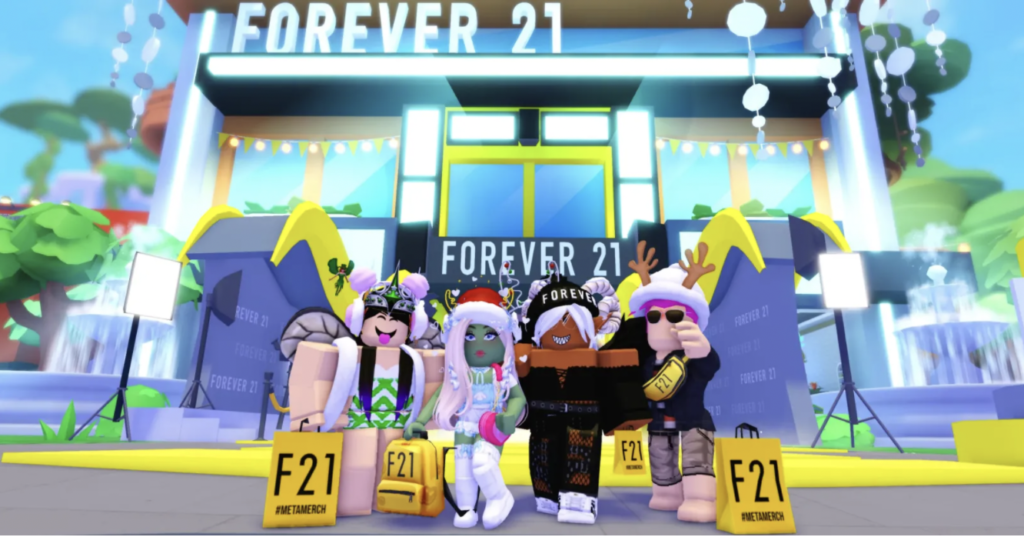
The metaverse company Virtual Brand Group is partnering with popular fashion company Forever 21 to create a unique experience that will let you operate your own Forever 21 store inside of Roblox. In Forever 21 Shop City,you’ll be encouraged to bring the vogue by designing your own fashion business through an unprecedented amount of customization options available through Roblox’s “Tycoon” mode.
Your first task is finding a “physical” location for your new venture! Ideally, you’ll want to find a spot in Forever 21 Shop City with a great view or a heavy amount of foot traffic. If at any point you feel like mixing things up, you can swap locations at any time.
...
Now that your Forever 21 store is built, it’s time to get creative. You’ll need to curate an inventory of eye-catching Forever 21 accessories and clothing to stock your shelves and cloth your display mannequins. You’ll also have to hire a team of non-player characters (NPCs) to work your store.
Like all business owners in the real world, sometimes your job will require you to do a little of everything. Be prepared to hit the store floor and help customers with questions or jump behind the cash register when things get busy. You may also find yourself decorating storefront windows and even pulling inventory from the back to fill shelves.
As if that weren’t cool enough, Forever 21 will be releasing new collections simultaneously in both real-world physical and the metaverse. Those same items will be available as virtual merchandise in Forever 21 Shop City that gamers can buy for their Roblox avatar.
See the full story here: https://www.virtualrealitypulse.com/edition/daily-amazon-apple-2021-12-16?open-article-id=20761482&article-title=forever-21-joins-the-metaverse-with--roblox--shopping-world&blog-domain=vrscout.com&blog-title=vrscout