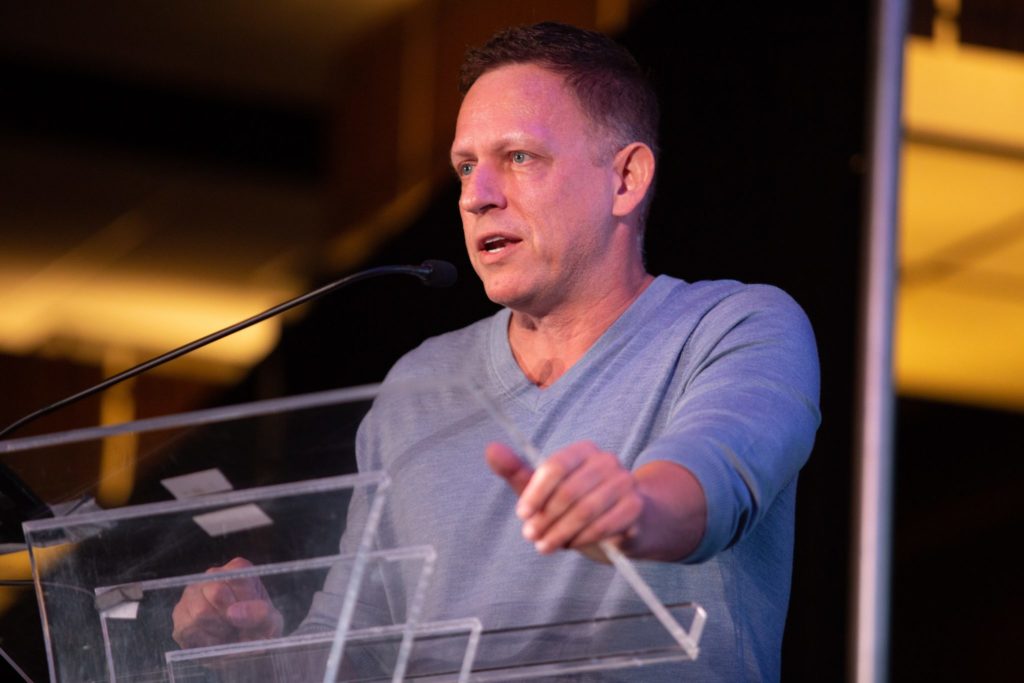
PETER THIEL: ARTIFICIAL GENERAL INTELLIGENCE ISN’T HAPPENING
He pointed instead to today’s concerns: Specifically, surveillance AI, which involves “fairly dumb computers” whose real potency is that they “monitor us in all places and all times.” That will shift the balance of society away from civil liberties toward centralization, he warned:
You can think of the crackdown in China or Hong Kong, where you have facial recognition software. This is not futuristic, super, super smart AI, but it is sort of a next generation technology.
He summed up: “Almost all the paths that lead to AGI, as it is currently conceived, go through giant organizations with giant databases, looking at people, modeling people, doing machine learning on people to build the AGI. You need this sort of surveillance to get to the AGI. And of course the surveillance a AI has a sort of a creepy totalitarian undercurrent.”
See the full story here: https://mindmatters.ai/2021/11/peter-thiel-artificial-general-intelligence-isnt-happening/
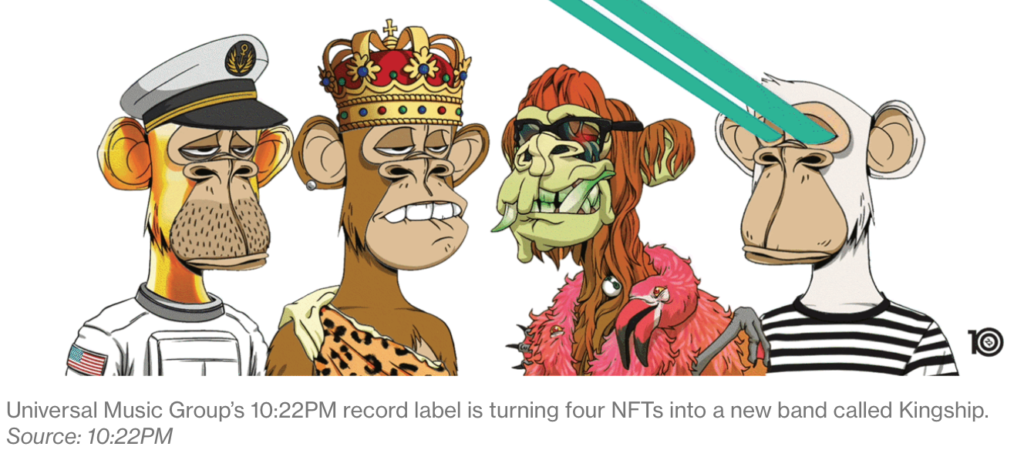
The World’s Largest Record Company Is Creating an NFT Super Group
Kingship, consisting of four virtual apes, reimagines the idea of a band — and a brand
Universal Music, the home to top-selling musicians like Drake and Taylor Swift, is working with collector Jimmy McNelis to convert four of his NFTs into a band called Kingship. Kingship consists of four digital characters — three bored apes and one mutant ape — all part of an NFT collection known as the Bored Ape Yacht Club. The club is one of the most successful NFT stories of the past year; it gave anyone who bought one of the apes full commercial rights to use the image.
...While Joshua has a novel idea — an NFT band — a virtual band is not unprecedented. In 1998, musician Damon Albarn and artist Jamie Hewlett created a virtual quartet called the Gorillaz. Albarn made the music and Hewlett designed four animated characters who appeared in music videos and the occasional interview or live performance. Albarn also gave interviews representing the group, and performed alongside musical collaborators.
What’s different this time around is how Kingship will make money — and interact with fans. Joshua plans to sell NFTs of Kingship, giving buyers access to exclusive music experiences and real-world events. Think of it as fan club for the virtual world.
Joshua pitched him on the idea of creating a new group, and picked four characters that she thought would work as a band. That includes a golden ape, another of which just sold at Sotheby’s for $3.4 million. Kingship's golden ape is valuedat around $190,000 at current prices, according to offer data on OpenSea, the largest marketplace for NFTs.
True believers say NFTs offer buyers something real — a bit of ownership in artists they like or access to special experiences. NFTs also speak to the blurring lines between our tangible and virtual worlds.
See the full story here: https://www.bloomberg.com/news/articles/2021-11-11/the-world-s-largest-record-company-is-creating-an-nft-super-group
White House A.I. director says U.S. should model Europe’s approach to regulation
Since August 2018, Lynne Parker has worked in the White House Office of Science and Technology Policy, helping steer the executive branch’s approach to research, innovation, policy, and investment in artificial intelligence. …
As the final speaker at the Fortune Brainstorm A.I. conference in Boston this week, Parker discussed this relatively new position and shared the initiative’s three main goals. “The first one is all about research. The innovations that we’re being able to take advantage of today, many of them are due to decades of investments by the federal government and research, so there’s a recognition that the advances for the next decade need to have that research underpinning as well,” she said. “A second goal is in making sure that the U.S. leads the world in the development and use of trustworthy A.I. in both the public and private sectors. That means the federal government itself, and its use of trustworthy A.I., as well as the private sector. Obviously, there are many things that need to happen for that to take place. And then the third [goal] is to make sure that we’re educating people to have the skills and the talents and the opportunities to learn about the A.I.-enabled jobs of both today and the future.” …
International cooperation is also a big issue for Parker’s initiative, as she discussed when asked to compare the U.S.’s approach to A.I. versus China’s. …
Finally, she touched on what’s been a running theme at Fortune’s Brainstorm A.I. conference—the need to make sure artificial intelligence is equitable and ethical. Right now, she said, both the private and public sectors are still figuring out the “appropriate” ways to determine what’s responsible when it comes to transparency and explainability. …
See the full story here: https://fortune.com/2021/11/10/white-house-a-i-director-regulation/

At Seattle’s Museum of Museums, a pseudo-religion generated by artificial intelligence and machine learning
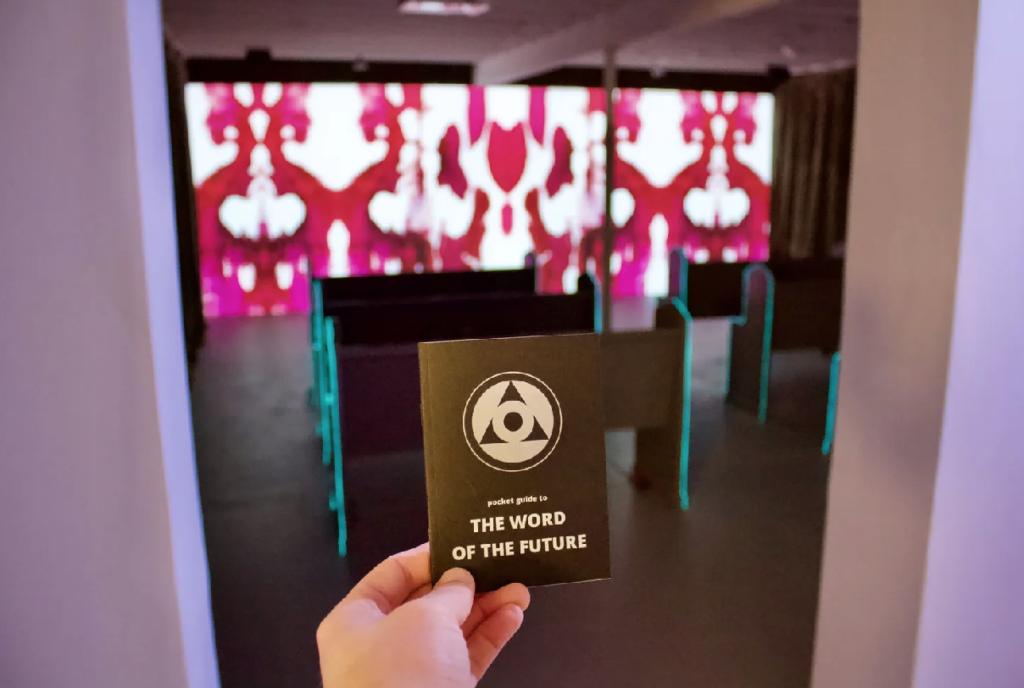
When you walk up the stairs of the Museum of Museums and into the gallery, you enter a church-like atmosphere. You see shifting stained-glass windows projected on the walls and pews for sitting. You hear what sounds like Gregorian chant and a friendly (yet authoritative) voice delivering a sermon. The Word of the Future is a neural network that made all that — not the pews, and not the projector, but all the churchy media you see and hear. The images of stained-glass windows do not exist in any church in the world, but are The Word’s idea of what stained glass should look like. The Gregorian chant was never sung by human voices, but is The Word’s idea of what that kind of music should sound like. The Word of the Future is a machine intelligence. (“The Word of the Future” also happens to be the name of the exhibition.)
... “The root idea was about how religion has been a force of civilization — almost like a technology that has defined some of the ways we perceive things,” Fennell said. “If you deeply believe in, let’s say, Jesus Christ, and see a face in your toast, you might attribute that to a holy action. That would be based on the framework of your understanding. That’s an extreme example, and not at all common, but people attribute things they don’t understand to forces they can understand. They try to make sense of things.”
... The result is three rooms with a coolly sacred feeling. The main event is a dim chapel where The Word gives a sermon on mind, learning and technology while Rorschach-like blots slowly morph on the wall. In an even darker, more intimate sanctum, The Word delivers another sermon on pareidolia (seeing meaning in randomness, like figures in clouds or faces in wood grain). Between the two is a gallery/reliquary with the stained-glass windows and a variety of “holy” objects in display cases.
See the full story here: https://www.seattletimes.com/entertainment/visual-arts/at-seattles-museum-of-museums-a-pseudo-religion-generated-by-artificial-intelligence-and-machine-learning/
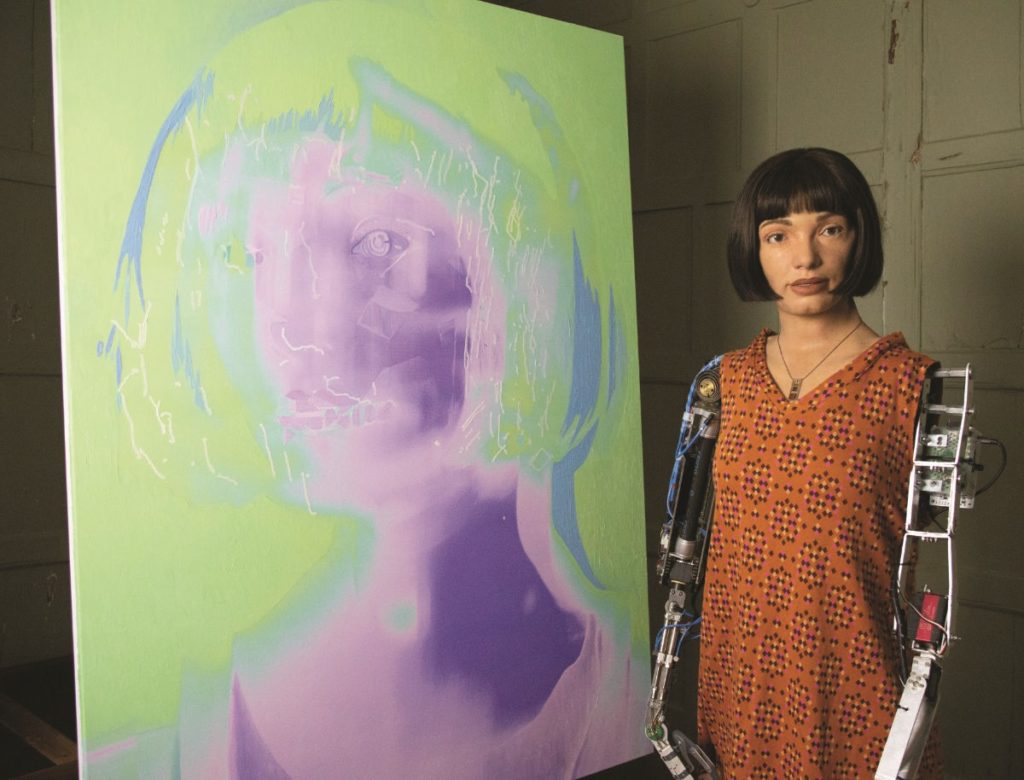
When is the art the artist?
Ai-Da’s drawing arm and her drawing AI algorithms were designed by Egyptians Salaheldin Al Abd and Ziad Abass.
These algorithms allow analysis of the subject Ai-Da is looking at and use the resulting data set to create the movements required for the drawing arm. Her repertoire has extended to performance art and clay modelling.
See the full story here: https://eandt.theiet.org/content/articles/2021/11/when-is-the-art-the-artist/
Summit Scramble is the World’s First Immersive Cross-Platform Web Game That You Can Play On Smartphones, Computers and Virtual Reality Devices
Key Features:
- Players can create and customize their own Ready Player Me avatars as their character in the game with select outfits, accessories and hairstyles.
- Summit Scramble is a free web game that can be played in AR on iOS and Android smartphones and tablets or Microsoft HoloLens, in 3D on desktop and laptop computers and in VR on the Oculus Quest/Meta Quest.
- Players can challenge their friends in real-time from anywhere around the world and play across platforms.
See the full story here: https://sports.yahoo.com/summit-scramble-world-first-immersive-174400477.html

Beeple’s ‘Human One’ Sculpture and NFT Sells for Nearly $29 Million
PhilNote: this is a true Andy Warhol / John Cage moment - it is great art because it uses the established art infrastructure and the market says it is thru the valuation.
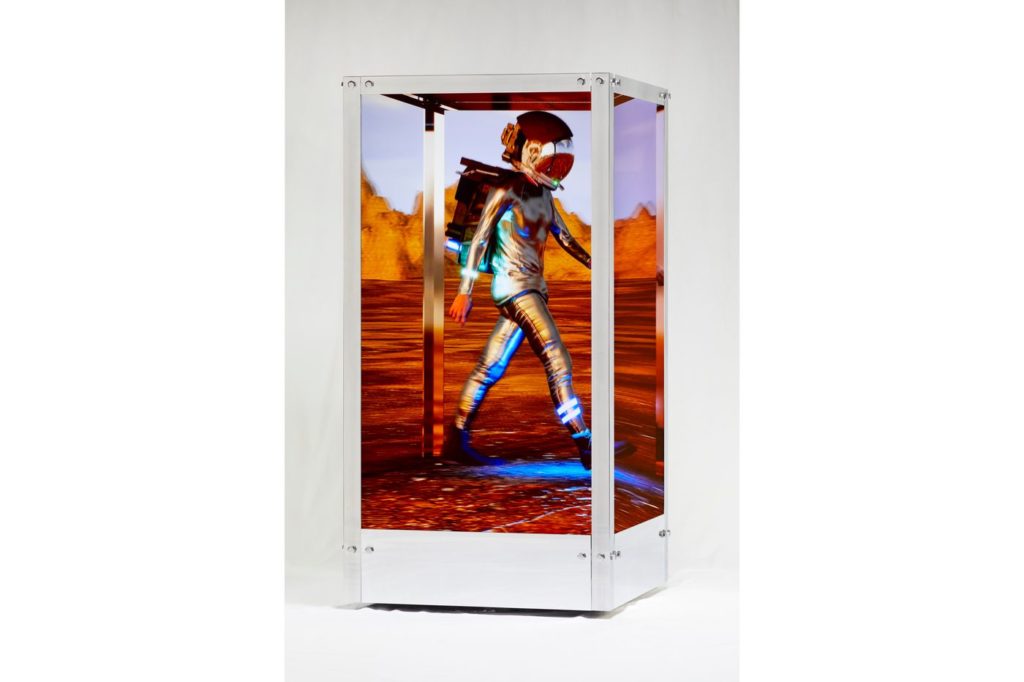
HUMAN ONE, a 3-D video sculpture and the latest creation bythe artist known as Beeple, sold for US$28.9 million to an online bidder in Switzerland at a live Christie’s auction in New York on Tuesday evening.
The more than 7-foot-high sculpture featuring dystopian imagery that is accessed through the Ethereum blockchain drew bids from collectors on the phone with specialists in New York and Hong Kong, before ultimately selling for a hammer price of US$25 million in just over 3 minutes.
The imagery that makes up the world of this ever-exploring human in Beeple’s work is drawn randomly from a data pool of one-minute video clips set up by Winkelmann and accessed via Ethereum, Christie’s says.
The artist intends to change the imagery blanketing the four walls of the sculpture throughout his lifetime, creating a lifelong connection with the winning bidder as well as any future owners of the sculpture.
See the full story here: https://www.barrons.com/articles/beeples-human-one-video-sculpture-and-nft-sells-for-nearly-29-million-01636506472