Taking Hollywood To Infinity And Beyond With The Infinity Festival
The conference is spotlighting a remarkable transition in the ways entertainment companies are making features and episodic series, aka, the entertainment products we now call video programming in an era when “TV” is far more than just what used to screen at a movie theater or run on a broadcast station’s linear feed.
But it’s also mixing in the tools and techniques of the video game world, virtual/augmented/mixed reality, blockchain tools, and more. The digital hurricane engulfing Hollywood was already underway two years ago but, forced by the pandemic’s limitations on traditional productions, only accelerated since. The Infinity Festival aims to reflect all that.
See the full story here: https://www.forbes.com/sites/dbloom/2021/11/03/taking-hollywood-to-infinity-and-beyond-with-the-infinity-festival/?sh=61a7293262a8&fbclid=IwAR1O1sNlclrOR_H8M1D4Q1dNes6xb8xh8cZhe0q-ZnLDTN4hp6fO4_Uawfk

The Incredible Machines Bringing XR Stages to Life
Here are three common issues.
Seams. Remember how the LED wall is made up of multiple segments, and how all the computers have to work together to project a single scene onto them?
“Each of those segments has a different geometry, because the wall is typically curved,” Tankersley said. “So the computers also have to understand the specific curve of the wall and where the segments meet.” If the software picks up any errors in the geometry, “you’ll see some weird artifacts on the wall.” Artifacts include a range of undesirable visual elements.
Syncing. “All of the screens have to be synced to the [camera] frame so that the camera and the wall are in sync for every frame, so you don’t get any flicker,” Tankersley said. “If the sensor on the camera is running on a slightly different clock to the wall, you’ll see artifacts.” How precisely do all the sensors and clocks have to be synced? “To the microsecond.”
Camera angles and proximity. “LEDs have a color shift on different angles…you see this with any TV,” Tankersley said. “If you look at it straight on, the colors are right, and if you look at an angle, they’re off. So you have to pay attention to the angle of the camera to the wall.”
See the full story here: https://hitsonline.org/2021/10/28/the-incredible-machines-bringing-xr-stages-to-life

Virtual reality is fighting loneliness, both on Earth and in space
Given the risks associated with isolation, space agencies conduct large-scale simulation studies to investigate and mitigate these effects. SIRIUS (Scientific International Research in Unique Terrestrial Station)is a series of on-land isolation experiments simulating long-term spaceflight.
SIRIUS-21 is an eight-month isolation study in Moscow that begins on Nov. 4, 2021. A multinational crew of six people will go into a special facility, called NEK, modelling a spacecraft that was built in the 1960s and stay in there for 240 days, partaking in 70 experiments prepared by international research teams.
Through the journey they experience: cloud gazing, watching a sunset over a canyon in the company of wild animals, observing aurora in the night sky, witnessing Mars rising over the horizon and flying through space coming across a solar eclipse. Finally, participants orbit around the Earth, reflecting on the interconnectedness of all life on our planet. This virtual journey is inspired by the Overview Effect, a profound experience that astronauts have when witnessing the beauty and fragility of Earth from outer space.
See the full story here: https://thenextweb.com/news/virtual-reality-loneliness-earth-space-syndication

The Next Privacy Crisis
But most of them promise a uniquely powerful combination of three features.
- Their hardware is wearable, hands-free, and potentially always on — you don’t have to grab a device and put it away when you’re done using it
- Their images and audio can blend with or compensate for normal sensory perception of the world, rather than being confined to a discrete, self-contained screen
- Their sensors and software can collect and analyze huge amounts of information about their surroundings — through geolocation and depth sensing, computer vision programs, or intimate biometric technology like eye-tracking cameras
...Writer and researcher Erica Neely says that laws and social norms aren’t prepared for how AR could affect physical space....
Augmentation also doesn’t just mean adding things to a wearer’s surroundings. It also means letting a computing platform capture and analyze them without other people’s consent.
Take facial recognition — a looming crisis at the heart of AR. ...
It’s not clear how AR systems will make money either — and what kinds of behaviors the resulting business models will encourage. ...
Even basic AR applications, like mapping an apartment to place a virtual screen, could potentially gather a huge amount of information. (What’s the size of your living space? Which books are on your shelves? How healthy are the snacks on your kitchen counter?) Without robust privacy protections, it will be incredibly tempting to use that data for ads....
Facebook Reality Labs announced a set of Responsible Innovation Principles designed to allay fears about trust, privacy, and consent that have dogged the company. It also awarded a series of academic grants to study specific issues in AR, selecting proposals like “Social Tensions with Always-available AR for Accessibility” and “Anticipating Virtual Gossip — What are (Un)Intentional Dark Patterns in a Ubiquitously Augmented Reality?” ...
“It’s very typical that developers of a technology have one kind of idea about what its uptake in society might be, and then the actual uptake turns out to be something quite different,” says University of Washington professor and human-computer interaction expert Batya Friedman. A good system is flexible enough to adapt to these unexpected uses. ...
See the full story here: https://www.theverge.com/22746078/ar-privacy-crisis-rethink-computing
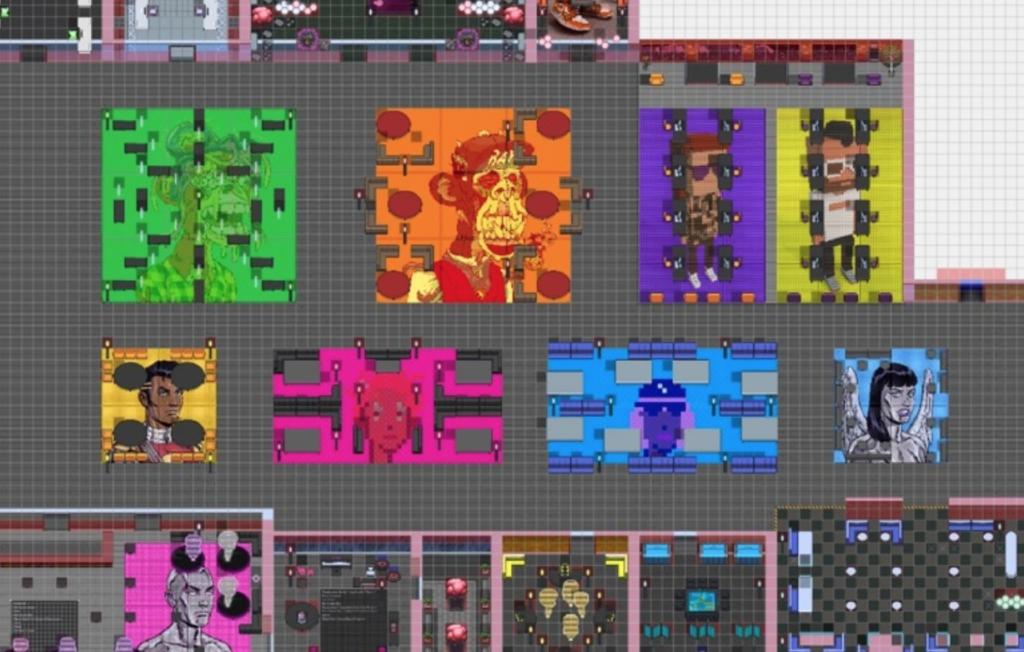
The Culture DAO launches the $CULTUR social token at the Virtual Beings Summit
And this year, blockchain culture has invaded the event. The Culture DAO(decentralized autonomous organization) is launching its social token, dubbed $CULTUR, at the event. And that may stir as much talk as the Virtual Beings Summit itself (the event takes place today and tomorrow). ...
DAOs are like companies without leaders. They’re a bunch of people who come together on a project and take ownership of it through control of tokens. The creators get so many tokens. But so do fans and investors and other who acquire tokens. And everybody gets to influence the fate of the project. Edward Saatchi, organizer of the Virtual Beings Summit, believes that these kinds of blockchain-inspired concepts will be intertwined with the success of virtual beings. A DAO, for instance, might create a character as complex as Hamlet and run that virtual being’s life, or it might collectively figure out how to create the next Pixar.
...This guild believes that the resonant characters of the future aren’t being built by centralized studios but by innovative technologists and artists — and fans who are involved in co-creating story of the character NFTs they buy.
...The Culture guild is about the living, digital portraits that the rapidly emerging metaverse class will use to announce themselves and find community in digital societies. The Culture Guild’s role is to create and innovate around virtual beings and this metaverse transition.
...Membership of the Culture DAO and Discord is normally 25 $CULTUR (1 $CULTUR can be swapped for ETH at a rate of around $25 at time of writing) alongside an application process; membership provides access to a token gated Discord with other founders, engineers, academics, artists across the Virtual Beings space as well as the ability to earn through hunting bounties (theculturedao.com/bounties).
See the full story here: https://venturebeat.com/2021/10/29/the-culture-dao-launches-the-cultur-social-token-at-the-virtual-beings-summit/
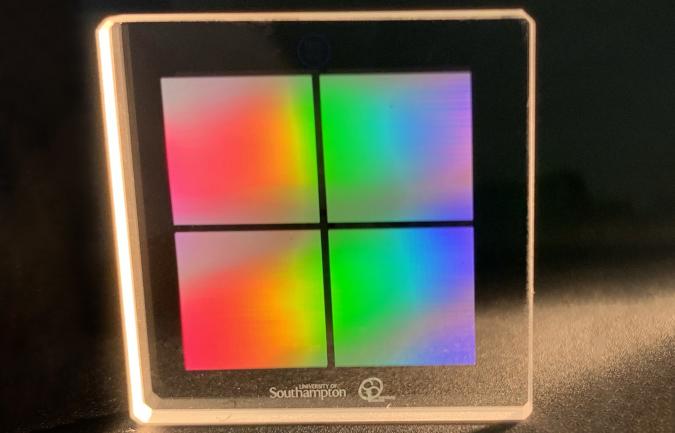
‘5D’ storage could fit 500TB on a CD-sized glass disc
With 5D optical storage, each file is uses three layers of nanoscale dots. The dots' size, orientation and position within the three standard dimensions, make up the five "dimensions." The dots change the polarization of light travelling through the disc which is read using a microscope and polarizer.
...To overcome the speed problem, researchers used a femtosecond laser with a high repetition rate. Rather than writing directly in the glass, they used the laser to produce a phenomenon called near-field enhancement, that creates tiny structures using a few weak light pulses. Those can be used to enhance the circular voids generated by a more powerful, single-pulse "micro-explosion."
...They were also able to write at speeds or around a million voxels per second, or about 230 KB per second.
That might sound slow, but by introducing parallel writing, you could feasibly fill a 500TB disc in about 60 days. That could provide a way to backup reams of valuable data, essentially forever.
See the full story here: https://www.engadget.com/5-d-storage-could-fit-500-tb-on-cd-sized-disc-095039455.html
Market Map of the Metaverse
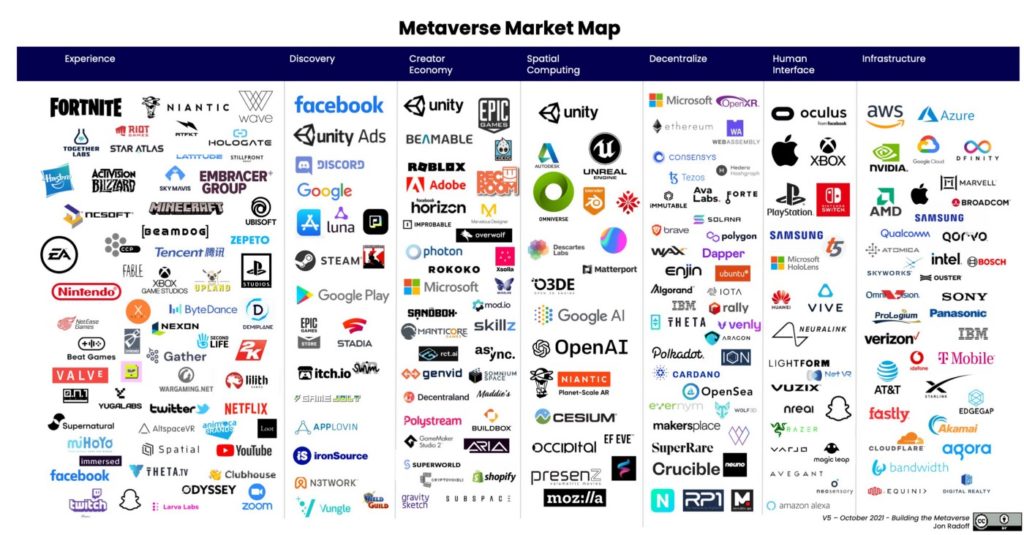
- Experience is what we actually engage with: games, social experiences, live music, etc.
- Discovery is how people learn that an experience exists.
- The Creator Economy is everything that helps creators make and monetize things for the metaverse: design tools, animation systems, graphics tools, monetization technologies, etc. Read The Evolution of the Creator Economy for more insights on how these markets evolve.
- Spatial Computing refers to the software that brings objects into 3D, computing into objects in the world, and allow us to interact with them. It includes 3D engines, gesture recognition, spatial mapping, and AI to support it.
- Decentralization is everything that is moving more of the ecosystem to a permissionless, distributed and more democratized structure.
- Human Interface refers to the hardware that helps us access the metaverse — everything from mobile devices to VR headsets to future technologies like advanced haptics and smartglasses.
- Infrastructure is the semiconductors, material science, cloud computing and telecommunications networks that make it possible to construct any of the higher layers.
See the full story here: https://medium.com/building-the-metaverse/market-map-of-the-metaverse-8ae0cde89696