The goal is to create theatrical performances — viewed around the world — that blend AR or virtual reality experiences with live performances in Broadway venues. The project is targeted for completion by next year. ...
“What we are trying to do as we move into the metaverse, as creators and developers, is view the theater as a digital venue, an augmented theatrical venue.” ...
Odeon’s Augmented Theatrical Venue is a physical venue freed from real-world constraints, Riggs said. She said it will transform any location into a stage by seamlessly integrating traditional production elements such as light, sound, and sets with augmented reality content. The platform will work with a range of existing theatrical software and can run on multiple audience-facing hardware platforms, including mobile devices or head-mounted displays. ...
LAST MONTH, STANFORD researchers declared that a new era of artificial intelligence had arrived, one built atop colossal neural networks and oceans of data. They said a new research center at Stanford would build—and study—these “foundational models” of AI.
Critics of the idea surfaced quickly—including at the workshop organized to mark the launch of the new center. Some object to the limited capabilities and sometimes freakish behavior of these models; others warn of focusing too heavily on one way of making machines smarter.
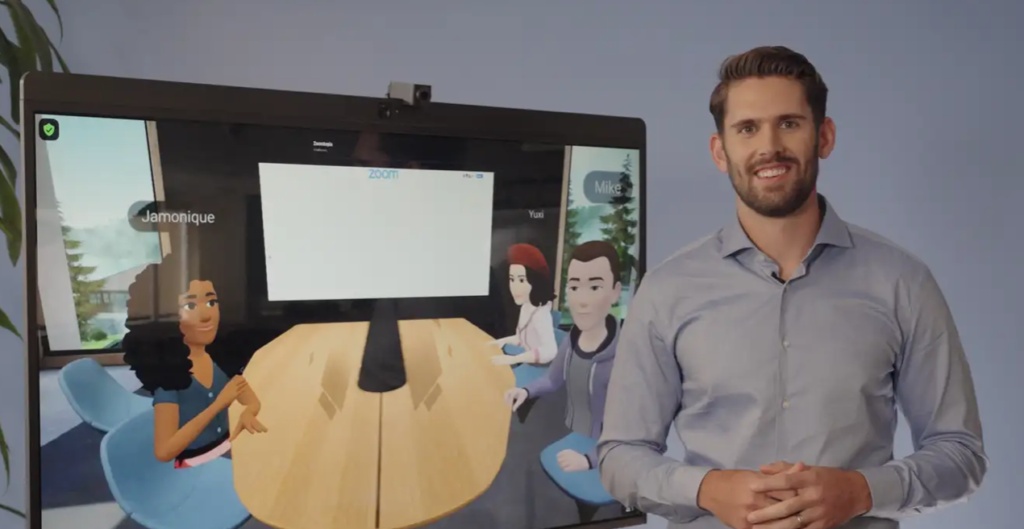
As part of its Zoomtopia 2021 conference, Zoom announced its first move into virtual reality. Zoom’s Whiteboard gives workers the ability to collaborate more effectively online, and the company plans to split it off into its own standalone service. As a result of this, it’ll become available in Facebook’s Oculus Horizons Workrooms. You, your co-workers, and your computer-generated avatars will eventually interact with one another in a stark white virtual conference room. Instead of a mouse cursor, you’ll use your hands to pan around the whiteboard, according to the preview images. Sounds... great.
The company is aiming automatic live transcription support for 30 languages by the end of 2022. The transcription engine will also include translation for 12 languages for paid accounts by the end of next year, though there are no specifics on which would be first.
Advances in machine learning have been spectacular in the last five years. This form of artificial intelligence has led to very significant progress is areas such as autonomous driving, machine translation (to and from multiple languages) and automated text generation.
And yet… Useful as Google Translate is, it still makes some fairly basic mistakes. For example, it correctly renders “the window that I have shut” as “la fenêtre que j'ai fermée”, but incorrectly translates “the key that I have found” into French as “la clé que j'ai trouvé”.
Anyone with a French A-level will tell you that, with the avoir verb, the past participle must agree with the direct object when it precedes the verb. “Clé” is feminine, so the extra ‘e’ is also needed on the end of the participle. Testing with similar examples gives a phrase translation accuracy of around 50 per cent, which isn’t great.
To someone like me who has been working in machine learning (ML) for the past 30 years, this is not surprising. Translation is only as good as the data fed to the ML algorithm during the learning phase. Google Translate has no understanding of French grammar: it learns through brute repetition of exemplar sequences. Evidently there are not enough examples in Google’s training data of phrases with feminine nouns as objects preceding avoir for the correct translation to be given every time.
During the daytime, Dreamverse is an public interactive digital art experience featuring the most prominent NFT artworks and artists in both digital and virtual formats. The Gallery will feature work by over 150 artists, curated by 10 seminal NFT artists, TIME, and Metapurse.
One of the continually cited benefits of “try before you buy” AR and VR product visualization is how it can increase conversions and reduce returns. We’ve covered plenty of proof points for conversions, but return rates have always lingered in theoretical and speculative territory.
Experience Emirates' fully-enclosed Gamechanger First Class Suites, explore the airline's signature A380 Onboard Lounge, or check out the cabin around your own seat in row 77 from the comfort of your home, with the airline's award-winning and industry-leading virtual reality (VR) experiences.
Available on emirates.com to anyone with an internet connection, via the Emirates app, and now on the Oculus Store for Oculus Rift users, Emirates has taken the next step in its ambition to reach and engage audiences around the world with cutting-edge VR technology. Learn more about the Emirates VR experience on Oculus Rift here...
Created in partnership with technology company Renacen, Emirates' customers can navigate through Economy, Business and First Class cabins, explore their seats, as well as the iconic Onboard Lounge and Shower Spa on the Emirates A380 using navigational hotspots. Emirates is working on an updated version featuring its Premium Economy cabin and latest A380 aircraft interiors.
In future developments, Emirates plans to offer customers the ability to explore destinations, select a cabin, and book and pay for their Emirates flight from within the Emirates Oculus VR app.
1. Nike uses augmented reality and virtual reality in their physical stores. Customers can scan items like shoes or clothing to view information, or they can enter a VR world to experience the different steps in Nike's supply chain so they understand how and where items are being made.
2. IKEA has developed The Place App, which allows shoppers to use augmented reality with their smartphone camera to place furniture items into their homes so they can visualize exactly how the item will look in their setting.
3. Warby Parker’s customers can use AR to try on glasses from the comfort of their homes, so they can pick out the perfect frames.
4. L'Oreal now offers augmented reality-powered makeup try-on experiences, delivered in collaboration with Facebook. Customers can experiment with the world’s leading beauty brands, such as Maybelline, L’Oréal Paris, Lancôme, Giorgio Armani, Yves Saint Laurent, and Urban Decay.
5. Luxury watch retailer WatchBox uses AR to let customers try on different sizes of watches to pick out the perfect one and make sure it looks great on their wrist.
6. FaceCake has created an Infinite Virtual Closet that allows users to create and build a dream closet with aspirational wardrobe and jewelry items, then virtually try them on. The AI-driven shopping platform also gives shoppers curated style recommendations. Imagine being able to virtually try on earrings and actually being able to see them dangling from your ears!
7. BMW’s augmented reality experiences allow car shoppers to go into showrooms and customize cars with different colors or styles using their tablets or phones. Or they can put on virtual reality goggles and experience what it’s like to drive the cars, so they understand their options and can make the perfect choice for their new vehicle.
8. Apple brought their physical retail stores home during the pandemic using AR technology to showcase their products. Shoppers can use AR Quick Look for new iPhone or iMac models, so you can see what they look like in your space or in your hand.
9. Toms, the shoes and apparel company, has installed virtual reality in hundreds of their stores across the world to give customers the ability to transport themselves to Peru. Toms donates $1 of every $3 they make to local people who play a part in their supply chain – and customers can experience the impact of that initiative via virtual reality.
10. Fashion retailer Asos now has simulated models on the website that you can dress up using AR, so you can see how garments look on different body types. In the future, we will likely have our own avatars, so we can have our bodies scanned and try out our own avatars in the digital world.
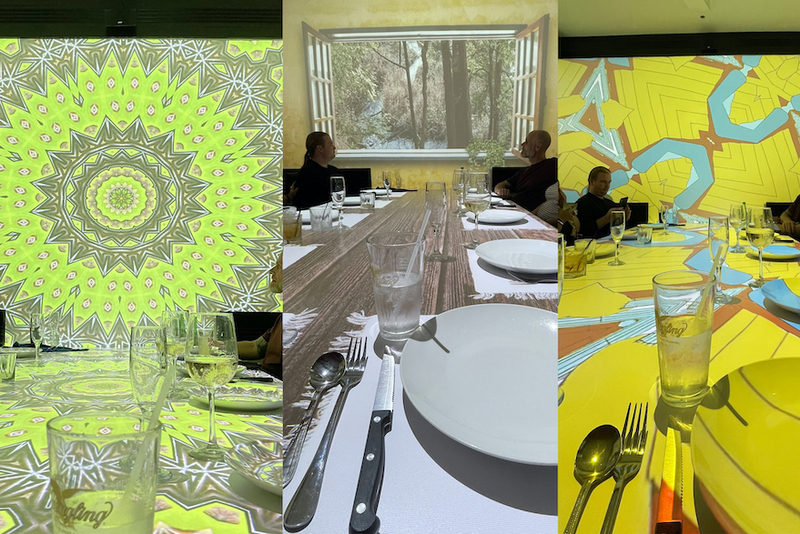
Quantum Virtual Entertainment, owned by both Lynch and Gregory Nies, teamed up to open The Spot 625 and create a virtual reality dining experience in a secluded room of the restaurant.
The Spot 625 opened this fall in Syracuse with the intent to bring a lot more to the table than just food. The new restaurant proposes a combination between food and virtual reality, creating an immersive dining experience like no other in the area. Guests purchase tickets to the VR experience and order their meal before arriving at The Spot through its website. Food options vary from pasta to beef, from chicken to seafood. Customers should note any dietary restrictions.
Despite the challenges, both owners explained that, as of now, the recently opened restaurant has been a success and that they are excited to see where it takes them in the future. They have a lot of ideas, they said, including introducing movement to make the experience even more immersive.
The student was one of 28 middle schoolers, ages 9 to 14, who participated in a pilot program this summer designed to teach them about AI. The curriculum, developed by Blakeley Payne, a graduate research assistant at the MIT Media Lab, is part of a broader initiative to make these concepts an integral part of middle school classrooms. She has since open-sourced the curriculum, which includes several interactive activities that help students discover how algorithms are developed and how those processes go on to affect people’s lives. ...
Algorithms as opinion
Payne’s curriculum includes a series of activities that prompt students to think about the subjectivity of algorithms. They begin by learning about algorithms as recipes, with inputs, a set of instructions, and outputs. The kids are then asked to “build,” or write down instructions, for an algorithm that outputs the best peanut butter and jelly sandwich.
Very quickly, the kids in the summer pilot started to grasp the underlying lesson. “A student pulled me aside and asked, ‘Is this supposed to be opinion or fact?’” she says. Through their own discovery process, the students realized how they had unintentionally built their own preferences into their algorithms. ...