philip lelyveld The world of entertainment technology

31Aug/21Off

Artist Uses Artificial Intelligence To Reconstruct Realistic Portraits of Historical Figures

To create these portraits, Uterwijk uploads numerous references of the person's likeness to the AI applications. Then, he makes small adjustments to the program until he is satisfied with the result.

 “I think the human face hasn't changed dramatically over thousands of years and apart from hairstyles and makeup, people that lived long ago probably looked very much like us, but we are used to seeing them in the often distorted styles of ancient art forms that existed long before the invention of photography.”
Not only does he reimagine real-life royals such as Tutankhamun and Elizabeth I in realistic portraits, but he also applies his digital manipulations to famous works of art, including Michelangelo's David sculpture and Leonardo da Vinci's Mona Lisa painting. “

See the full story here: https://mymodernmet.com/bas-uterwijk-ai-portrait/

Nefertiti

30Aug/21Off

How Lord of the Rings changed big screen battles forever

Though audience members might not realize, they're watching AI agents, with different fighting styles and weapons going up against each other -- some with swords, some with shields and spears, some airborne with sparks flying from their hands. 

To create distinctive battle patterns for the different groups, Weta relied on motion capture, allowing Massive to give each agent an arsenal of moves to choose from.

Not only are all the fighting styles different, the agents are different. Back in the Lord of the Rings days, Jon Allitt, head of the crowds department at Weta Digital, created a tool in Massive called Orc Builder, that could randomly generate different variations of orcs based on characteristics like height and limb length. Orc Builder is now called Body Page, and it worked the same way in Endgame. 

"Visual effects, at its very core, are not about being a perfect simulation of reality. It's about making you believe it," says Gray Marshall, industry veteran and chair of the department of visual effects at the Savannah College of Art and Design.

Regelous, still helming the company, says he's always trying to figure out how to keep moving forward. That might mean giving filmmakers the ability to see special effects almost immediately during production. The Mandalorian, for example, made headlines when it premiered using Epic's Unreal Engine's real-time rendering to create immersive, computer-generated sets. So instead of inserting CG environments into green-screen footage after the fact, it happens during filming. 

See the full story here: https://www.cnet.com/features/how-lord-of-the-rings-changed-big-screen-battles-forever/

30Aug/21Off

Scientists Hope VR Can Change Human Behavior And Curb Climate Change

Scientists at the Stanford Virtual Human Interaction Lab are using virtual reality in the hopes that it can change human behavior and curb climate change. The Stanford Virtual Human Interaction Lab, which was founded in 2003, has been using augmented and virtual reality to help influence human interaction. Some of their previous work includes integrating VR into the classroom, using VR to help users feel empathy, and studying the psychology of augmented reality.

While this research can help improve the understanding of environmental change in the world's youth, the IPCC report explicitly states that in 20 years the world will be facing a climate catastrophe. While this research and software are altruistic in nature using virtualreality is going to do little to reverse the effect of climate change when world leaders are the ones who must act.

See the full story here: https://screenrant.com/virtual-reality-climate-change-activism/

30Aug/21Off

TikTok owner ByteDance takes first step into virtual reality with latest acquisition

  • TikTok owner ByteDance has made its first foray into virtual reality (VR) through the acquisition of a start-up called Pico.
  • Pico was the third-largest virtual reality headset maker globally in the first quarter of 2021, with shipments growing 44.7% year-on-year, according to IDC.
  • For ByteDance, which found success with TikTok and Chinese version Douyin, the Pico acquisition marks a push to diversify its business.

See the full story here: https://www.cnbc.com/2021/08/30/tiktok-owner-bytedance-acquires-pico-and-takes-first-step-into-virtual-reality.html

27Aug/21Off

Expo 2020 Dubai: Slip on a virtual reality headset and walk into the futuristic Serbia Pavilion

Dubai: The Neolithic community of Vinča, which lived 7,000 years ago in the area of today's modern Serbia, was the vanguard of technology; they were the creators of the world’s finest early ceramics, the first European proto-script, the first double-storey construction, the first factories for standardised production of goods, as well as art, weaving, clothes and jewellery manufacturing. The appetite for innovation and creativity in Serbia is deeply rooted in its history. To carry on the Vinča legacy, Serbia at Expo 2020 Dubai is preparing to welcome the world into its palimpsest of innovations.

One of the unique features at this pavilion is that you can the experience the exhibit from anywhere in the world. Anyone can log on to their virtual reality (VR) headset app (available closer to opening date on Exposerbia.rs) from home and tour the entire pavilion. If at Expo, you can pick up a VR headset inside the pavilion, choose from six special avatars and become your own character in a separate world.

“The World Fair will be the first global event since the outbreak of the pandemic,...

See the full story here: https://gulfnews.com/expo-2020/news/expo-2020-dubai-slip-on-a-virtual-reality-headset-and-walk-into-the-futuristic-serbia-pavilion-1.1629711689701https://gulfnews.com/expo-2020/news/expo-2020-dubai-slip-on-a-virtual-reality-headset-and-walk-into-the-futuristic-serbia-pavilion-1.1629711689701

26Aug/21Off

Wendy’s new delivery-friendly french fries are a sign of the times

The real reason behind the innovation has to do with keeping the fries crisp throughout the duration of a delivery—a consideration that hardly existed five or ten years ago.

The new fries will be skin-on, with a new type of batter coating that will allegedly retain crispness longer. They’ll be available in the U.S. nationwide by the middle of September, before rolling out to Canada and other locations globally.

https://thetakeout.com/wendys-new-fries-stay-crispy-longer-arrive-sept-2021-1847566338

26Aug/21Off

Scammers and Hackers See New Frontier in NFT Art

Hannes Koch, co-founder of the artist studio Random International, said he and his collaborators recently hired a blockchain certification provider, Verisart, to issue a certificate of authenticity to their inaugural NFT in April. They have also started attaching retroactive certificates to all their physical works.

See the full story here: https://www.wsj.com/articles/scammers-see-new-frontier-in-nft-art-11629896400

24Aug/21Off

TikTok is building its own AR development platform, TikTok Effect Studio

Both Facebook and Snap offer tools that allow developers to build out augmented reality (AR) experiences and features for their own respective family of apps. Now, TikTok is looking to do the same. The company recently launched a new creative toolset called TikTok Effect Studio, currently in private beta testing, which will allow its own developer community to build AR effects for TikTok’s short-form video app.

On a new website titled “Effect House,” TikTok asks interested developers to sign up for early access to Effect Studio.

See the full story here: https://techcrunch.com/2021/08/23/tiktok-is-building-its-own-ar-development-platform-tiktok-effect-studio/

22Aug/21Off

Pumpers, Dumpers, and Shills: The Skycoin Saga

Michael Terpin, who has managed two hundred such token sales, and who handled public relations for Skycoin, told me that the scheme empowers entrepreneurs. “Somebody who had an innovative product could sell directly, prior to it being built, to an audience of enthusiasts,” he said, without having to “give up a third of the company.”

A frenzy followed a few years later. Since 2017, hundreds of projects have announced token sales. One of the most lucrative, eos, raised about three and a half billion dollars in a yearlong I.C.O. 

 In chat rooms, Smietana’s followers addressed him with reverence. “We all are in honor to speak with synth,” a user called Anosis wrote. “It’s like having a chance to talk to Satoshi.”

By early January, 2018, the total estimated value of pre-mined Skycoins had reached almost five billion dollars. Smietana sent representatives to conferences in New York, Lisbon, San Francisco, and Singapore, and arranged a retreat in Mauritius. A former marketing contractor, who requested anonymity out of fear of harassment, recalled that Smietana could spend lavishly on the people who worked with Skycoin, in one case paying for cryotherapy, vitamin injections, thousand-dollar steak dinners, and a twelve-thousand-dollar trip to the Esalen Institute. 

In early February, 2018, a month after the CoinAgenda conference, Stephens booked a trip to Shanghai to see Smietana, determined to bring some order to Skycoin. One night, he had dinner with Smietana and members of a Chinese marketing team that Smietana had hired, at a steak house in Xuhui. As the dinner began, Smietana rose from his chair and launched into a rambling diatribe of conspiracy theories. For hours, he catalogued the hidden crimes of a class of global élites who controlled citizens through virtual reality, medical marijuana, and pornography. At some point, Stephens started recording Smietana on his phone. “We want to feminize the peasant population to make them more docile,” Smietana says. “It’s so they don’t revolt.”

Skycoin went into full damage-control mode. The project had been running a black-ops marketing unit sometimes referred to as Shill Team Six, composed of users plucked from Telegram who specialized in manipulating attention on the Internet. The “shills” occasionally flooded 4chan and Reddit, keeping engagement up with memes and bots. 

In voice messages, DJ Hives referred to Skycoin customers as “fish,” a poker term for easily exploited players, and encouraged Smietana to cultivate an aura of infallibility: “We want to put you on the level of deity as far as the masses are concerned.” (When contacted on Telegram, DJ Hives said, “None of this is correct,” and declined to comment further.)

In July, 2018, a recording leaked of Li Xiaolai, a Chinese billionaire and the founder of a coin that launched with an eighty-two-million-dollar token sale, giving his unfiltered perspective on the industry. “From the start, I knew one thing,” he said. “The main power to compete here is the traffic.” Successful coins accrue value, in other words, not because of technical sophistication but because they get people’s attention. This requires having a founder who can capture the imagination. “All the successful 100X, 1000X projects—you go and look at the founder, they will definitely be a spin doctor,” he said. What matters with a coin is that people are talking about it. “The consensus of idiots is still consensus,” he said.

To some extent, this is true of most modern currencies: they have no value apart from what we collectively assign them. But the U.S. dollar is supported by government guarantees and controlled through monetary policies. Bitcoin abolished government backing, but its scarcity is regulated through algorithms. (Even so, a tweet or statement from a high-profile coinholder like Elon Musk can raise or crash its price.) ...  Their value is built on a promise that some feature, often still in development, will make them more useful than other currencies. Until that promise is fulfilled, it is largely a matter of faith. “Money is a social construct,” Smietana wrote, on Telegram. “It is based upon CONFIDENCE . . . Confidence is a religion and is built upon perception and not reality.”

Founders that control perception control the price of their coin. According to Chwierut, the blockchain researcher, during the I.C.O. bubble, it was not uncommon for founders to spend as much as thirty per cent of their budget on ad campaigns.

I began to feel dizzy reporting this story, trying to sort through the layers of deception and to figure out whom I could trust. Everyone seemed to think that they could spin what I wrote to their advantage.

See the full long article here: https://www.newyorker.com/tech/annals-of-technology/pumpers-dumpers-and-shills-the-skycoin-saga

20Aug/21Off

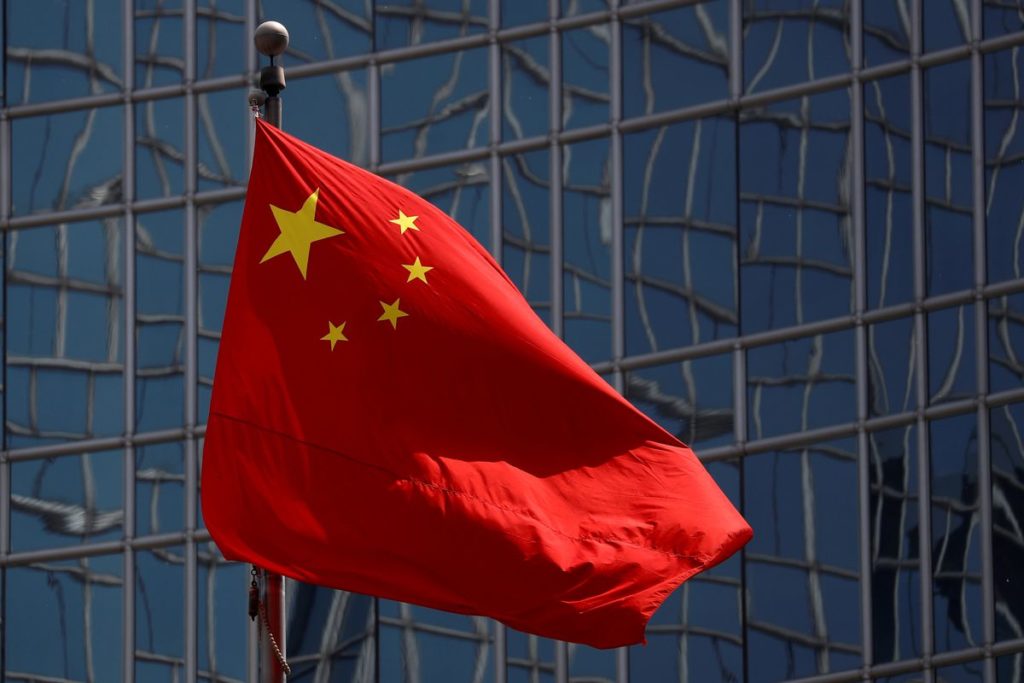
China passes new personal data privacy law, to take effect Nov. 1

SHANGHAI, Aug 20 (Reuters) - China's National People's Congress on Friday passed a law designed to protect online user data privacy and will implement the policy from Nov. 1, according to state media outlet Xinhua.

The law's passage completes another pillar in the country's efforts to regulate cyberspace and is expected to add more compliance requirements for companies in the country.

China has instructed its tech giants to ensure better secure storage of user data, amid public complaints about mismanagement and misuse which have resulted in user privacy violations.

The law states that handling of personal information must have clear and reasonable purpose and shall be limited to the "minimum scope necessary to achieve the goals of handling" data.

It also lays out conditions for which companies can collect personal data, including obtaining an individual's consent, as well as laying out guidelines for ensuring data protection when data is transferred outside the country.

The law further calls for handlers of personal information to designate an individual in charge of personal information protection, and for handlers to conduct periodic audits to ensure compliance with the law.

The second draft of the Personal Information Protection law was released publicly in late April. ...

On Tuesday, China's State Administration for Market Regulation (SAMR) passed a sweeping set of rules aimed at improving fair competition, banning practices such as fake online reviews.

In January, the government-backed China Consumers Association issued a statement criticizing tech companies for "bullying" consumers into making purchases and promotions. ...

See the full story here: https://www.reuters.com/world/china/china-passes-new-personal-data-privacy-law-take-effect-nov-1-2021-08-20/