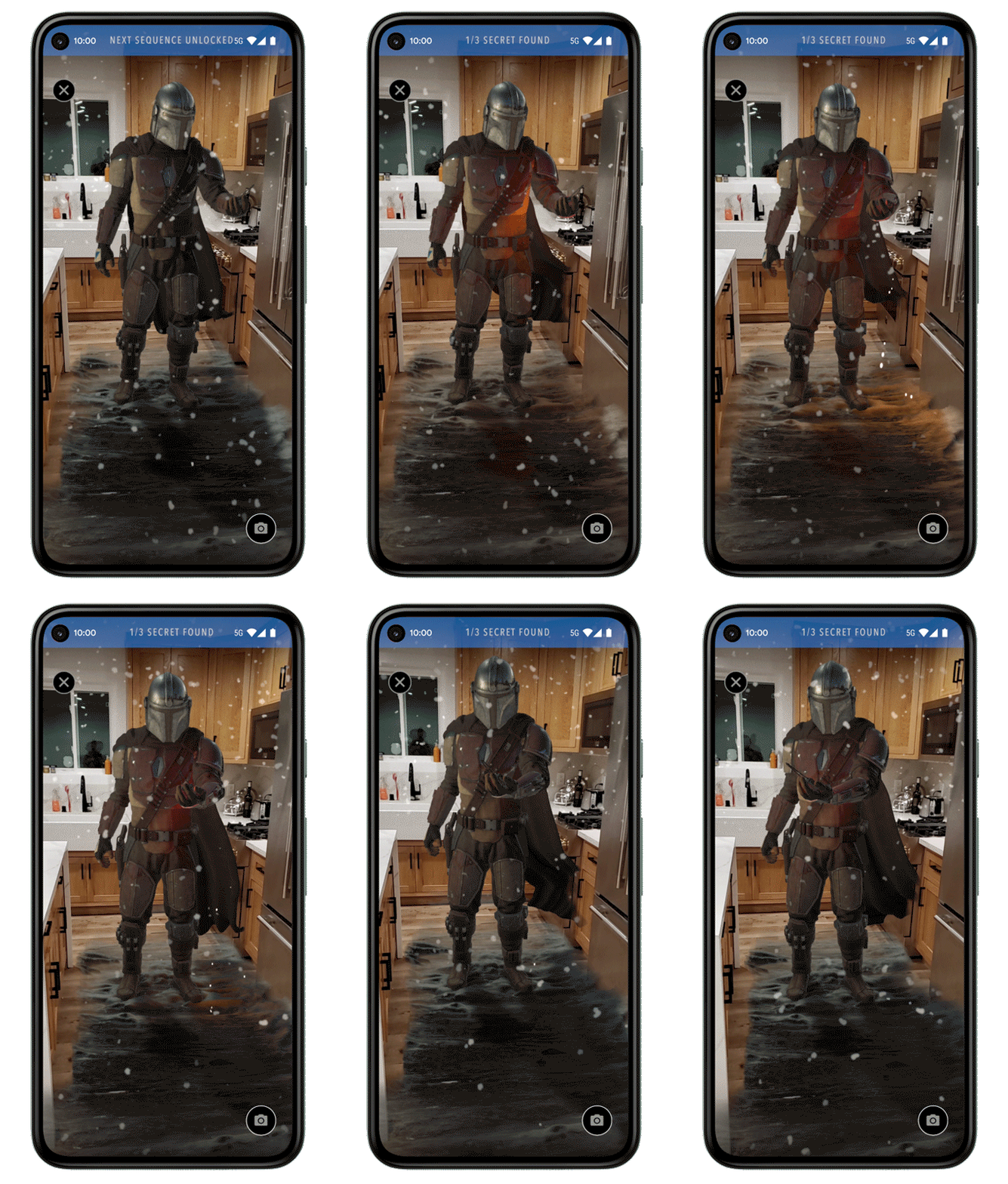
Earlier today, Google and Lucasfilm launched a brand new AR experience that “puts you in the shoes of a bounty hunter following the trail of Mando himself, Din Djarin and the Child.” Users can interact with life-sized heroes featured throughout the show, explore the world of The Mandalorian, unlock additional effects through various interactions, and record 3D scenes to share with your fellow nerf herders.
Powered by ARCore, Google’s own developer platform for mobile AR experiences, the app features support for DepthAI, allowing for more realistic AR visuals that blend seamlessly with real-world environments.
The Mandalorian AR Experience is available free on 5G Google Pixel and select 5G Android smartphones via the Google Play Store. A full list of supported devices can be found here.
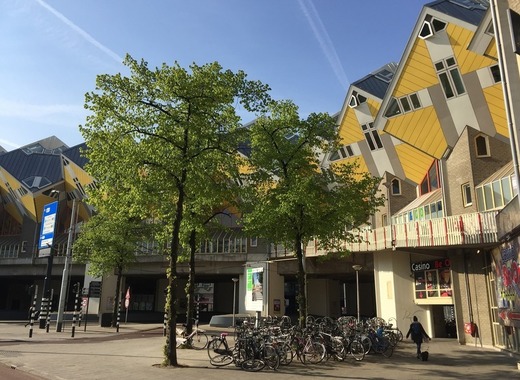
Twenty of the most special trees in Rotterdam and their stories were brought together for a different tourist path on Tuesday 17 November. The Dutch municipality has created a 4-kilometre-long walking route along the trees in the city centre and reinforced the experience with augmented reality. They are now accessible to anyone owning a smartphone.
Start a conversation with Rotterdam’s most extraordinary trees
Just like buildings and monuments, trees can be the silent witnesses of important historical events, of our everyday moments filled with joy or sadness. The Dutch city of Rotterdam decided to pay the needed attention to some of its most special trees with an innovative service available to both locals and tourists alike.
A new trail named Bomenroute (Tree Route), 4 kilometres long, encompassing 21 trees will allow passers-by to communicate with trees in vivid colours.
Unlike virtual and augmented reality experiences that require you to download apps or have special hardware, this technology lives right in your mobile internet browser.
...
As with static websites, there are a host of different tracking and analytics available when using WebAR. Not only can you track traditional metrics like engagements and time on page, you can also get more granular insights like how long a user interacted with a particular product or even — if a user “tried something on” through your experience — their clothing size for future reference.
A word of caution: Don’t be a data snoop! Data protection is incredibly important, and with advancements in technologies like eye tracking, facial recognition and image targeting, the power to collect personal information is only growing. In fact, these technologies are sometimes required to build virtual and augmented reality experiences. It is more important now than ever that we as digital content creators treat this power with respect.
...
The development process of creating WebAR experiences can be broken into six simple steps:
Planning and Creative: Always begin with a well-rounded plan that clearly states your target audience, campaign goals and creative vision. This will help inform your decisions later on.
Platform Selection: There are two industry-leading platforms for building WebAR experiences; 8th Wall and Zappar. These are software packages that make developers’ lives easier by giving them access to the base technologies needed to build amazing WebAR experiences — think tools like surface tracking and image recognition. Each has their own benefits and drawbacks, but leveraging one of these two platforms will save you valuable time and money compared to developing your experiences from scratch.
Asset Creation: Now it’s time to start building your 3D digital assets. A good WebAR experience is all about balancing your creative vision with available bandwidth speeds. Highly detailed models or super complex animations can cause web-based experiences to run slowly. For an optimal experience, focus on creating low-poly art assets and engaging yet simple animations.
Assembly: With your plan in hand, platform selected and assets ready to go, you can begin developing your new WebAR experience. This work will be done through the platform you selected above. Like most digital development, this process is fairly technical and best handled by a developer or team of developers with experience building in the platform.
Testing: Testing is an important step when building any digital experience — but especially with WebAR, as there are so many variables to consider. We recommend testing across all major mobile platforms and web browsers. If possible, we also suggest trying the experience on different network connections (Wi-Fi, 4G, 3G, etc.)
Distribution: Both 8th Wall and Zappar offer hosting services and custom URL integrations if you prefer to keep things simple. You can also export the final experience and host it on your own servers Either way, you can now share your new WebAR experience by simply sharing the host URL via QR or any other means.
WHERE IS THE TECH TODAY?
Companies like Google, Apple and Mozilla have been working for years behind the scenes to help make WebAR a reality. Serious research and development efforts on WebAR began in the 2000s but started to really ramp up in the last three to five years. These efforts have paid off, and this technology is now ready for prime time.
WebAR is supported by all major mobile phone manufacturers — such as Samsung, Apple, HTC, Xiaomi, Huawei and more — and across all major web browsers, including Safari, Chrome and Firefox. As consumers and creators, this means we now have access to more three billion sets of eyeballs when we publish a WebAR experience. It’s simply up to you to reach them.
A QUICK NOTE ON 5G TECHNOLOGY
5G is promising mobile internet speeds five to 10 times faster than the fastest 4G connection. What does this mean for WebAR? Imagine watching an NFL football game play out in 3D right on your dining room table. Or perhaps having a phone call with your interior designer while being able to see new paint colors and furniture options appear in your living room in real time. 5G technology is going to be a game changer for WebAR and other interactive technologies like WebVR and 360-degree live streaming. The experiences we’re seeing today (as powerful as they are!) are just the beginning.
Empathy is the secret weapon of human analysts, and because human goals—like saving for retirement, or investing in a climate-aware manner—are the raison d’etre for investing, we will always need real people in the loop.
While QED’s goal is to develop an AGI, it is doing so in the context of having an empathic human working alongside a machine agent to produce better client outcomes.
Global experts who took part in an international webinar on Artificial Intelligence (AI)and Journalism pointed out that news organisations have started to adopt AI to change the way how news is generated, produced, published and shared.
The event was organised by the Department of Media Studies, Christ Nagar College Trivandrum in association with AI Journalism for Research and Forecasting, UAE.
The expert speakers included Prof Charlie Beckett, London School of Economics, Prof. Nicholas Diakopoulos from Northwestern University, Guilherme Canela, Chief of Freedom of Expression and Safety of Journalists at UNESCO Paris and Francesco Marconi, expert in Computational journalism, USA, among others.
"News organisations have started to adopt AI to change the way how news is generated, produced, published and shared. By using advanced algorithms and machine learning tools, journalists can handle large data to provide greater insights and solutions. The conventional model of journalism is getting disrupted and the changes with AI and Machine Learning is set have profound impact in media organisations," said Marconi.
SOMPO will be employing Binah.ai's technology into use within the leisure and entertainment industries in Japan by motoring the health of workers amid the pandemic, hoping to filter entrances into the workplace, malls and even theme parks.
SOMPO developed an application using Binah.ai's technology named Health Checker, which allows smartphone users to check vital signs using photographs taken of a subject by the phone.
The company’s solution monitors an individual’s heart rate within seven seconds, oxygen saturation within 10 seconds, respiration rate within 30 seconds, and heart rate variability within 45 seconds. Within 90 seconds, the app can also assess mental stress levels.The technology, as explained by the company, relies on the simple and long-established optical technique of photoplethysmography, often used in pulse oximeters or “finger clips” to measure blood flow. Rather than shining a light beam into body tissue, the company’s technology analyzes the reflection of light that returns to the camera from the cheeks.
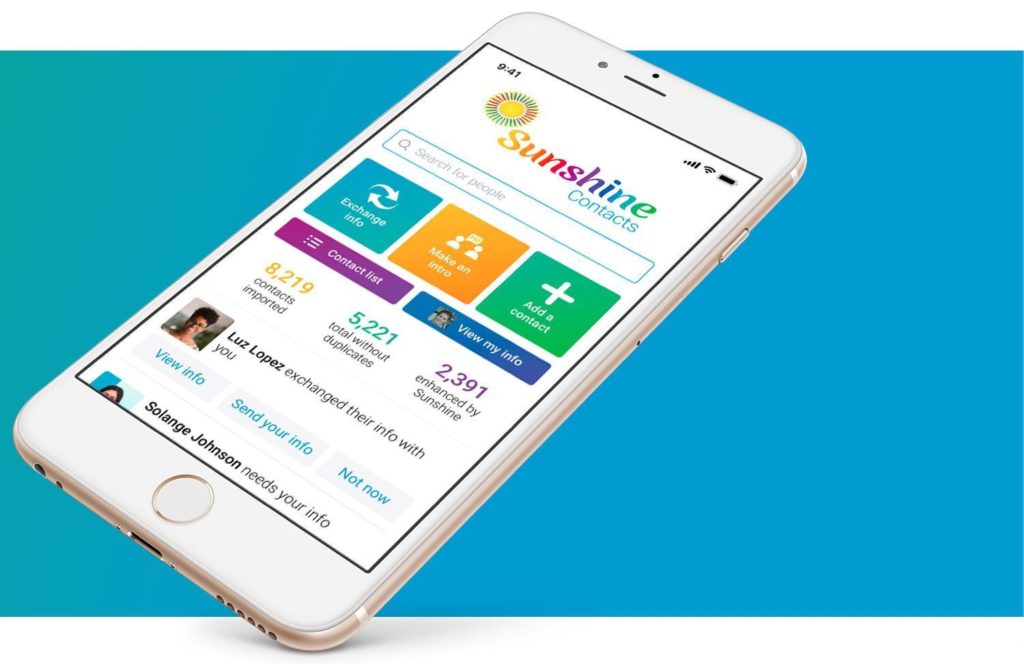
Since leaving Yahoo, Mayer cofounded Sunshine with the goal of creating “advanced technology to make mundane tasks effortless, free up your time, and make it easier to be thoughtful.”
The company’s Sunshine Contacts is a perfect example, using artificial intelligence (AI) to understand the relationships between people. This helps the app organize communication, events and more. The app also uses AI to pull together the various bits of a contact’s information into one location, making it easier to keep the information organized and up-to-date.
The app is available via invitation for the time being. As of yet, there has been no announcement regarding general availability.
The 60-metre-tall wheel has 42 gondolas, each accommodating up to four people amid the ongoing ban on public gatherings. Tickets cost HK$20 for adults and HK$10 for children aged three to 11 and senior citizens.
Users can download it for free to see the city from two time periods – between 1890 and 1920, and from 1960 to 1980 – during 20-minute ride
The world’s first-ever augmented reality experience on a moving platform took two years to develop and was guided by city historians Ko Tim-keung and Jason Wordie
In that virtual home, the user practices observing, asking questions of each family member, and then interpreting their behavior. At the end of the experience, the user makes a critical decision: Is the home safe enough for the child? Or should the child be removed from her family? This individual experience is followed by a seminar where users work together to unpack their experiences – a precursor to transferring what they learned to their day-to-day activities.