Facebook’s Augmented Reality hearing aids can focus on sounds you’re ‘looking at’
Research lead for Facebook’s Hearing Science lab told Digital Trends, ”Many people with hearing loss don’t use hearing aids — in part — because they don’t work well in everyday situations like a noisy restaurant, a conversation involving multiple people at a loud party, or in a moving car.”

The team is exploring how they can use beamforming technology, deep learning, noise cancellation, and AR to fix this problem.
The reason: The team is using AR glasses to know which sounds you want to focus on. The technology will then amplify that sound while drowning out the rest.
It works firstly on the AR side of things. The technology can map out the objects – or in this case a person you’re talking to. Once it understands what it needs to focus on, the rest of the system comes into play by picking up only sounds coming from the ‘object’ and amplifying it while drowning out noises from objects, not in the field of focus.
The team also said that this technology could also work with phone calls, where the person on the other end will only hear your voice and the rest of the ambient sounds will be cancelled out.
See the full story here: https://sea.mashable.com/tech/13049/facebooks-augmented-reality-hearing-aids-can-focus-on-sounds-youre-looking-at
Alibaba’s Secret Three-Year Experiment to Remake the Factory
After helping more than a million brick-and-mortar Chinese retailers modernize their operations, Alibaba Group Holding Ltd. has now set its sights on a new target: the country’s outdated factories.China’s largest corporation unveiled in September its first smart factory, a secret experiment that Alibaba’s been conducting for three years on the outskirts of its hometown of Hangzhou. The three-story facility known as Xunxi — translated literally as “fast rhino” — is the company’s attempt at leveraging its consumer data and technologies to help the multi-trillion-dollar manufacturing arena improving efficiency and meet rising consumer expectations.
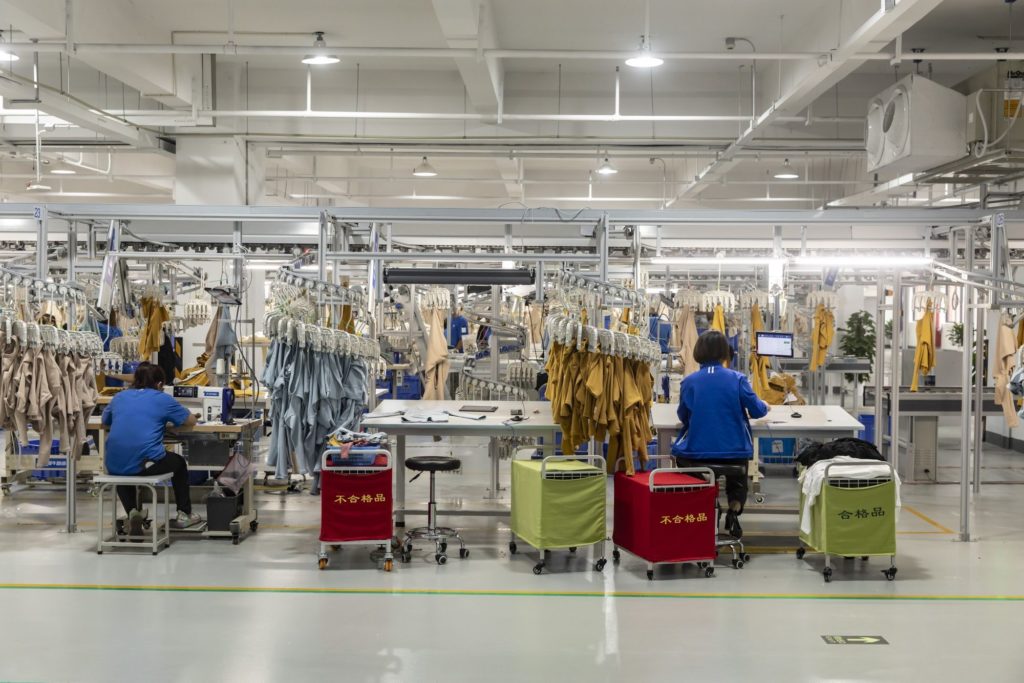
Alibaba has said that one in four clothes purchases in the country was shipped via its e-commerce platforms, granting it access to an ocean of data that it’s now deploying to assist domestic garment makers in design and production planning.It’s also centralizing the material procurement process to help reduce costs. Artificial intelligence, robotic arms as well as many other in-house technologies have also been put into use at the Xunxi factory prototype.
See the full story here: https://sportsgrindentertainment.com/alibabas-secret-three-year-experiment-to-remake-the-factory/https://sportsgrindentertainment.com/alibabas-secret-three-year-experiment-to-remake-the-factory/
Canada crawling toward AI regulatory regime, but experts say reform is urgent
On Thursday, privacy watchdogs revealed that five million images of shoppers' faces were collected without their consent at a dozen of Canada's most popular malls.

Real estate company Cadillac Fairview embedded cameras equipped with facial-recognition technology, which draws on machine-learning algorithms, in digital information kiosks to discern customers' ages and genders, according to an investigation by the federal, Alberta and B.C. privacy commissioners.
Canada needs to roll out concrete rules that balance privacy and innovation, said Carolina Bessega, co-founder and chief scientific officer of Montreal startup Stradigi AI.
Public trust in artificial intelligence becomes increasingly crucial as machine-learning companies move from the conceptual to the commercial stage, she said. "And the best way to trust AI is to have clear regulations."
Innovation Minister Navdeep Bains tells The Canadian Press that an update to 20-year-old privacy legislation is due "in the coming weeks" to address gaps in personal-data protection, but refused to nail down a timeline.
Bains pointed to the European Union's General Data Protection Regulation from 2018 as a model that hands citizens more control over their privacy and digital information through "clear enforcement mechanisms," he said.
See the full story here: https://www.tricitynews.com/canada-crawling-toward-ai-regulatory-regime-but-experts-say-reform-is-urgent-1.24230956
The Next Generation Of Artificial Intelligence (Part 2)
For the first part of this article series, see here.
The field of artificial intelligence moves fast. It has only been 8 years since the modern era of deep learning began at the 2012 ImageNet competition. Progress in the field since then has been breathtaking and relentless.
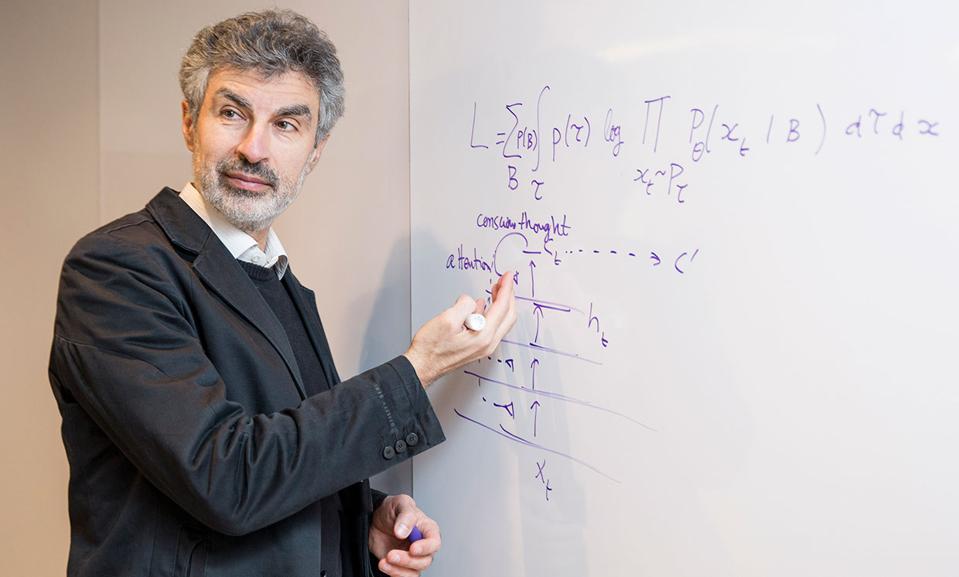
My previous column covered three emerging areas within AI that are poised to redefine the field—and society—in the years ahead. This article will cover three more.
4. Neural Network Compression
5. Generative AI
6. “System 2” Reasoning
See the full story here: https://www.forbes.com/sites/robtoews/2020/10/29/the-next-generation-of-artificial-intelligence-part-2/?sh=1dec000b7a30
Getting the story straight: Blockchain to curb fake news
Rather than responding to existing fake news, this solution prevents imposters, a type of fake news story that appears to be from a legitimate news agency.

The ANSAcheck project started in 2019. Giuseppe Perrone, the head of EY’s blockchain initiatives in the Mediterranean, served as EY’s leader. The ANSAcheck solution works by assigning a unique hash ID to every ANSA-created news story and posting the hash to Ethereum, the world’s largest public blockchain platform. If even one letter in the story is changed, the system will detect that it is not an identical copy to the original story. Story IDs are batched and posted multiple times each day to Ethereum. If ANSA updates the story, another entry is recorded on the blockchain and linked back to the original entry to form a chain of provenance.
When users click on the ANSAcheck sticker, the console viewer displays the transaction details on the blockchain.
More recently, EY was batching roughly 500–600 new stories every six hours, so the cost per transaction dropped to around $0.006 per story. Ethereum costs drove the decision to reduce the time of notarization.
Mary Lacity is a Walton professor of information systems and the director of the Blockchain Center of Excellence at the University of Arkansas.
See the full story here: https://cointelegraph.com/news/getting-the-story-straight-blockchain-to-curb-fake-news
See the background story on Ansa from April, 2020, "ANSA leveraging blockchain technology to help readers check source of news," here: https://www.ansa.it/english/news/science_tecnology/2020/04/06/ansa-using-blockchain-to-help-readers_af820b4f-0947-439b-843e-52e114f53318.html