We’re closer to holographic meetings than you think
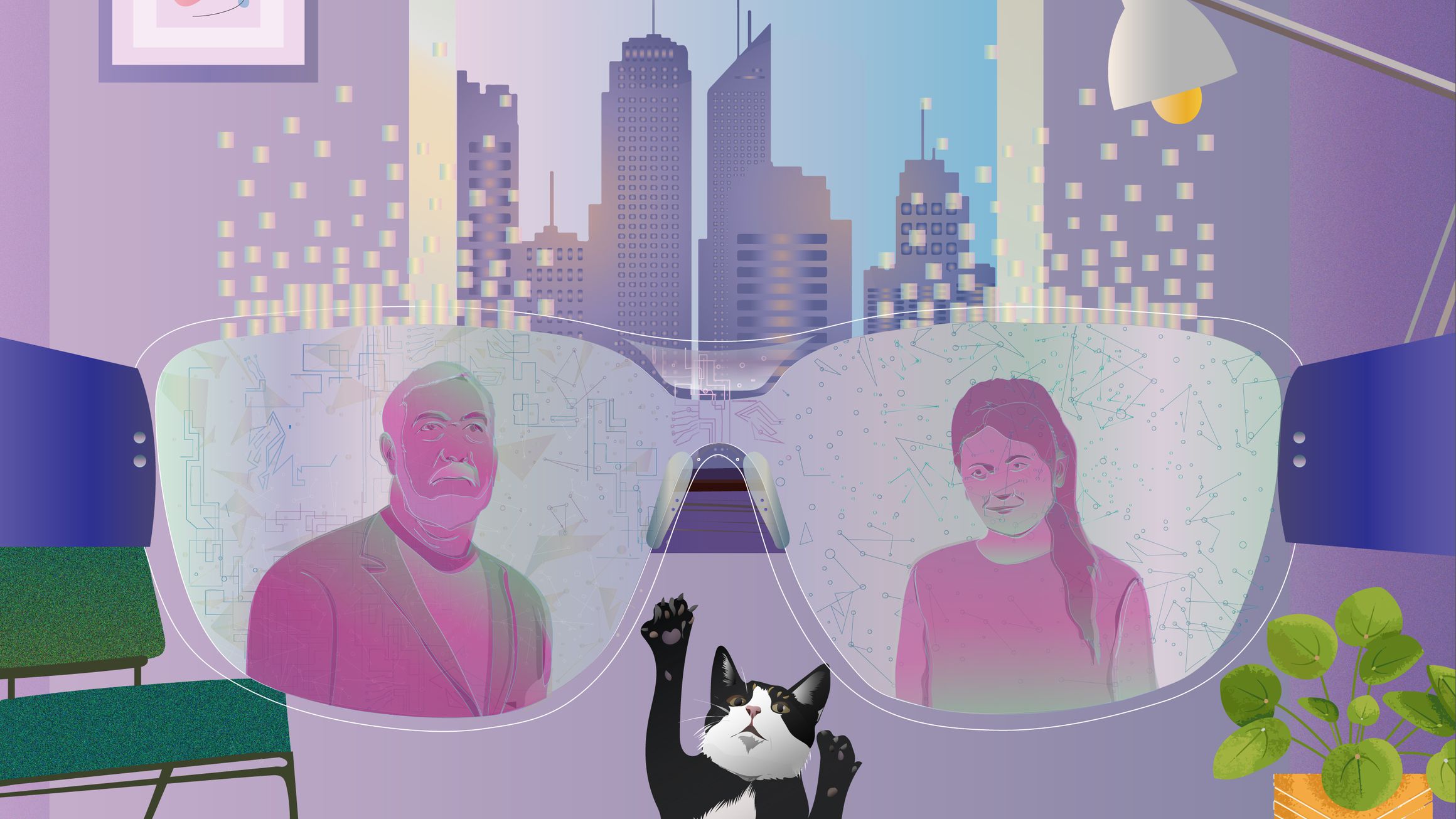 Still, experiencing Spatial on a $400 Oculus Quest headset brought me slightly closer to the concept of hanging out with holographic friends while wearing smart glasses. What’s still missing, aside from the actual glasses, is fast-enough internet connectivity to make this kind of tech work. 5G networks would change that.
Managing AI risks and reducing methane from cows
(USC = University of the Sunshine Coast, Queensland, Australia)
Professor Paul Salmon was awarded $460,522 over three years to lead the delivery of a framework for the management of safe artificial intelligence (AI) systems and Associate Professor Scott Cummins was awarded $425,766 to determine the key genes in seaweed that help reduce methane emissions by livestock.
Professor Salmon said that while AI offered far-reaching benefits, it also still posed a threat to society if not properly managed.
“It is widely acknowledged that a failure to implement appropriate controls for the next generation of artificial intelligence (AI) could have catastrophic consequences including, in the worst case, the extinction of the human race,” he said.
“Our research aims to forecast the risks associated with Artificial General Intelligence systems and identify the controls require to ensure that risks and existential threats are minimised.
See the full story here: https://www.usc.edu.au/about/usc-news/news-archive/2019/december/managing-ai-risks-and-reducing-methane-from-cows
Nvidia’s acquisition of Arm strengthens its ecosystem, brings economies of scale to the cloud, expansion to the edge
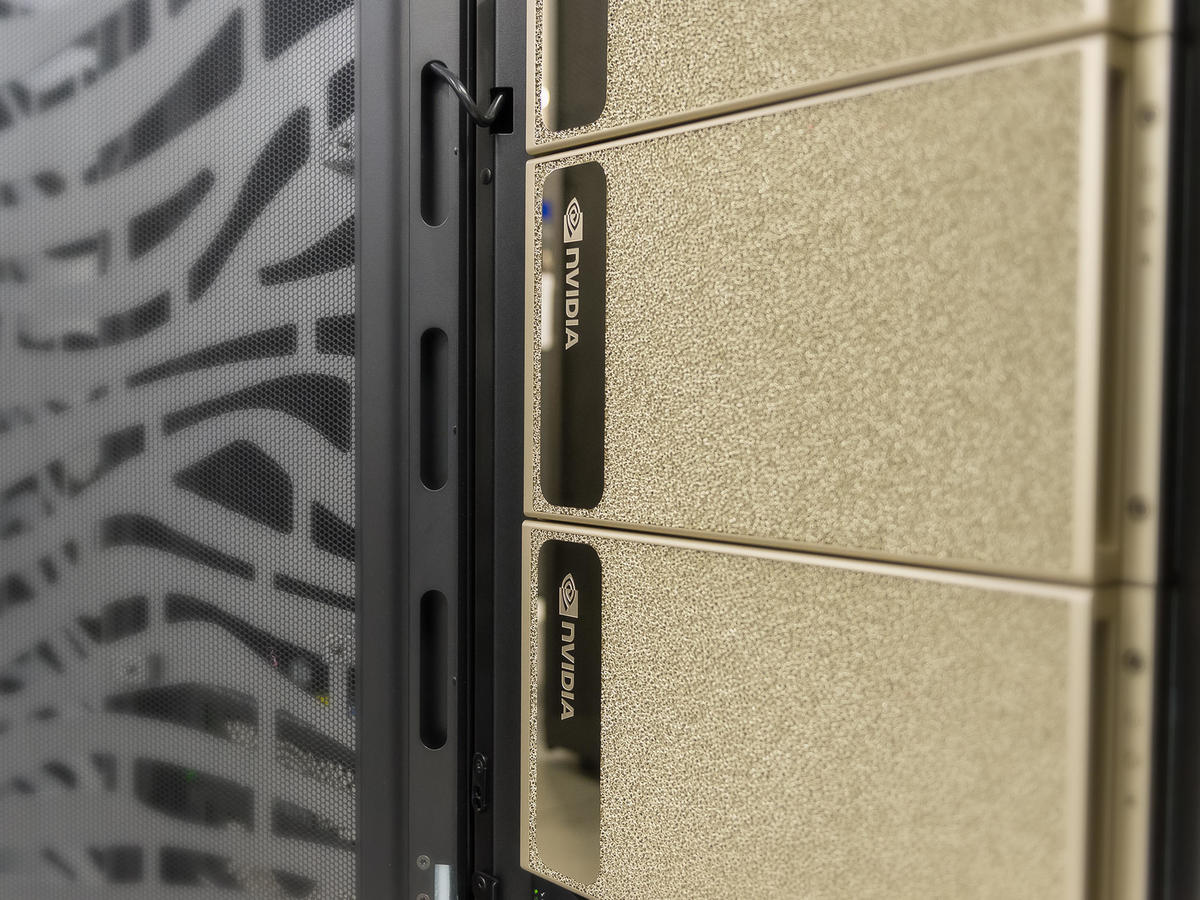 Nvidia is after a double bottom line in the AI chip market: Better performance and better economics. Arm's acquisition helps with the economies of scale in the data center and expands Nvidia's footprint to the edge.
This is the second high-profile acquisition for Nvidia in 2020, following the acquisition of Mellanox in April. The two are complementary, as they are both fundamental for Nvidia's plan to acquire and maintain a leading role in AI workloads in the data center and beyond.
See the full story here: https://www.zdnet.com/article/nvidias-acquisition-of-arm-strengthens-its-ecosystem-brings-economy-of-scale-to-the-cloud-expansion-to-the-edge/
Renowned artist Jenny Holzer to debut project at UChicago using augmented reality
 YOU BE MY ALLY will feature 29 excerpts from historically significant readings from the Core curriculum, selected in collaboration with UChicago students and faculty, including works by distinguished writers W. E. B. Du Bois, Helen Keller, Audre Lorde, Toni Morrison, Friedrich Nietzsche, Plato, Mary Shelley and Virginia Woolf.
Text selections from the Core Curriculum also will be featured on LED trucks driving throughout the UChicago campus, South Side and downtown communities on Oct. 5-6, bringing the experience to a diverse public audience in an unexpected manner.
YOU BE MY ALLY operates at the edge of arts and technology, responding to the challenges of participation in the arts during a pandemic. It enables a broad audience to engage these historic texts, and to consider the impact of public speech in a democracy in the weeks and days leading up to the 2020 election.
See the full story here: https://news.uchicago.edu/story/renowned-artist-jenny-holzer-debut-project-uchicago-using-augmented-reality
Electronic skin reacts to pain like a human
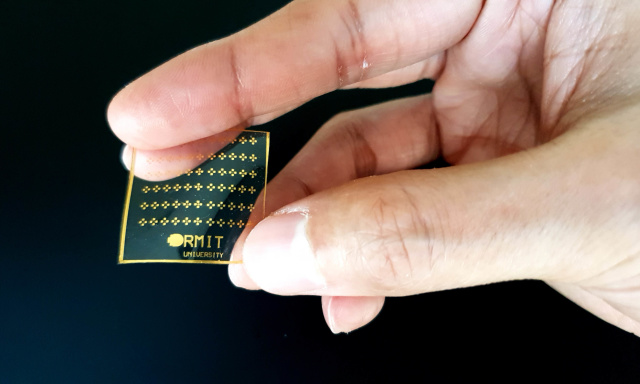 Electronic skins can already react to touch, but they’re not much good at reacting to the jabs and burns that cause pain. That’s a problem for prosthetics and robots that are supposed to have human-like responses. They may be more sensitive in the future, though. RMIT University researchers have developed an artificial skin (via SciTechDaily) that reacts to pain much like humans do. It would provide “near-instant” feedback if pressure and temperatures hit levels that would make someone yelp.
The wearable prototype is made of stretchable, extremely thin electronics (oxides and biocompatible silicone) with pressure sensing, temperature-reactive coatings and brainlike memory cells. It’s subtle enough to communicate the difference between gently poking yourself with a pin versus a painful jab, researcher Md Ataur Rahman said. The design mimics the neurons, neural pathways and receptors that guide human senses.
Robots could be less intimidating as they’d exhibit more human-like fragility. It could also be useful for non-invasive skin grafts where conventional methods aren’t effective.
See the full story here: https://www.engadget.com/electronic-skin-reacts-to-pain-like-humans-204141247.html
Establishing privacy controls for virtual reality and immersive technology
 Privacy laws, like the California Consumer Privacy Act and EU General Data Protection Regulation, may establish baseline privacy compliance expectations for companies building and using immersive technologies. In a thoughtful piece for Privacy Perspectives four years ago, Intel called for data protection rules to extend to virtual places and data objects, but what a suite of meaningful privacy rules looks like in XR is unclear.
I would recommend the following three actions.
First, improve transparency and begin making XR-specific data disclosures.
AR point clouds and other sensor-based mapping functionality are necessary to sell the illusion of virtual reality, but companies need to recognize that XR users will react to mapping functionality in much the same way that they have become apprehensive about location tracking.
Similarly, with growing regulatory interest in facial recognition and biometrics, XR companies should be much more open about the types of biometric data that are either collected or derived from these technologies.
Second, embrace transparency reporting and technical solutions to restrain data sharing. Facebook’s recent announcement that its Oculus headsets would be locally recording users’ experience in its Horizon VR app on a rolling basis highlights the surveillance potential of XR. Researchers at the University of Washington have highlighted how XR presents another tension point for the Fourth Amendment’s third-party doctrine, and it is not an exaggeration to say that metaverse enthusiasts are concerned immersive technology opens the door to a “total surveillance state.”
Third, shaping a new reality requires a commitment to diversity and inclusion.
Women often choose non-gendered avatars like robots to disguise themselves and avoid harassment.
...what is to stop digital makeup from becoming an individual’s permanent reality? These types of augmentations or filters may have spillover effects on users’ physical bodies and sense of self — "Snapchat dysmorphia" is a new term to describe the trend of people getting plastic surgery to look like the versions of themselves that appear in social media filters.
See the full story here: https://iapp.org/news/a/establishing-privacy-controls-for-virtual-reality-and-immersive-technology/
Ancient Greek History Revived Through Pioneering Virtual Reality Project
 “In the first scenario, the viewer will be able to wander around the ancient Cycladean city of Santorini, and learn about all the technological innovations then in use at the site of Akrotiri”, Kontonikolaou adds.
“This was the oldest Greek, and possibly one of the first world civilizations to use structural elements of modern-day societies which were very advanced for that era, such as a sewage system and other innovations. Thanks to the motion simulator platform, users will be able to even feel the earthquake caused by the eruption of the volcano in 1613 B.C. that flattened out the city”.
See the full story here: https://greece.greekreporter.com/2020/09/09/ancient-greek-history-revived-through-pioneering-virtual-reality-project/