Virtual reality conference to open in east China
PhilNote: it is interesting that they track # of deals as a show success metric.
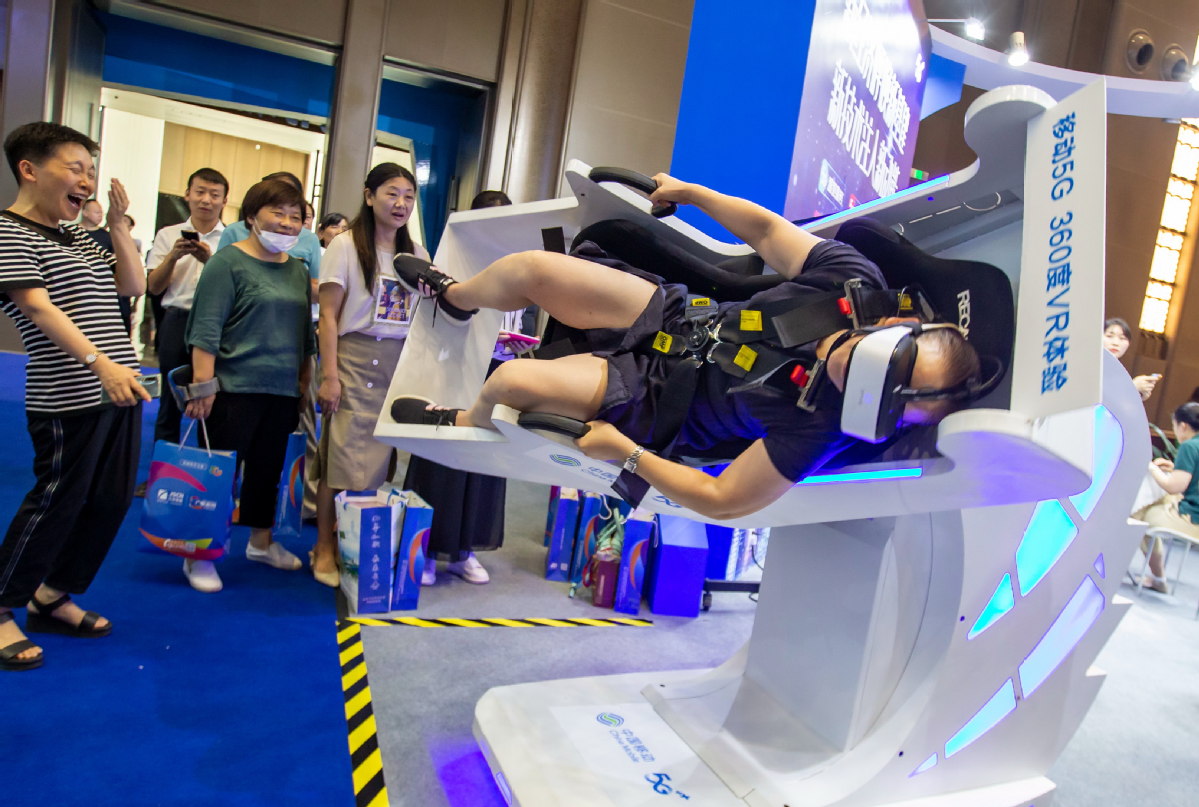 The two-day event will be held online and offline this year, with participants exploring issues related to XR (extended reality), cloud VR, industrial ecology and entertainment games.
Co-hosted by the Ministry of Industry and Information Technology (MIIT) and the provincial government of Jiangxi, the conference is held annually in Nanchang. During the 2019 conference, a total of 104 VR industry agreements and projects were inked.
See the full story here: http://www.xinhuanet.com/english/2020-08/23/c_139311829.htm
With virtual reality, caregivers can become patients
In 2014, she returned to school to earn a Master of Science degree in biomedical visualization at the University of Illinois at Chicago. Her thesis question: If we could step into the world of someone who is aging, could that help health care providers be more effective?
The company’s software allows users to peer into the body and mind of someone confronted with aging issues: cognitive decline such as Alzheimer’s, age-related vision and hearing loss, or neurodegenerative diseases such as Parkinson’s and dementia.
The goal is to give users, including medical students, nurses, certified nursing assistants, assisted-living staff members and family caregivers, a better understanding of the challenges facing aging adults with these diseases or impairments through a first-person patient perspective.
This year, the company received seed funding of $3.2 million from several venture capital funds, including the WXR Fund, which invests in women entrepreneurs and in the next wave of computing.
See the full story here: https://www.chicagotribune.com/consumer-reviews/sns-nyt-virtual-reality-caregivers-older-patients-20200820-k6n3d4vl5vedjdrdzibj7zzelu-story.html
A Spanish hospital will lead a European study that will create the largest database on prostate cancer
 The objective of the new plan is to promote the development of new tools to improve the diagnosis, characterization and monitoring of prostate cancer based on Artificial Intelligence (AI) applied to magnetic resonance imaging.
To obtain these data, they explain from the Valencian hospital center, the Diagnostic Image Service will use magnetic resonance images of the prostate obtained in the daily routine of different radiology services, « But with the particularity », details Roberto Sanz, biomedical engineer at the Quirónsalud Valencia Hospital, « of having a large unified database at an international level, made up of contributions from leading European hospitals. »
In addition to the images, all the clinical information on diagnosis, treatment and follow-up of patients« In this way, the quality of all the data and the validity of the results will be ensured », concludes the engineer from Quirónsalud Valencia.
See the full story here: https://www.explica.co/a-spanish-hospital-will-lead-a-european-study-that-will-create-the-largest-database-on-prostate-cancer/
Aristotle and the chatbot: How ancient rules of logic could make artificial intelligence more human
Rather than just computing a response from a sequence of words, responses from the chatbot are derived from the relationships between billions of terms. Beliefs with low confidence can be sent back to the user (for example, a person asking a health chatbot about symptoms) as questions.
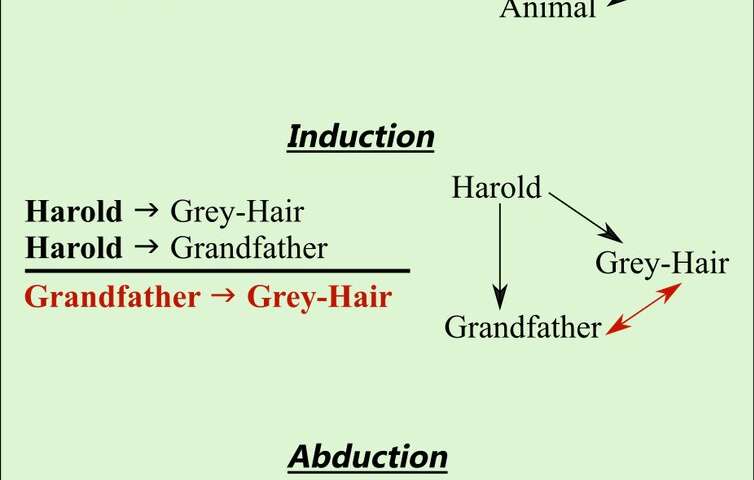 In the future we think this will allow for more engaging, deeper and natural interactions between humans and machine. The beliefs and "personality" of the chatbot will become tailored to the user.
Aristotle's 2,000-year-old logic has had a profound influence on Western civilisation. A revamp of his ancient works could very well shift us into a new frontier of human-computer interaction.
See the full story here: https://techxplore.com/news/2020-08-aristotle-chatbot-ancient-logic-artificial.html
Infinite Canvas documentary explores Today at Apple’s augmented reality collaboration
 Infinite Canvas is the debut film of award-winning photographer Ryan McGinley. McGinley traveled around the world in 2018 to talk with artists discovering augmented reality for the first time. Together with Today at Apple and the New Museum, the project became [AR]T, a series of interactive installations experienced through the lens of an iPhone at flagship Apple Stores across the world.
See the full story here: https://9to5mac.com/2020/08/19/today-at-apple-infinite-canvas-ar-documentary/
SIGGRAPH 2020 announces its immersive programming, including several Virtual Reality experiences
 The SIGGRAPH 2020 conference runs 17–28 August, and content will be available online and on-demand through 27 October. Immersive programming at this year’s conference is open to Ultimate and Enhanced pass holders. Registration is still open through September 11. A sneak peek of all gaming and interactive content from SIGGRAPH 2020 can be viewed on the event’s YouTube channel.
See the full story here: https://www.auganix.org/siggraph-2020-announces-its-immersive-programming-including-several-virtual-reality-experiences/
USC Partnering With Hollywood Studios to Test Limits of Virtual Production

The Entertainment Technology Center at USC has bestowed its 2020 Innovative Technology Award on the virtual-production-based project “The Ripple Effect” from writer/director Hannah Bang, Margo Sawaya and writer Sabina Vajrača, with Eric Weaver serving as the project’s executive director. The focus of this year’s Innovative Technology Award is on using technologies to minimize the amount of time and people on set to stay safe during the COVID-19 pandemic.
“The Ripple Effect” will use a game engine to minimize on set crew while also providing better controls for talent and staff, Weaver explained.
The project is being supported by Amazon Studios, Microsoft, Universal Pictures, WB Entertainment, Equinix and Seagate, as well as in-kind project support from Verizon/RYOT, Technicolor, Halon, ICVR, Lux Machina, Stargate Studios, 5th Kind, SilverDraft, ARRI, xR Stage and Xsens.
See the full story here: https://www-tvtechnology-com.cdn.ampproject.org/c/s/www.tvtechnology.com/amp/news/usc-partnering-with-hollywood-studios-to-test-limits-of-virtual-production
Cityzenith gets green light on $500 Million Orlando Sports & Entertainment District Digital Twin project
 SmartWorldPro2 Integrates all software and services used by anyone designing, constructing, and managing complex, large-scale building projects, properties, and real estate portfolios.
The OS+ED is planned opposite the Amway Center in downtown Orlando, where the Orlando Magic play basketball, and will include a 300-room hotel, 420,000 square feet of offices, 80,000 square feet of event space, more than 100,000 square feet of retail, and an open-air plaza.
It will be a fully interconnected Smart District, using state-of-the-art IoT, Digital Twin and AI Technologies to transform the four-block urban core, west of the I-4 Highway.
Phil Tinsley, CEO of the OS+ED Dev Corp, said: “The project is a highly programmed, high amenity development where residents, visitors and tenants experience Living-as-a-Service™ (LaaSTM) the first bundled entertainment, ticketing, hospitality, housing, transportation, food and beverage, wellness, and utilities platform of its kind in the US.
See the full story here: https://gisuser.com/2020/08/cityzenith-gets-green-light-on-500-million-orlando-sports-entertainment-district-digital-twin-project/
Hour One wants synthetic AI characters to be your digital avatars
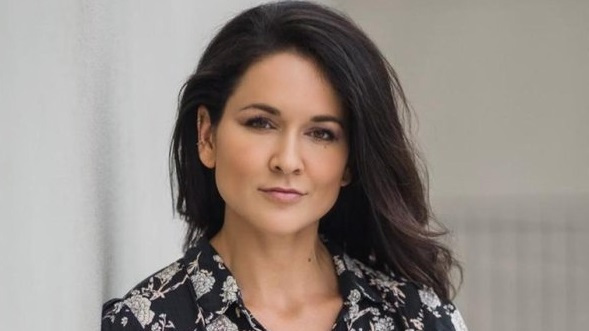 Hour One also started coming out of stealth at the same time with a plan to expand business-to-business human communication. The company showcased its “real or synthetic” likeness test at CES 2020, challenging people to distinguish between real and synthetic characters generated by its AI.
Hour One is using deep learning and generative adversarial neural networks to make its video characters. The company says it can do this in a highly scalable and cost-effective way. They’re supposed to look good, and the image on top of this story looks realistic.
Hour One is working with companies in the ecommerce, education, automotive, communication, and enterprise sectors, with expanded industry applications expected throughout 2020. The company has about 100 avatars today.
Oren Aharon and Lior Hakim created Hour One in 2019 with a mission of driving the economy of the digital workforce powered by synthetic characters of real-life people. They can use blockchain technology to verify the identity of a digital character and who owns it. If they’re altered or used for “deep fakes,” Hour One will be able to mark them as altered and notify people what has happened. The team has eight people.
The pitch is that the lower cost per character use means that companies will be able to engage more with their customers on every level, from digital receptionists to friendly salespeople.
See the full story here: https://venturebeat.com/2020/08/18/hour-one-wants-synthetic-ai-characters-to-be-your-digital-avatars/