Prada Brings Virtual Reality to Home Entertainment
 A range of contents, available at popular platforms, including YouTube VR and VEER, will guide users in an immersive journey through the Prada world with stops in several locations, including the brand’s Epicenter stores in Tokyo, New York an Los Angeles, as well the Fondazione Prada in Milan and Venice.
Using the virtual reality technology, users will also have the chance to take a closer look to the Prada spring 2020 collection and to discover the secrets of the Made to Measure project, as well as the artisanal making of the Prada men’s shows.
Among the several initiatives developed by the company, in May, the Prada Group signed a partnership with leading customer experience management platform Sprinklr aimed at reinforcing the digital culture within the company. Based in New York, Sprinklr is a global software service with more than 1,800 employees helping brands in 150-plus countries.
See the full story here: https://wwd.com/fashion-news/fashion-scoops/prada-brings-virtual-reality-to-home-entertainment-1203645366/
Wharton’s A.I. expert predicts the future of artificial intelligence in business

"Right before a take, marker has snapped and it's time for action.Shot on a real set at high iso, some noise, view at 100%.More filmmaking images:"
Kartik Hosanagar has taught a course on the business impact of emerging tech for 17 years at the University of Pennsylvania’s Wharton School of Business. Lately, interest in the portion of the class that deals with artificial intelligence has been so great that Hosanagar and Wharton last month announced a whole new initiative called Wharton AI for Business.
The project includes a new course on the business implications of A.I. as well as a guest lecture series,...
The most successful companies, he says, will be those that are able to take a big step back and think about how they can use A.I. to do something far more strategic. “The question is, what can you do uniquely with that technology that everyone else can’t do?”
He uses the example of streaming platforms such as Netflix or Amazon and entertainment companies such as Disney. They face a dilemma because social distancing has disrupted their content creation pipelines: With actors and film crews unable to work in close proximity, production on many shows has had to pause. ...
Hosnagar says studios could turn to advanced A.I., similar to the technology used to create deepfakes, to create visually realistic content without actors or film crews. “Those that are able to do this might be able to get more films and TV shows out in a period of scarcity,” he says. “But not every studio can change production the same way.”
Figuring out how best to use A.I. strategically requires a realistic understanding of what your company is actually capable of —not only whether you have the right tech chops, but what your customers want and how this fits with your overall brand and market position.
But Hosanagar thinks the pandemic may actually present an opportunity for startups too by removing some of the advantage of having vast amounts of historical data.
Like some other folks I’ve spoken to for this newsletter, Hosanagar thinks the pandemic will accelerate the use of unsupervised learning algorithms, which don’t need big, labelled data sets to train on. He also thinks there is a greater role for reinforcement learning, where A.I. software learns from simulated experience. And he thinks that A.I. systems in the future will have to incorporate a wider diversity of data to become more inclusive of disruptions such as those caused by Covid-19.
See the full story here: https://fortune.com/2020/06/02/whartons-a-i-expert-predicts-the-future-of-artificial-intelligence-in-business/
The Risks of Autonomous Weapons Systems for Crisis Stability and Conflict Escalation in Future US-Russia Confrontations
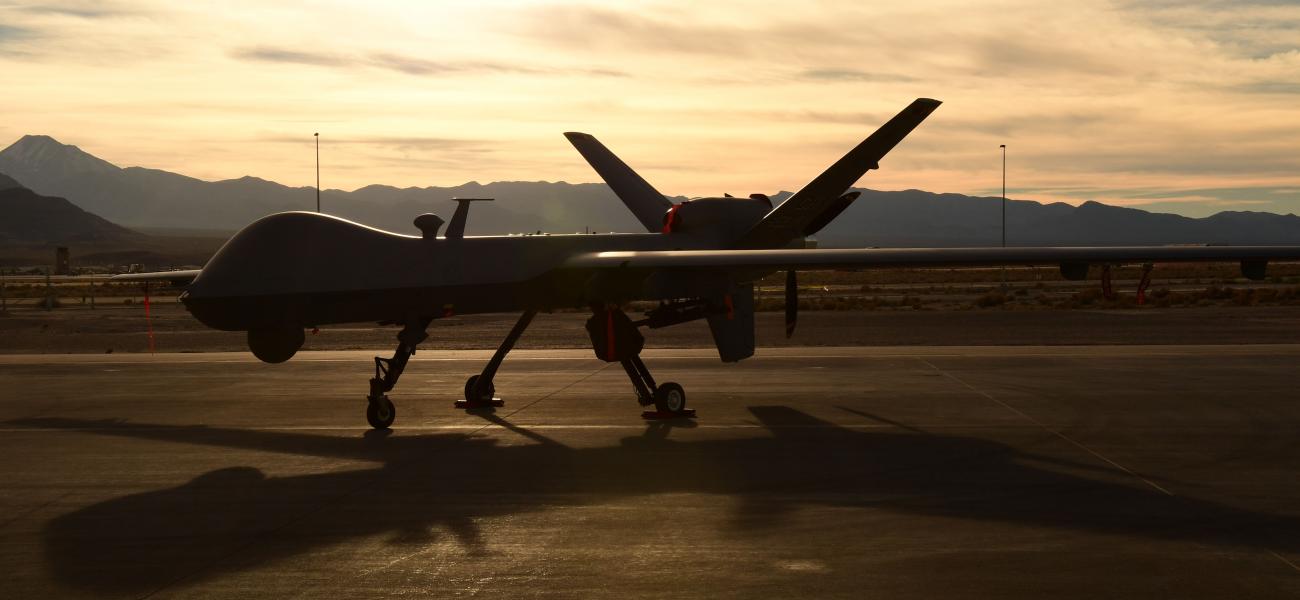
Motivations and General Aims Driving AWS Development Efforts
The Pentagon views AI and robotics, along with several other emerging technologies including hypersonics and directed-energy, as key to offsetting the anti-access and area-denial capabilities and concepts developed by China and Russia over the past two decades, thereby regaining and sustaining U.S. conventional deterrence overmatch. Meanwhile, China’s People’s Liberation Army anticipates that AI could fundamentally change the character of warfare even as it fears the emergence of a generational gap between its capabilities and that of the U.S. military. It thus seeks to develop AI and other “strategic front-line” technologies in future military competition with the United States.
Concluding Thoughts
Much attention has been paid to the operational advantages to be gained from the development of AWS. By contrast, much less attention has been paid to the risks AWS potentially raise. There are times in which the fundamental tensions between the search for military effectiveness and the requirements of ensuring that crises between major nuclear weapons states remain stable and escalation does not ensue are pronounced and too consequential to ignore. The development of AWS may well be increasing the likelihood that one day the United States and Russia could find themselves in just such a time. Now, while AWS are still in their early development stages, it is worth the time of policymakers to carefully consider whether the putative operational advantages from AWS are worth the potential risks of instability and escalation they may raise.
See the full story here: https://www.russiamatters.org/analysis/risks-autonomous-weapons-systems-crisis-stability-and-conflict-escalation-future-us-russia
TikTok has its Arab Spring moment as teen activism overtakes dance moves
Cassidy, who has amassed 1.6 million followers on TikTok since joining last November, is among the millions of users who are helping to turn the go-to destination for short-form viral music videos and pranks into a first stop for youth activism as protests against police brutality spread across America.
“The movement will be shaped to not only spread awareness about the injustice in society, but it will go further, teaching about the importance of voice and calls to action to stop the brutality,” Cassidy said.
The hashtag #blacklivesmatter has shot up TikTok’s trending list with 3 billion views as of Tuesday morning. TikTok superstars like Charli D’Amelio, whose 60 million followers is nearly twice the number of HBO’s U.S. subscribers, hit pause on showing off dance moves to discuss George Floyd, a black man in Minnesota whose death as a white police officer knelt on his neck has sparked a national debate on race and power.
TikTok’s emergence as a platform for political discourse for teens follow a tradition of media platforms evolving beyond their founders’ initial designs such as Twitter’s role in the Arab Spring protests in 2011 and the MTV cable TV network’s role galvanizing young voters in the early 1990s.
...
TikTok’s big moment also comes as its high-profile new hire, Walt Disney Co’s Kevin Mayer took over as CEO of the Chinese-owned company on Monday.
The new leadership comes at tensions flare between the United States and China over trade, technology and the COVID-19 pandemic. Because TikTok is owned by China-based ByteDance Technology Co and widely popular among American teens, U.S. regulators have questioned the safety of the personal data it handles and if its Chinese ownership poses a national security risk.
...
“The younger crowd does not want to be on Facebook and they are not on Facebook. They are on SnapChat and TikTok,” Scott said.
See the full story here: https://www.reuters.com/article/us-minneapolis-police-tiktok/tiktok-has-its-arab-spring-moment-as-teen-activism-overtakes-dance-moves-idUSKBN2392WX
Facebook to verify the identities of some user profiles behind viral posts
 Lost in the news of the George Floyd protests against police brutality and racism in the U.S., Facebook last week quietly noted it will now require Facebook profile pages with large followings in the U.S. to verify their identity. The company said that profiles with sizable audiences that also have a pattern of inauthentic behavior and whose posts rapidly go viral will be asked to verify their identity or the distribution of their posts will be impacted.
If the profile’s owner chooses not to verify their identity or the ID provided does not match the linked Facebook account, the distribution of the profile’s viral post will continue to be reduced so fewer people will see it, the company explains.
In addition, if the profile that’s posting is also a Facebook Page admin, they’ll need to complete the Page Publishing Authorization and won’t be able to post from their Page until the account is verified through Facebook’s systems.
See the full story here: https://techcrunch.com/2020/06/01/facebook-to-verify-the-identities-of-some-user-profiles-behind-viral-posts/
Artificial intelligence: The dark matter of computer vision
 There is a range of efforts aimed at solving the shallowness and brittleness of deep learning, the main AI algorithm used in computer vision today. But sometimes, finding the right solution is predicated on asking the right questions and formulating the problem in the right way. And at present, there’s a lot of confusion surrounding what really needs to be done to fix computer vision algorithms.
In a paper published last month, scientists at Massachusetts Institute of Technology and University of California, Los Angeles, argue that the key to making AI systems that can reason about visual data like humans is to address the “dark matter” of computer vision, the things that are not visible in pixels.
Titled, “Dark, Beyond Deep: A Paradigm Shift to Cognitive AI with Humanlike Common Sense,” the paper delves into five key elements that are missing from current approaches to computer vision. Adding these five components will enable us to move from “big data for small tasks” AI to “small data for big tasks,” the authors argue.
These dark components are functionality, intuitive physics, intent, causality, and utility (FPICU).
See the full story here: https://bdtechtalks.com/2020/06/01/artificial-intelligence-computer-vision-fpicu/
TOP 10 REINFORCEMENT LEARNING PAPERS FROM ICLR 2020
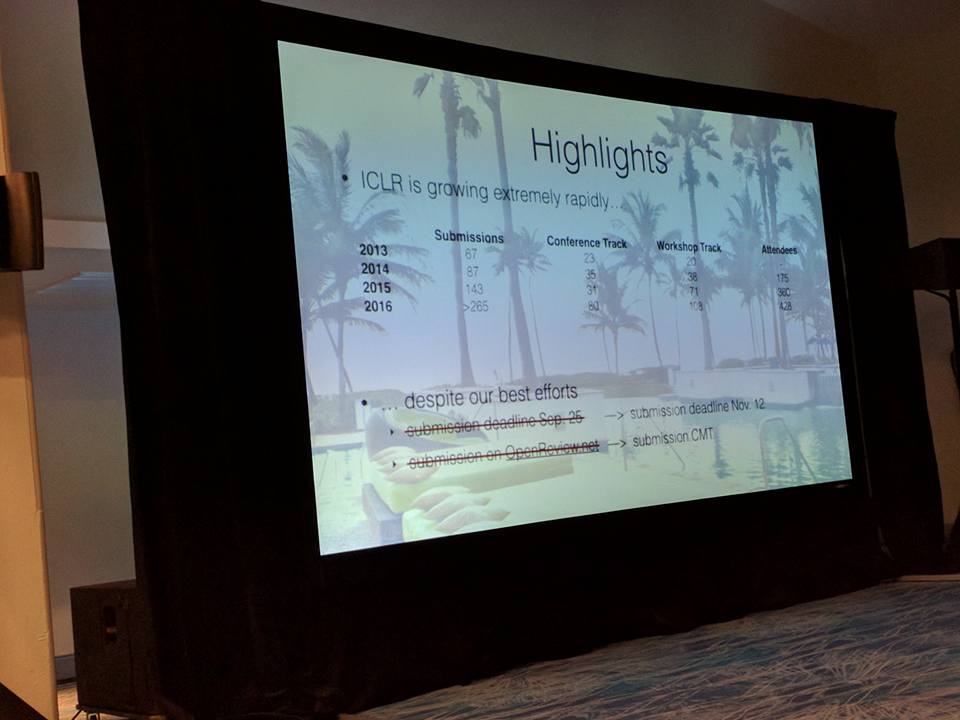 Reinforcement Learning has become the base approach in order to attain artificial general intelligence. The ICLR (International Conference on Learning Representations) is one of the major AI conferences that take place every year. With more than 600 interesting research papers, there are around 44 research papers in reinforcement learning that have been accepted in this year’s conference.
This article lists down the top 10 papers on reinforcement learning one must read from ICLR 2020.
See the full story with links to the full papers here: https://analyticsindiamag.com/top-10-reinforcement-learning-papers-from-iclr-2020/
Armed with disinfectant, South Korean robot tackle coronavirus spread
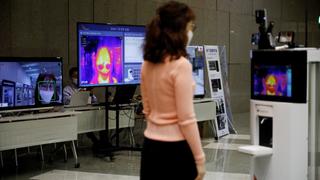 Seoul - A self-driving robot equipped with cameras and an LED screen greets visitors at the lobby in the headquarters of South Korea's largest mobile operator, checking their temperature, dispensing hand sanitiser and disinfecting the floor.
"Please take part in social distancing," the white robot firmly but politely reminds three SK Telecom employees who stand chatting nearby.
Having largely managed to contain an epidemic that infected more than 11,000 and killed 269, South Korea is transitioning from intensive social distancing towards what the government calls "distancing in daily life".
The robot, developed jointly by SK Telecom and Omron Electronics Korea, an industrial automation solution provider, transmits data to its server in real time, powered by the telecom company's fifth-generation (5G) technology.
It sets off an alarm if anyone's temperature is over 37.5 Celsius (99.5 Fahrenheit), while using artificial intelligence (AI) to detect gatherings and advise people to disperse. Those not wearing a mask will be reminded to put one on.
"The robot helps minimise people-to-people contact and reduce time that's taken for temperature checks at the entrance, and the AI technology raises accuracy," said Ra Kyhong-hwan, head of data business cooperation at SK Telecom and one of the developers.
Armed with ultraviolet lamps and two disinfectant sprayers, the robot can disinfect 99% of 33 square metres (355 square feet) of surface area in 10 minutes, the company said.
The developers added a function to hide faces mirrored in the screen to protect people's privacy, Ra said.
...
A customer can place an order through a QR code, and the robot, called Delitower, would pick up food from the restaurant or a delivery rider and bring it straight to the customer's location.
"We've been testing delivery robots since last year and are seeking to adopt them at the offices, hotels and residential complexes as more people find robots to be useful amid the coronavirus outbreak and social distancing," an official at Woowa Brothers told Reuters.
See the full story here: https://www.iol.co.za/technology/gadgets/armed-with-disinfectant-south-korean-robot-tackle-coronavirus-spread-48791375