The World’s Biggest Social Virtual Reality Gathering Is Happening Right Now
Virtual Market 4, or V-Ket 4 for short, is a Japanese expo that spans 36 separate worlds contained within the VRChat ecosystem. Its primary purpose is to sell virtual apparel and avatars, like if shopping for a new “skin” in Fortnite took place inside a sprawling virtual mall. Given the scale of the event, it’s also drawn the attention from big brands to create an almost CES-like feel.
In concept, V-Ket 4 is one of the more remarkable activities I’ve seen during my time writing about VR, but in practice we’re clearly far off from a truly rich social experience in VR.

The most astonishing aspect is the scope and scale of the event. According to the official press release, V-Ket 3 hosted more than 710,000 people, and this time more than a million visitors are expected to participate over the course of 10 days (making it the largest social VR gathering ever). 40 companies, many of them well-known multinationals including Audi, Netflix, Panasonic, and Sega, will be exhibitors as well. ... I also do not know the number of people who will attend in 2D, since VRChat also works on desktop without a VR device.
V-Ket 4 is one of the most stunning developments I’ve seen, and they are certainly making good on their stated mission of “developing and enriching the virtual space.” For us westerners, it’s also a reminder that development of the technologies doesn’t occur at a uniform speed across various geographies. When I visited China and Japan a few years ago, it was already clear that consumer adoption of virtual reality was far beyond what we currently see in the West.
See the full story here: https://singularityhub.com/2020/04/30/the-worlds-biggest-social-virtual-reality-gathering-is-happening-right-now/
MIT develops machine-washable sensors that embed in clothing for constant vital sign monitoring
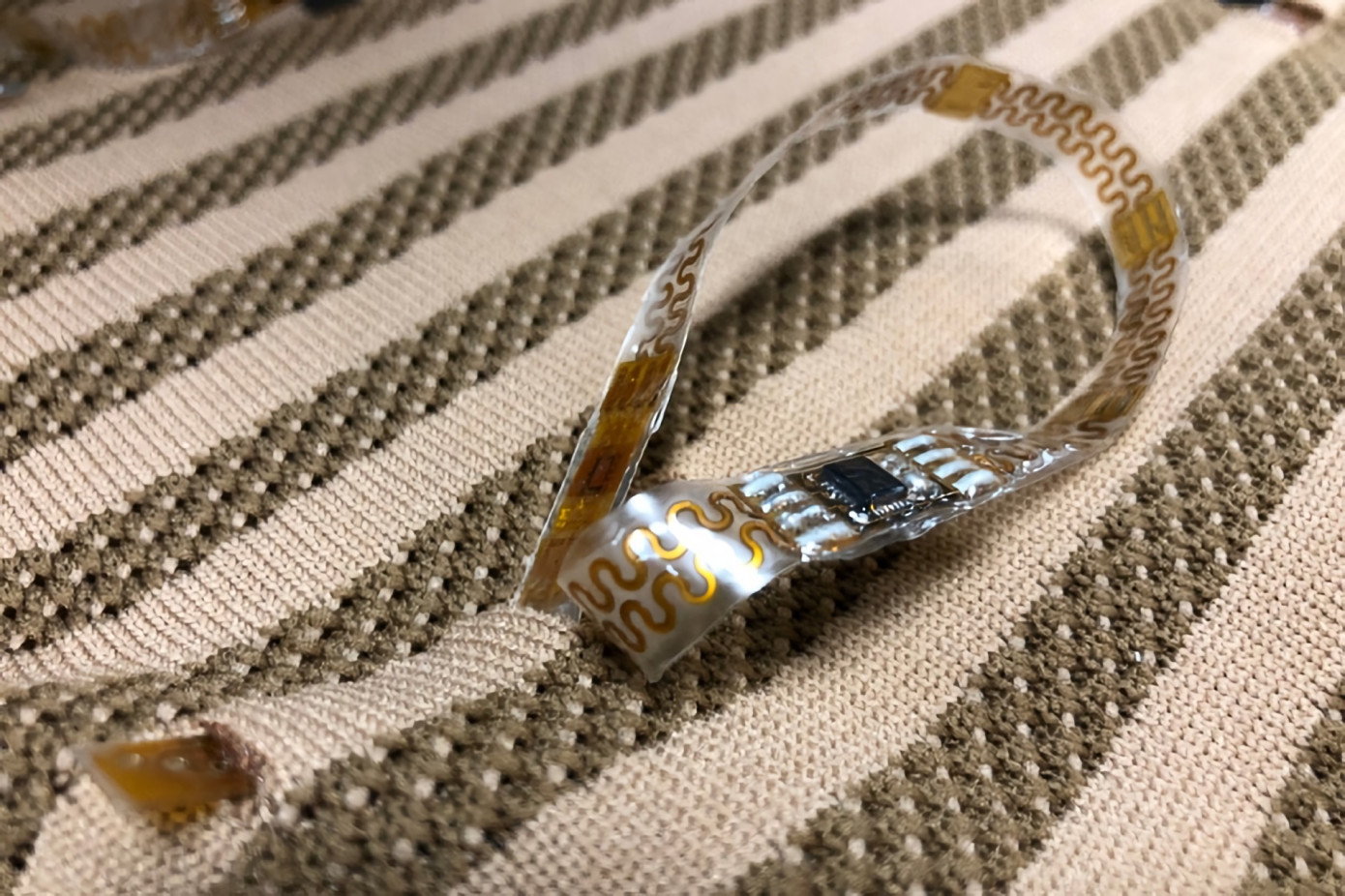 MIT has developed a new type of lightweight sensor that can be integrated into flexible fabrics, including the kinds of polyesters often used in athletic wear, to provide constant monitoring of vital signs including body temperature, heart rate and respiratory rate. These sensors are machine-washable and can be integrated into clothing that appears totally normal on the outside, and they can also be removed and re-used in different garments.
... its potential here on Earth has much more widespread benefit potential, particularly in the era of COVID-19 and the healthcare landscape that will result even once it’s more under control.
...Rather than relying on updates either in-person, or even via telemedicine, these individuals could provide a steady stream of biometric data to the healthcare professionals monitoring their treatment. It could automate the process to an extent that makes it easier for both individual and their caregivers to keep on top of the situation in real-time.
See the full story here: https://techcrunch.com/2020/04/23/mit-develops-machine-washable-sensors-that-embed-in-clothing-for-constant-vital-sign-monitoring/
Ruling: Patents can only be issued to human inventors, and not AIs.
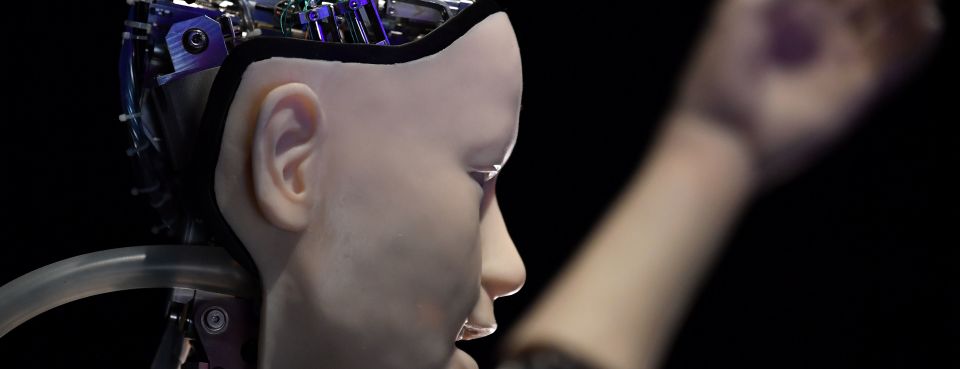 The U.S. Patent and Trademark Office just issued its decision that only “natural persons" - not AIs - can be named as inventors, refusing two patents for an AI that created an emergency flashing light and shape-shifting food container. The inventions come from physicist and AI researcher Stephen Thaler's "DABUS,"which won't get its name on the patents. The office argues that patent law refers to inventors in humanlike ways, which can't apply to machines.
- The European Patent Office (EPO) and UK’s Intellectual Property Office (IPO) have issued similar rulings turning down Thaler's request and patents.
- The Artificial Inventor Project, which supports Thaler, argues that it could become impossible to patent new innovations if no humans were involved in the work closely enough to take credit.
- The issue of non-human ownership over properties was brought up when PETA argued that a macaque monkey could own the rights to selfies it took; the case was ultimately settled.
See the full story here: https://news.bloomberglaw.com/ip-law/ai-cant-be-named-inventor-on-patent-agency-says
This AR contact lens startup is gaining steam despite Magic Leap’s struggles
 Mojo Vision, a startup with staff made up of veterans from the tech industry'sbiggest hitters, including Google, Amazon, HP and Apple, is betting we'll eventually be wearing contact lenses instead of computer-assisted glasses.
It's unclear when Mojo Vision's smart contacts will make their way to market, but the company has been discussing the tech more publicly in the past year. During the annual CES in Las Vegas this January, Mojo Vision showed off a prototype allowing people to see text, sports scores, weather and other information in a lens held just in front of their eye.
Jay Z tries to use copyright strikes to remove deepfaked audio of himself from YouTube
 In a fascinating deep dive from XOXO festival co-founder Andy Baio over at his website Waxy, Baio looks into AI-powered Jay-Z impersonations on YouTube, specifically one creator using Jay-Z’s iconic voice and hip-hop flow to rhyme classics like William Shakespeare's “To Be or Not to Be” soliloquy from Hamlet and Billy Joel’s “We Didn’t Start the Fire.”
( To Be or Not To Be - https://lbry.tv/@VocalSynthesis:2/jay-z-raps-the-to-be-or-not-to-be:8 )
In a strange turn of events, Roc Nation LLC, Jay-Z’s full-service entertainment agency, filed copyright strikes against the YouTube uploads of the above-mentioned deepfakes. The notices specifically cite AI, with Roc Nation writing, “this content unlawfully uses an AI to impersonate our client’s voice,” according to Baio’s conversations with the creator, who remains anonymous and goes by the online handle Voice Synthesis. The channel itself has nearly 40,000 subscribers, and many of its videos have racked up hundreds of thousands of views.
All of Voice Synethesis’ videos are created by feeding Google’s open source Tacotron 2 text-to-speech model with Jay-Z songs and lyrics and having the synthetic voice read pre-written text. The situation raises fascinating questions about what exactly is being infringed upon here if the synthetic voice is simply producing original content using the likeness of a celebrity. For a deeper look into the copyright issues at play here, I highly suggest you read Baio’s analysis in full because he gets into the finer details of fair use and why Jay-Z’s claims may not hold up in court.
I don’t really understand why mimicking a celebrity’s voice using an AI model should be treated differently than someone naturally doing an (extremely accurate) impression of that celebrity’s voice,” Voice Synthesis argues.
See the full story here: https://www.theverge.com/2020/4/28/21240488/jay-z-deepfakes-roc-nation-youtube-removed-ai-copyright-impersonation
ZTE, Alibaba demonstrated ‘5G + Holographic Stage’, WIMI’s AR + Live Broadcast Is Going to Build New Entertainment Ecology
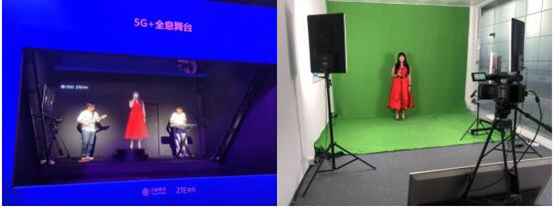 The China mobile global partner conference was held in Guangzhou pazhou poly world expo. ZTE and China mobile jointly demonstrated a 5G + holographic stage, which transmitted the lead singer of the band far away from the field to the stage area inside the stadium through 5G in real time, and conducted a singing and playing meeting with the band on the stage that transcended time and space, attracting wide attention.
See the full story here: http://www.digitaljournal.com/pr/4665595
Augmented Reality in Remote Classrooms
 A team led by Purdue University has built an app platform called MetaAR, enabling students and teachers to easily collaborate using augmented reality.
The cost and difficulty make it impossible for most educators to teach in AR. That’s why Ramani and his team have created MetaAR, an authoring platform that allows educators to create their own AR apps. It also allows students and teachers to collaborate remotely in AR.
“We want to make the creation of AR content as simple as creating a PowerPoint file and presenting it yourself,” Ramani said. “Using our technology platform, any instructor can easily train on MetaAR to create their own kits and lesson plans and start collaborating in a virtual classroom.”
For its test case, Ramani’s team built a simple STEM education kit: a small model of a city designed to teach the basics of circuit boards. Wooden pieces, like streets and buildings, had conductive material, which lit up streetlights if students assembled the “circuit” correctly. Using their MetaAR software, the researchers duplicated the pieces in 3D and formulated a simple lesson to teach students how to build the city. In the classroom, students looked at their desks through tablets, which showed them how to orient the physical pieces. It also alerted the students when they placed the physical pieces incorrectly.
MetaAR’s real magic, however, is its collaborative platform. If students had a question, they used video and images of their work to ask for help.
MetaAR will be presented virtually on Tuesday (April 28) at the 2020 CHI Conference on Human Factors in Computing Systems, one of the leading conferences on human-computer interaction. Several other members of Ramani’s lab also will present advances in augmented reality, including StoryMakAR, which uses AR to help children create storytelling experiences. Other presentations are a study using AR “ghosts” to teach factory workers to perform machine tasks, and Vipo, a spatial-visual platform to program the interactions of mobile robots.
See the full story here: https://www.purdue.edu/newsroom/releases/2020/Q2/hands-on-with-augmented-reality-in-remote-classrooms.html
Robots could complete ‘all human tasks’ by 2050 claims transhumanist writer
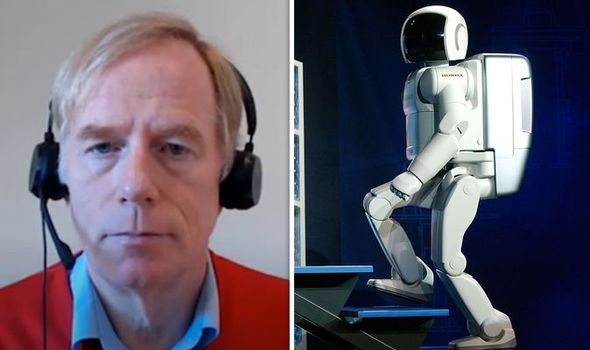 The movement, known for its popularity amongst Silicon Valley tech entrepreneurs, has been gaining prominence in recent years.
Speaking to Express.co.uk Mr Wood said: “I believe there’s a 50 percent chance of artificial general intelligence, and hence the possibility of robots doing all human tasks, by the middle of the century and I’ve said there’s about a 10 percent chance we might have this by 2025.”
Artificial general intelligence is the point at which a machine can match or surpass human intellect in any given area.
Mr Wood argued there’s a mismatch between human biology, conditioned over thousands of years by evolution, and the destructive potential of the technology we are developing.
See the full story here: https://www.express.co.uk/news/science/1275130/Robots-news-artificial-intelligence-transhumanist-transhumanism-David-Wood
Offset, Young Thug, And Others Are Hosting A Live Virtual Reality Stadium Concert
 Virtual reality organization Oculus Venues partnered with Supersphere VR to bring an immersive and energetic concert experience to fans from their homes. Offset tapped fellow rappers Saint Jhn, Rich The Kid, and Young Thug to join him in the performance. The rappers will be broadcasting their performances into the virtual venue and donations from the event will be donated to the Atlanta Community Food Bank.
As part of the virtual experience, friends will be able to meet up inside the venue and enjoy the show together through VR headsets. According to Supersphere, the event will mimic a typical stadium show along with “actual production and stagecraft that fans would typically enjoy on tour.”
Offset’s VR performance kicks off 4/29 at 7 p.m. EDT. Watch it here. https://www.oculus.com/experiences/event/609621869627225/?utm_source=rakuten&utm_medium=affiliate&utm_campaign=je6NUbpObpQ
See the full story here: https://uproxx.com/music/offset-young-thug-vr-concert-oculus-venues/