Opinion | America needs a plan for artificial intelligence
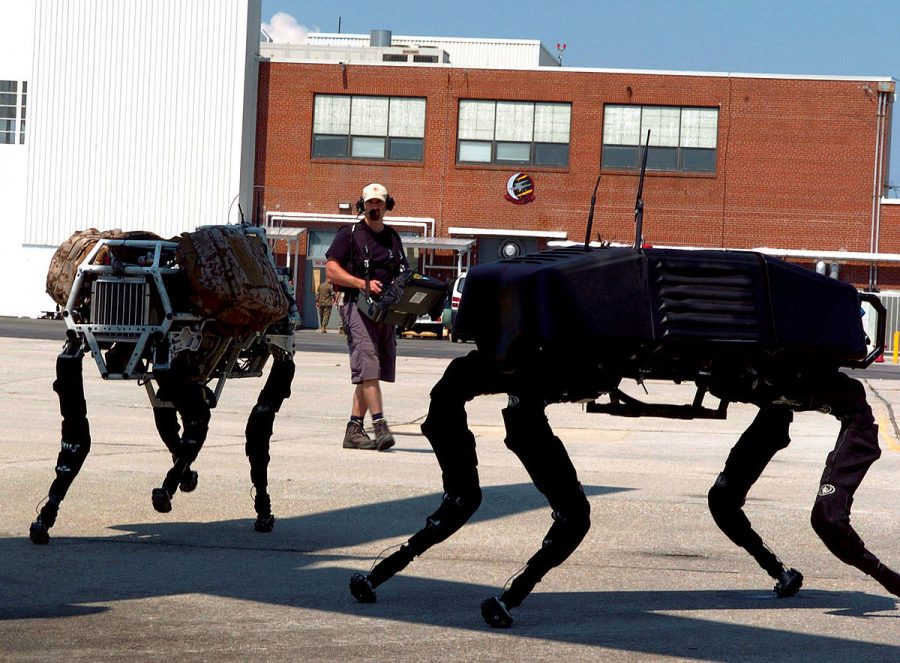 Modern society is already drowning in artificial intelligence. Apple’s Siri, Amazon’s Alexa and Google’s Assistant, as well as our internet browsers, email accounts, messaging services and social media platforms all employ AI to nudge us in certain directions, such as with suggested words or increased organization.
In the not too distant future, Webb argues, researchers will almost certainly create what is known as “general” artificial intelligence (AGI) — machines that can perform any task the way a human could. And, because most of the algorithms at the heart of this AGI will be written to allow for self-improvement, AGI could eventually evolve into artificial superintelligence (ASI). ASI would almost certainly end up being orders of magnitude more intelligent than the smartest human who has ever lived or than every human combined.
China, unlike the U.S., has a clear and broad strategy regarding artificial intelligence. In 2017, China launched its “New Generation Artificial Intelligence Development Plan,” (AIDP) in which it aims to be the world leader on AI by 2030. What’s most concerning is the rate at which the U.S. is being outspent on research and other investments regarding the future of machine learning technology. China is spending billions, while many elected officials in the United States don’t even understand how Facebook works.
See the full story here: https://dailyillini.com/opinions/2020/04/25/opinion-america-needs-plan-for-artificial-intelligence/
AWS Announces General Availability of Amazon Augmented Artificial Intelligence
 Today, Amazon Web Services (AWS), an Amazon.com company (NASDAQ: AMZN), announced the general availability of Amazon Augmented Artificial Intelligence (A2I), a fully managed service that makes it easy to add human review to machine learning predictions to improve model and application accuracy by continuously identifying and improving low confidence predictions. Amazon A2I helps developers add human review for model predictions to new or existing applications using reviewers from Mechanical Turk, third party vendors, or their own employees. Amazon A2I makes it easier for developers to build the human review system, structure the review process, and manage the human review workforce. For example, developers could use Amazon A2I to quickly spin up and manage a workforce of humans to review and validate the accuracy of machine learning predictions for an application that extracts financial information from scanned mortgage documents or an application that uses image recognition to identify counterfeit items online, so that the quality of results improve over time. There are no upfront commitments to use Amazon A2I, and users pay only for each review needed. To get started with Amazon A2I, visit aws.amazon.com/augmented-ai
Today, machine learning provides highly accurate predictions (known as “inferences”)...In each case, machine learning models provide an inference and a confidence score that expresses how certain the model is in its prediction. ...
With Amazon A2I, developers can add human review to machine learning applications without the need to build or manage expensive and cumbersome systems for human review. Amazon A2I provides over 60 pre-built human review workflows for common machine learning tasks (e.g. object detection in images, transcription of speech, and content moderation, etc.) that allow machine learning predictions from Amazon Rekognition and Amazon Textract to be human-reviewed more easily.
See the full story here: https://www.cxotoday.com/press-release/aws-announces-general-availability-of-amazon-augmented-artificial-intelligence/
‘Bigscreen’ Brings On-Demand Movies in New ‘Movies & Events’ Update
 Bigscreen’s unique appeal is its ability to mirror a user’s desktop and share it with other people, effectively letting anyone throw their own viewing (or gaming) party.
Bigscreen, the social VR viewing platform, introduced paid movies late last year so you could buy a ticket to join people in watching a number of 2D and 3D films at set times, working more or less like a physical movie theater.
Also new the the platform is the new Events menu, which includes a list of events, live countdown timers, and number of people interested in the event. These one-time only events let you watch things such as special movie showings, rocket launches, sports events, and other live streams with friends and anyone else on the platform. Although some events are free, Bigscreen says movie events require paid tickets, which start at $3.99 and vary by country.
Since last July all users have been able to watch select live TV channels for free, although the on-demand rental service puts the company in a good position to understand where its users are spending their time, and more importantly, their money.
Bigscreen supports Oculus Rift, HTC Vive, Valve Index, all Windows VR headsets, Oculus Quest and Oculus Go.
One Denverite Is Creating a Virtual Tour of the Iconic Cinderella City Mall
An iconic Colorado mall was torn down in the late 1990s, but for the past three years architect Josh Goldstein has been rebuilding what once was—at least virtually.
Cinderella City stood at what is now the intersection of Hampden Avenue and Santa Fe Drive in Englewood from 1968 to 1998. The more than 1.5 million-square-foot mall was popular among area residents and took claim as the largest mall west of the Mississippi, according to the Denver Public Library.
“The mall was the thing that got me interested in architecture, in that when I was young, my parents drove me by the [mall], and it was being demolished,” says Goldstein, now 30. “I don’t think at the time I had ever seen anything being demolished before. And certainly nothing of that scale.”
 Goldstein says he hoped to finish the simulation in one year for what would have been the mall’s 50-year anniversary. His intent was to build a simplified version, but says that didn’t satisfy him. So, he began adding people, signs, trees, and music. “It sort of snowballed from there,” he says.
To build the simulation, he’s using a 3D modeling software called FormIt. He’s also building the mall in reverse starting with an ’80s/’90s model and working his way back to a ’60s/’70s version. “Seeing the model get more developed and the mall feel more alive … feels like you’re watching the mall’s life play out in reverse,” Goldstein says.
See the full story here: https://www.5280.com/2020/04/one-denverite-is-creating-a-virtual-tour-of-the-iconic-cinderella-city-mall/
‘Half-Life: Alyx’ Was Among the Best Selling Steam Games Released in March
 In its monthly top sales list, Valve is accounting for two weeks of sales, which helps put Half-Life: Alyx on more equal footing with the rest of the games released during the entire month of March. However you slice it, making the top 20 on Steam is an achievement for any title, let alone a VR game.
..., on launch day Half-Life: Alyx broke the record for peak concurrent usership of a VR game on Steam at 42,858 players, putting it head and shoulders above the competition for top concurrent users, multiplayer games included.
Although Valve hasn’t released official numbers on how many copies it’s sold to date, SteamSpy estimates there are currently between 500,000 – 1,000,000 owners, putting the game’s revenue at around $25 – $50 million should those numbers at all reflect reality. Even at half that estimation, Half-Life: Alyx is well positioned to be the best selling VR game to date.
Boston Dynamics’ Spot finds a new career in telemedicine amid COVID-19 pandemic
OLYMPUS DIGITAL CAMERA
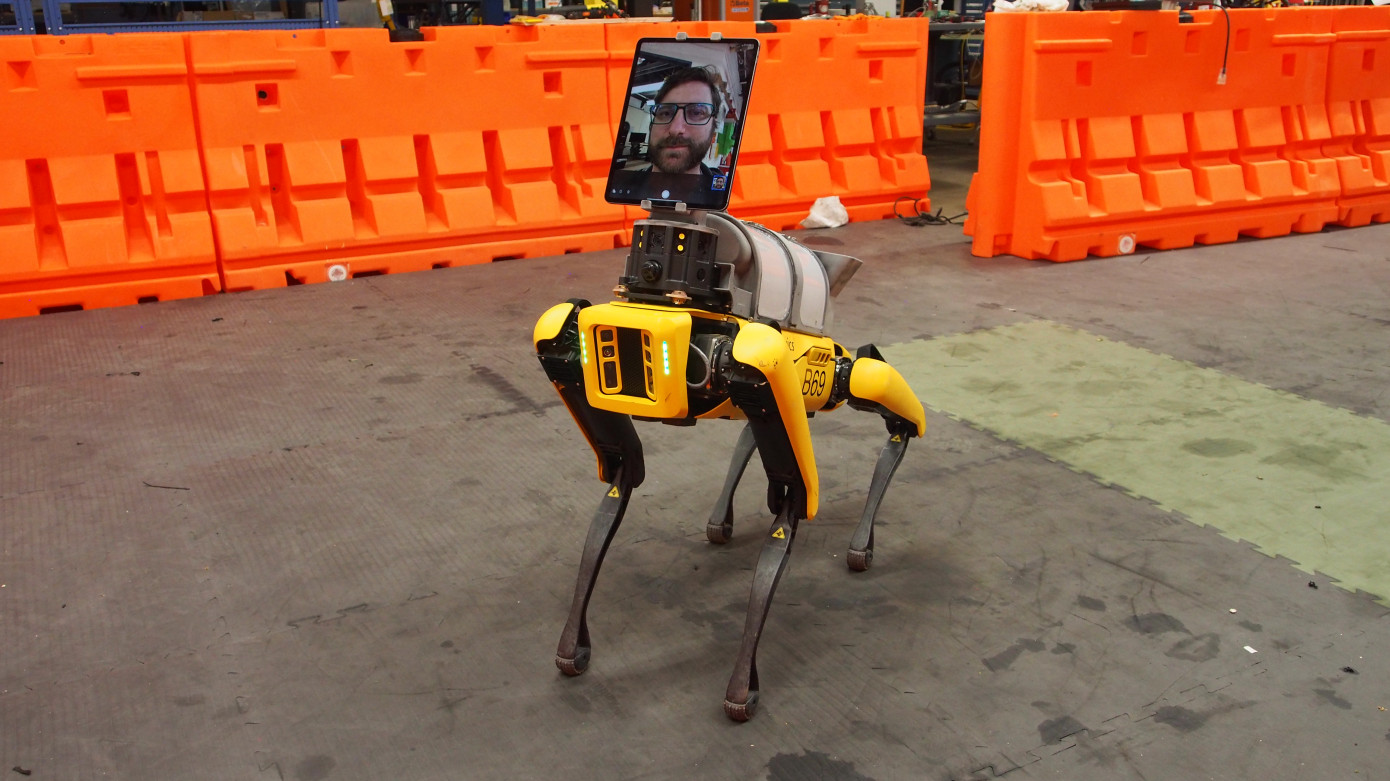
Fitted with an iPad and a two-way radio, Spot is being used as a mobile teleconferencing system, allowing doctors to check in on patients without risking the spread of the highly contagious virus. It’s a fairly simple task — and one that a number of robotics companies have actively cracked.
While ultimately price-prohibitive for many healthcare facilities, Spot’s four-legged locomotion makes it possible for the robot to visit areas inaccessible for wheeled systems. The modularity always means it has the potential to accomplish further tasks. Boston Dynamics says it’s working on outfitting the robot with a system to detect vital signs like temperature, respiratory rate, pulse rate and oxygen saturation.
In the future, a UV light could also be mounted to the robot’s back to serve as a mobile disinfecting station.
See the full story here: https://techcrunch.com/2020/04/23/boston-dynamics-spot-finds-a-new-career-in-telemedicine-amid-covid-19-pandemic/
3 ways Augmented Reality can have a positive impact on society
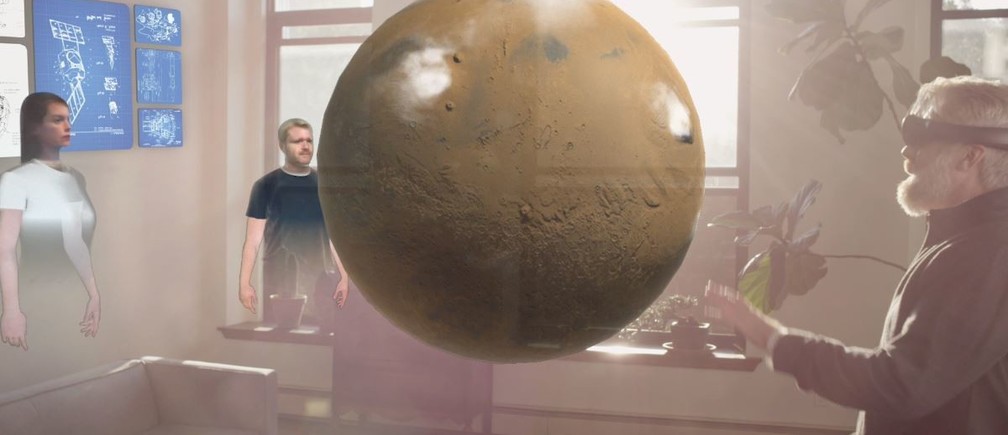
- There are three things AR does very well: visualization, annotation and storytelling;
- There are examples in each of these areas that are both timely in the current reality of COVID-19 and which can be built upon once cultural institutions, schools and workplaces reopen their doors;
- From enabling online learning to opening access to cultural events and experiences, applications of AR and VR could help us overcome the isolation of COVID-19 lockdowns.
See the full story here; https://www.weforum.org/agenda/2020/04/augmented-reality-covid-19-positive-use/
Augmented reality swimming goggles maker Form raises $8.5M
 Vancouver, B.C.-based startup Form raised $8.5 million ($12 million CAD) for its augmented reality swimming goggles.
- Founded in 2016 by tech vet and former competitive swimmer Dan Eisenhardt, Form’s $199 goggles provide real-time visual feedback such as metrics on split times, distance, stroke rate, pace, and calories. There’s a heart rate monitoring feature powered by Polar. The company launched in August and shipped more than 10,000 goggles in its first four months of operation.
- Large family offices in the UK and Denmark led the round, which included participation from Silicon Valley Bank.
- See the full story here: https://www.geekwire.com/2020/augmented-reality-swimming-goggles-maker-form-raises-8-5m/