Dance Majors’ New Virtual Reality
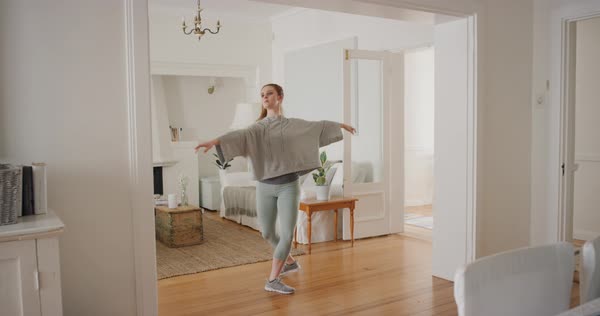 As we all know, all University of Utah classes were moved to online learning because of the sudden outbreak of COVID-19.
“One of the biggest challenges is obviously not being able to dance out fully, thus risking the deterioration in the technique we’ve worked so hard to attain this year,” Walterscheid said. So, the dancers aren’t shattering mom’s favorite decorative figurine, but they could be endangering their coveted dance form and technique. Walterscheid explained an additional characteristic to the change in location, which is the new “workspace” that she has to work with — “Most of us are having to take class on hardwood floor, tile or carpet.”
See the full story here: https://dailyutahchronicle.com/2020/04/10/dance-majors-new-virtual-reality/
Some shirts hide you from cameras—but will anyone wear them?
The world, when we eventually enter it again, is waiting for us with millions of digital eyes—cameras, everywhere, owned by governments and private entities alike. Pretty much every state out there has some entity collecting license plate data from millions of cars—parked or on the road—every day. Meanwhile all kinds of cameras—from police to airlines, retailers, and your neighbors' doorbells—are watching you every time you step outside, and unscrupulous parties are offering facial recognition services with any footage they get their hands on.
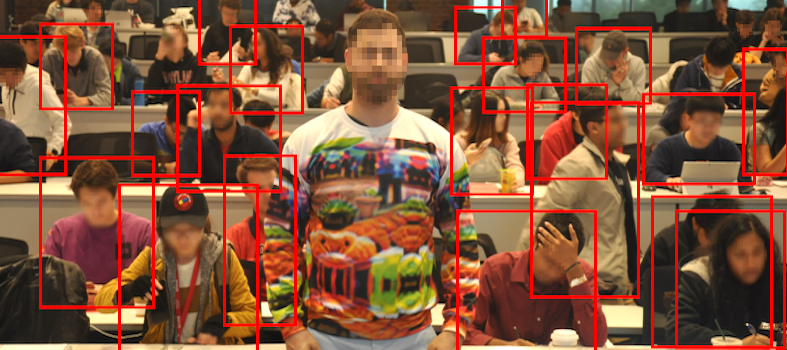 Goldstein and a team of students late last year published a paper studying "adversarial attacks on state-of-the-art object detection frameworks." In short, they looked at how some of the algorithms that allow for the detection of people in images work, then subverted them basically by tricking the code into thinking it was looking at something else....what if you make a point of being seen, and in doing so generate enough noise in a system that a single signal becomes harder to find?
That's the approach designer Kate Bertash takes with her Adversarial Fashion product line, which she presented at DEFCON in 2019. Her prints are designed first and foremost to mess with automatic license plate readers (ALPR), systems that scoop up images from the fronts and backs of everyone's cars all over the country and hoover them into massive databases.
The trick to expansion is threefold. First, people have to be interested in wearing adversarial designs. Second, the design actually has to work as intended. And third: the design has to be something you wouldn't mind being seen wearing while also, ideally, being good-looking enough that others will want to wear it, too.
See the full story here: https://arstechnica.com/features/2020/04/some-shirts-hide-you-from-cameras-but-will-anyone-wear-them/
Out Of Office: 65+ Startups Helping You Work From Home
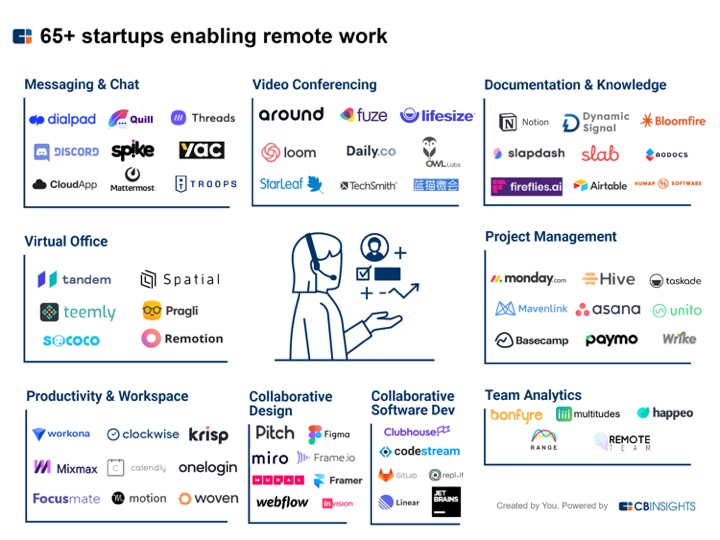
https://www.cbinsights.com/research/remote-work-from-home-market-map
What is artificial narrow intelligence (ANI)?
 In 1956, a group of scientists led by John McCarthy, a young assistant-professor of mathematics, gathered at the Dartmouth College, NH, for an ambitious six-week project: Creating computers that could “use language, form abstractions and concepts, solve kinds of problems now reserved for humans, and improve themselves.”
The project kickstarted the field that has become known as artificial intelligence (AI). At the time, the scientists thought that a “2-month, 10-man study of artificial intelligence” would solve the biggest part of the AI equation.
What is the difference between general AI and narrow AI?
Different types of narrow AI technologies
The narrow AI techniques we have today basically fall into two categories: symbolic AI and machine learning.
Machine learning comes in many different flavors. Deep learning... Deep learning is especially good at performing tasks where the data is messy, such as computer vision and natural language processing.
Reinforcement learning,... problems that must be solved through trial-and-error such as robotics.
Why narrow AI?
What comes after narrow AI?
Cognitive scientist Gary Marcus proposes to create hybrid AI systems that combing rule-based systems and neural networks.
Richard Sutton, computer scientist and the co-author of a seminal book on reinforcement learning, believes that the solution to move beyond narrow AI is to continue to scale learning algorithms.
Deep learning pioneer Yoshua Bengio... system 2 deep learning algorithms will be able to perform some form of variable manipulation without the need to have integrated symbolic AI components.
Yann LeCun, another deep learning pioneer, spoke of self-supervised learning at this year’s AAAI Conference.
How do we know if we have moved past narrow AI?
See the full story here: https://bdtechtalks.com/2020/04/09/what-is-narrow-artificial-intelligence-ani/
Studios, Filmmakers Create Virtual Movie Events via Twitter
 In addition to Twitter Watch Parties, Netflix Party has emerged, with the Chrome extension allowing viewers to “watch a title in sync via a shared link” and converse via text in a chat room. After critical acclaim drove “Freaks” to Netflix’s No. 2 spot in its top 10 most popular movie titles, the movie’s writers/directors Zach Lipovsky and Adam Stein created a Netflix Party.
Engadget describes these parties as “a more intimate affair” than Twitter Watch Parties, “the throwback vibe of a ’90s AIM chatroom, where the conversation can be a bit more focused.” “Yet, the goal of both is the same: to create a fresh sense of excitement that mirrors the experience of a movie theater packed with giddy viewers,” it adds. After watching “Cats” in sync with friends, attending via Skype, the Engadget writer said she preferred this version of virtual cinema.
“Your friend isn’t there next to you … but you can hear their laughter and see their expression of bewilderment … you can connect while far apart,” she said. “Therein lies the magic of the movie theater, however you choose to find it.”
See the full story here: https://www.etcentric.org/studios-filmmakers-create-virtual-movie-events-via-twitter/
SenseGlove is working on a “low-cost” force-feedback glove for VR
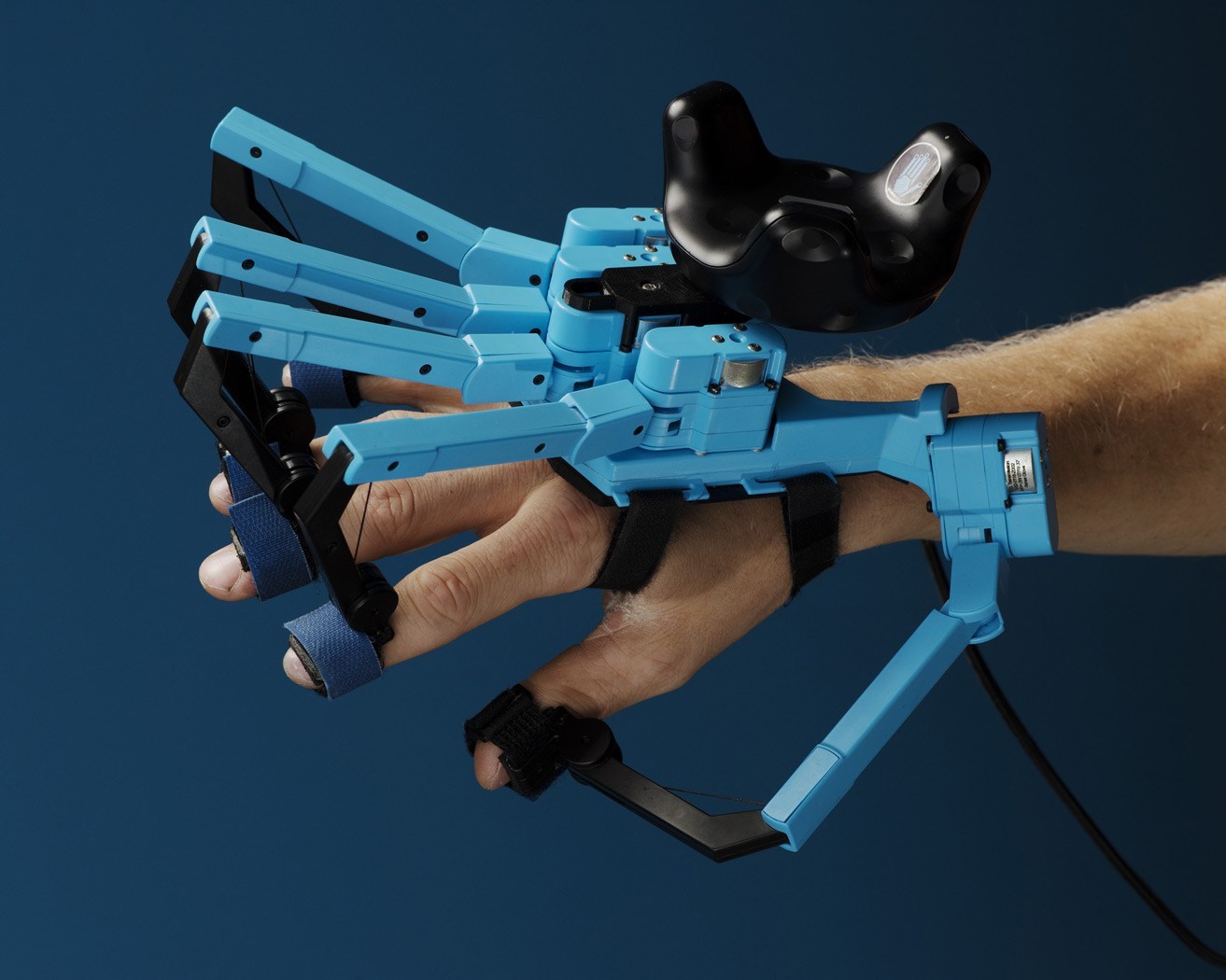 Haptics is a very important part of virtual reality, and while we wait for consumer solutions arriving in some years, for now, the market is dominated by enterprise solutions like the amazing Dexmo Gloves or HaptX Gloves. These solutions are high-performant, but also incredibly expensive, and only big enterprises can afford them.
A Dutch company called Senseglove wants to change that, offering a force feedback glove for VR made in plastic with a price that is still high, but that can be affordable for small and medium companies. SenseGlove has received some weeks ago a big investment, and I had the pleasure of speaking with its COO Niels Bogerd about their product and their goals.
Iris Van Herpen Diving Into Virtual Reality
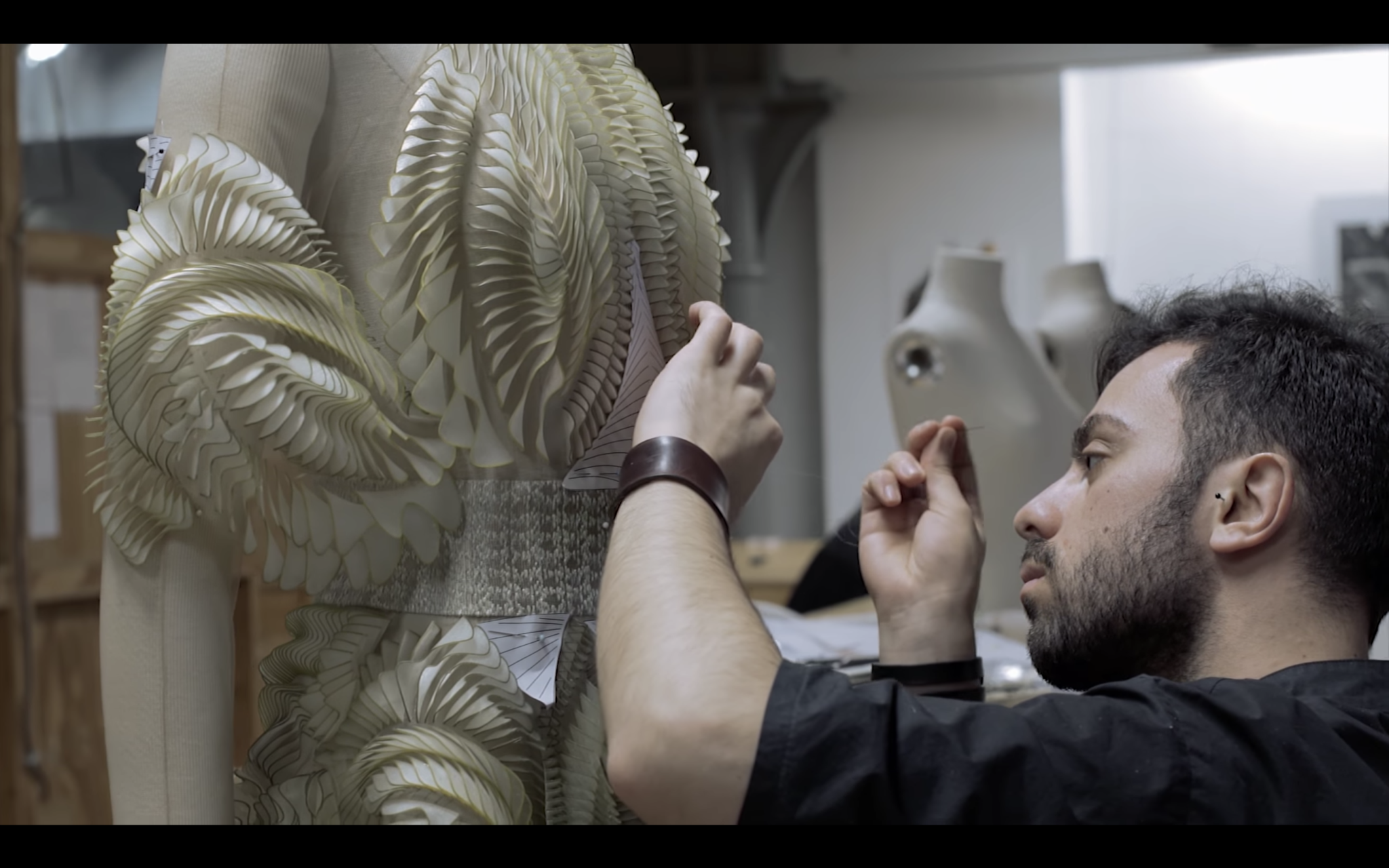 As enamored as she is with IRL fashion shows, Iris Van Herpen began preparing for a leap into cyberspace two years ago.
The Dutch couturier is designing her fall 2020 couture collection, and concurrently is plotting an “immersive virtual reality experience” that will allow a broader audience to discover her otherworldly creations.
A pioneer with 3-D printing and design processes, Van Herpen also downloads plenty of poetry and emotion into her designs. Will that translate in the digital realm?
Here, the designer talks about what the future of fashion might look and feel like.
WWD: Can you talk a little more about the immersive virtual reality experience you’re developing?
I.V.H.: We are doing it simultaneously as we are working on a new collection. It’s just slower and a bigger challenge because we are doing it from home.
At the same time, we are creating a VR experience of that same work. It really is a test to be honest. It’s the first time we will be doing it this way. It’s an experiment for us to get as close to the materiality and the emotion and the three-dimensionality that is important in my work.
WWD: Do you see digital shows as democratizing fashion in a way?
I.V.H.: So much of my audience only experiences my work on my web site or Instagram. The three-dimensionality and true emotion of the work is not being experienced by everybody. I’m really excited by the possibility of bringing a more three-dimensional and emotional experience of the work to a much broader audience.
See the full story with video here: https://wwd.com/fashion-news/fashion-features/iris-van-herpen-virtual-reality-fashion-1203554662/
What You Don’t Know You Don’t Know About 5G
 5G fundamentals
One of the fundamental misconceptions about 5G is that 5G is a new cellular band. This is fundamentally wrong. The name for 5G was set by the specification setting organization, the 3GPP. The 3GPP is comprised of the different companies involved in the building of 5G hardware and software. The organization has been around since 3G, and helped to create the 4G specification that we now know as LTE.
This 5G New Radio can operate at pretty much any frequency from 600 MHz to 40 GHz today, including the current ones that we already use for cellular communications. Companies like Sprint and T-Mobile already do this with some of their 5G spectrum, so some consumers can already see the benefits of 5G without any new spectrum. Using 5G in this spectrum is generally referred to as ‘Sub-6GHz’ because it behaves in a very different manner than the higher bands people seem to associate with 5G. Ironically, the majority of 5G deployments will primarily utilize spectrum in the Sub-6GHz bands. This means that some of the fears around 5G are unfounded—these cellular base stations operate at the same frequencies as 4G networks, and possibly even more efficiently and safely.
5G NSA versus SA
Part of the 3GPP Release 15 specification allows for the creation of a NSA and SA network architecture. What does this mean?...
5G reality versus 5G hype
There is a lot of hype around 5G, which is to be expected of any big technology inflection point. The specifications for 5G in Release 16, Release 17 and beyond, call for a lot of new features that will enable a lot of new use cases. The expected richness of these upcoming releases is in large part responsible for 5G’s hype. The reality is that it is hard to predict next-generation use cases beyond what we have today. Very few could have predicted that 4G would result in services like Uber, GrubHub or Apple Pay....
5G mmWave health concerns
There has been a certain amount of fearmongering around 5G, particularly when it comes to the mmWave bands, 28GHz and 39GHz (future bands include 24GHz, 27GHz, and possibly 70Ghz). A lot of the fear comes from groups that have little to no knowledge about the technology itself. Some claim mmWave signals can cause cancer and other ailments. Most recently, some are attempting to tie the spread of coronavirus to the launch of 5G networks—which is quite the stretch, even for conspiracy theorists. ...
That system had a 0.1% chance of injury and did not penetrate beyond 1/64th of an inch under the skin. This fact throws into doubt the claim that 5G could cause brain cancer or other cancers. ...
‘An immersive experience’: Professor uses virtual reality to replicate the classroom
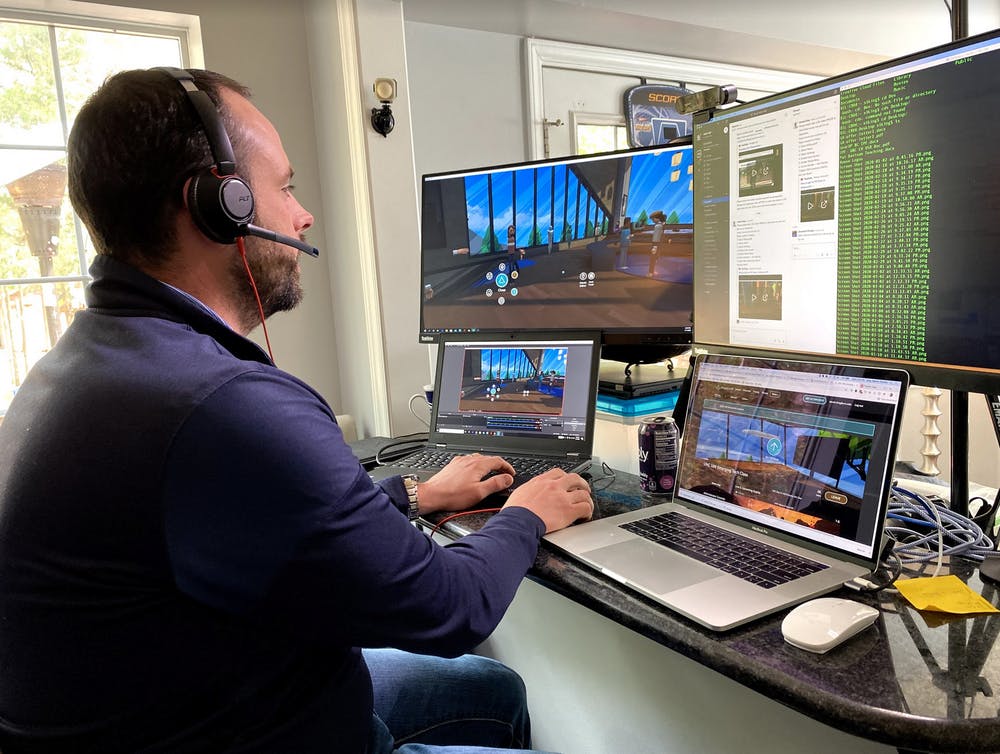 King built a virtual 3D version of his classroom, which allows his students to walk around in the classroom and break out into groups.
He said he has tested out a lot of different platforms for hosting 3D classrooms.
The first experience, he said, was through Mozilla Hubs. But King said his class will likely stick to AltspaceVR because of how pleased the students have been with it.
Markie McRae, a sophomore media and journalism major, said the virtual reality class is much more social than a Zoom lecture.
“I feel like I’m engaging in class — a community aspect I would have not gotten from Zoom,” he said.
See the full story here: https://www.dailytarheel.com/article/2020/04/virtual-reality-classroom-0407
Best AR apps in 2020: Augmented reality comes to your phone
Mondly (Android, iOS: Free)
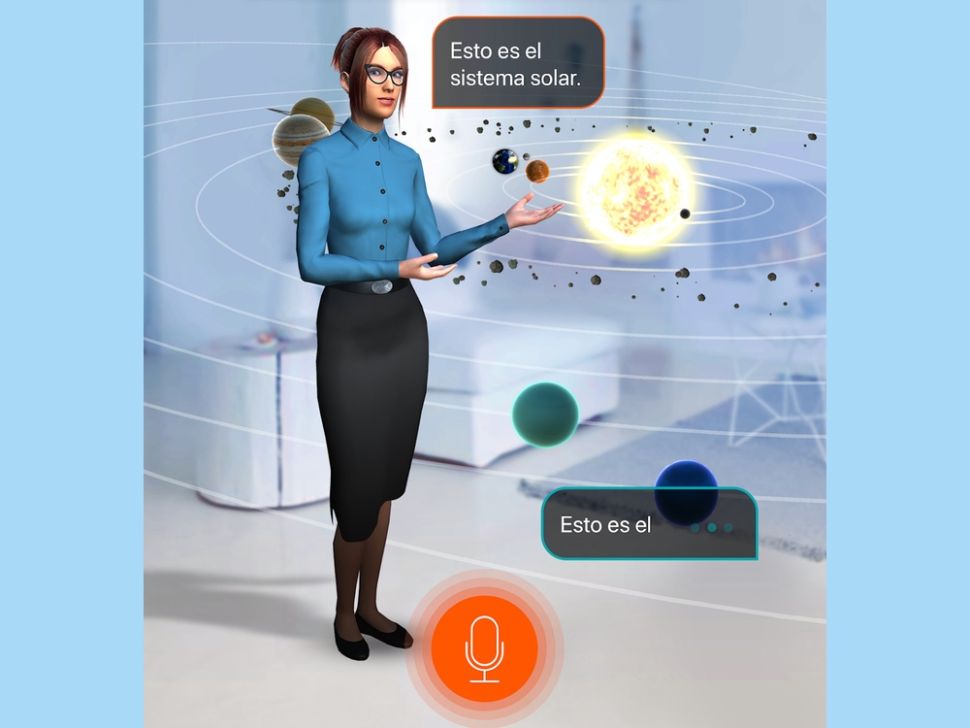 Mondly's AR features engage language learners with an animated chatbot as well as visualizations of objects and words to help make learning more dynamic, as well as providing instant feedback on pronunciation and any errors.
Euclidean Skies (iOS: $4.99)
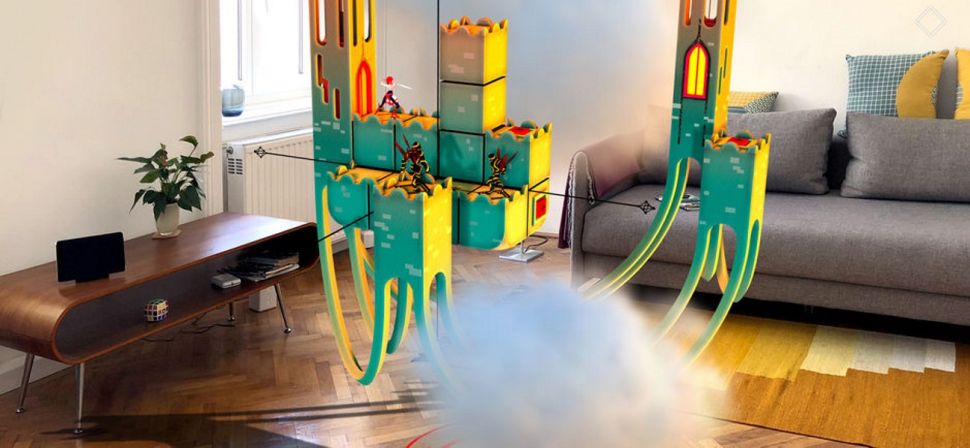 The mind-bending Escher-space-meets-Rubik's-Cube puzzles of Euclidean Lands get a worthy sequel in Euclidean Skies, where you must guide an adventurer past puzzles and perilous foes through a combination of clever moves and rotating the very level itself.
ARise (iOS: $2.99)
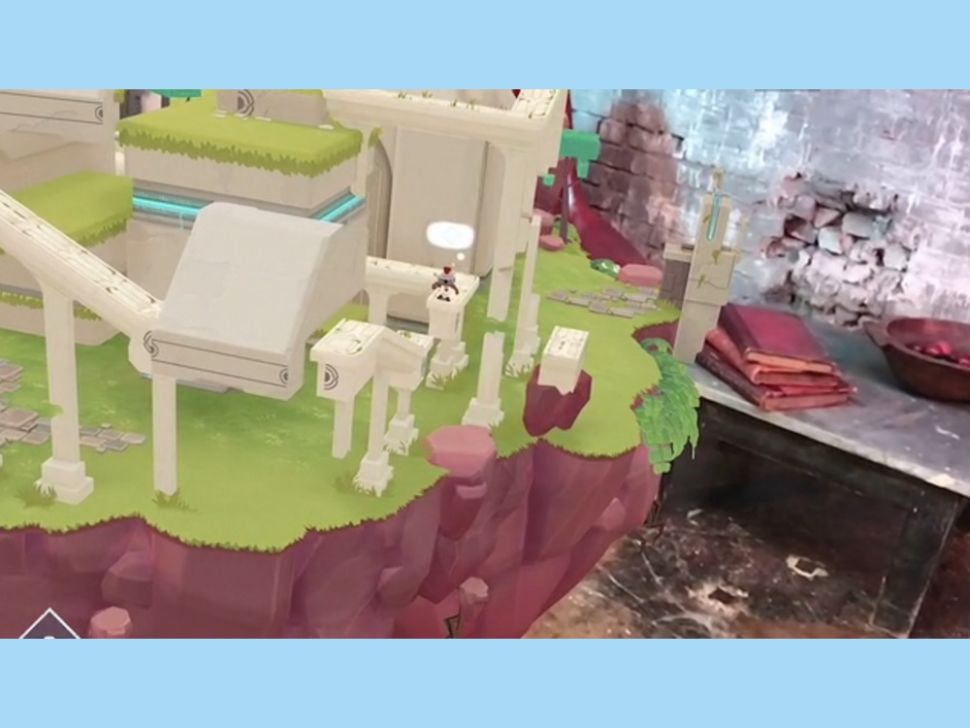 Unlike traditional AR experiences, the marker-less capabilities of ARKit lets you turn just about any space into a play area, whether it's home, the bus stop, or the office break room.
WallaMe (Android, iOS: Free)
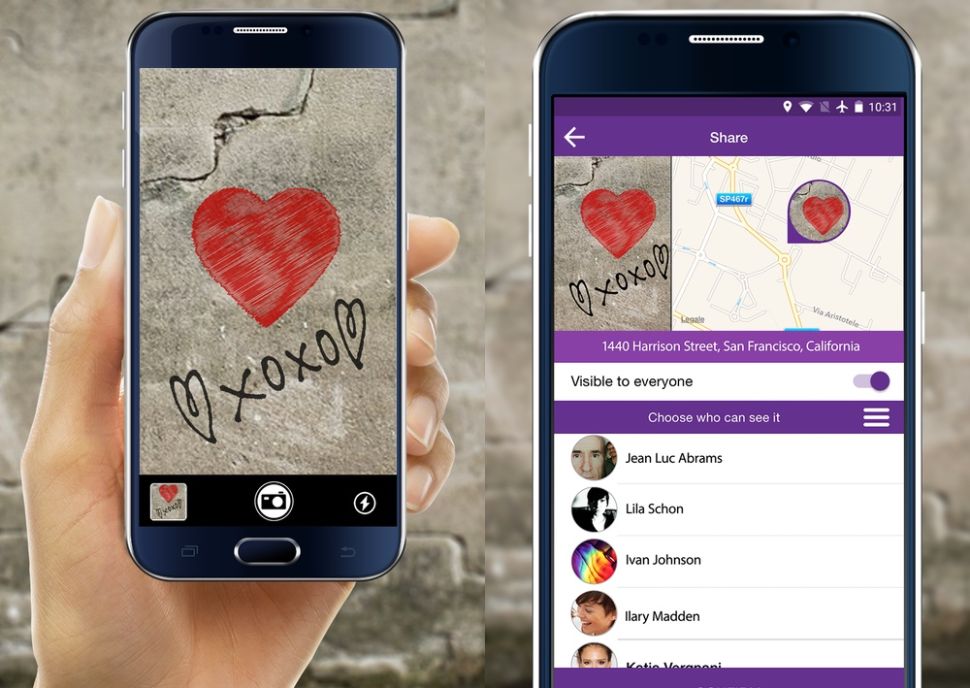 The world becomes your canvas with WallaMe, one of the best AR apps for creating geotagged works of virtual art drawn or painted on walls, sidewalks, or buildings without having to spill a single drop of paint.
You can share the locations of your messages or artwork with your friends so that they can view your work with their own smartphone camera using WallaMe. You also can make your work public for any WallaMe user to discover with their viewfinder. In addition to using your phone as a viewfinder, you can search for other user-created WallaMe walls using a map interface.
Google Translate (Android, iOS: Free)
 Google Translate is already a handy text and audio translation tool, and it gets even better with its augmented reality real-time visual translation features. All you need to do is hold up your smartphone camera and focus on the text, and Google Translate will provide real-time translations of words and phrases from a variety of languages.
See the full story here: https://www.tomsguide.com/round-up/best-ar-apps