Samsung’s Z Flip has a cool hinge and a helpful split screen UX
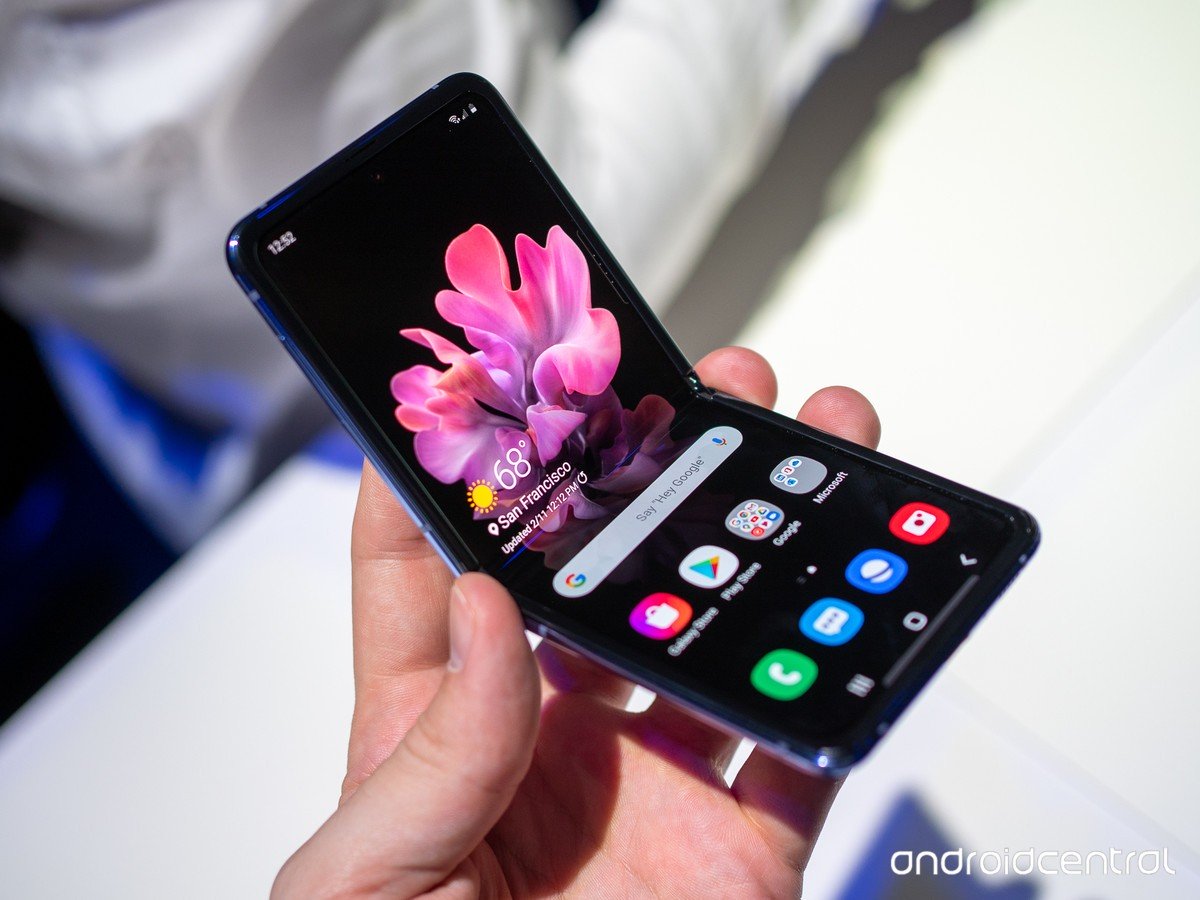 Samsung jumped right in with the most anticipated news at Unpacked and put the Z Flip at the top of the show. The foldable phone changes the shape and size of the smartphone as well as how we use it, a Samsung spokeswoman said.
The screen is ultra thin glass that will fold up to 200,000 times, according to Samsung. The hideaway hinge connects both halves of the phone and prevents dust and sand from getting into the phone.
The phone goes on sale Friday, Feb. 14 with a $1,380 price tag. Buyers will get a subscription to YouTube premium.
Samsung's One UI 2 is built to take advantage of the phone's form factor. The most interesting new feature of this interface is the split screen; half is for viewing, and half is for interacting.
For example, a user can watch a video on the top half and type a comment on the bottom half. This interface could make the expensive phone more productive for business users when traveling. The One UI 2 interface making it even easier to multitask. A user can lock the phone at its 90-degree angle and have a video call and still have the laptop free for taking notes, referring to files, or adjusting a presentation.
Here are the specs for the Samsung Galaxy Z Flip:
- 6.7-inch screen
- Rear cameras: 12-megapixel ultra-wide-angle f/2.2 123-degree; 12-megapixel wide-angle f/1.8 78-degree
- Front camera: 10-megapixel f/2.4 80-degree
- 8 GB memory
- 256 GB storage
- Folded: 87.4 x 73.6 x 17.3 mm
- Unfolded: 167.3 x 73.6 x 7.2
- 183 g/6.46 oz
- Nano-SIM, eSIM
- Samsung Pay
- Always-on display
- Foldable dynamic AMOLED capacitive touchscreen, 16M colors
- Android 10.0, One UI 2
- Qualcomm SM8150 Snapdragon 855+
- No memory card slot
- No headphone jack
- Side-mounted fingerprint sensor
- Wireless charging
- Non-removable Li-Po 3300 mAh battery
See the full story here: https://www.techrepublic.com/article/samsungs-z-flip-has-a-cool-hinge-and-a-helpful-split-screen-ux/
Facebook Acquires the Computer Vision Startup Scape Technologies
 TechCrunch discovered a regulatory filing that shows that Facebook has acquired the London-based computer vision startup Scape Technologies. The startup uses computer vision to determine location accuracy beyond the capabilities of the global positioning system (GPS).
It uses a cloud-based “Visual Positioning System” which translates images into 3D maps that provide very precise outdoor location over whole cities. It can come in handy when someone wants to know the exact location of store in a particular street block, for example.
The technical principle behind it has already been used by Google in developing a Visual Positioning System that is already being used for Augmented Reality navigation in Google Maps.
See the full story here; https://virtualrealitytimes.com/2020/02/09/facebook-acquires-the-computer-vision-startup-scape-technologies/
SUNDANCE VR AND AR GOT EXTREMELY WEIRD IN 2020
BEST CONCEPT: BREATHE
(DIEGO GALAFASSI)
 The medium: Magic Leap mixed reality headsets with biometric sensors.
The premise: Four people put on mixed reality headsets and step into an empty space. Sensors estimate when they’re breathing, then visualize the air they exhale as a cloud of light — mixing with the breaths of the other participants and then drifting into the ether. And the whole system is set in a larger context by some soothing narration about air (and Earth’s larger ecosystem) from Zazie Beetz.
MOST INEXPLICABLY COMPELLING: SCARECROW
(JIHYUN JUNG, SNGMOO LEE, TAEWAN JEONG, COOPER YOO)
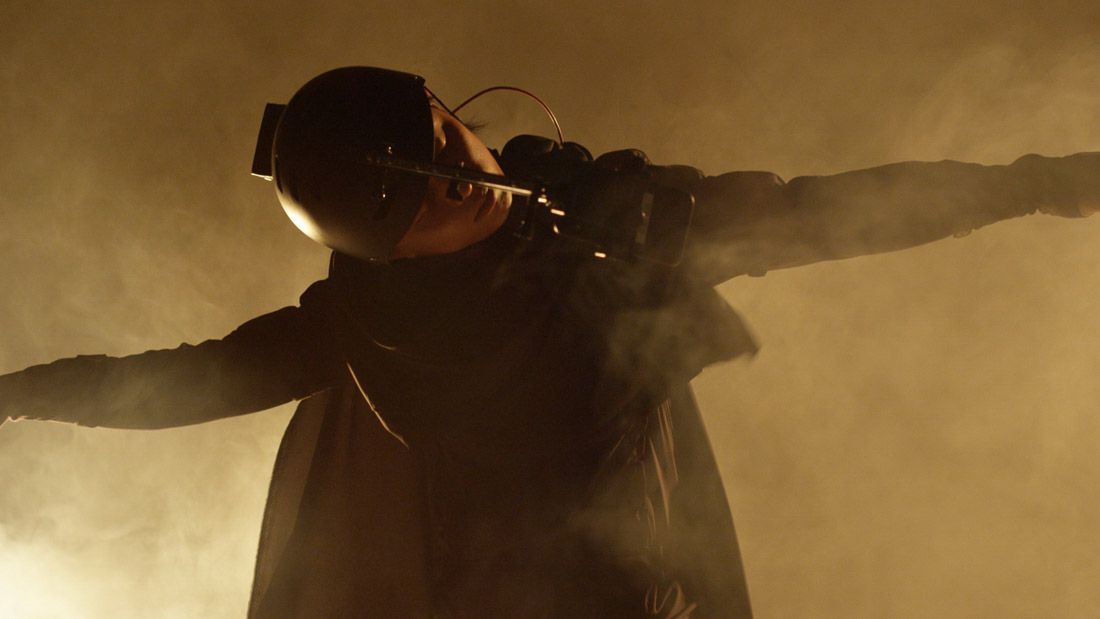 The medium: Full-body virtual reality — plus a physically present dancer, a thermal hand plate that simulates touching hot and cold objects, and a scanner that digitizes an image of your face. It’s a lot.
The premise: A New Frontier pamphlet gave Scarecrow a one- or two-sentence synopsis about reawakening creativity in artists, or something similarly vague. This turned out to be nonsense, because Scarecrow is about dancing with a scarecrow whose heart has been stolen by a large mythological bird.
See all the mentioned installations here: https://www.theverge.com/2020/2/7/21125284/sundance-best-vr-ar-film-festival-new-frontier-2020
USING AI TO PREDICT BEST PICTURE, BEST DIRECTOR, AND MORE AT THE 2020 OSCARS
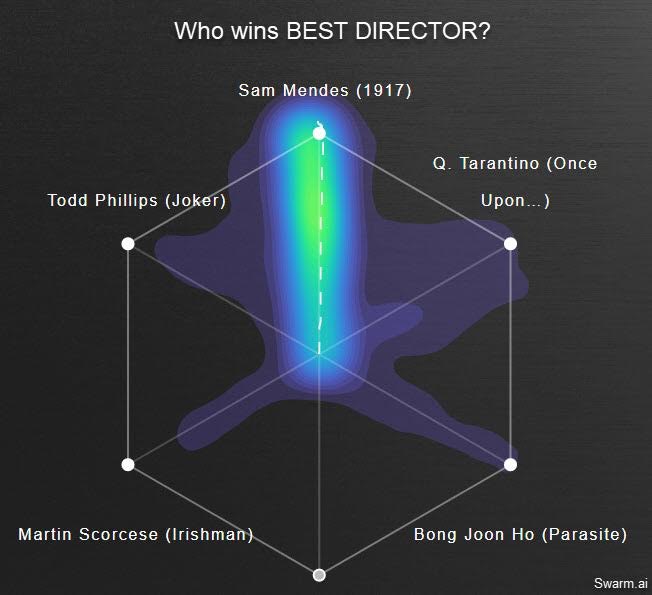
Unanimous AI, which also does sports predictions (it nailed the Super Bowl last weekend), uses a mix of human intuition and algorithms to create what the company called “Swarm A.I.” In practice, this means several dozen movie fans logging in simultaneously to make their predictions. As those predictions come in, a digital puck gets dragged between the various options in each category, giving participants the chance to rethink their picks based on group consensus. The result is a hivemind, similar to how bees work together to pick a location for a new home.
cf64e2a6-27b4-4ce9-b23b-b580d89b8755-0.gif

See the full story here: https://www.inverse.com/entertainment/oscar-predictions-2020-best-picture-actor-actress-director-according-to-ai
Music by numbers? Robot conducts human orchestra
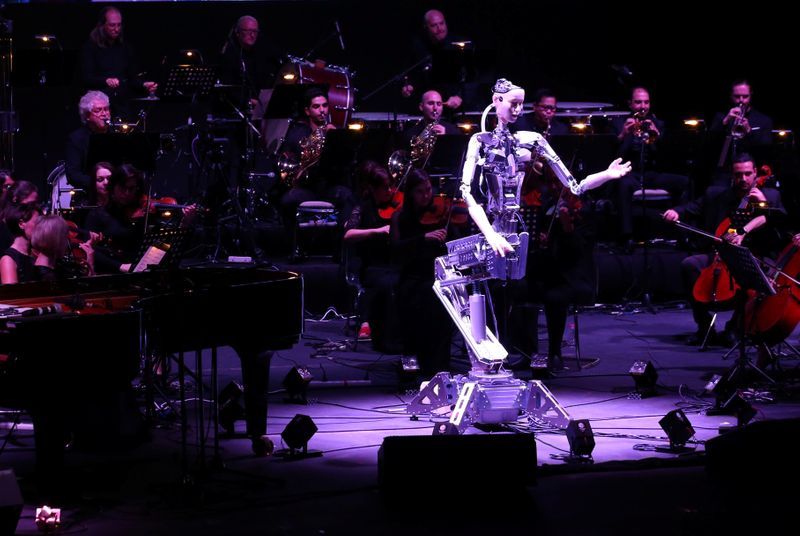 The robot has a humanoid face, hands and lower arms, which gesticulate with what could pass for passion as it bounces up and down and rotates during the live performance of Keiichiro Shibuya's opera "Scary Beauty" in the Emirate of Sharjah.
For Shibuya, a composer from Japan, the role of robots in our everyday lives may well be increasing, but it is up to us to decide how artificial intelligence might add to the human experience, and humans and androids create art together.
"This work is a metaphor of the relations between humans and technology. Sometimes the android will get crazy, human orchestras have to follow. But sometimes humans can cooperate very comfortably," he said.
Shibuya wrote the music, but the android controls the tempo and volume of the live show, and even sings at times.
Meet the Tech World’s 10 Newest Bets on the Future of Music
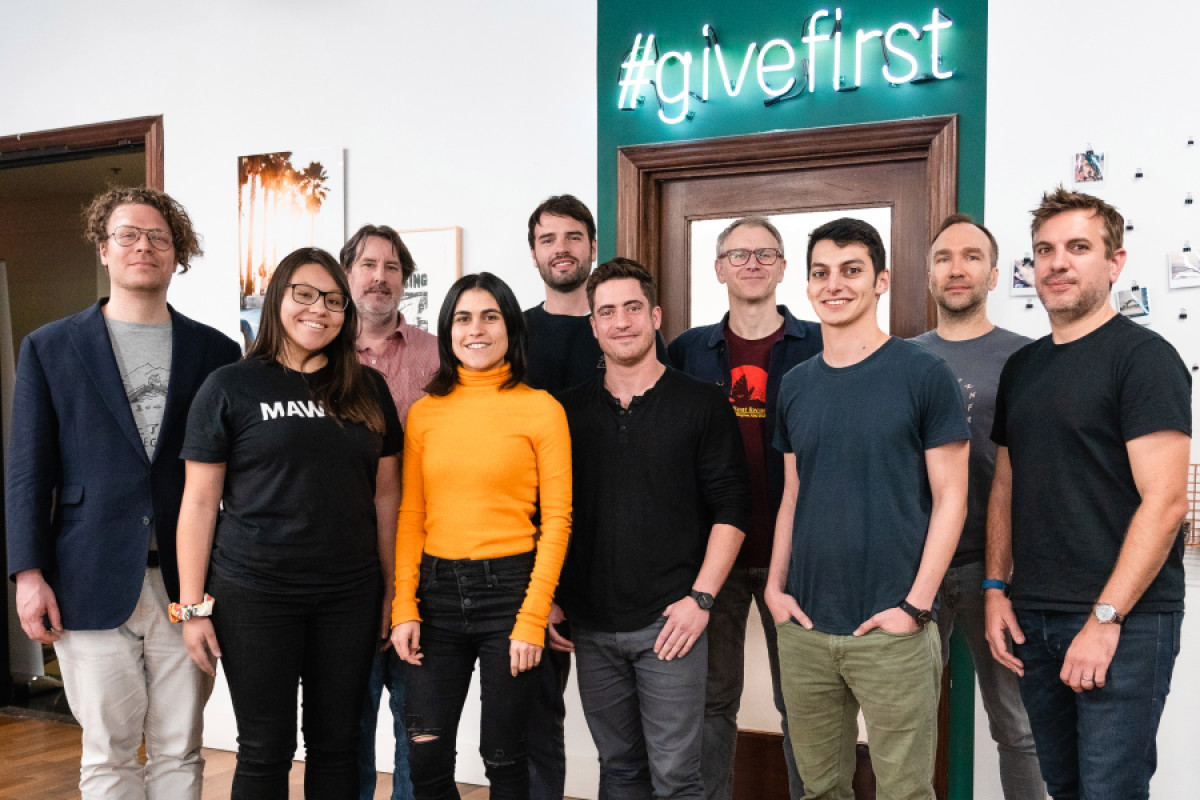 Techstars Music … announced its 2020 class today, trumpeting 10 music-tech ideas it believes will be key to the industry’s future.
Delta AI
Delta protects the digital rights and brand identity of entertainment companies through the detection and traceability of deepfakes. Delta’s AI-driven SaaS platform allows enterprise to actively identify, monitor and respond to deep fake content.
Entertainment Intelligence (Ei) collects, cleans, categorizes and enriches data for a wide range of entertainment businesses. Ei is unique in its ability to seamlessly blend social and consumption data from limitless sources, tracking and analyzing information on a daily basis. Ei also generates industry benchmarks, reports and dashboards to help customers understand their market, save time and increase efficiencies.
‘There’s a Wide-Open Horizon of Possibility.’ Musicians Are Using AI to Create Otherwise Impossible New Songs
[PhilNote: just as at the birth of the synthesizer, AI can create new sounds and tonalities based on existing instruments and voices. It is a new potential creative tool.]
 It’s the job of forward-thinking musicians, then, to wield the technology for the exact opposite purpose: to push against standardization and explore uncharted territory they could not have conjured on their own.
For their most recent album Chain Tripping, YACHT trained a machine learning system on their entire catalog of music. After the machine spit out hours of melodies and lyrics based on what it had learned, the band culled through its output and spliced together the most intriguing bits into coherent songs. The result was a jumpy and meandering interpretation of dance pop that was strange to listen to and even stranger to play.
“I think often musicians underestimate how much the way we play is based on our physical experiences and habits,” Evans says. She says it took the band many excruciating hours to learn the new music, because many riffs or chord changes would deviate just slightly from the ones they had relied on for decades. “AI forced us to come up against patterns that have no relationship to comfort. It gave us the skills to break out of our own habits,” she says. The project resulted in the first Grammy nomination of YACHT’s two-decade career, for best immersive audio album.
....
Arca and the Bronze team soon began collaborating on an installation by the French artist Philippe Parreno that currently resides in the newly reopened lobby of New York’s Museum of Modern Art. The music creaks and burbles out of swiveling speakers that seem to move along with you. The output changes with the temperature and crowd density, meaning no two days in the space will be the same.
Arca says that listening to the music that she ostensibly composed is a strange and gripping experience. “There’s something freeing about not having to make every single microdecision, but rather, creating an ecosystem where things tend to happen, but never in the order you were imagining them,” she says. “It opens up a world of possibilities.” She says that she has a few new music projects coming this year using Bronze’s technology. ...
When more AI creations are released, there will be inevitable legal battles. Existing copyright laws weren’t written with AI in mind, and are extremely vague about whether the rights to an AI song would be owned by the programmer who created the AI system, the original musician whose works provided the training data, or maybe even the AI itself. Some are worried that a musician would have no legal recourse against a company that trained an AI program to create soundalikes of them, without their permission.
See the full story here: https://time.com/5774723/ai-music/?fbclid=IwAR3xo7AJSfLU1scdhJPYsETc_QTjEcfXKXGipRDEtlZ4fTRILScs6jgvHe0