“We Were Naïve,” Says FCC Chair Who Oversaw the Creation of Section 230
 The problem is not really in markets, but in society. What is the Facebook market? The market for no one charging you to put your own content on a page? If you look at it as a market, as with Facebook, you see that a fairly small percentage of the overall online advertising market goes to Facebook, and that doesn’t really worry you. But you are worried about the embedding of the company in the society. And it is the same thing with Amazon and the same thing with Google. It is exactly the same as with AT&T: one company, everybody has a phone line, they define the technology and they do everything—so the government broke it up.
My conclusion is that Mark Zuckerberg, god bless him, who is a smart but really lucky guy, should not be surprised that people want to break up his company, because it’s exactly the same thing that happened to AT&T and also Standard Oil. Standard Oil was also embedded in society in every conceivable way: in shipping, transportation, industrial process, heating. When companies are that deeply entrenched, it isn’t anymore just about efficiency and markets—it is about their political power, social power, and influence power. And if you are Facebook and you say, “We know that we are powerful, but our powers are such superpowers that we ourselves cannot control them’”—this is not what I would call a workable excuse.
See the full story here: https://promarket.org/we-were-naive-says-the-fcc-chair-who-oversaw-the-creation-of-section-230/
Introduction to tech-driven immersive theater
 In The Nest, an immersive show currently running in Los Angeles, audience members sift through an abandoned storage unit to slowly uncover the story of its owner. Creators Jeff Leinenveber and Jarrett Lantz wanted to coax people through the story rather than lead them through it more obviously. They created a custom Arduino flashlight that the audience used to explore the space, but whose functionality could be controlled remotely. "We use it at precise moments for either cinematic effect or to help guide an audience member,” says Larantz. When audience members are getting off track, or exploring the wrong area, the show runners will trigger the flashlight and it will flicker or go out. “People will naturally gravitate towards the next thing,” says Leinenveber.
This could be automated using beacon technology like in The Raven, of course, but Lantz and Leinenveber instead opted for the human touch.
Project Amelia —a branching narrative, immersive send-up of big tech, created by Bricolage in Pittsburgh. The experience took place in a 20,000 sq. ft. former gym, involving multiple story tracks and ten possible different endings. This was far too much for a backstage team to keep tabs on. The solution? Allow the actors on stage to cue scenes and lighting changes from their own devices in real time.
See the full story with useful links at the end here: https://sway.office.com/1mZxInQjMafAtvpX?ref=Link&loc=play&fbclid=IwAR23jVsPmm2q31qUUZ0oR0MIGiWnRTz-Poxp94t09X6rJw-nsRy6ILowLog
Augmented Reality Raises Legal Issues For Property Owners
 It will be important for property owners and asset managers to be prepared for these changes. Some suggestions:
- Review lease and contract documentation to clarify what augmented reality features the tenant or counterparty may use which is associated with the building, such as those which are akin to signage.
- Perform periodic due diligence as to the appearance of the property using commonly available devices and apps.
- Review real estate purchase agreements to be sure that agreements with augmented reality providers are disclosed and either assigned to the purchaser or terminated at closing.
see the full story here: https://www.law360.com/technology/articles/1240342/augmented-reality-raises-legal-issues-for-property-owners
Twitter Just Released Its Plan To Deal With Deep Fakes
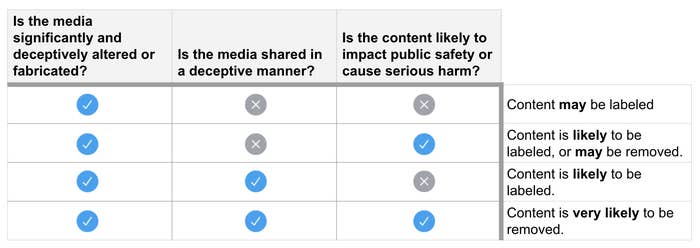 Twitter will soon begin removing altered videos and other media that it believes threatens people’s safety, risks mass violence, or could cause people to not vote. It will also start labeling significantly altered media, no matter the intent.
The company announced the new rule Tuesday. It will go into effect March 5.
“You may not deceptively share synthetic or manipulated media that are likely to cause harm,” Twitter said in a blog post. “In addition, we may label Tweets containing synthetic and manipulated media to help people understand the media’s authenticity and to provide additional context.”
See the full story here: https://www.buzzfeednews.com/article/alexkantrowitz/twitter-just-released-its-plan-to-deal-with-deep-fakes
WHEN THE BEST USER INTERFACE IS NO INTERFACE AT ALL
 For years now, medical literature has warned that “the growing number of prompts may be counterproductive.” Indeed, alarm fatigue is a serious enough issue to rank among the top ten health technology hazards of 2020, according to medical safety firm ECRI Institute.
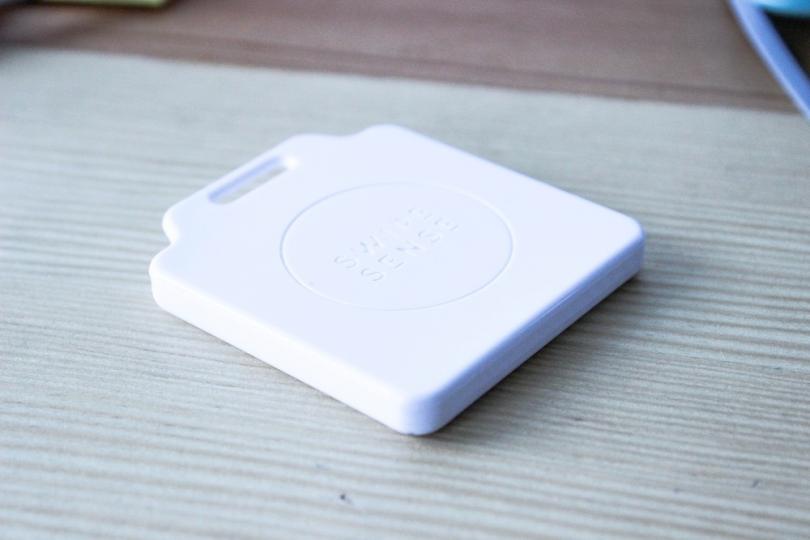
For these reasons, SwipeSense deliberately avoided alerts in the design of its product — a set of IoT “badges” that gather data on when healthcare workers disinfect their hands, and where nurses are making stops during their rounds, all geared toward driving better, safer habits.
Here’s how it works. The badges clip behind nurses’ ID cards during shifts and communicate with sensors outfitted onto hand sanitation dispensers; the badges can also attach to medical equipment, to help keep track of valuable (and expensive) devices. The data is transmitted in real time across a Bluetooth wavelength to the hospital’s cloud.
Beyond tracking hand-washing habits and assets, there are trickle-up advantages. Hospital operations staff can use the data to plug whatever holes are spotted in nurses’ rounds, thereby shoring up avoidable harm.
Artificial intelligence is also showing early promise in this area, according to a study published last year in the Journal of Medical Internet Research. Experimental results suggested that an AI “reasoning algorithm” developed by researchers — which determines if a collection of alarms should be aggregated before notifying caregivers — is useful in preventing alarm fatigue.
See the full story here: https://builtin.com/design-ux/iot-medtech-alert-fatigue-swipesense
Level 6 Autonomous Driving Concept, & An Appeal To Elon Musk To Make Smart Traffic Lights
 Dumb traffic lights could be a thing of the past, and relatively soon. The technology exists to make it happen. Guess who has this technology? Elon Musk and Tesla.
As a part of the endeavor to create autonomous vehicles, Tesla has created cameras that can recognize all of the items needed to make smart lights a reality. These include: small cars, big vehicles (SUV), buses, vans, semi trucks, pickup trucks, motorcycles, pedestrians, bike lanes, bicycles, dogs, road cones, solid lines, dashed lines, double lines, stop markings on the road, arrows on the road, trashcans, railroad crossings, lane poles, parking spaces, and parking signs.
While there are more parts of the puzzle needed, the large portion of the work has been completed. Many large intersections where this technology would be utilized already have traffic cameras installed that have fine enough vision to capture license plate characters.
See the full story here: https://cleantechnica.com/2020/02/03/level-6-autonomous-driving-smart-traffic-lights/
Israel’s Rafael reshapes urban-warfare with AI, augmented reality
 The Germany military is studying Israeli digital combat technology ahead of a potential contract. Even the United States, which enjoys modern digital equipment, has shown interest in Fire Weaver as a system that is well-suited to American battle doctrines.
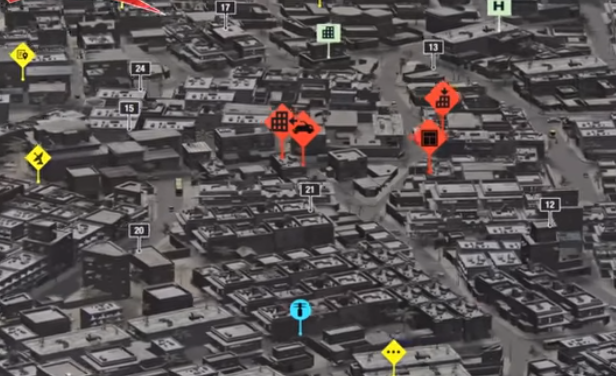
In December, a German company named Atos was selected by a German federal office, which reports to Germany’s Federal Ministry of Defense, to study the creation of a "glass battlefield to support dynamic operations." Atos was tasked with demonstrating how drones could be used together with ground vehicles and soldiers to create a real-time, three-dimensional picture – "glass battlefield" – for managing combat operations.
To carry out its study, Atos joined forces with Rafael. The Israeli company is delivering two key components for the study. .... the first component is "Fire Weaver," an advanced, augmented-reality system that connects all friendly forces to a single battlefield picture and makes sure that all of them are looking at the exact same targets. ... The second component offered by Rafael for the study is a radio system called BNET, which can be used by soldiers, vehicles or drones, connecting them all together.
See the full story here: https://www.israelhayom.com/2020/02/02/israels-rafael-revolutionizes-urban-warfare-with-ai-augmented-reality/