Skydiving, kayaking, fly fishing: Virtual reality therapy is taking paralyzed veterans to new places
 Last summer, the St. Louis VA began integrating virtual reality into therapy for patients with paralysis. Much more than a cool diversion or entertainment, it's a useful tool in helping patients cope and encouraging them to lead active lives.
"You can look down and see your feet. It's like you are standing on a pier fishing. Everything looks right. When you move, it feels like you are walking down the pier," Erbe said. "You really feel like, oh my god, I'm going too fast or I'm going too far."
Patients can box, learn tai chi, shoot a bow and arrow, and even feel like they are reeling in a big fish.
"We can have a veteran in a funk, where their life has drastically changed, and show them that just because things are different, doesn't mean you can't do this or do that. It's still possible," Luitjohan said. "It just takes adaptations."
New therapeutic programs designed for virtual reality not only can help with pain management and behavioral therapy, but also have the capability of measuring things such as reaction time, range of motion and cognitive function to determine whether patients are progressing.
See the full story here: https://techxplore.com/news/2020-01-skydiving-kayaking-fishing-virtual-reality.html
Bay Area virtual reality amusement boldly goes to the next level

"Star Trek Discovery: Away Mission" puts players in the role of Starfleet officials who must battle strange creatures and Klingons during an investigation. (Sandbox VR)
Sandbox, which also has a space in San Mateo, is one of several companies attempting to take cutting-edge virtual-reality technology and boldly go in a more ambitious, visually stunning, full-body direction while developing a new genre of entertainment.
“A lot of people tend to think that VR is just putting on a headset and watching a movie at home or seeing a game play out in front of you while you have a controller in your hand,” says Susan Washburn, store manager for San Francisco’s Sandbox VR. “We’re making it not only more immersive, but interactive with other people.”
The Void operated a pop-up space in the Atrium at Westfield San Francisco Center late last summer and plans to open a permanent venue there soon.
Our adventure began in a spacious, gray room that instantly transforms into an icy alien planet. Clad in special gear, we (and our avatars) assume the roles of Starfleet officers who are directed to investigate a distress signal. Mission accepted, naturally.
The experience lasts about 30 minutes, during which we are “beamed” to various locales and face off against one menacing threat after another. Along the way, we use tricorders to scan our whereabouts and hunt for clues. Enhancing the immersive enterprise are haptic vests that pulsate during the “teleportation” process.
Sandbox VR, which is open daily at San Mateo’s Hillsdale Shopping Center at 60 E. 31st Ave. and a San Francisco pop-up at 767 Market St. Tickets are $48 per person. https://sandboxvr.com.
See the full story here: https://www.mercurynews.com/2020/01/23/virtual-reality-amusement-boldly-goes-to-the-next-level/
Mastercard seeks loyalty in augmented reality
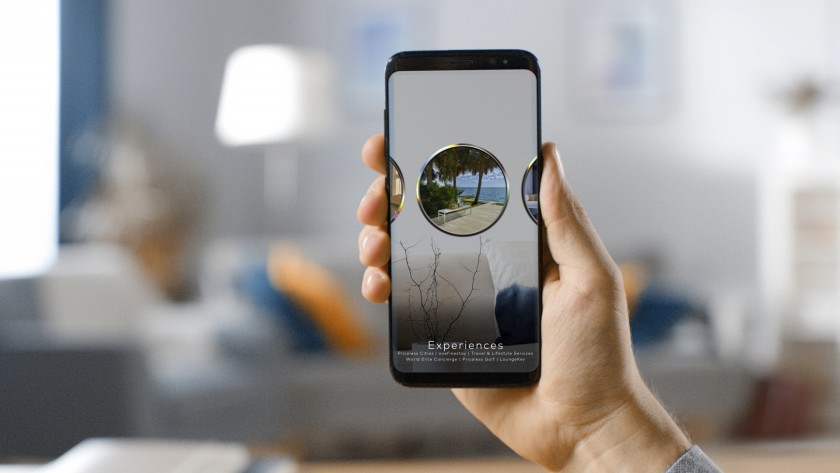 The card brand is using augmented reality to provide its own “photorealistic” experience through a series of interactive portals.
TD Ameritrade and Fidelity deployed the technology to add detail to wealth management, while RBC uses AR to add content to gift cards.
Mastercard's rewards AR app prompts users to scan their card to start a session, then prompts consumers to use their phone to scan the area around them. In front of their surroundings, consumers see portals such as “experiences,” “everyday value,” or “peace of mind.”
The visuals on the phone's screen correspond to the portal — peace of mind is a spa, and everyday value is a home.. A set of golf clubs results in information about golf-related incentive marketing.
There are also partner brands, such as Lyft, Fandango and Postmates, though the brands are not involved in the design of the 360 degree virtual images. Fandango, for example, would appear as a film reel with movies, offers and benefits.
Mastercard plans to launch the AR rewards app for iPhones in the second quarter, with other platforms to follow.
"As AR takes off in lower risk areas, look for enabling payments…being able to not only receive a discount but being able to pay for the product or service at the same time.”
See the full story here: https://www.paymentssource.com/news/mastercard-seeks-loyalty-in-augmented-reality
China’s video sharing app TikTok expands in Culver City
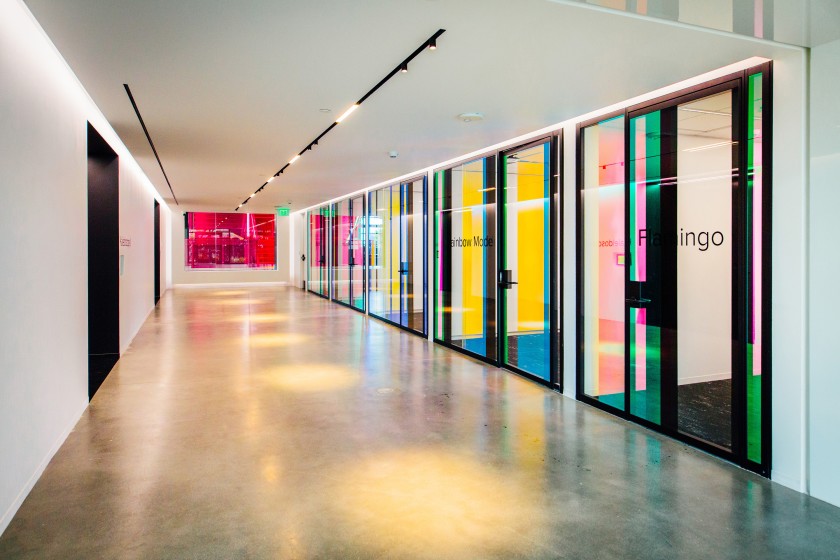 TikTok, a video sharing service, said Wednesday that it is expanding its U.S. operations in Culver City.
TikTok, which is owned by Beijing-based tech company ByteDance, said its new Culver City office has a capacity for around 1,000 employees and will provide more space for its growing U.S. team. The company was previously in a temporary office in Culver City.
The company has received acclaim for generating a big audience for influencers but also has drawn scrutiny over whether it censors content that may not be favorable to the Chinese government. Branches of the U.S. military have banned its members from using TikTok, following concerns that the app’s ties with China could pose a security risk.
See the full story here: https://www.latimes.com/entertainment-arts/business/story/2020-01-22/tik-tok-expands-office-in-culver-city
Magic Leap 1 augmented reality headset: A cheat sheet
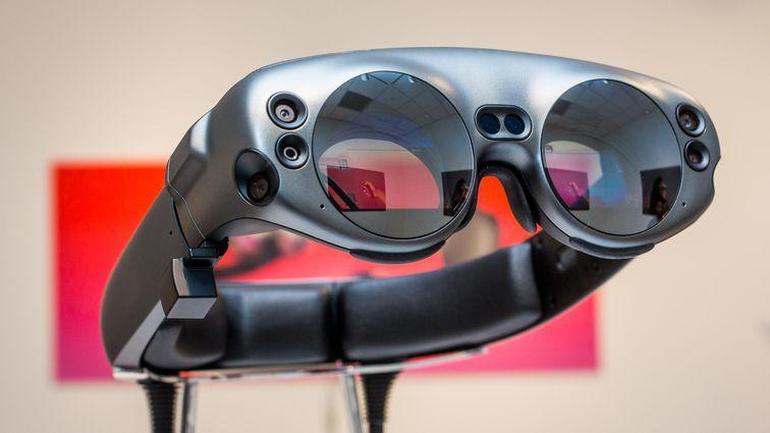 Tech specs for Magic Leap 1
Headset:
- Six-layer waveguide "photonic lightfield chip" display
- Eye tracking infrared sensors
- IR dot projector for measuring room
- 40x30 degree field of vision
- Spatial audio
- Voice input
Computer:
- NVIDIA Parker SOC
- 2 Denver 2.0 64-bit cores + 4 ARM Cortex A57 64-bit cores
- NVIDIA Pascal GPU, 256 CUDA cores
- 8 GB RAM
- 128 GB SSD storage
- Bluetooth 4.2, Wi-Fi 802.11ac/b/g/n, USB-C
- Up to three hours of continuous-use battery life
- Runs on proprietary Lumin OS
Controller:
- 6 degrees of freedom
- LRA haptic feedback
- Touchpad
- 8-bit resolution trigger button
- Digital bumper button
- Digital home button
How can developers build apps for Magic Leap 1?
Magic Leap 1, like HoloLens, is a developer-centered device. Developers who want to build apps (experiences) for Magic Leap 1 need to not only have access to a Magic Leap headset but also know a bit about its software.
Magic Leap 1 runs on its own operating system called Lumin OS, which is built from open-source tools like Linux and the Android Open Source Project; developers will need to become familiar with the different layers of this OS and its components. Lumin OS won't be a mystery to seasoned developers, though, because it's made up almost entirely of these familiar components:
- A Linux-based kernel with custom drivers for Magic Leap 1 makes up the Lumin OS core;
- OS services are largely standard, along with a set of Perception Services that manage Magic Leap 1's sensors and other unique hardware;
- The platform APIs used by Lumin OS are made up of standard POSIX APIs and additional ones especially for Magic Leap 1;
- The Lumin runtime provides a basic set of foundational APIs and a UI toolkit;
- Lumin OS uses popular 3D runtimes like Unreal 4 and Unity; and
- Lumin OS's interface is the last layer, and it's custom built for Magic Leap 1.
See the full story here: https://www.techrepublic.com/article/magic-leap-1-augmented-reality-headset-a-cheat-sheet/
Tim Cook Subtly Dinged Mark Zuckerburg by Saying Augmented Reality Doesn’t Isolate People Like Other Technologies
 Apple has thrown its weight behind augmented reality, integrating the technology into the iPhone and making it easier for developers to develop augmented reality apps. One popular app lets iPhone users use their phone to measure real-world items as though it's a measuring tape.
Cook pointed to AR's use in gaming as well as more futuristic uses such as projecting tutorials onto real life: "You may be under the car changing the oil, and you're not sure exactly how to do it. You can use AR."
See the full story here: https://www.entrepreneur.com/article/345333
How Do You Know When You’re Being Manipulated? The Dangers of Dark Design
 By using specific psychological techniques, designers can create UX and UI products that deceptively guide users into making decisions, often without their full understanding.
Tactics such as strategic visual design and persuasive micro-copy can manipulate people into making unintentional purchases, giving consent to invasive privacy settings or spending more time on the application than needed.
And they’re not restricted to the fringes of e-commerce sites, either: A recent study found more than 1,800 instances of dark pattern use on 1,254 online shopping websites.
The Push for Regulation Is Growing
Last year, the DETOUR Act (Deceptive Experiences to Online Users Reduction Act) was put before Congress, which would restrict irresponsible design use on big web platform holders with more than 100 million active users.
Actions like this, along with legislation like GDPR in Europe and the upcoming California Consumer Privacy Act, signal the dawn of a new information economy. While it’s difficult to predict how Big Tech will respond, some big players like Microsoft and Mozilla have actually come out in favor of the bill.
Collaboration on Ethics
On the one hand, we enjoy the opportunities and convenience given to us by digital apps. On the other, we must carefully assess the risks posed to individuals and societies as a whole and ensure that our civil liberties are protected from the long arm of data-hungry Big Tech.
See the full story here: https://www.brinknews.com/how-do-you-know-when-youre-being-manipulated-the-dangers-of-dark-design/
Experience Ai Weiwei’s first virtual reality artwork, Omni
 Ai Weiwei’s first virtual reality video, which you can see here, is called Omni. It fuses together two films the artist has made focusing on the migrant crisis, immersing viewers in the upheaval of displacement and exile for both animals and humans.
The first part of Omni focuses on the elephants of Myanmar.
The second part of Omni drops the viewer into the centre of a migrant camp known as Cox’s Bazaar, in Bangladesh just over the border from the refugees’ home in Myanmar’s Rakhine state, where they have fled persecution, ethnic cleansing and a military crackdown. The work provides a migrants’-eye view of daily activities, such as queuing for supplies, and takes the viewer through the camp, from its tents to its markets and playgrounds.
See the full story here: https://www.theguardian.com/artanddesign/2020/jan/21/experience-ai-weiwei-first-virtual-reality-artwork-omni