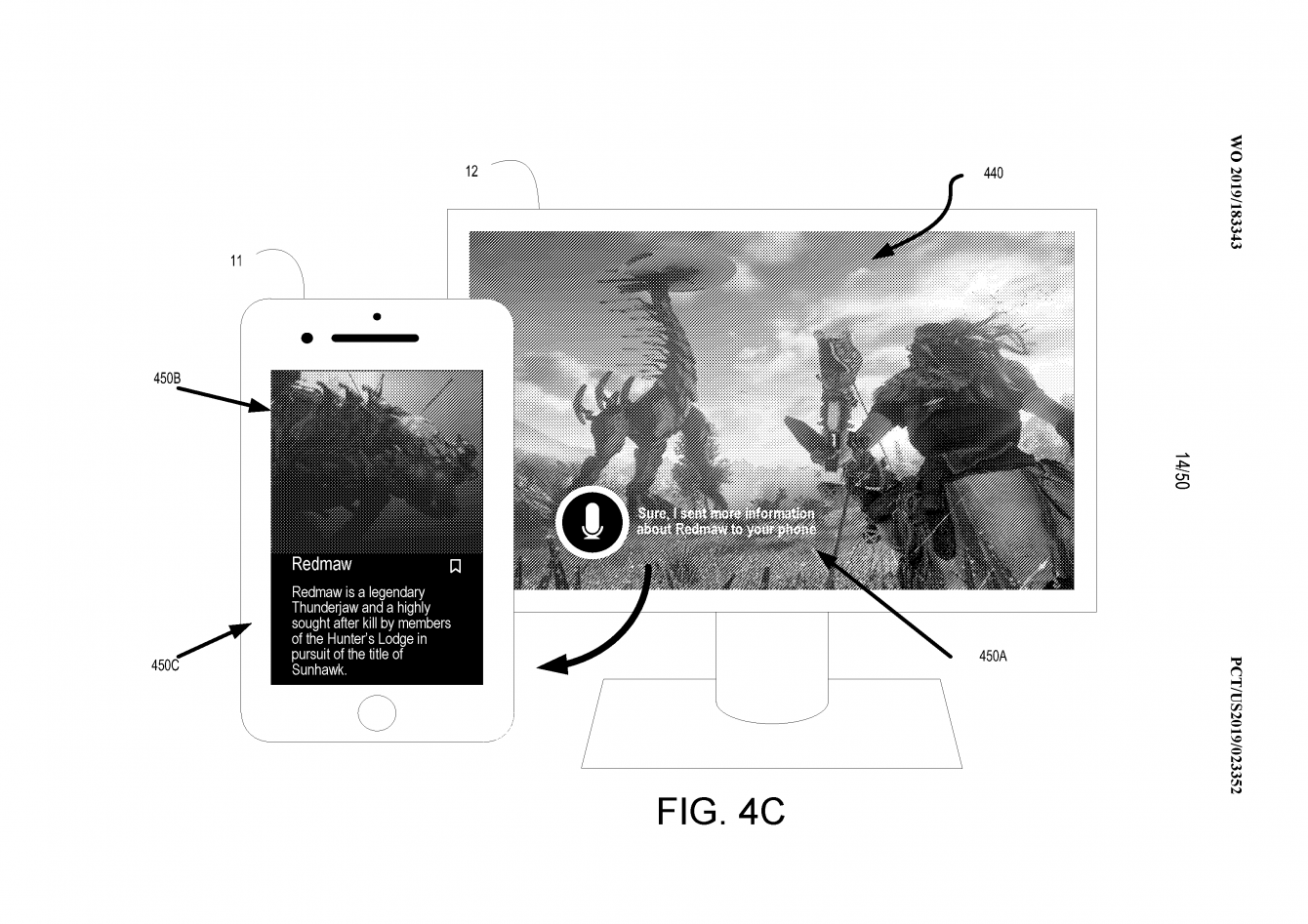
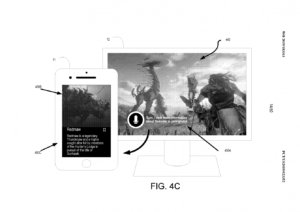
 In the patent, it shows that players will be able to ask a variety of in-game inquiries. For example, in Horizon Zero Dawn if the player asks where the nearest health source is the assistant will show it via the game’s map. There are also pictures showing requests in Skyrim including how to fight the dragon Mimulnir, where to find a steel sword, and directions to Bleak Falls Barrow. The new PlayStation assistant will seemingly function off mobile devices where you can submit your commands by either typing or speaking.
When and if it is ever implemented this could potentially be a great accessibility option for PlayStation consumers. The PlayStation 4 already has voice recognition, but nothing as advanced and detailed as what Sony is apparently pursuing.
See the full story here: https://www.dualshockers.com/sony-filed-patent-voice-assistant/
[PhilNote: this is an implementation of the spatial web similar to what 6D.AI does.]
Virtual tour technology provider Matterport is launching an app to let agents create 3D property layouts from their smartphone rather than the pricier cameras.
Matterport 3D Capture for Smartphones will be available on iPhone devices by the end of this year, with Android to follow.
The technology picks up the features of a room and objects to create 3D images with detailed characteristics.
A spokesman for Matterport said the quality of the images would be similar to third-party 360-compatible cameras.
Agents can use this service with Matterport’s starter package, which costs £7.99 a month and lets a single user upload, create and store tours.
Other packages will allow more users and offer some extra functions.
See the full story here: https://propertyindustryeye.com/matterport-to-launch-3d-virtual-reality-tours-that-can-be-taken-on-smartphones/
 The study, conducted by researchers from the University of Georgia, sought to build on previous research which found that undertaking exercise with the help of virtual reality helped patients, including people with chronic back pain, better manage their condition.
Doctoral student Carly Wender of the College of Education’s department of kinesiology, decided to investigate whether the use of virtual reality would likewise reduce pain experienced during exercise.
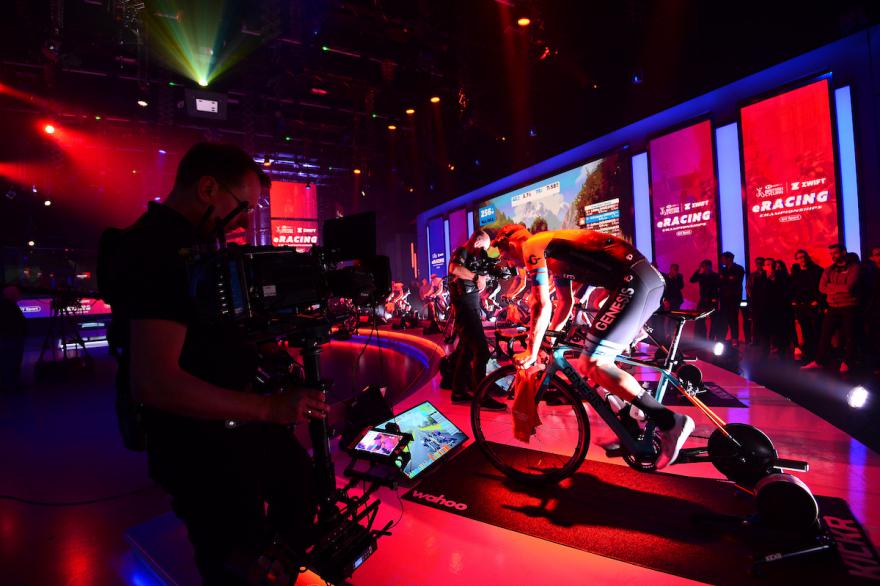
94 people participated in the study, all of them wearing a virtual reality headset while undertaking three 30-second sprints, with a four-minute recovery period in between.
Half of the subjects were shown a changing urban landscape to enable them to feel as though the were riding through a city. The rest were given a static picture of the same cityscape and asked to imagine that they were riding through it.
The former group experienced between 12 and 13 per cent less pain in their quadriceps during the second and third sprints compared to those who were shown the static picture.
Both groups achieved a similar level of cycling performance, meaning that relief from pain was not linked to potentially reduced cycling performance in the group shown the interactive cityscape.
See the full story here: https://road.cc/content/news/267023-virtual-reality-cycling-leads-less-muscle-pain-finds-study
A trial of the equipment involving 50 participants aged between 16 and 60 showed that the visual effect was “very convincing” for objects from 20cm to 10m.
None of the participants reported any eyestrain or nausea associated with using the headset.
See the full story here: https://www.aop.org.uk/ot/science-and-vision/technology/2019/09/30/researchers-develop-an-augmented-reality-headset-that-minimises-eyestrain
Developed by researchers at the Centre for Advanced Photonics and Electronics (CAPE) in collaboration with Huawei European Research Centre, in Munich, the HMD uses partially reflective beam splitters to form an additional ‘exit pupil’ (a virtual opening through which light travels). This, together with narrow pixel beams that travel parallel to each other, and which do not disperse in other directions, produces a high-quality image that remains unaffected by changes in eye focus.
See this full story here: https://www.cam.ac.uk/research/news/new-augmented-reality-head-mounted-display-offers-unrivalled-viewing-experience
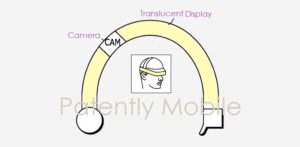 More specifically, Sony's system may also include game consoles made by Microsoft or Nintendo or other manufacturer virtual reality (VR) headsets, augmented reality (AR) headsets, portable televisions (e.g. smart TVs, Internet-enabled TVs), portable computers such as laptops and tablet computers, and other mobile devices including smart phones.
These client devices may operate with a variety of operating environments. For example, some of the client computers may employ, as examples, Linux operating systems, operating systems from Microsoft, or a Unix operating system, or operating systems produced by Apple Computer or Google.
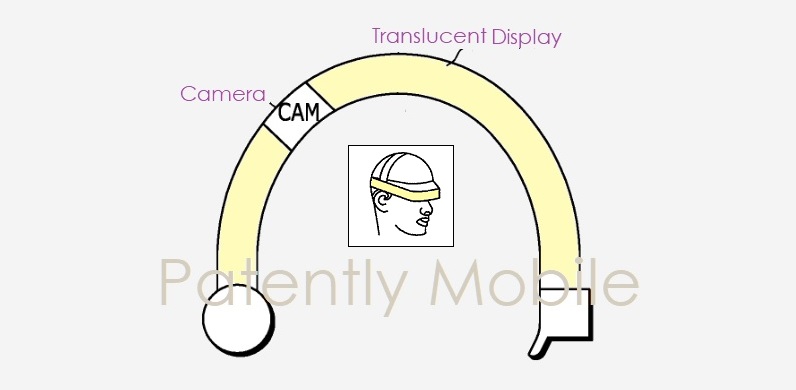
Content appropriate for Heads-Up-Display (HUD) can be strategically extracted and displayed or superimposed over the primary viewing area through the use of a visor or display worn or positioned in front of the user, relieving the user from diverting their attention to other areas of the screen and creating a gameplay advantage for the user.
See the full story here: https://www.patentlyapple.com/patently-apple/2019/09/sony-invents-an-augmented-reality-gaming-visor-for-playstation-xbox-and-both-apple-and-google-operating-systems.html
Verizon has acquired the software, technology, and "certain other assets" of San Mateo. Calif.-based augmented reality startup Jaunt XR, the companies announced Monday. The amount of the deal was not disclosed.
Jaunt, once a major player in cinematic virtual reality with more than $100 million in funding, including from Disney, had shifted to augmented reality over the past year as it struggled to make inroads in the VR market. Since the transition announced last October, Jaunt had been focusing on developing volumetric video capturing of humans for distribution on mobile devices and social media channels. It was working on projects with AT&T, Snap, and Facebook, chief operating officer David Moretti told Fortune back in April, adding that the projects were "a nice story for a 5G use case."
See the full story here: https://fortune.com/2019/09/30/verizon-jaunt-xr-augmented-reality/
In fact, each unit contains two cameras. One camera photographs a car’s registration plate and a second high-set lens looks down through the windscreen and can see what drivers are doing with their hands.
The units use artificial intelligence to exclude drivers who are not touching their phones. Photos that show suspected illegal behavior are referred for verification by human eyes before an infringement notice is sent to the vehicle’s registered owner along with a 344 Australian dollar ($232) fine. Some cameras will be permanently fixed on roadsides and others will be placed on trailers and moved around the state.
A six-month trial of two fixed cameras this year checked 8.5 million vehicles and detected more than 100,000 drivers with their hands on phones, including one driver who was using a phone and iPad simultaneously. Another driver had a passenger steer while they both held phones, the government said.
See the full story here: https://www.providencejournal.com/entertainmentlife/20190927/australia-uses-new-technology-to-catch-drivers-on-phones
- Scientists have developed a soft artificial skin that provides haptic feedback and -- thanks to a sophisticated self-sensing mechanism -- has the potential to instantaneously adapt to a wearer's movements. Applications for the new technology range from medical rehabilitation to virtual reality.
- The skin's system of soft sensors and actuators enable the artificial skin to conform to the exact shape of a wearer's wrist, for example, and provide haptic feedback in the form of pressure and vibration. Strain sensors continuously measure the skin's deformation so that the haptic feedback can be adjusted in real time to produce a sense of touch that's as realistic as possible. The scientists' work has just been published in Soft Robotics.
- Haptics sandwiched between silicone layers
The artificial skin contains soft pneumatic actuators that form a membrane layer which can be inflated by pumping air into it. The actuators can be tuned to varying pressures and frequencies (up to 100 Hz, or 100 impulses per second). The skin vibrates when the membrane layer is inflated and deflated rapidly. A sensor layer sits on top of the membrane layer and contains soft electrodes made of a liquid-solid gallium mixture. These electrodes measure the skin's deformation continuously and send the data to a microcontroller, which uses this feedback to fine-tune the sensation transmitted to the wearer in response to the wearer's movements and changes in external factors.
See the full story here: https://www.sciencedaily.com/releases/2019/09/190927074937.htm
 The algorithm is trained to identify the language, tone and facial expressions to select the best applicants by assessing their performances in the videos.
Facial expressions assessed by the algorithms include brow furrowing, brow raising, eye widening or closing, lip tightening, chin raising and smiling, which are important in sales or other public-facing jobs.
Loren Larsen, Hirevue’s chief technology officer, told The Daily Telegraph that 80 to 90 per cent of the predictive assessment was based on the algorithms’ analysis of candidates’ use of language and verbal skills.
“There are 350-ish features that we look at in language: do you use passive or active words? Do you talk about ‘I’ or ‘We.’ What is the word choice or sentence length? In doctors, you might expect a good one to use more technical language,” he said.
“Then we look at the tone of voice. If someone speaks really slowly, you are probably not going to stay on the phone to buy something from them. If someone speaks at 400 words a minute, people are not going to understand them. Empathy is a piece of that.”