An Augmented Reality Tour Guides Visitors to the Museum’s Margins
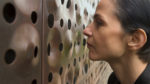 The de Young Museum in San Francisco accurately describes Ana Prvački’s Detour, a new commission developed in collaboration with Google Arts & Culture, as an “alternative” tour. I’d add a few other adjectives: decentralized, wide-ranging, irreverent, semi-private, and technologically advanced. Available through September 29, Detour is a series of videos meant to be viewed on one’s smartphone at nine specific points in the museum, offering Prvački’s take on the museum’s architecture, gardens, and the views its tower affords. Her videos are activated by the magic of Google Lens, an app most commonly advertised as a way to identify species of flowers and dogs through a smartphone camera. Though Prvački’s tour, as an artwork, is a refreshing and adventurous addition to the museum’s contemporary exhibitions, the requirement to view it through one’s phone via an app often felt like rigmarole invented for the sake of collaborating with a major tech company rather than the future of expanded art viewing.
The app is free. The spaces you traverse in the course of visiting Detour’s stops are unticketed. There’s even Wi-Fi to let you download Google Lens without incurring data charges. But the de Young does not provide loaner devices for those without the correct technology who might wish to view Prvački’s work on-site. While Google Arts & Culture has a presentation of the project on its website, the charm of the tour is having a personal guide in your pocket. It wouldn’t make sense as a series of video stations scattered around the museum, either. Not all art is viewable by all people—barriers to entry include geography, admission fees, personal comfort, and social pressures. The de Young is very clear in its positioning of the collaboration with Google Arts & Culture, which includes both Detour and “lensable” items in the permanent collection, as an experiment. But when a museum embraces new technologies and offloads the burden of hosting those technologies onto the user, it limits access to an artwork not by ticket price, but by personal possession. And that’s a shame, because we could probably all use a bit more copper in our systems.
See the full story here: https://finance.yahoo.com/news/know-investing-virtual-reality-technology-111700513.html
Entanglement sent over 50 km of optical fiber
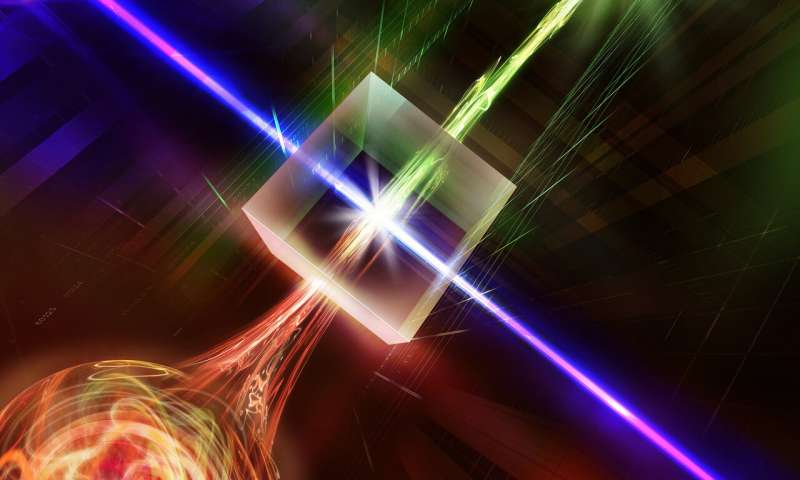 For the first time, a distance of 50 kilometers was covered using fiber optic cables. "This is two orders of magnitude further than was previously possible and is a practical distance to start building inter-city quantum networks," says Ben Lanyon.
Converted photon for transmission
Lanyon's team started the experiment with a calcium atom trapped in an ion trap. Using laser beams, the researchers write a quantum state onto the ion and simultaneously excite it to emit a photon in which quantum information is stored. As a result, the quantum states of the atom and the light particle are entangled. But the challenge is to transmit the photon over fiber optic cables. "The photon emitted by the calcium ion has a wavelength of 854 nanometers and is quickly absorbed by the optical fiber," says Ben Lanyon. His team therefore initially sends the light particle through a nonlinear crystal illuminated by a strong laser. Thereby the photon wavelength is converted to the optimal value for long-distance travel: the current telecommunications standard wavelength of 1550 nanometers. The researchers from Innsbruck then send this photon through a 50-kilometer-long optical fiber line. Their measurements show that atom and light particle are still entangled even after the wavelength conversion and this long journey.
See the full story here: https://phys.org/news/2019-08-entanglement-km-optical-fiber.html
Martin Scorsese, Christopher Nolan Among Directors Launching “Filmmaker Mode” TV Setting
 Leading directors including Martin Scorsese, Christopher Nolan, Ryan Coogler, Patty Jenkins and Rian Johnson have teamed up with the UHD Alliance — a coalition whose members include Hollywood studios and consumer electronics manufacturers — to introduce a new UHD TV setting aimed at preserving the filmmakers' creative intent on consumer displays.
There’s been growing concern in the production community that with the many settings available on consumer TVs, the filmmaker’s creative decisions that are made during production and post are not always what is displayed. This new "Filmmaker Mode" for supported TV models is aimed at giving viewers a consistent, cinematic representation of images as the filmmakers intended, in terms of color, contrast, aspect ratio and frame rates.
He noted that Filmmaker Mode offers “a single button that lines up the settings so it works for the benefit of the movie and not against it.” He got a laugh as he added, “If you love movies, Filmmaker Mode will make your movies not look like poo poo.”
See the full story here: https://www.hollywoodreporter.com/behind-screen/martin-scorsese-christopher-nolan-launching-filmmaker-mode-tv-setting-1234968
Virtual reality helps Israeli soldiers enter new world
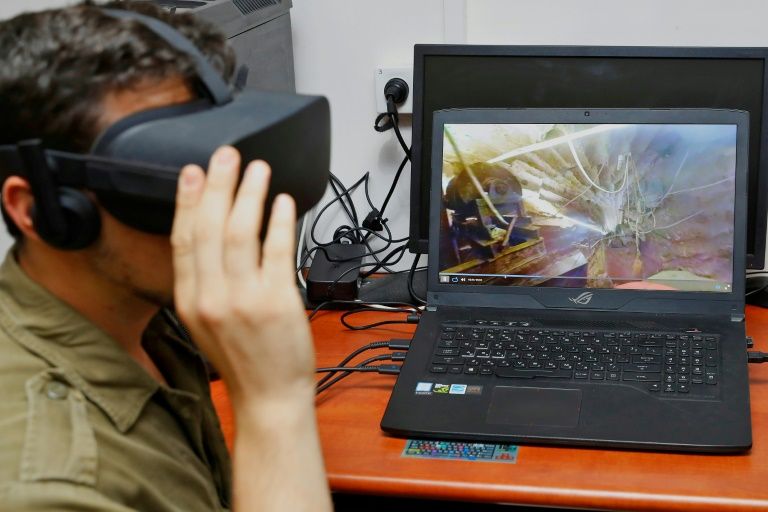 In December, the Israeli army launched an anti-tunnel operation on the Lebanese border dubbed "Northern Shield".
"Technology is an essential part of the fight," which justifies heavy investment, says H., commanding officer of Yahalom's training centre at a military base in central Israel.
The Hezbollah tunnels exposed by Israel have been digitally scanned and appear on a soldier's headset as they are in reality.
"The soldier sees what a tunnel looks like," says H.
Since it is not always possible to train in the field, the virtual world allows personnel to familiarise themselves with a hostile underground environment without leaving their base, he added.
There are a dozen soldiers on the current course; 100 have been through it since it began three years ago.
See the full story here: https://news.yahoo.com/virtual-reality-helps-israeli-soldiers-enter-world-104837674.html
Virtual Reality Expedition to Ancient Israel
 Date:
Date:
Location:
Free and open to the public
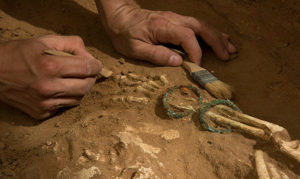
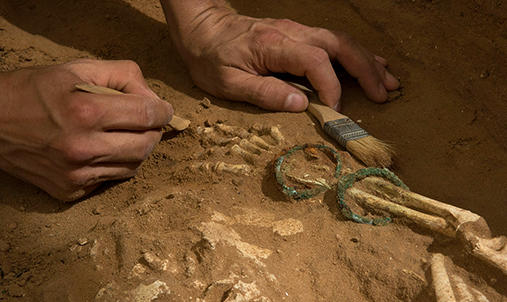
“Travel” in fifteen minutes to an archaeological site in Ashkelon, Israel to explore the first-ever excavation of a Philistine burial ground. For years archaeologists have searched for evidence of these Biblical people. Transport yourself to the center of 360° scenes of an archaeological expedition while your gallery facilitator explains what you are seeing. Borrow a device from the museum or download the virtual reality app on your smart phone and bring it to place in a 3D viewer at the museum for an immersive experience.
https://semiticmuseum.fas.harvard.edu/event/virtual-reality-expedition-ancient-israel
Google is working on cheap AI-based hand tracking for Google Glass
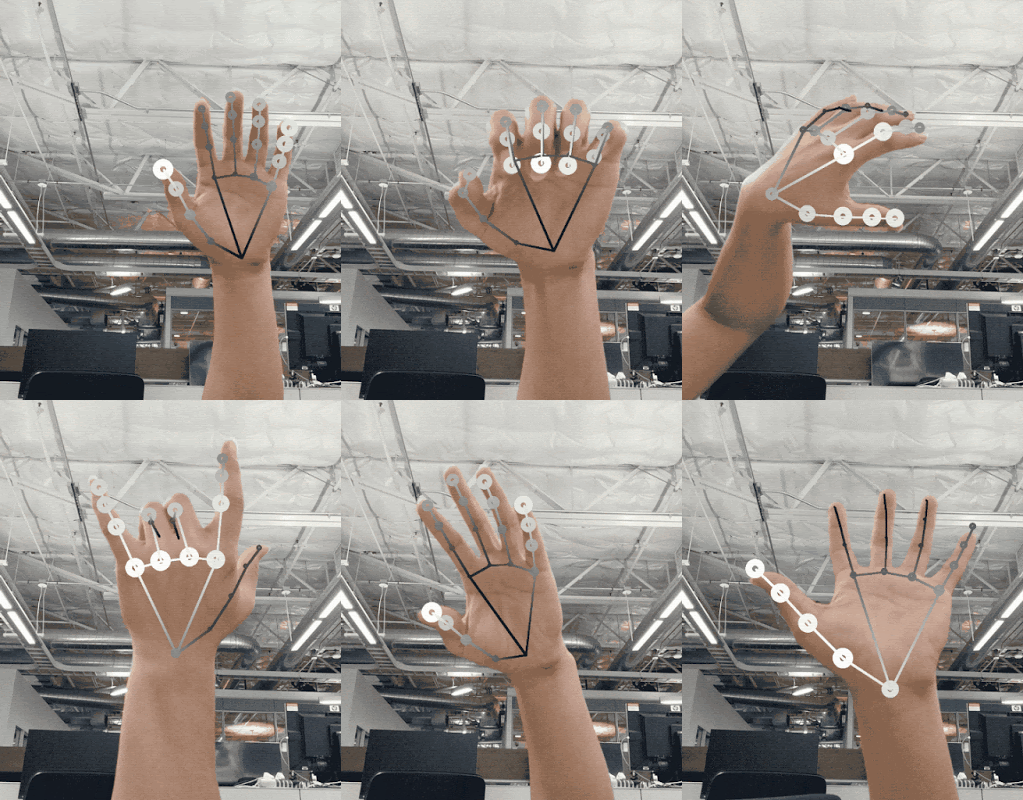
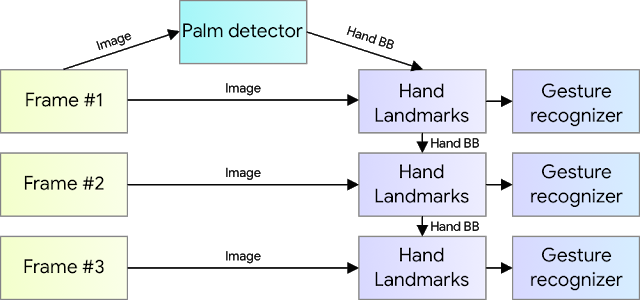 MediaPipe can map up to 21 points on the hand and fingers with up to 96% precision and do it all on a mobile device (ie not in the cloud), opening up the possibility of using the tehcnology in other applications such as controlling applications on your smartphone.
See the full story here: https://mspoweruser.com/google-is-working-on-cheap-ai-based-hand-tracking-for-google-glass/