Apple’s Sidecar just really *gets* me, you know?
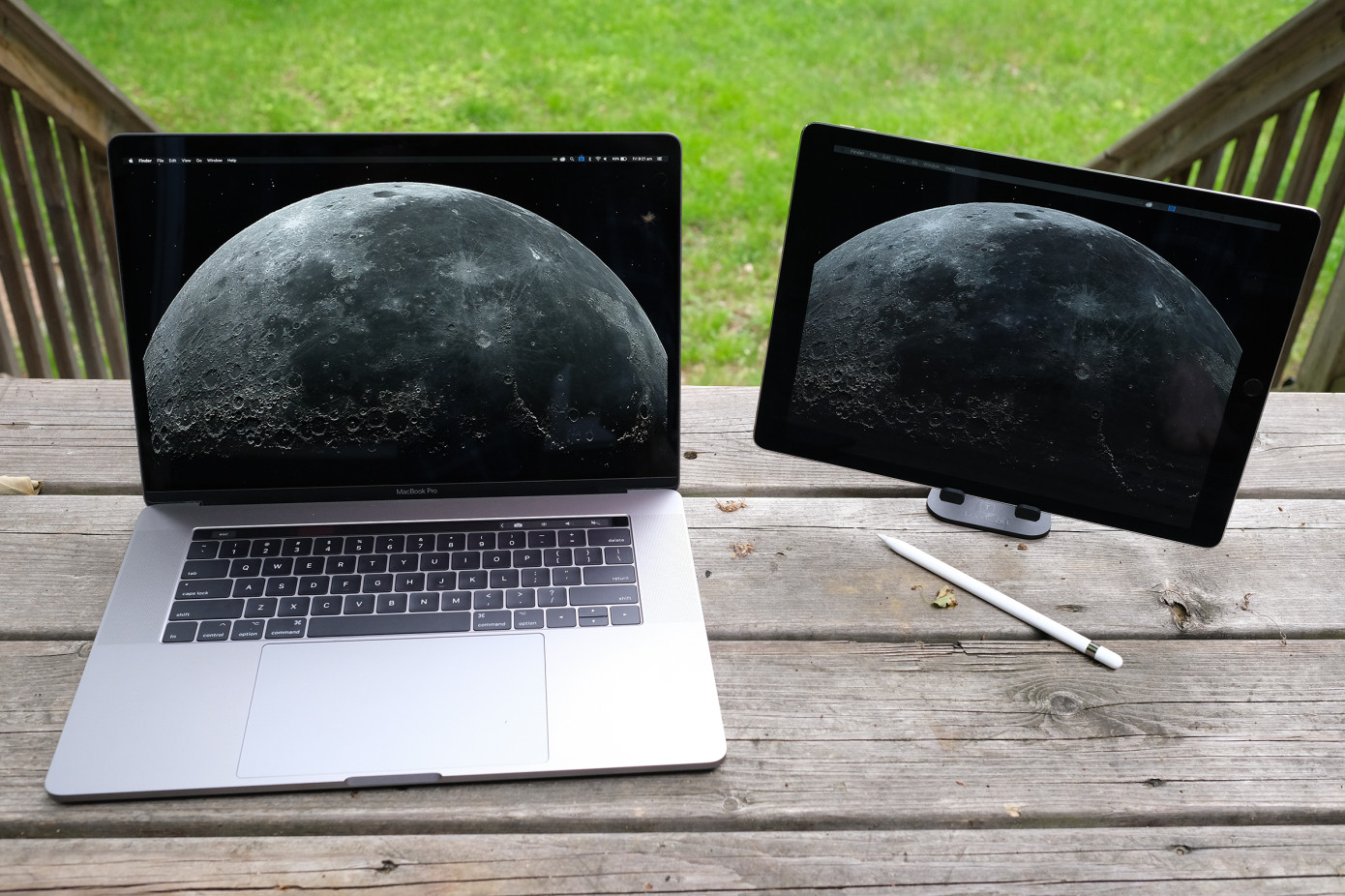 Sidecar, the feature that lets you use an iPad as an external display for your Mac. This is something I’ve been looking to make work since the day the iPad was released, and it’s finally here – and just about everything you could ask for.
But Sidecar is already a game-changer, and one that I will probably have a hard time living without in future – especially on the road.
Falling nicely into the ‘it just works’ Apple ethos, setting up Sidecar is incredibly simple. As long as your Mac is running macOS 10.15 Catalina, and your iPad is nearby, with Bluetooth and Wifi enabled, and running the iPadOS 13 beta, you just click on the AirPlay icon in your Mac’s Menu bar and it should show up as a display option.
Once you select your iPad, Sidecar just quickly displays an extended desktop from your Mac on the iOS device. It’s treated as a true external display in macOS System Preferences, so you can arrange it with other displays, mirror your Mac and more. The one thing you can’t do that you can do with traditional displays is change the resolution – Apple keeps things default here at 1366 x 1024, but it’s your iPad’s extremely useful native resolution (2732 x 2048, plus Retina pixel doubling for the first-generation 12.9-inch iPad Pro I’m using for testing), and it means there’s nothing weird going on with pixelated graphics or funky text.
See the full story here: https://techcrunch.com/2019/06/28/apples-sidecar-just-really-gets-me-you-know/?utm_medium=TCnewsletter&tpcc=TCdailynewsletter
The Pentagon has a laser that can identify people from a distance—by their heartbeat
 The Jetson prototype can pick up on a unique cardiac signature from 200 meters away, even through clothes.

Everyone’s heart is different. Like the iris or fingerprint, our unique cardiac signature can be used as a way to tell us apart. Crucially, it can be done from a distance.
An individual’s cardiac signature is unique, though, and unlike faces or gait, it remains constant and cannot be altered or disguised.
Contact infrared sensors are often used to automatically record a patient’s pulse. They work by detecting the changes in reflection of infrared light caused by blood flow. By contrast, the new device, called Jetson, uses a technique known as laser vibrometry to detect the surface movement caused by the heartbeat. This works though typical clothing like a shirt and a jacket (though not thicker clothing such as a winter coat).
Cardiac signatures are already used for security identification. The Canadian company Nymi has developed a wrist-worn pulse sensor as an alternative to fingerprint identification. The technology has been trialed by the Halifax building society in the UK.
One glaring limitation is the need for a database of cardiac signatures, but even without this the system has its uses. For example, an insurgent seen in a group planting an IED could later be positively identified from a cardiac signature, even if the person’s name and face are unknown.
Augmented Reality Changing The Factory Landscape From PTC’s Room With A View
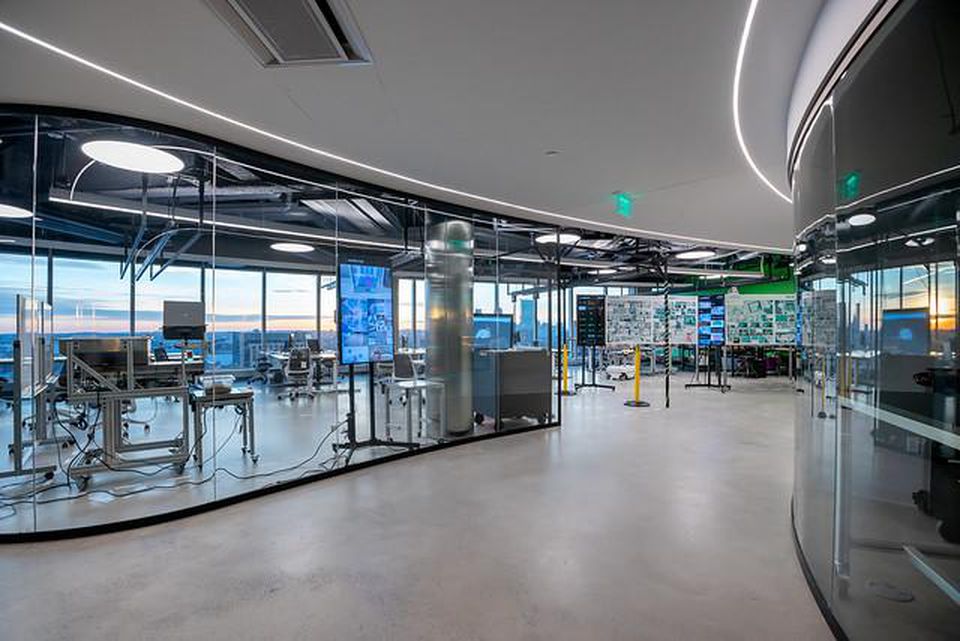 Solving a spatial problem
The goal here is to make the factory a spatial problem. "As humans, we are spatially empowered," Heun explains. "We have superpowers in our brain to understand space. Everyone has that. Every child has that. At the moment that you put the interaction with these factories into that space where they are, you literally could enable children to operate a factory. That is how easy it is."
Heun and his team have prototyped a tool that they are developing with Lego, and allowed children to program it successfully. "I told our chairman that although this is only a small Lego toy, it can also work for a big machine. The interface is the same.
"We expect more and more from our factories, or from the world that we live in. We made everything digital, and now we want to make the real world digital as well, but we don't have the right interface for that.
See the full story here: https://www.forbes.com/sites/markvenables/2019/06/25/augmented-reality-changing-the-factory-landscape-from-ptcs-room-with-a-view/#38b06f5ab40a
Vivo hopes augmented reality will get a second chance in the 5G era, unveils Vivo AR Glass headset
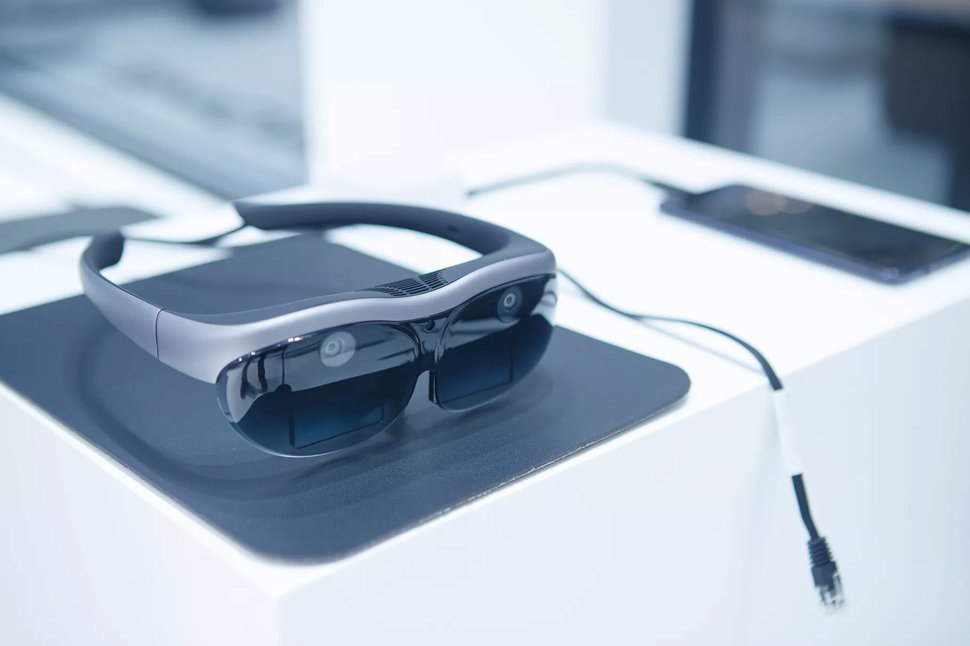
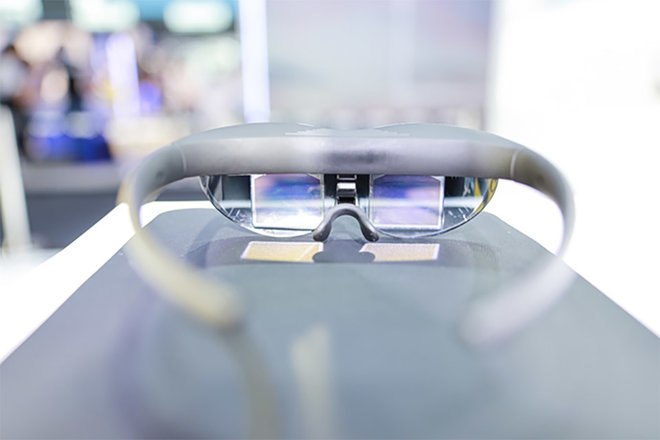 Chinese firm Vivo seems to be confident that consumer augmented reality will take off for real this time, mainly thanks to 5G.
The headset features a dual-screen display, rather than the single option on Google's mostly failed Google Glass project, and 6DoF (six degrees of freedom) to map the wearer's position in the virtual world.
The announcement was made during MWC19 Shanghai - the Far Eastern version of Mobile World Congress that occurs in Barcelona each February/March.
We'll bring you more on the Vivo AR Glass when it gets closer to release.
See the full story here: https://www.pocket-lint.com/ar-vr/news/vivo/148472-vivo-hopes-augmented-reality-will-get-a-second-chance-in-the-5g-era-unveils-vivo-ar-glass-headset
ABSOLUTELY AUGMENTED REALITY | “8 1/2 ANTI-SOCIAL MASKS FOR INSTAGRAM”

927 007

w23 005

a 009

92605 002
See the full story here: https://www.flaunt.com/content/absolutely-augmented-reality