Led by UBS Group, 14 financial firms including banks in the United States, Europe and Japan are using blockchain technology to settle cross-border trades. The group, which spent the last four years developing this project, invested £50 million ($63.2 million) to establish Fnality International, a company to control the bitcoin token, dubbed the utility settlement coin (USC). Trades can take a long time to clear and failed trades are common; the USC token would both carry all the information to complete a trade and be payment for it.
The Wall Street Journal reports that the project’s launch “may herald a new phase in the banking sector’s adoption of blockchain.” “A number of blockchain projects are moving out of the experimental phase and into production, a sign that the technology is becoming more integrated in the global financial infrastructure,” it adds.
See the full story here: http://www.etcentric.org/coalition-of-banks-launches-bitcoin-for-cross-border-trade/
ePlay Digital Inc. (CSE:EPY) today announced its partnership with 8i, a leading volumetric video company with facilities in Los Angeles, Seoul, Tokyo, Wellington, and Seattle. ePlay will integrate 8i hardware and content used for creating and publishing 3D avatars into ePlay’s sports, esports, and entertainment mobile game platform and Fan Zones. The collaboration increases ePlay’s presence in Los Angeles, dramatically decreases development time for adding celebrities and athletes into Big Shot games, and creates new sponsorship and advertising revenues for the two companies. ePlay recently announced that Big Shot is expected to generate an average esports, and in-app purchase revenue per daily active user (ARPDAU) of USD$1.46. The new features, advertising, and sponsorship revenues from this partnership are expected to add USD$0.03 ARPDAU in 2019 and drive ePlay’s gross margin rate to over 80% in 2020.
See the full story here: https://www.globenewswire.com/news-release/2019/06/05/1864890/0/en/ePlay-and-8i-Announce-Augmented-Reality-Partnership-and-L-A-AR-Studio.html
 Hello TeamSolar has partnered with Google to create augmented reality (AR) technology focused on customized experiences in specific locations. As part of the deal, Google has invested in Hello TeamSolar.
The funding will primarily go toward developing a platform for branded custom AR experiences to be played in large-scale settings across multiple devices in real time. The team will also be working with Google to create applications that support AR location-based services. The startup is creating a platform to deliver content via multiple devices with Google Cloud Anchors.
Archie Prakash, who is on the faculty of University of Southern California’s Interactive Games & Media department, founded Hello TeamSolar along with Nick Fortugno, creator of Diner Dash and CEO of Playmatics, and Linda Franke, a former lecturer at UDK Berlin (Berlin Arts University).
Google will own roughly 5% of Hello TeamSolar, which has a post valuation of $10 million.
Hello TeamSolar’s advisers include Samuel Roberts of USC Cinematic Arts and Maria Essig of Google.
See the full story here: https://venturebeat.com/2019/06/05/google-invests-in-augmented-reality-tech-startup-hello-teamsolar/
Video analytics is a seldom-used term, however, its impact is game-changing. Picture this familiar scenario: a fashion retailer has a physical store on the high street and an online e-commerce website for the same product ranges. People enter the store to try on the products and browse the items that they are interested in, but the majority of people leave without buying anything at all. Often, when this is the case, those who do not buy are never registered as having existed in the company’s data understanding (apart from perhaps as a contributor to footfall).
The online store, on the other hand, sees more sales due to the convenient nature of the service. All data that is collected from the website automatically from cookies and tracking links are analysed and inputted into the online feedback loop, whether a person bought made a purchase or not. However, this feedback loop does not exist for the physical store. Detailed pre-purchase data simply hasn’t existed until now. This is the way that the industry has always worked and will always work, right…? Perhaps not, anymore…
Technology has now reached the stage where similar kinds of data can be collected from the physical store as already from online activity. Video analytics is the medium which enables this to happen. By having one or a set of analytics-enabled cameras in the store, data is collected from how people interact with the physical space around them. Once collected this is run through an artificial intelligence system that can identify, categorise and rank different behaviours. No annoying feedback forms upon checkout. No emails asking how people’s in-store experience was. Nothing. By utilising smart, analytics-enabled cameras, business intelligence data can be collected and used to inform an important business decision on a regular basis. This leads to a more intelligent model of operation and, quite simply, a more successful business.
See the full story here: https://www.technative.io/forget-augmented-and-virtual-reality-genuine-reality-is-making-a-comeback/
 But what if that tamper-resistant seal originated from the camera itself? The NYU team demonstrates that you could adapt the signal processors inside—whether it's a fancy DSLR or a regular smartphone camera—so they essentially place watermarks in each photo's code. The researchers propose training a neural network to power the photo development process that happens inside cameras, so as the sensors are interpreting the light hitting the lens and turning it into a high quality image, the neural network is also trained to mark the file with indelible indicators that can be checked later, if needed, by forensic analysts.
"People are still not thinking about security—you have to go close to the source where the image is captured," says Nasir Memon, one of the project researchers from NYU Tandon who specializes in multimedia security and forensics. "So what we’re doing in this work is we are creating an image which is forensics-friendly, which will allow better forensic analysis than a typical image. It's a proactive approach rather than just creating images for their visual quality and then hoping that forensics techniques work after the fact."
The main thing consumers expect from cameras is ever-improving image quality and fidelity. So one main focus of the project was showing that incorporating machine learning into the image signal processing that goes on inside of a camera doesn't visibly detract from photo quality as it paves the way for tamper-resistant elements. And adding these features within the image-generation hardware itself means that by the time files are being stored in the camera's SD card or other memory—where they're potentially at risk of manipulation—they are already imbued with their tamper-evident seals.
The researchers mainly insert their watermarks into certain color frequencies, so they will persist through typical post-processing—like compression or brightness adjustments—but show modification if the content of an image is altered. Overall, the forensic-friendly additions improved image manipulation detection accuracy from about 45 percent to more than 90 percent.
"As the research and industrial communities consider this technology, I do think they should be wary of potential risks posed by anti-forensic attacks and adversarial machine learning," says Matthew Stamm, an information forensics researcher at Drexel University. " ... But it’s feasible that an attacker might be able to create a deep learning network to remove these security artifacts, allow an image to be modified or falsified, then re-insert the security artifacts afterward."
For forensic watermarking to really make an impact on curbing deepfakes it would need to work on video also, something the researchers say they haven't broached yet, but that would be theoretically possible.
See the full story here: https://www.wired.com/story/detect-deepfakes-camera-watermark/
 The study showed that this was not significant and showed a reversal in the traditional view. Students wearing virtual reality headgear that blocked their full view of their partner not wearing AR felt that they had less of a social connection with their partner.
On the other side, those who were not wearing AR gear said they did not notice a significant difference and felt socially connected to the AR user they were paired with.
This directly contrasts the common attitude of cellphone users when interacting with others. In this case, many studies have found that the cellphone user felt more socially connected with their conversation partner than the non-cellphone user.
This could suggest that with newer AR technologies, there are more ways to interact than with previous technologies.
Another factor would be that the test subjects might not have known the AR user had a limited view that prevented them from seeing what the non-AR user looked like.
See the full story here: https://byuiscroll.org/study-performed-using-stanford-students-shows-the-effects-of-virtual-reality/
 1. Stage an encounter
See also: connection, conversation
2. Be wild: Bewilderment is powerful
See also: Joy, awe
3. Move from being to doing
See also: agency, interaction, control
4. Embody the future
See also: bodies, voices
See the full story here: https://immerse.news/virtual-futures-a-manifesto-for-immersive-experiences-ffb9d3980f0f
 Microsoft co-founder Bill Gates, Uber co-founder Travis Kalanick’s 10100 fund and current Uber CEO Dara Khosrowshahi have invested in Luminous, a small start-up building an artificial intelligence chip.
The seven-person company’s goal is to build a chip that can substitute for 3,000 boards containing Google’s latest Tensor Processing Unit AI chips, or TPUs.
“We know this works because we already have working silicon,” Gomez said.
Google’s entry into the AI silicon business was itself a bold development. The company took matters into its own hands, rather than relying on the Nvidia graphics cards that have become popular among AI researchers for training AI models with vast supplies of data. Google’s public cloud now features its own TPUs; the company hasn’t started selling these chips to other companies.
See the full story here: https://www.cnbc.com/2019/06/03/bill-gates-and-travis-kalanick-invest-in-ai-chip-start-up-luminous.html?fbclid=IwAR2zBjRXjd0YHALz-SdOJWJcx8fdAwvVZZsy9hjdus-ab8cTLjHMl1KYxQk

 Google
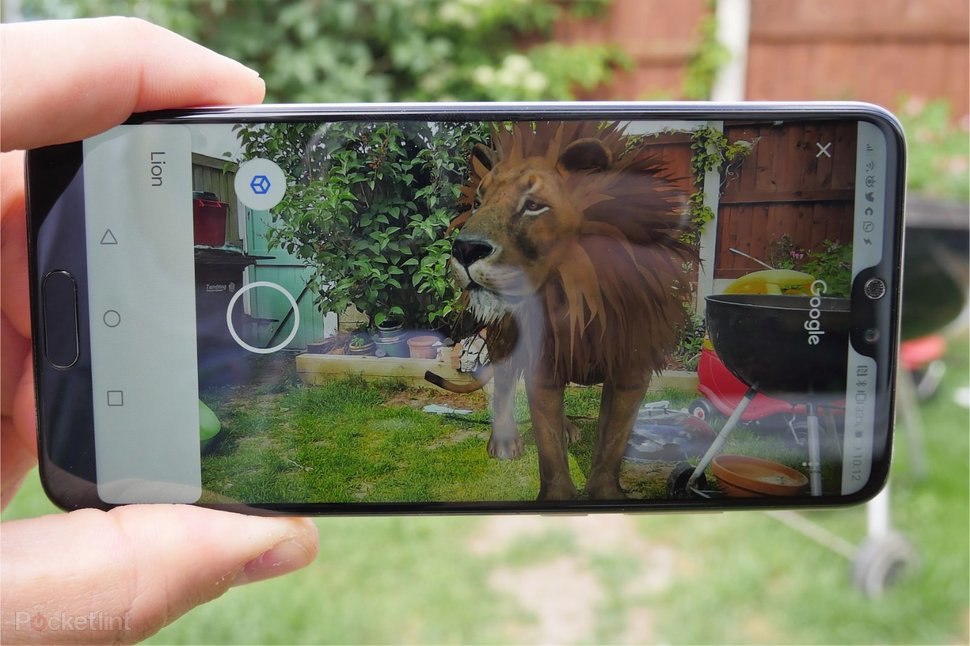
 is taking steps to make search results on your phone more exciting. One of these moves includes adding AR animals to search results.
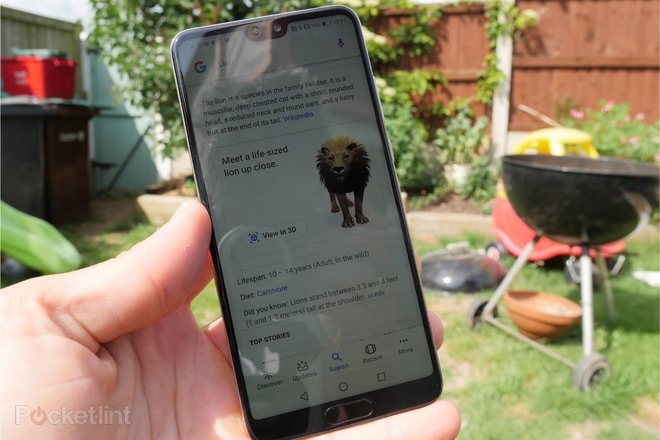
If you have an AR-enabled phone, then all you need to do is search for specific animals using Google search and you'll get an augmented reality vision of those creatures to play around with.
All you need to do is search for an animal, then you'll see a card within the results that says "Meet a life-sized [creature] up close." From there you just need to click the "view in 3D" button to launch the experience.
This new addition to search uses Google ARCore and works with any phone that supports it which includes most modern Android smartphones. We're expecting to see more of this sort of thing in future. Google has already confirmed that it's working with NASA, New Balance, Samsung, Target, Visible Body, Volvo and Wayfair to create more AR content in the near future.
See the full story here: https://www.pocket-lint.com/ar-vr/news/google/148226-google-search-results-now-include-augmented-reality-animals

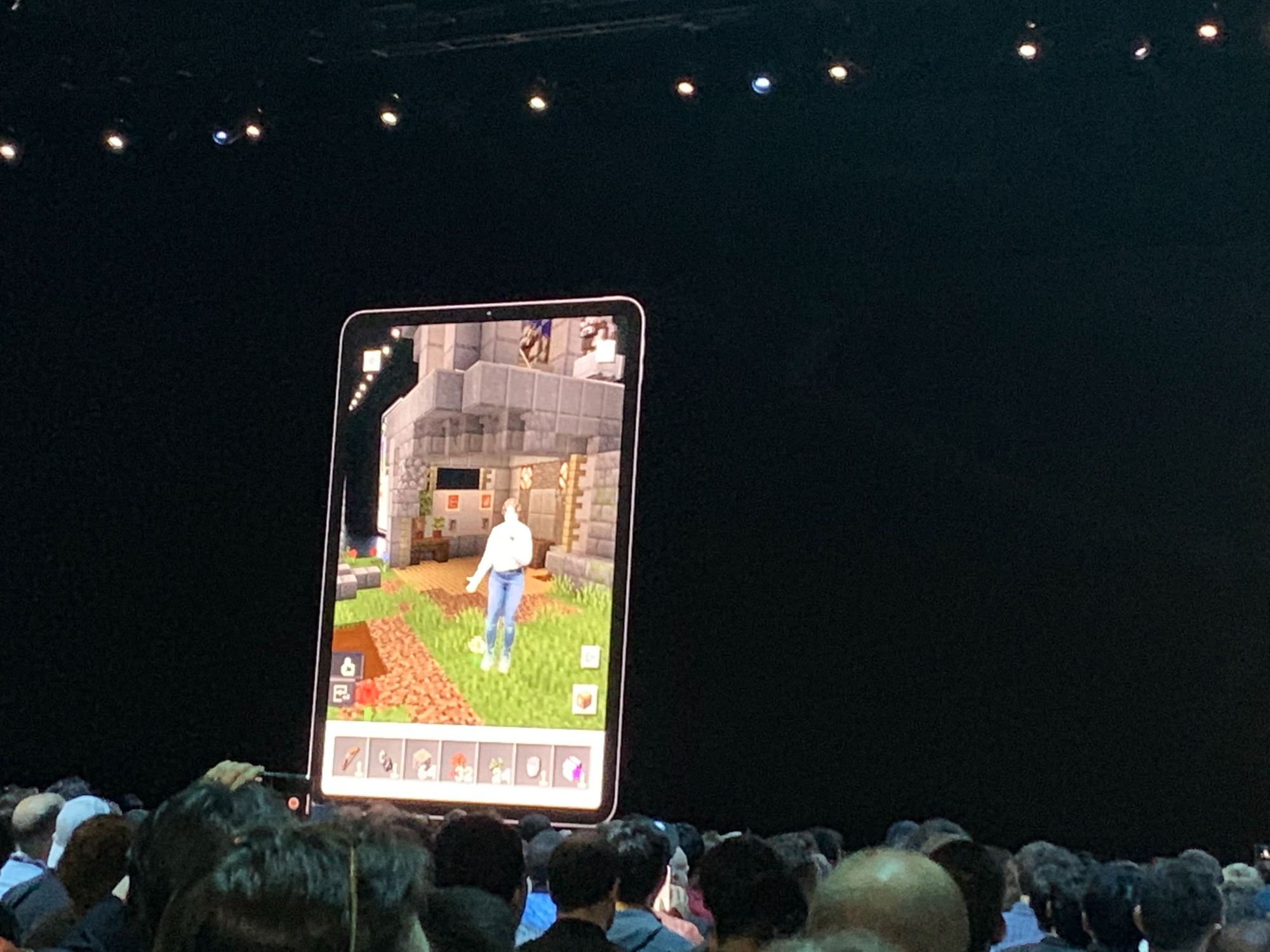
 Apple showed off its updated augmented reality platform at its Worldwide Developer Conference (WWDC) keynote event today. Apple has a new version of its AR platform, dubbed ARKit 3.0, and Microsoft showed how it could bring Minecraft to life in AR using the new features.
Onstage, Microsoft showed how you can use your iPhone to add a layer of augmented reality animations on top of a scene in Minecraft Earth. You can, as you can see in the picture above, add your own body into the 3D space of a Minecraft scene.
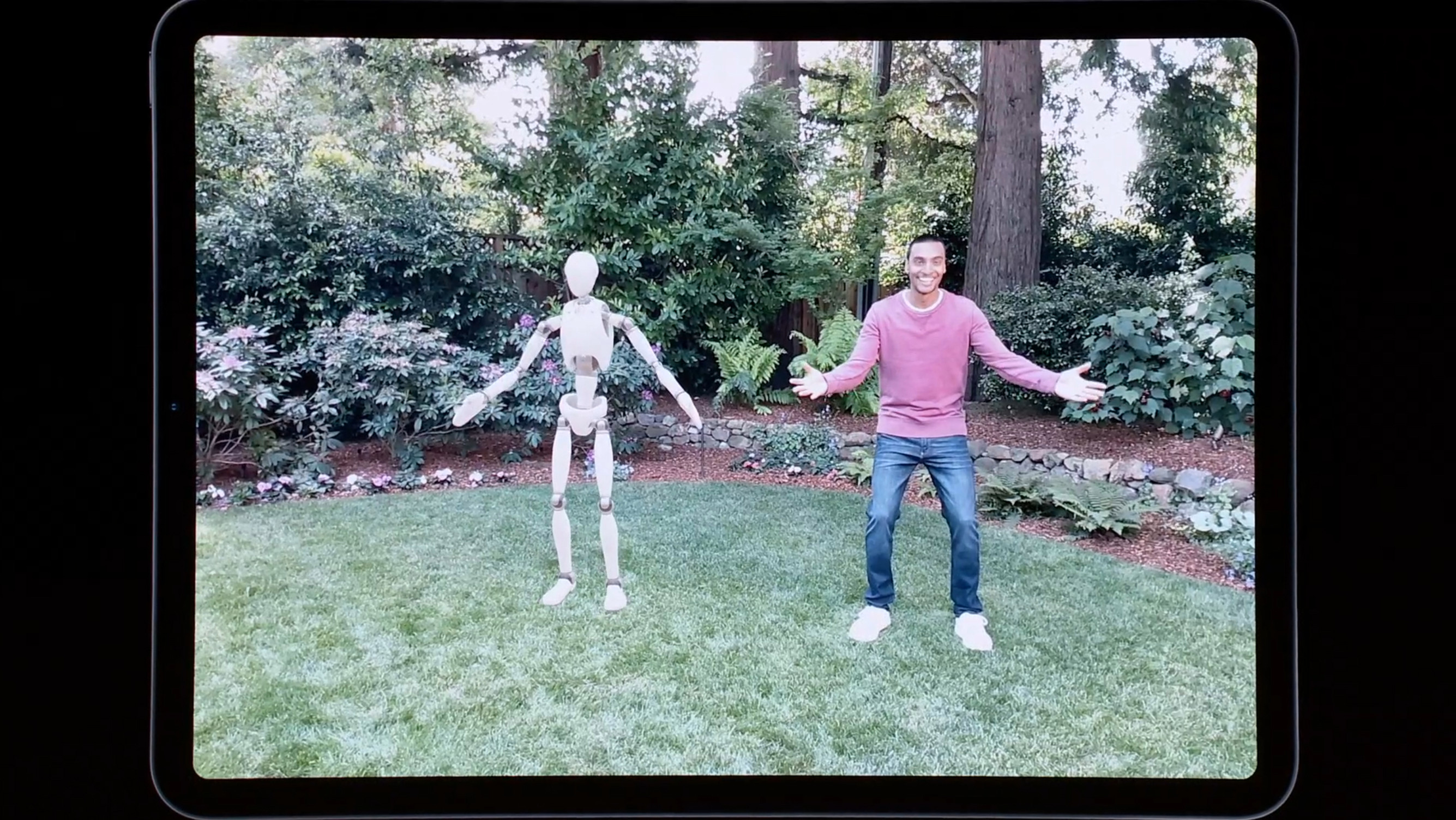
Apple has also added motion capture, which allows an iPhone to capture your body so that it can be added to an AR scene and be manipulated as a movable animated object. It’s now easier to build interactive AR experiences, and you can use an a built-in AR content library. Apple says the ARKit 3.0, RealityKit, and Reality Composer tools will make it a lot easier for developers to create compelling AR experiencers.