Sony Unit to Produce Movies, TV Shows Based on Games
 Sony Interactive Entertainment (SIE) has launched PlayStation Productions to transform the company’s 100+ video games into film and television projects. The production company, headed by Asad Qizilbash, is at work on its first projects on Sony Pictures’ Culver City lot. SIE Worldwide Studios chair Shawn Layden, who also oversees the new production company, noted that, with 25 years developing games, the company believes “now is a good time to look at other media opportunities across streaming or film or television.”
The Hollywood Reporter, in an exclusive, notes that the original content library includes “adventure to sci-fi to action to mystery to horror.” “Instead of licensing our IP out to studios, we felt the better approach was for us to develop and produce for ourselves,” said Qizilbash. “One, because we’re more familiar, but also because we know what the PlayStation community loves.”
Although film adaptations of games haven’t always worked well, Hollywood is friendlier to the concept of adapting games largely because today’s directors and producers play them.
Layden agreed, noting that his goal is, “to be the first gaming entity to do something lasting and meaningful in a completely different medium.”
See the full story here: http://www.etcentric.org/sony-unit-to-produce-movies-tv-shows-based-on-games/
Virtual reality helps police in dealing with autistic people
 This week, the company announced a partnership with Chicago police to train officers by using virtual reality headsets. It will be making the program, developed with the help of mental health and autism experts, available to police departments across the U.S.
For now, they offer two training modules: one for autism and another for dealing with people who have schizophrenia.
“The ability to tell the difference between someone who’s acting in an unusual way that may be due to their autism versus someone who could be a risk to you can be a really fine line,” said David Kearon of the advocacy group Autism Speaks. “When you’re trying to make that judgment very quickly, that’s where we see mistakes made.”
See the full story here: https://www.boston.com/news/politics/2019/05/24/virtual-reality-helps-police-learn-to-interact-with-autistic
Upcoming 10th Augmented World Expo To Shine Light On Immersive Computing
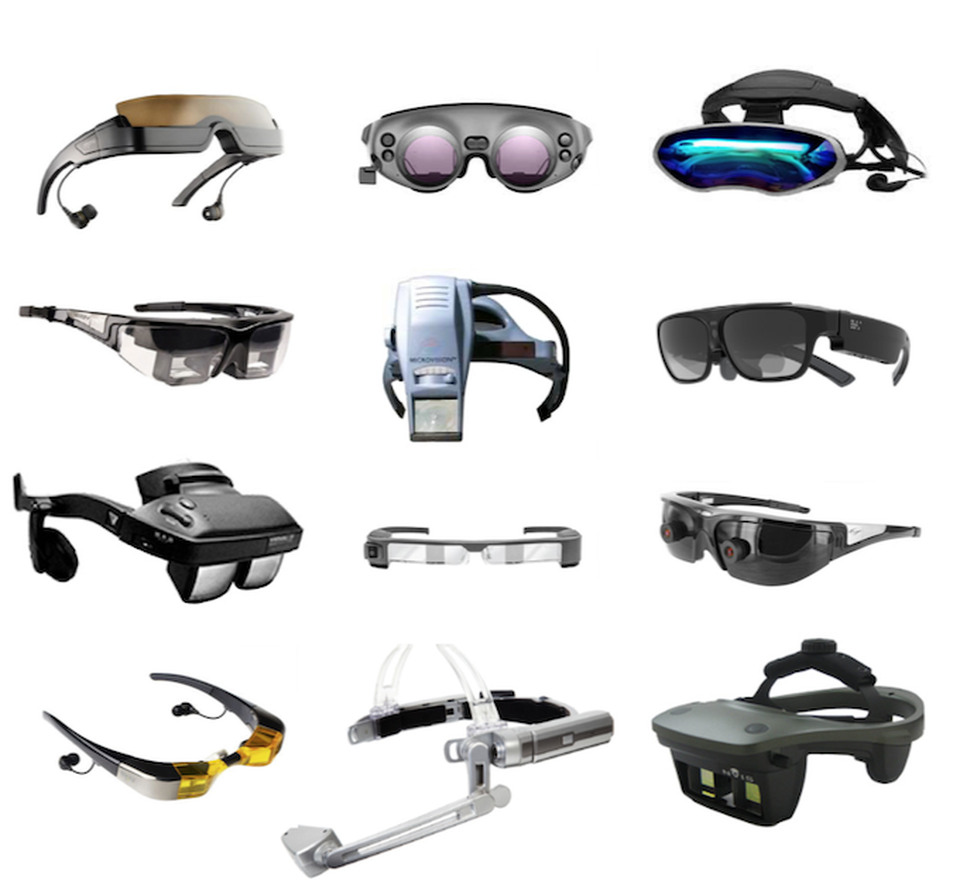 Inbar called 2019 “The Year of the Creator,” as a good number of authoring tools aimed at equipping the next generation of creators with easy-to-use object oriented tools for building XR experiences without code are coming of age. “The race to build an index of the real world is on, with companies working to align digital content with the physical environment on a global scale in order to enable next-level augmented reality,” said Inbar.
See the full story here: https://www.forbes.com/sites/charliefink/2019/05/24/upcoming-10th-augmented-world-expo-to-shine-light-immersive-computing/#56e9dc165128
Senators Press For National Artificial Intelligence Strategy
 Several U.S. senators have proposed the Artificial Intelligence Initiative Act to create a national AI strategy and fund federal R&D in this growing area to the tune of $2.2 billion. The initiative’s $2.2 billion would be awarded over a five-year period to multiple federal agencies. At the same time, although the European Commission put out guidelines for artificial intelligence technology, some experts are saying that the tech companies that participated in drafting guidelines compromised them to protect their own interests.
VentureBeat reports that the Act, created by senators Rob Portman (R-Ohio), Martin Heinrich (D-New Mexico) and Brian Schatz (D-Hawaii), would fund agencies such as the Department of Energy and the Department of Commerce’s National Institute of Standards and Technology (NIST), and would also “establish a National AI Coordination Office to lead federal AI efforts, require the National Science Foundation (NSF) to study the effects of AI on society and education, and allocate $40 million a year to NIST to create AI evaluation standards.”
Wired reports that Johannes Gutenberg University of Mainz philosopher Thomas Metzinger criticized the European Commission’s AI guidelines saying that, “too many of the experts who created [them] came from or were aligned with industry interests.” He and another group member drafted a list of prohibited AI uses, including autonomous weapons, but “tech’s allies later convinced the broader group that it shouldn’t draw any ‘red lines’ around uses of AI.” In the formal draft, “red lines” became “critical concerns,” which “appeared to please Microsoft.”
Harvard law professor Yochai Benkler also believes that, “industry has mobilized to shape the science, morality and laws of artificial intelligence … becoming too influential over how society governs and scrutinizes the effects of AI.”
Signs of pushback include San Francisco’s ban of the city’s use of facial recognition and the Algorithmic Accountability Act, introduced by senators Cory Booker (D-New Jersey), Ron Wyden (D-Oregon) and representative Yvette Clarke (D-New York), to require companies to “assess whether AI systems and their training data have built-in biases, or could harm consumers through discrimination.”
See the full story here: http://www.etcentric.org/senators-press-for-national-artificial-intelligence-strategy/
Snapchat Takes Down Porn Lenses, May Start Cat-and-Mouse Game
 Snapchat quickly removed a handful of x-rated augmented reality lenses Tuesday, dealing a blow to efforts by adult entertainment company Naughty America to promote its subscriptions to the service’s users. However, the porn studio may not be quite done with Snapchat just yet, as it is still distributing the source files that allow Snapchat users to build their own naughty lenses.
Naughty America had begun to distribute Snapchat lenses to its users earlier this week. The lenses allowed Snapchat users to super-impose porn stars in various states of undress over images of their own living room, and share the results with their friends on the service.
If anything, the conflict between Snapchat and Naughty America goes to show that user-generated augmented reality isn’t immune to the very same content moderation issues that video sites and other user-generated content hosting services have been dealing with for some time. And as companies like Snapchat are making it easier to build lenses for their services, they’ll likely face these issues a lot more often.
See the full story here: https://variety.com/2019/digital/news/snapchat-porn-lenses-removed-ar-1203223589/