Senators Press For National Artificial Intelligence Strategy
 Several U.S. senators have proposed the Artificial Intelligence Initiative Act to create a national AI strategy and fund federal R&D in this growing area to the tune of $2.2 billion. The initiative’s $2.2 billion would be awarded over a five-year period to multiple federal agencies. At the same time, although the European Commission put out guidelines for artificial intelligence technology, some experts are saying that the tech companies that participated in drafting guidelines compromised them to protect their own interests.
VentureBeat reports that the Act, created by senators Rob Portman (R-Ohio), Martin Heinrich (D-New Mexico) and Brian Schatz (D-Hawaii), would fund agencies such as the Department of Energy and the Department of Commerce’s National Institute of Standards and Technology (NIST), and would also “establish a National AI Coordination Office to lead federal AI efforts, require the National Science Foundation (NSF) to study the effects of AI on society and education, and allocate $40 million a year to NIST to create AI evaluation standards.”
Wired reports that Johannes Gutenberg University of Mainz philosopher Thomas Metzinger criticized the European Commission’s AI guidelines saying that, “too many of the experts who created [them] came from or were aligned with industry interests.” He and another group member drafted a list of prohibited AI uses, including autonomous weapons, but “tech’s allies later convinced the broader group that it shouldn’t draw any ‘red lines’ around uses of AI.” In the formal draft, “red lines” became “critical concerns,” which “appeared to please Microsoft.”
Harvard law professor Yochai Benkler also believes that, “industry has mobilized to shape the science, morality and laws of artificial intelligence … becoming too influential over how society governs and scrutinizes the effects of AI.”
Signs of pushback include San Francisco’s ban of the city’s use of facial recognition and the Algorithmic Accountability Act, introduced by senators Cory Booker (D-New Jersey), Ron Wyden (D-Oregon) and representative Yvette Clarke (D-New York), to require companies to “assess whether AI systems and their training data have built-in biases, or could harm consumers through discrimination.”
See the full story here: http://www.etcentric.org/senators-press-for-national-artificial-intelligence-strategy/
Snapchat Takes Down Porn Lenses, May Start Cat-and-Mouse Game
 Snapchat quickly removed a handful of x-rated augmented reality lenses Tuesday, dealing a blow to efforts by adult entertainment company Naughty America to promote its subscriptions to the service’s users. However, the porn studio may not be quite done with Snapchat just yet, as it is still distributing the source files that allow Snapchat users to build their own naughty lenses.
Naughty America had begun to distribute Snapchat lenses to its users earlier this week. The lenses allowed Snapchat users to super-impose porn stars in various states of undress over images of their own living room, and share the results with their friends on the service.
If anything, the conflict between Snapchat and Naughty America goes to show that user-generated augmented reality isn’t immune to the very same content moderation issues that video sites and other user-generated content hosting services have been dealing with for some time. And as companies like Snapchat are making it easier to build lenses for their services, they’ll likely face these issues a lot more often.
See the full story here: https://variety.com/2019/digital/news/snapchat-porn-lenses-removed-ar-1203223589/
Handheld games device Playdate looks adorable and innovative
 Announced on Wednesday, Playdate is due out next year, at a price of $149. It comes with a few interesting quirks. First, it has a crank on the side, which manufacturer Panic says puts “a whole new spin on games.” The company’s website shows one game, Crankin’s Time Travel Adventure, in action. Players use the crank to control an on-screen character.
Second, its launch library of 12 games are all included in the price of the hardware. The games are released on a weekly basis, and are designed to surprise and delight players.
See the full story here: https://www.polygon.com/2019/5/22/18636485/playdate-release-games-handheld-panic
Could This Be The Big Break-Out Moment For Augmented Reality?
“Key players like Snapchat use AR almost only to boost video creation,” Braverman explains. “This approach is good as an initial step, but it cuts the potential of spatial experience.” He and his co-founder noticed the lack of in-camera apps with depth of experience and interactivity and decided there was a massive opportunity. WATTY Remote was born, and now the company is working to make AR more accessible by bringing multiuser AR experiences to daily activities such as grocery shopping, sports viewing and social interaction.
 In order to demonstrate the company's capabilities, WATTY Remote is launching an AR ping-pong application. Braverman says that this activity was selected given the fact that it is fast-paced and, therefore, showcases AR elements, such as matchmaking, lag compensation and latency, at their best, WATTY is also currently at work on a stealth AR business solution that will be revealed later this year.
See the full story here: https://www.forbes.com/sites/laurencoleman/2019/05/22/could-this-be-the-big-break-out-moment-for-augmented-reality/#1ae6d5fc67bf
Google announces a new $999 Glass augmented reality headset
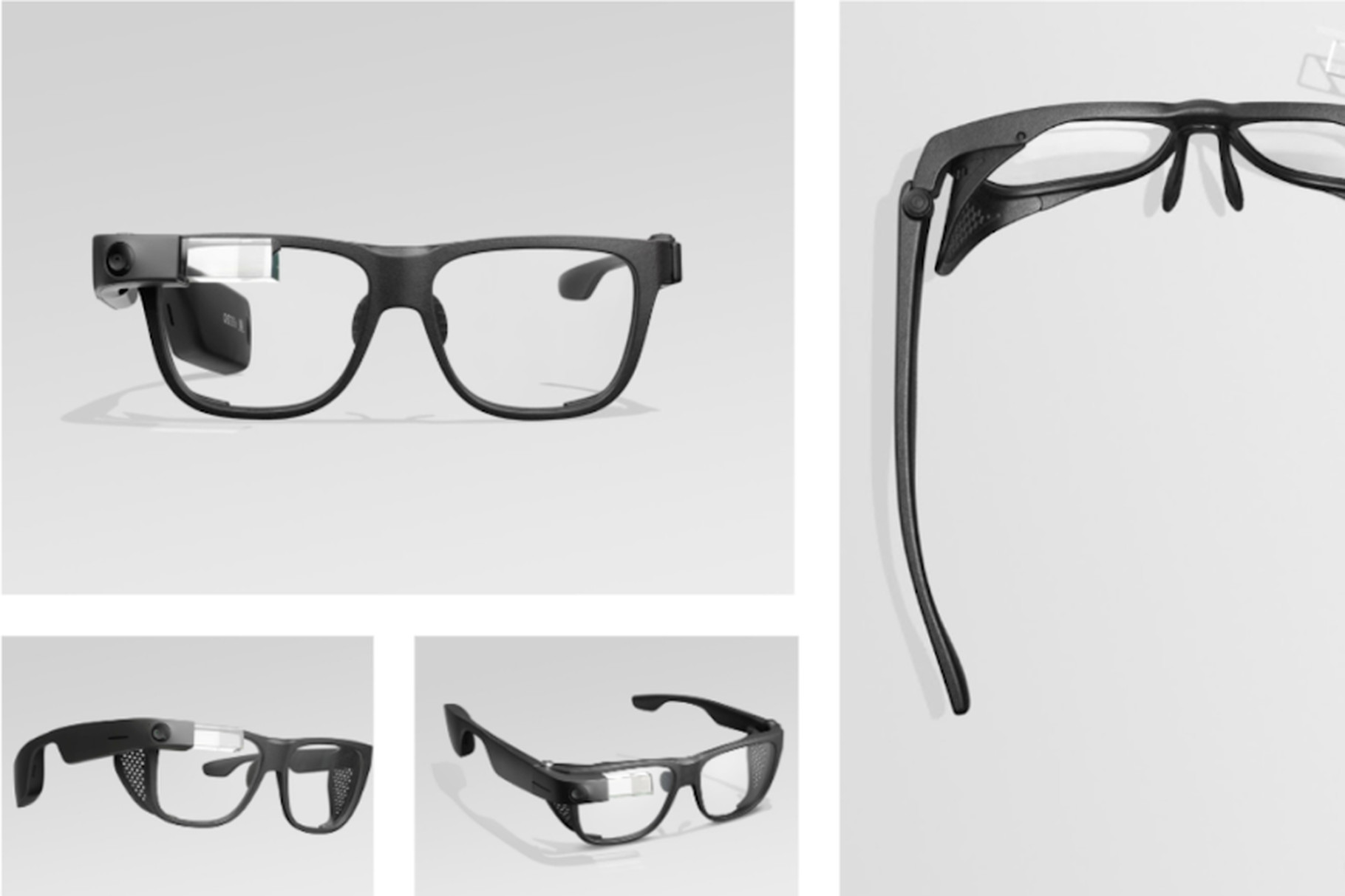 Google has announced a new version of its business-focused Glass augmented reality headset, which it’s now designating an official Google product instead of an experiment. The Glass Enterprise Edition 2 costs $999, although, like its predecessor, it’s not being sold directly to consumers. It’s got a new processor, an improved camera, a USB-C port for faster charging, and a variety of other updates.
Google is also adding new safety frames to Glass in partnership with Smith Optics, plus a bigger battery and other upgraded components. Glass also now runs on Android, with support for Android Enterprise Mobile Device Management. The Glass Enterprise Edition 2’s existence leaked months ago, complete with news that it would likely be moving to Android. But we haven’t gotten a full picture of Google’s plans for it until now.
See the full story here: https://www.theverge.com/2019/5/20/18632689/google-glass-enterprise-edition-2-augmented-reality-headset-pricing