Q&A: The Future Group’s Pixotope aims to shake up augmented and virtual production
How do you see it fitting into the larger AR/VR ecosystem?
Whilst the broadcast market is currently our most important market, it’s clear that cross-reality content, particularly augmented reality (AR), will permeate all market segments in the long run.
We, therefore, needed to create a solution that would address the requirements of other market segments as well, including corporate, industrial, medical, educational, digital marketing, and events.
Consequently, Pixotope has been specifically designed to be simple to use, really fast to design with, it connects to third-party products easily for added functionality, and it outputs graphics content of the highest possible quality today …even at 4K, and later in 2019, HDR too.
The Future Group will showcase Pixotope during the upcoming 2019 NAB Show in stand SU12702.
See the full story 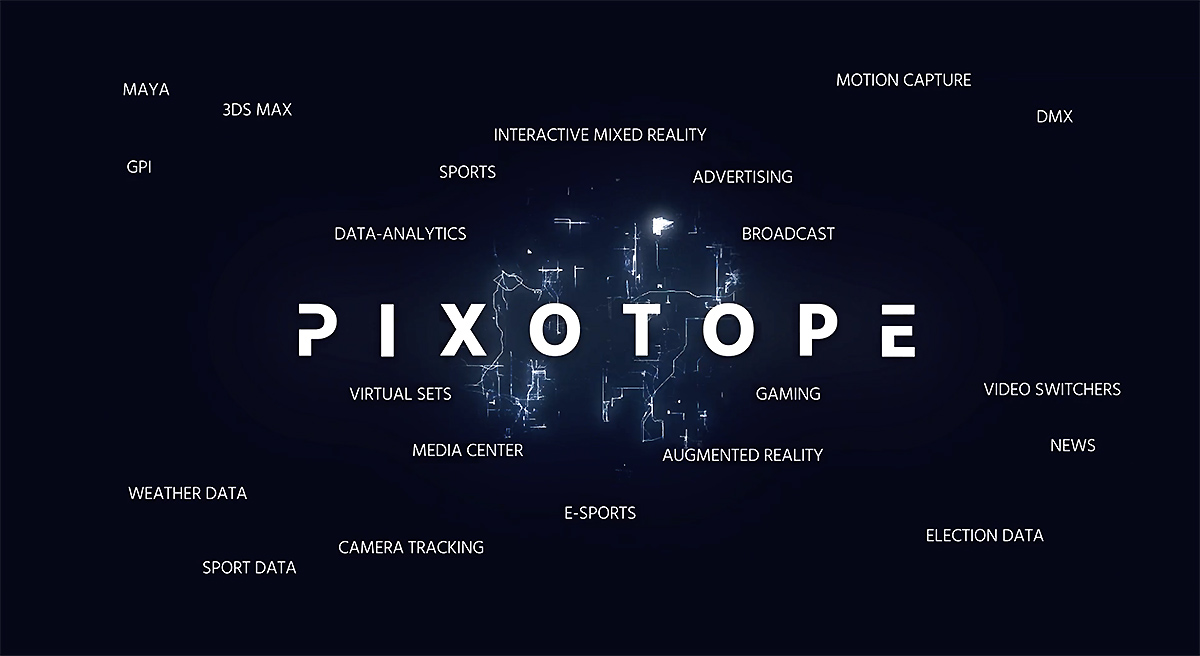
Apple’s smart glasses can change the game in a niche augmented & virtual reality market
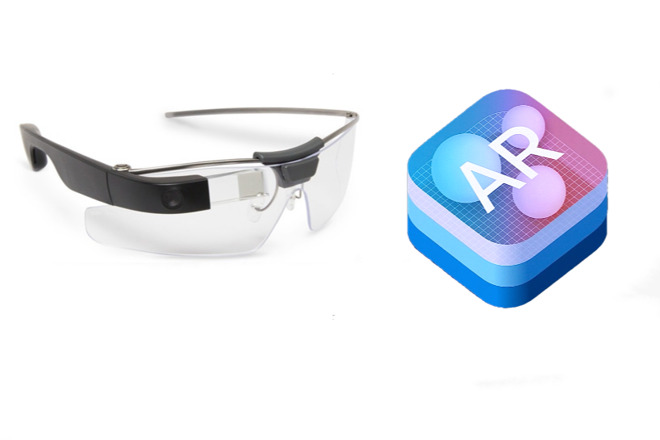 We don't need more technology, we need someone to find a true use for Virtual and Augmented Reality. Apple is just the firm to do it —since it's done the same thing twice before.
See the full story here: https://appleinsider.com/articles/19/03/09/apples-smart-glasses-can-change-the-game-in-a-niche-augmented-virtual-reality-market
In a note to investors on Friday, TF International Securities analyst Ming-Chi Kuo said that Apple will start producing its AR headset as soon as the fourth quarter of 2019. Kuo cautioned, however, that mass production could slip to the second quarter of 2020, if development doesn’t go as planned, according to Apple-tracking site 9to5Mac, which obtained a copy of the note.
According to Kuo, Apple’s AR glasses will rely on the iPhone to power the features and will not act independently. Android users, then, will either need to buy an iPhone to use Apple’s device or find an alternative.
http://fortune.com/2019/03/08/apple-augmented-reality-headset-2/
Don’t break up big tech — regulate data access, says EU antitrust chief
 “Because I still find that it’s quite tricky to understand what it is that you accept when you accept your terms and conditions. And I think it would be great if we as citizens could really say ‘oh this is what I am signing up to and I’m perfectly happy with that’.”
Breaking up tech giants should be a measure of last resort, the European Union’s competition commissioner, Margrethe Vestager, has suggested.
“To break up a company, to break up private property would be very far reaching and you would need to have a very strong case that it would produce better results for consumers in the marketplace than what you could do with more mainstream tools,” she warned this weekend, speaking in a SXSW interview with Recode’s Kara Swisher. “We’re dealing with private property. Businesses that are built and invested in and become successful because of their innovation.”
Vestager has built a reputation for being feared by tech giants, thanks to a number of major (and often expensive) interventions since she took up the Commission antitrust brief in 2014, with still one big outstanding investigation hanging over Google.
But while opposition politicians in many Western markets — including high profile would-be U.S. presidential candidates — are now competing on sounding tough on tech, the European commissioner advocates taking a scalpel to data streams rather than wielding a break-up hammer to smash market-skewing tech giants.
The commissioner has spoken up before about regulating access to data as a more interesting option for controlling digital giants vs breaking them up.
And some European regulators appear to be moving in that direction already. Such the German Federal Cartel Office (FCO) which last month announced a decision against Facebook which aims to limit how it can use data from its own services. The FCO’s move has been couched as akin to an internal break up of the company, at the data level, without the tech giant having to be forced to separate and sell off business units like Instagram and WhatsApp.
It’s perhaps not surprising, therefore, that Facebook founder Mark Zuckerberg announced a massive plan to merge all three services at the technical level just last week — billing the switch to encrypted content but merged metadata as a ‘pro-privacy’ move, while clearly also intending to restructure his empire in a way that works against regulatory interventions that separate and control internal data flows at the product level.
Asked for her worst case scenario for tech 10 years hence, she said it would be to have “all of the technology but none of the societal positive oversight and direction”.
On the flip side, the best case would be for legislators to be “willing to take sufficient steps in taxation and in regulating access to data and fairness in the marketplace”.
“We would also need to see technology develop to have new players,” she emphasized. “Because we still need to see what will happen with quantum computing, what will happen with blockchain, what other uses are there for all if that new technology. Because I still think that it holds a lot of promise. But only if our democracy will give it direction. Then you will have a positive outcome.”
See the full story here: https://techcrunch.com/2019/03/11/dont-break-up-big-tech-regulate-data-access-says-eu-antitrust-chief/
Niantic’s Harry Potter: Wizards Unite is a sorcerous smorgasbord for the Pokémon GO generation

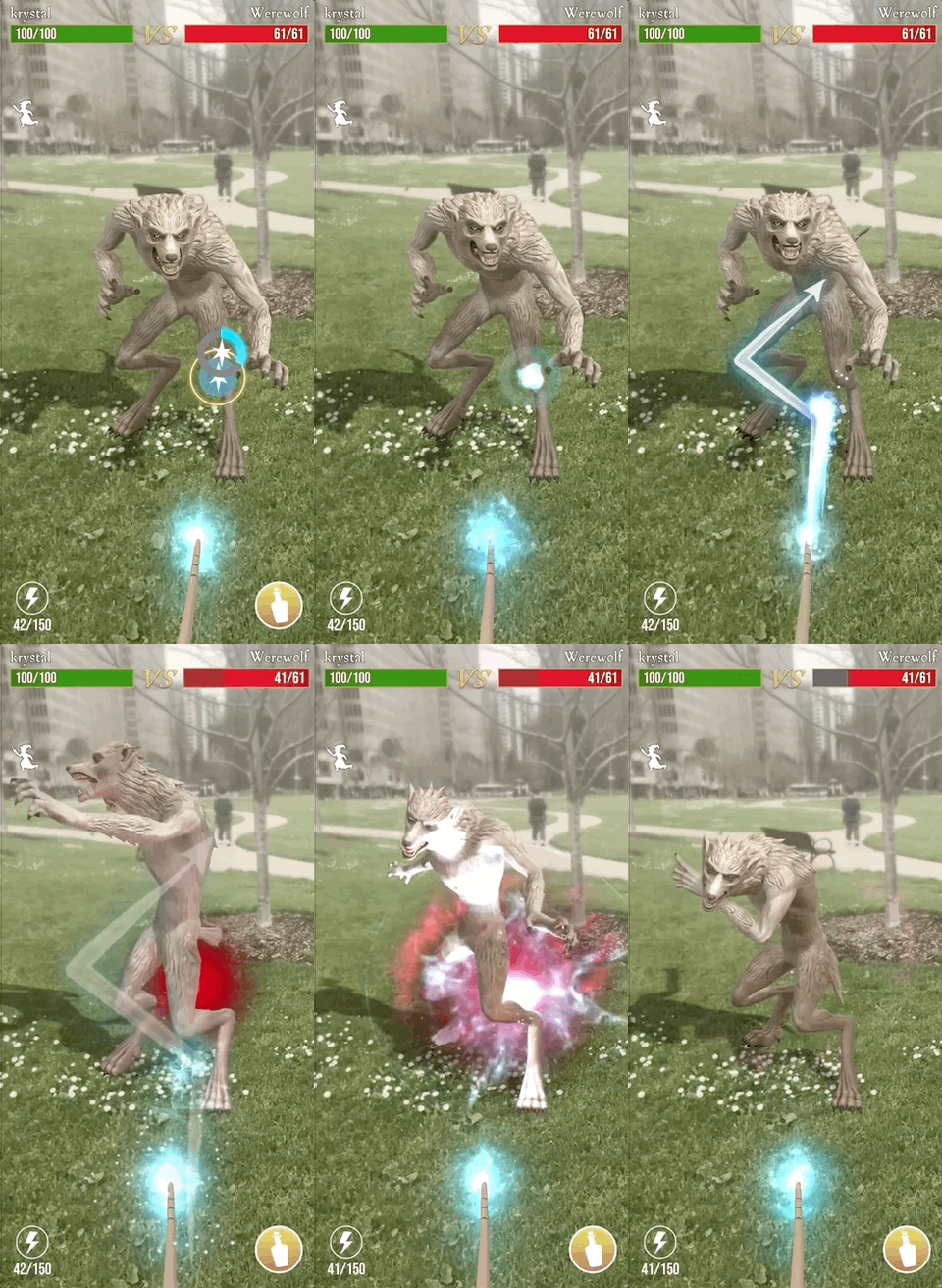 Niantic’s follow-up to the absurdly popular Pokémon GO, the long-awaited Harry Potter: Wizards Unite, has one major drawback: unlike its predecessor, you can’t explain it in a single sentence. There’s so much to do in this game that it may repel some casual players — but while its depths of systems and collectibles may be nigh endless, don’t worry: you still basically just walk around doing wizard and witch stuff.
...it’s coming out sometime in 2019 (I’d guess before Summer but they wouldn’t say), in 17 languages (listed at bottom; actual countries where it’ll be offered unknown), there’s no wand accessory yet (I asked and they all looked nervous), minimum specs are reasonable and AR is optional, and it’s free but there are in-app purchases.
In HP:WU you:
- Walk around a wizarding-themed version of the real world looking for locations at which to resupply and “foundables” to encounter
- Dispel, battle, or otherwise deal with the “confoundable” associated with these
- Earn reward items from encounters and for entering foundables in your registry
- Use reward items to level up in various professions, brew potions, and battle alongside others at “fortresses”
- Find rare foundables that advance the overall plot of why this is all happening anyway
See the full, lengthy article here: https://techcrunch.com/2019/03/11/niantics-harry-potter-wizards-unite-is-a-sorcerous-smorgasbord-for-the-pokemon-go-generation/
Real-Time AR Self-Expression with Machine Learning
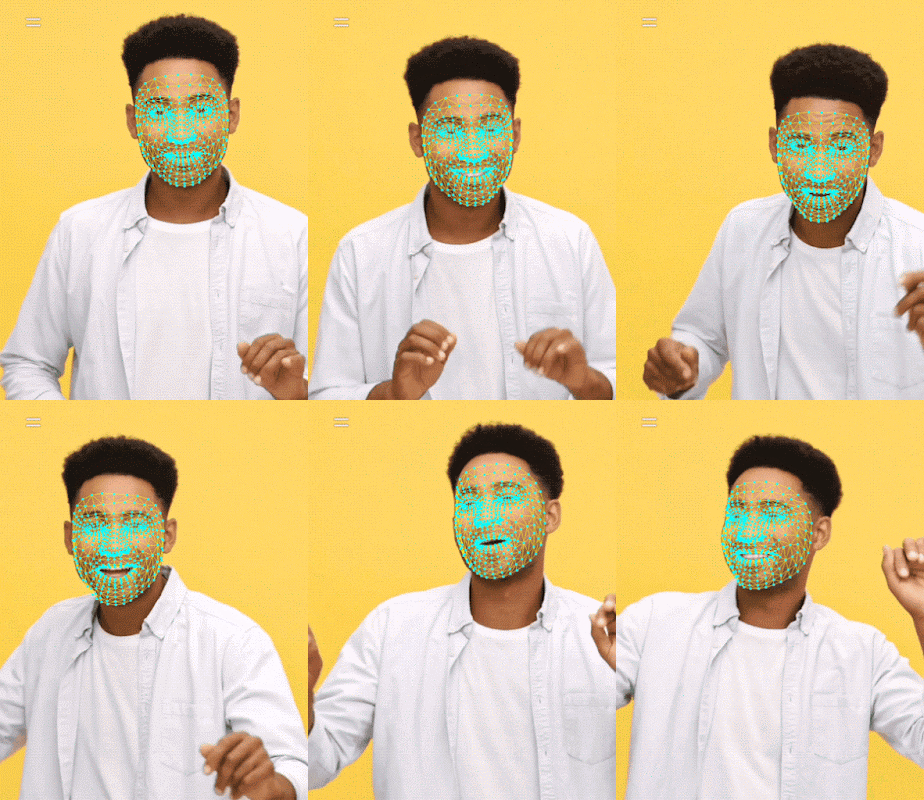 One of the key challenges in making these AR features possible is proper anchoring of the virtual content to the real world; a process that requires a unique set of perceptive technologies able to track the highly dynamic surface geometry across every smile, frown or smirk.
To make all this possible, we employ machine learning (ML) to infer approximate 3D surface geometry to enable visual effects, requiring only a single camera input without the need for a dedicated depth sensor. This approach provides the use of AR effects at realtime speeds, using TensorFlow Lite for mobile CPU inference or its new mobile GPU functionality where available.
An ML Pipeline for Selfie AR
Our ML pipeline consists of two real-time deep neural network models that work together: A detector that operates on the full image and computes face locations, and a generic 3D mesh model that operates on those locations and predicts the approximate surface geometry via regression.
Once the location of interest is cropped, the mesh network is only applied to a single frame at a time, using a windowed smoothing in order to reduce noise when the face is static while avoiding lagging during significant movement.
The 3D mesh network receives as input a cropped video frame. It doesn't rely on additional depth input, so it can also be applied to pre-recorded videos. The model outputs the positions of the 3D points, as well as the probability of a face being present and reasonably aligned in the input.
Hardware-tailored Inference
We use TensorFlow Lite for on-device neural network inference.
The end result of these efforts empowers a user experience with convincing, realistic selfie AR effects in YouTube, ARCore, and other clients by:
- Simulating light reflections via environmental mapping for realistic rendering of glasses
- Natural lighting by casting virtual object shadows onto the face mesh
- Modelling face occlusions to hide virtual object parts behind a face, e.g. virtual glasses, as shown below.
In addition, we achieve highly realistic makeup effects by:
- Modelling Specular reflections applied on lips and
- Face painting by using luminance-aware material
See the full story here: https://ai.googleblog.com/2019/03/real-time-ar-self-expression-with.html
Nintendo Unveils Virtual Reality Cardboard Headset for Switch
 The Nintendo Labo VR Kit lets gamers build a headset mostly out of cardboard so that they can slide in the device to create what the company calls “basic VR technology.” It’s reminiscent of Google’s Cardboard, which turns smartphones into VR goggles and was introduced almost five years ago. Priced at $80, Nintendo’s VR kit includes an alien shooting title and an ocean swimming simulation. It goes on sale April 12.
“We wanted to design an experience that encourages both virtual and real-world interactions among players,” Doug Bowser, Nintendo of America’s chief, said in a statementThursday.
Nintendo’s VR headset doesn’t require a strap-on to stay affixed. Instead, users hold it up to their eyes with one hand and control games with the other. That suggests a focus on more casual, shorter experiences and a device that’s meant to be easily shared among a group. Spending on VR and augmented reality will grow 69 percent this year to $20.4 billion, with hardware accounting for half of that, according to IDC.
The new product is Nintendo’s first move into VR in more than two decades, after the 1995 Virtual Boy flopped with consumers.
See the full story here: https://www.bloomberg.com/news/articles/2019-03-07/nintendo-unveils-virtual-reality-cardboard-headset-for-switch