According to a new report by Bloomberg, Apple has appointed company veteran Frank Casanova to the position, which will oversee “all aspects of Product Marketing for Apple’s Augmented Reality initiative.”
Although it’s still unclear exactly what that “initiative” is, the creation of a dedicated position to lead Apple’s marketing efforts in this area serves as another sign that the company clearly plans to go beyond the ARKit capabilities of its iOS devices into an actual new product — Apple has not traditionally appointed senior marketing personnel simply to promote iOS features.
Rumours of an Apple AR headset have been gaining traction over the past year, with Apple having begun acquiring significant AR engineers and researchers as early as 2016, followed by a late 2017 report that revealed that the company was starting to source suppliers and working internally on a new “rOS” operating system to power the device. The company also reportedly acquired a notable Danish AR startup around that same time, although news of that acquisition didn’t break until last fall, almost a year after the initial acquisition. While Apple’s culture of secrecy keeps things pretty vague about how all of these hires and acquisitions fit together, it’s becoming clear that in addition to expanding its ARKit camera technology on iPhones and iPads, work also continues on a standalone headset that indeed could be launching as early as next year.
Beta testing AR walking directions with Local Guides. Now, with the impending introduction of AR into Google Maps, we may see a product that could have a massive impact. At Google’s 2018 developer conference, the company previewed Google Lens-like AR features offering improved walking directions and place information through the smartphone camera.
Google is now actively testing augmented walking directions. The company said today in a blog post, “We’re starting to test this feature with select Local Guides, a small group of Google Maps enthusiasts around the world who we know will offer us the feedback about how this approach can be most helpful. Like other AI-driven camera experiences such as Google Lens (which uses the camera to let you search what you see), we believe the ability to overlay directions over the real world environment offers an exciting and useful way to use the technology that already exists in your pocket.”
Why should you care. Google Maps is one of seven Google products that claims more than a billion users globally. Google is one of only a very small number of companies — the others being Amazon, Apple, Facebook and Microsoft — that can roll out practical AR applications to hundreds of millions of people simultaneously.
Most previous AR applications were about novelty or offered poor user experiences. Mapping and visual local search have obvious utility and should be widely adopted, if or when they are generally released. And if we assume that AR walking directions and other features make into Maps, it’s a safe bet that some form of AR monetization — aka paid marketing opportunities — will follow in time.
Federico Augugliaro, Head of Productions, Verity Studios
Craig Evans, President & CEO, Digital Nation Entertainment
Chad Finnerty, Eyellusion
Marty Tudor, CEO, Base Hologram Productions
Metallica’s WorldWired tours, for example, make heavy use of drones from Verity Studios, “flying lights” that are programmed to become part of the production and light up the stage in an agile, immersive way.
Verity Studios’ head of productions Federico Augugliaro explained that it can take about three months to integrate the light drones into a production, factoring in things such as artist involvement, formation and number of drones. Asked for a ballpark figure as to price, he said “it starts in the six digits.”
Hologram tours such as Eyellusion’s Frank Zappa and Ronnie James Dio productions are just that -- full productions rather than hologram gimmicks.
After showing a video displaying the realistic computer models used for both Dio and Zappa to Production Live! guests Feb. 11, Eyellusion’s diretor of creative development Chad Finnerty explained that 15-20 artists put together the models that will become the on-stage hologram, using the same special effects technique as the mad titan Thanos from the latest “Avengers” movie. “It takes a huge army to create these kinds of effects and bring it to life,” he said, adding that it roughly takes a half a year to get a hologram road-ready.
Virtual Reality (VR) is revolutionizing training, and Hamilton-Ryker's (H-R) newest division TalentGro® is taking full advantage of this new technology. The company is using VR Forklifts to assess proficiency and provide training to both temporary employees and clients' direct employees. Hamilton-Ryker has VR Forklifts at offices in Kentucky, Mississippi and Tennessee, but the units can be transported anywhere.
NextVR, the Official VR Partner of NHRA, will launch the exclusive partnership by releasing a virtual reality experience captured at the 2018 Auto Club NHRA Finals in Pomona, CA. Content captured includes digital highlight packages produced by NextVR in a 3D stereoscopic VR format. This content is now available for free to fans globally on a new NHRA channel within the NextVR app.
Artie, of Artie’s adventure fame, has taken a different approach to automated agents, using AR to give algorithms a friendly and familiar face. The company’s software allows users to create and share avatars based on celebrities, influencers, and popular fictional characters. These avatars are ‘emotionally aware, world-aware and object-aware through the use of computer vision and sentiment analysis,’ according to co-founder Armando Kirwin, and draw on a much wider range of natural communication than your average chatbot or digital assistant. ‘The average interaction with a digital assistant might be five seconds or less, but because interacting with an avatar is a much more natural experience, we’re able to increase the session time to around five minutes.’
Artificial personality
Giving a personality to an AI avatar is a novel way of getting around the problems that machine learning has in unpredictable situations. Establishing a narrative context for each interaction with a character or avatar allows users to interact with a being that has a defined personality, attitude, and way of speaking. ‘If you talk to an Iron Man avatar on social media, he’s not going to talk to you about politics, he’s going to talk to you about his world’ says co-founder Ryan Horrigan.
Cogito’s application trains AI to be more empathetic by detecting minute changes in tone of voice and speech patterns. Artie’s avatars use computer vision, natural language processing and sentiment analysis to replicate emotions in a virtual character and give AI a different way to interact with us.
The executive order aimed to better educate workers in the field, improve access to the cloud computing services and data needed to build A.I. systems, and promote cooperation with foreign powers. But the order did not set aside funds for A.I. research and development, and the administration provided few details on how it planned put its new policies into effect.
In July 2017, Chinese unveiled a plan to become the world leader in A.I., aiming to create an industry worth $150 billion to its economy by 2030, and two Chinese cities promised to invest $7 billion in the effort. Other governments, too, began making large investments, including South Korea, Britain, France and Canada.
For 10 minutes on Feb. 2, the shooter videogame put away its guns and transported players to a live virtual performance by the electronic-dance producer, who was visible as a digital avatar, with his signature marshmallow helmet. The pop-culture mashup spoke not only to the game’s broad popularity but to its potential as a stage for all kinds of entertainment.
The performance attracted millions of viewers, according to representatives for Marshmello, and is an example of how musicians are experimenting with new ways to reach a massive live audience.
The idea for the concert was set in motion in June, when Marshmello participated in a “Fortnite” tournament run by the game’s creator, Epic Games Inc. He teamed with Tyler “Ninja” Blevins, a celebrity gamer who made the game a must-try when he live-streamed a playing session with the singer Drake. Marshmello later that night performed for tournament competitors and staff, and the two sides stayed in touch. The event sprang from their conversations.
It is the latest move by Epic to appeal to more than just gamers. The closely held company previously forged partnerships with Walt DisneyCo. , which is an investor in Epic, and the National Football League on special in-game events. Gamers, for example, could buy virtual NFL jerseys for their characters to wear while running about the “Fortnite” world.
Marshmello’s performance followed the classic “Fortnite” playbook: The concert was free, though players could buy virtual costumes, weapons and dance moves specially designed for the event. A costume with a marshmallow head cost $15. A Marsh Walk dance move, also known as an emote, went for $5.
Fortnite’s live in-game concert was a shockingly stunning sight to behold, and it was also an unprecedented moment in gaming. It truly felt like a glimpse into the future of interactive entertainment, where the worlds of gaming, music, and celebrity combined to create a virtual experience we’ve never quite seen before.
IDC story https://lbe.news/2019/02/11/idc-announces-top-ten-forecasts-for-the-vr-ar-market-in-2019/?fbclid=IwAR0pKis2tHz1uwofO5BTU9roMOS-gS1B0czM-E_Ez2kzfG3Oi_e9EMjq6CQ
Original Mandarin version http://finance.eastmoney.com/a/201902111041103663.html
Google Translate version below and here: https://translate.google.com/translate?hl=en&sl=auto&tl=en&u=http%3A%2F%2Ffinance.eastmoney.com%2Fa%2F201902111041103663.html
Beijing, February 11, 2019
Under the active guidance of the domestic policy environment, the VR/AR market has risen steadily in 2018.IDC believes that the current industry application is further expanding and deepening, and the consumption scenes in the segmented areas are continuously enriched. The VR terminal market is gradually transitioning to the mid-to-high-end product form with better experience, and the industrial ecological development is more mature.
Technological innovation and application will become an important development trend of the VR/AR market in 2019. The maturity and popularity of new technologies will empower the market for continued growth.The content ecology is still the key to the overall progress of the industry. In the future, there will be more industrial fields to extend the olive branch to VR/AR technology equipment providers and content producers.
Prediction 1: The VR market of the cinema will continue to grow.35% of VR machines will be used for family viewing.Family IMAX viewing will be expected to be defined, manufacturers will bring clearer, more interactive and more VR viewing equipment, and is expected to lead the global viewing VR market.In 2018, the domestic VR all-in-one market ushered in rapid development, becoming the product with the highest shipment volume in the overall VR market last year.Video entertainment has become an important way for VR to enter the family scene. With the maturity and popularity of 4K resolution display technology, more manufacturers will join this segment in the future, and the price, content and wearing experience will become products. The key factor of competition.
Prediction 2: 5G network will drive the development of VR/AR security inspection market.Especially in the AR field, power, manufacturing and other inspections will be deployed in AR applications, and better support for remote information interaction and support with 5G networks.The application of AR technology plays an important role in the intelligent development of the industrial Internet.Through the combination of the Internet of Things and AR technology to achieve visual control, staff can intuitively obtain key real-time information of the target facility through AR equipment, and can quickly locate problems and formulate solutions based on abnormal prompts, thereby effectively reducing equipment accident rate and improving municipality. Facility operation and maintenance inspection efficiency.The popularity of 5G networks will provide a high-quality information communication environment, support real-time audio and video interaction during the inspection process, and multi-tasking such as data transmission.
Prediction 3: AI will be equipped with virtual/augmented reality devices, 65% of VR/AR devices will provide voice technology interaction, and 20% of VR/AR devices are expected to make users accustomed to voice interaction, thus better making up for the shortcoming of virtual keyboards. board.The development of artificial intelligence will promote the change of traditional interaction modes in VR/AR devices. With the technology of speech recognition, users will get rid of the limitations of the handle and sensor.At the same time, because the speech recognition system involves data transmission and background computing and other units, vendors need to integrate chip technology and application development resources to solve the problem of system delay, equipment cost and user experience.
Prediction 4: Mobile AR content is more ecological.Professional content developers will bring more AR applications, while user-generated content (UGC) for mobile 3D modeling
The AR application scenario and user experience will also be enhanced.
Thanks to development platforms such as ARKit and ARCore, mobile AR content and applications continue to be enriched, growing rapidly in games, social, marketing and e-commerce.At present, the domestic Internet and mobile phone manufacturers are also actively participating in the layout of the mobile AR market. By combining AI image recognition technology, location-based LBS application and 3D scanning modeling technology, the mobile AR market will continue to grow rapidly in the future. The traditional form of content interaction will usher in an upgrade.
Prediction 5: The VR game market will grow by 75% in 2019.The offline experience store game revenue accounted for more than 80% of the overall VR game revenue.Excellent VR games will be extended to the experience store, and the sinking experience will bring more potential users.As domestic game makers increase their investment in the VR industry, more high-quality content and products will enter the domestic market, which will help improve the content richness in the VR game market.At present, the popularity of domestic VR game users is low, and the two-way drainage from offline experience stores and online social platforms will help expand user coverage, and supporting players to record and share game videos will enhance game performance and increase appeal to potential users.
Prediction 6: By 2023, there will be more than one billion people visiting at least one consumer place where VR devices are installed each year, and 10% of consumers will try to use VR devices, which will foster users' interest in buying home VR devices.IDC
FutureScape: Consumer Digital Transformation and the Home Internet of Things Market Global 2019 Forecast shows that there will be more offline entertainment venues, such as cinemas, theme parks, amusement halls and Internet cafes, to provide customers with paid VR experience projects.The offline entertainment scene will further become an important promotion channel for the VR industry in the consumer market, helping to promote the conversion of ordinary users to VR paying users, and driving the market growth of home VR hardware devices, software development and content subscription.
Prediction seven:
More than 30% of the display scenarios will be integrated through the rental method to provide equipment, software, and services, so that users do not have to bear high hardware costs, but also achieve excellent interactive display.Although VR/AR technology can help solve the problem of insufficient interactive experience and space limitation in the field of industry application and business activities, but due to the high cost of equipment and content acquisition, related applications have certain limitations in actual operation. Sex.In the future, as more service providers provide VR/AR overall solutions through leasing, they can help customers meet the needs of equipment, applications and supporting services in the display scenario, while reducing one-time procurement costs and increasing equipment utilization. Gradually cultivate market maturity.
Prediction 8: The weight of the commercial market is growing further, especially in the education market, which is affected by policy tilt and increased investment in education. More than 1,000 schools are expected to adopt VR/AR technology.
In the future, VR/AR will find more commercial scenarios in the industry application, and targeted solutions to the application pain points in the market.According to the IDC market tracking report, it is expected that the share of VR/AR shipments in the domestic education market will account for nearly 7.0% of the overall market in 2018.With the promotion of relevant policies, the education and training market in the vertical and vertical fields such as medical and manufacturing has developed rapidly. The simulation application supporting multi-person collaboration will help enhance content interactivity and improve training efficiency.In the future, more universities will adopt VR/AR content for course training, which will drive the demand for education market to continue to grow.
Prediction 9: By 2024, 7% of domestic companies will use VR applications as a solution to support cross-regional collaboration, and the future workplace and teamwork model will usher in transformation and upgrade.
"IDC FutureScape: Connectable Devices Global 2019 Forecast -
China Revelation shows that VR will help solve the problem of low efficiency in cooperation across offices and regions.The current utility of using collaborative software and hardware for the workforce is low, and in addition to enabling the team to enter the same virtual space, the VR technology can also display and manipulate data and even objects.In China, VR technology has begun to showcase in cross-space applications in medical and other industries, such as live broadcasts and other specific scenarios. In the future, this application will require more network infrastructure and other layouts to support a wider range of practical operations.
Prediction 10: By 2024, 55% of Chinese large and medium-sized enterprises will deploy AR hardware for some employees. The key driver is to improve work efficiency.Early adopters in the industry have achieved significant results by deploying AR hardware, including fewer downtimes, faster execution times, and shorter induction training hours.As the AR market matures, industry-specific application scenarios will gradually break down and begin to attract a wider range of commercial applications.The integration of enterprise systems will become easier, the developer talent pool will become larger and larger, and the aggregation of content will make the AR platform more efficient in deploying between different departments.In the future, companies and enterprises will extend AR applications to various business units, including internal and external IT support, product development and customer support.
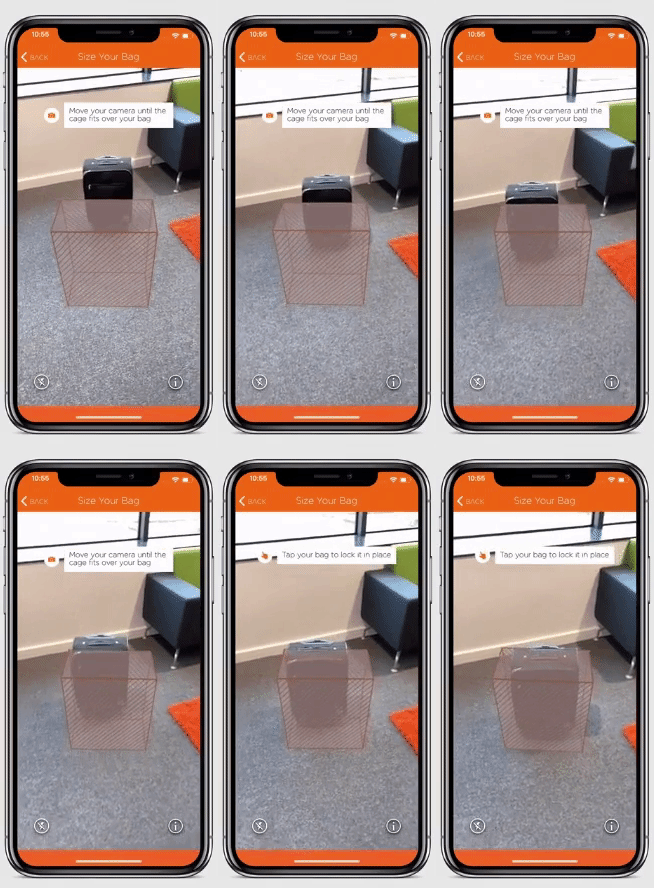
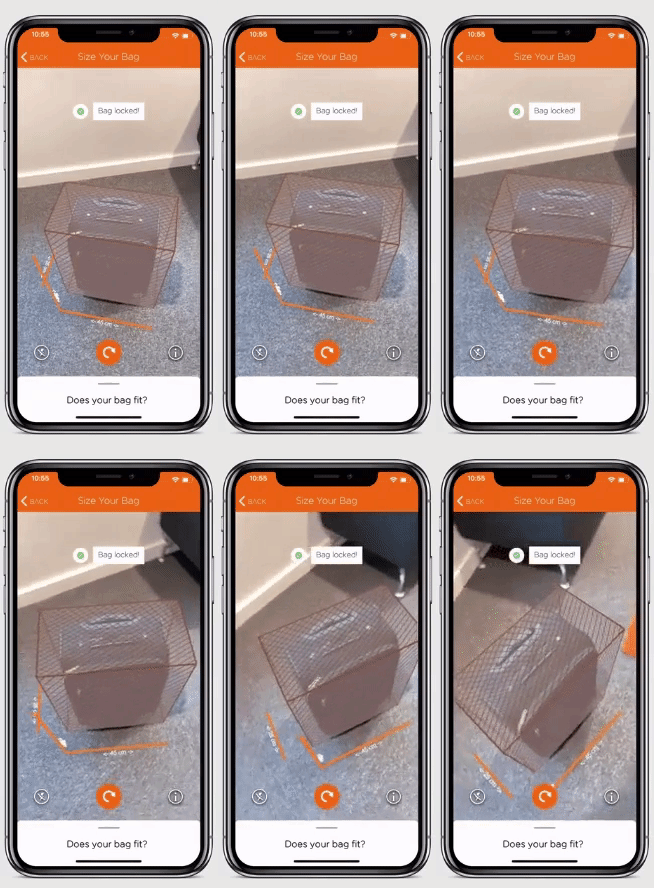
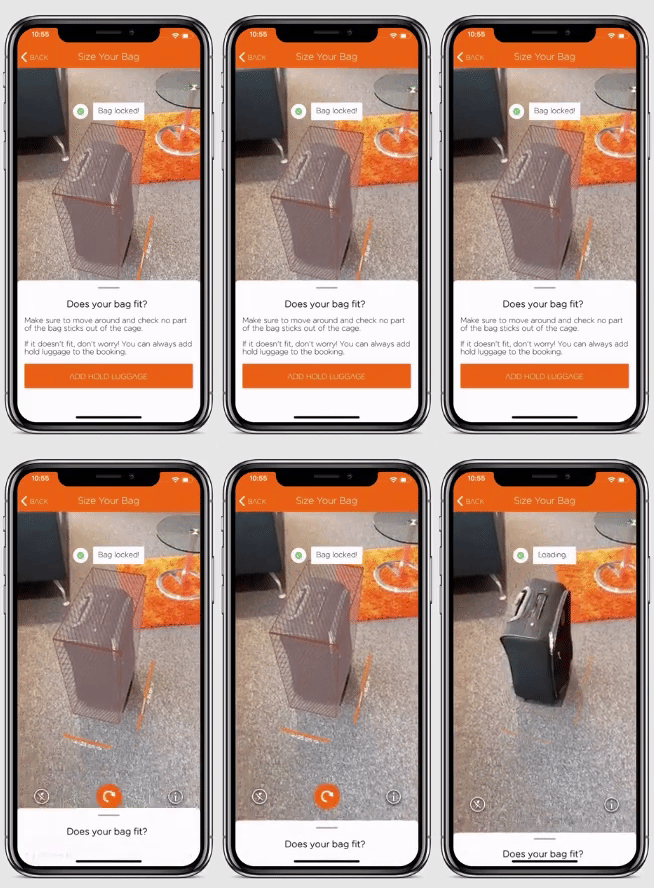 See the full story here: https://mobile-ar.reality.news/news/budget-airline-easyjet-packs-augmented-reality-luggage-checking-feature-into-its-mobile-app-0193551/
 According to a new report by Bloomberg, Apple has appointed company veteran Frank Casanova to the position, which will oversee “all aspects of Product Marketing for Apple’s Augmented Reality initiative.”
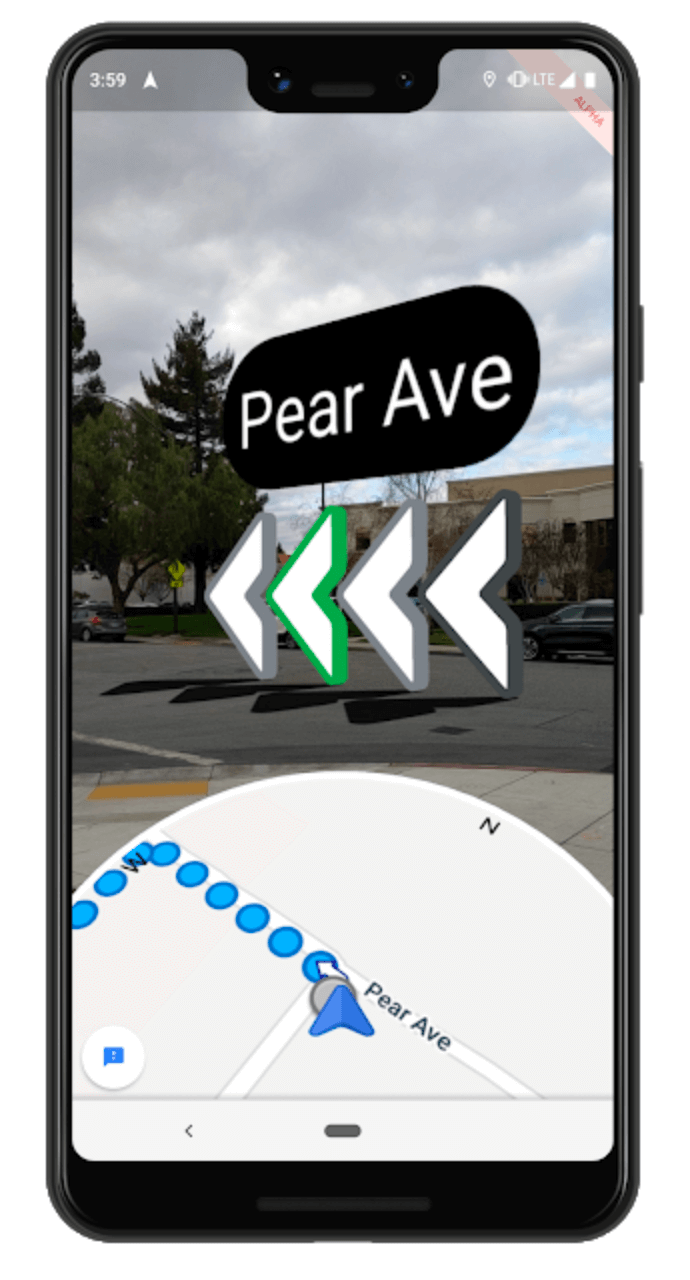 Beta testing AR walking directions with Local Guides. Now, with the impending introduction of AR into Google Maps, we may see a product that could have a massive impact. At Google’s 2018 developer conference, the company previewed Google Lens-like AR features offering improved walking directions and place information through the smartphone camera.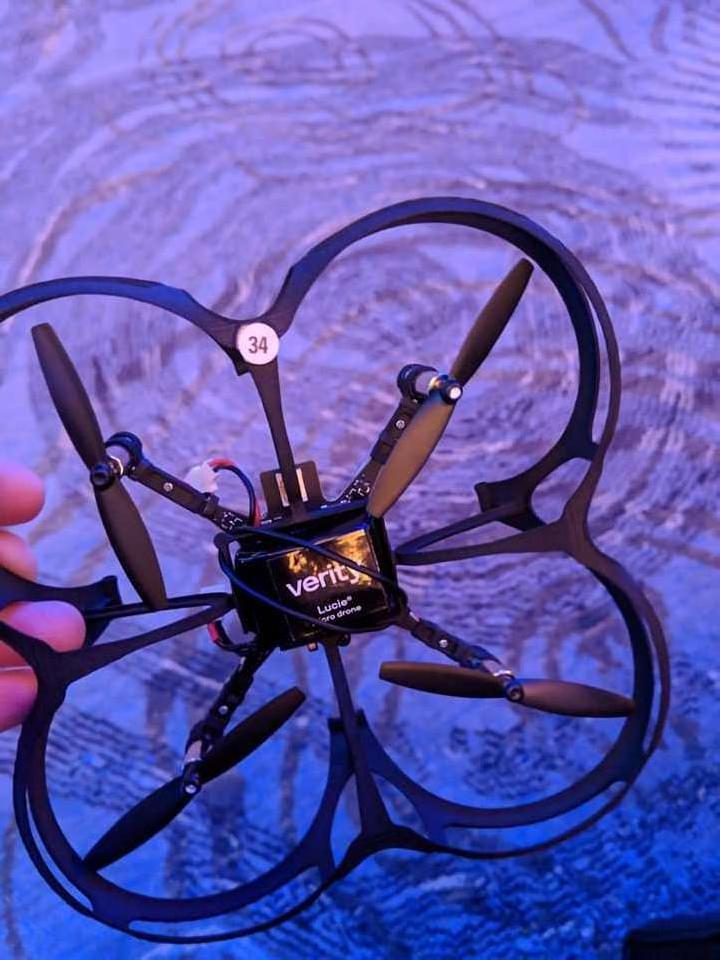
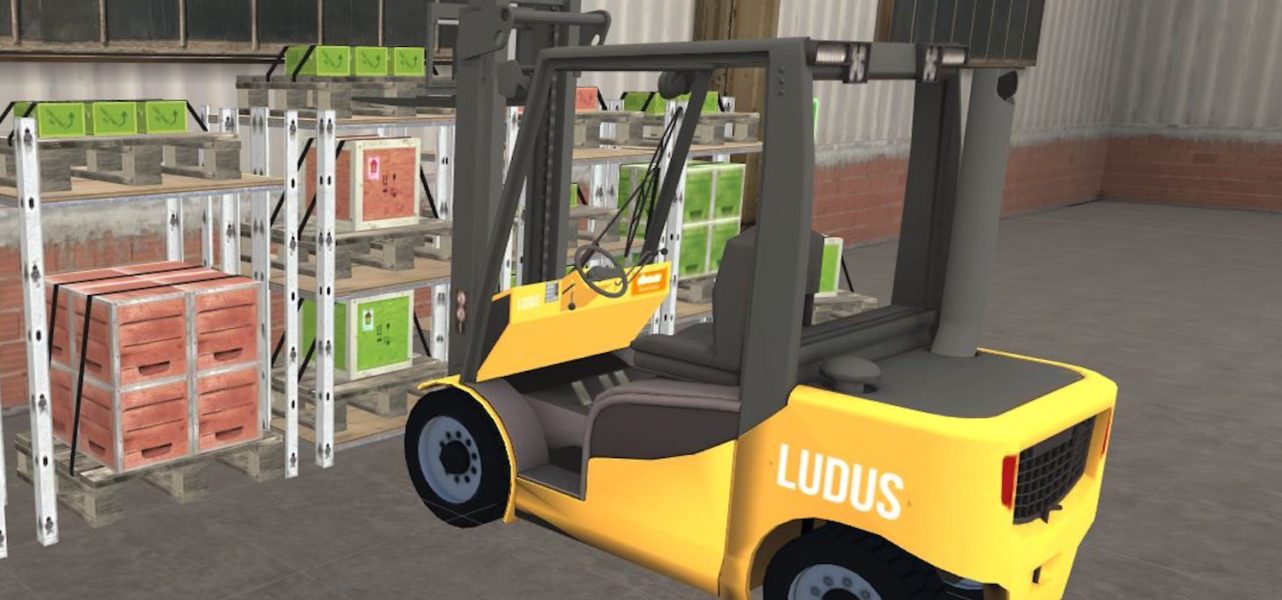 Virtual Reality (VR) is revolutionizing training, and Hamilton-Ryker's (H-R) newest division TalentGro® is taking full advantage of this new technology. The company is using VR Forklifts to assess proficiency and provide training to both temporary employees and clients' direct employees. Hamilton-Ryker has VR Forklifts at offices in Kentucky, Mississippi and Tennessee, but the units can be transported anywhere.
 NextVR, the Official VR Partner of NHRA, will launch the exclusive partnership by releasing a virtual reality experience captured at the 2018 Auto Club NHRA Finals in Pomona, CA. Content captured includes digital highlight packages produced by NextVR in a 3D stereoscopic VR format. This content is now available for free to fans globally on a new NHRA channel within the NextVR app.
 Artie, of Artie’s adventure fame, has taken a different approach to automated agents, using AR to give algorithms a friendly and familiar face. The company’s software allows users to create and share avatars based on celebrities, influencers, and popular fictional characters. These avatars are ‘emotionally aware, world-aware and object-aware through the use of computer vision and sentiment analysis,’ according to co-founder Armando Kirwin, and draw on a much wider range of natural communication than your average chatbot or digital assistant. ‘The average interaction with a digital assistant might be five seconds or less, but because interacting with an avatar is a much more natural experience, we’re able to increase the session time to around five minutes.’
 The executive order aimed to better educate workers in the field, improve access to the cloud computing services and data needed to build A.I. systems, and promote cooperation with foreign powers. But the order did not set aside funds for A.I. research and development, and the administration provided few details on how it planned put its new policies into effect.