HTC’s Vive Studios recently leaned into Christianity’s experiential edge and large demographic test base by partnering with Brazilian VR production company Panogramma to create 7 10-minute-long vignettes, each focused on the miracles of Jesus described in the Gospel of John. The film premiered in 2018 at Europe’s leading Independent Film Festival - the Raindance Film Festival in London.
VR Focus reported that 7 Miracles was filmed in Rome and in Matera, directed by Rodrigo Cerqueira (Jesus VR: The Story of Christ) and co-directed by Marco Spagnoli (Hollywood Invasion, Hollywood on Tiber, Walt Disney and Italy – A Love Story). The VR film was produced by Enzo Sisti (Aquaman, Wonder Woman, Avengers: Age of Ultron, Passion of the Christ) and Vive Studios’ Joel Breton (Pirates of the Caribbean, Unreal, Anno 1602, Terrarria) and Rodrigo Cerqueira.
“There have been some great advances in various pieces of the technology but as a whole it’s not grandma-proof,” says Venky Ganesan, a partner at Menlo Park-based venture capital firm Menlo Ventures.
Last year, seven million VR headsets shipped globally, according to an estimate by research firm IDC. That’s a fraction of the nearly 100 million smart speakers shipped in 2018, according to IDC’s forecast.
“The hardware needs to come to the point where people en masse will purchase it,” says Kobie Fuller, a partner at Upfront Ventures, a Santa Monica venture capital firm.
Aside from introducing VR for game-casting in Thailand, Infofed plans to launch a CLMV (Cambodia, Laos, Myanmar, and Vietnam) e-sports league this year, and an additional tournament for all of Southeast Asia in 2020.
Thailand faces competition from Indonesia in its quest to become the region’s e-sports hub. Indonesia has more than 47.7 million active gamers, and its professional players receive support from the Indonesia e-Sports Association (IeSPA), a government institution run by the Ministry of Youth and Sports.
Winsche Studios plans to make its mark in the field of Augmented Reality (AR), launching their new social network platform called doRRtal. This platform will enable users to share 360 photos with their connections. New AR approach immerses and engage users deeply and augment the way they share and receive information. doRRtal will enable users to click on their connection's photos and view it in like a dorm to which user walks in and see the fill experience of 360 photo viewing.
Winsche Studios expands of its commitment to Social Media users by offering 100% fully AR integrated photo sharing network as well as the first fully encrypted users' data. This step will ensure that users will free safer on the social network.
Immersive technologies are changing the boundaries of what can be experienced in theatre. Amelia Heathman goes to see virtual reality play Draw Me Close
“The application of VR in this play is so specific that I can’t imagine making something like this again. But, what I would say is I have an immense appreciation for VR as a discreet medium unto itself.
“It’s definitely not film, not theatre, it’s nothing other than what it really is and eventually it will find its great authors and visionaries, people who will be making great works of art in VR,” he adds.
There is certainly a place for VR at NT. Coffey says the potential for storytelling is huge with these immersive technologies. “I’m a big believer in that a lot of big disciplines like film, gaming, and theatre are increasingly blurred genres now. And if we want to be part of that ecosystem then we need to be working with it now.”
Draw Me Close will take place at the Young Vic Theatre from 21 January to 2 February. Tickets are on sale now.
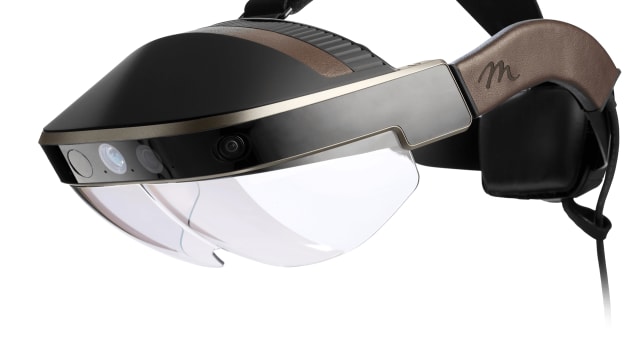
"We were the first full AR system with hand tracking, optics, and world tracking, these are things we had in the Meta 1 in 2014. A lot of big players have followed our standard, and I'm proud of that. We were early, for sure. I think the too early part is really a question to look back at in the future."
"Start with the killer app. Every founder in every company that failed took too long to get to it. And if I did it again, I would get to it at the start," says Gribetz. "After years, I've discovered it's the right question every founder should ask themselves. The hardware is not enough. Figure out your market. Figure out your killer app."
But what Gribetz is confident of is that he's still focused on his dream of helping to bring a "zero learning curve computer" that acts as a kind of "iOS of the mind" to the masses, one way, or another.
"I have a very clear mission to put [an AR] headset, exactly as I said at TED in 2016, on a billion heads," says Gribetz. "I didn't say which headset, I said a strip of glass, lightfields, photorealism, and, most importantly, an intuitive computing experience, on a billion heads. The whole situation that's going on now, which is not pleasant in any way, is not going to slow me down on that mission."
"I always seemed kind of annoying to my friends," the boy, speaking through a Kermit the Frog avatar, begins, "and I could never focus. I've never really been able to focus."
He opens about his struggles with Attention Deficit Hyperactivity Disorder (ADHD), saying he struggles with insomnia––"I probably make it worse by looking at screens and stuff," he says at one point––and endures a constant struggle to keep his mind "on track."
He also describes feelings of shame from missing social cues, classmates who seem indifferent or even aloof to his general awkwardness, and going to school anticipating that he'll be bullied. "They're gonna be really mean to me," he says.
Sadly, especially in the UK, the greater your ambition the more likely you are to fail, and whilst we, as a society are improving, our culture around failure is nothing compared to the Americans who are encouraged to dare to dream big. Blippar was one of those outliers, but despite the painful recent outcome, Jess is clearly addicted to that taste.
"The Blippar experience gave me a taste of the rocket ship trajectory that great tech and visionary ideas can enjoy - and the significant potential that growth businesses have to disrupt behaviours and improve lives. I’m frankly greedy for that now", she says, in an excited yet blunt, honest tone.
"I’m only interested in businesses with global potential - but they are, by their nature, high risk. They require deep pocket investment and are fraught with stress - higher highs, lower lows and of course, the constant risk of spontaneous combustion. I wouldn’t change anything about my Blippar experience. Go big, or go home".
The first technique, known as partial ordering, begins to introduce just the slightest bit of uncertainty. You could program the algorithm to prefer friendly soldiers over enemy soldiers and friendly civilians over enemy soldiers, but you wouldn’t specify a preference between friendly soldiers and friendly civilians.
In the second technique, known as uncertain ordering, you have several lists of absolute preferences, but each one has a probability attached to it. Three-quarters of the time you might prefer friendly soldiers over friendly civilians over enemy soldiers. A quarter of the time you might prefer friendly civilians over friendly soldiers over enemy soldiers.
The algorithm could handle this uncertainty by computing multiple solutions and then giving humans a menu of options with their associated trade-offs, Eckersley says. Say the AI system was meant to help make medical decisions. Instead of recommending one treatment over another, it could present three possible options: one for maximizing patient life span, another for minimizing patient suffering, and a third for minimizing cost. “Have the system be explicitly unsure,” he says, “and hand the dilemma back to the humans.”
See the full story here; https://www.technologyreview.com/s/612764/giving-algorithms-a-sense-of-uncertainty-could-make-them-more-ethical/?utm_campaign=the_download.unpaid.engagement&utm_source=hs_email&utm_medium=email&utm_content=69114562&_hsenc=p2ANqtz-9hTFsjeojj-ckwtsA0lKK7u2-gqfUE3vSzkrHS8HNFSL9Leaj3_e5l-eW3bwxaYCIQnaylmla11RqfnMLZYEeZdSshpQ&_hsmi=69114562
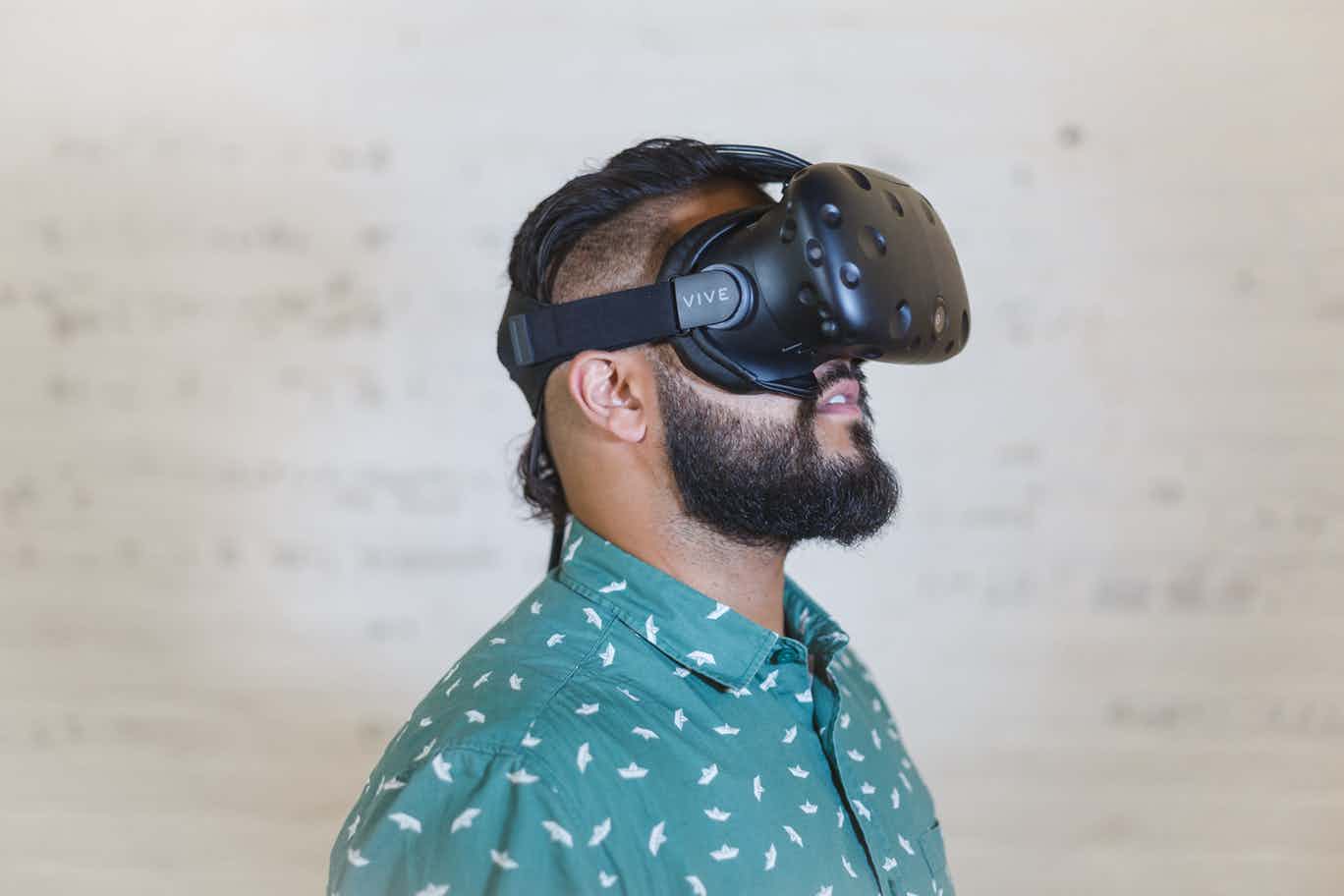 HTC’s Vive Studios recently leaned into Christianity’s experiential edge and large demographic test base by partnering with Brazilian VR production company Panogramma to create 7 10-minute-long vignettes, each focused on the miracles of Jesus described in the Gospel of John. The film premiered in 2018 at Europe’s leading Independent Film Festival - the Raindance Film Festival in London.
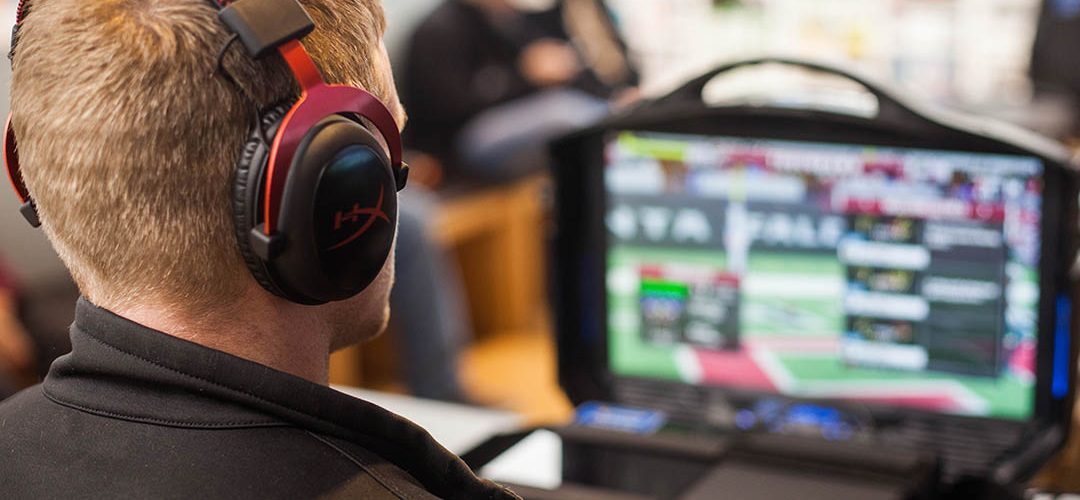 With around 18.3 million e-sports players, Thailand has the 19th largest gamer community in the world. It has the potential to become Southeast Asia’s e-sports hub, and Bangkok-based virtual reality (VR) service startup Infofed wants to be at the forefront when that comes true.
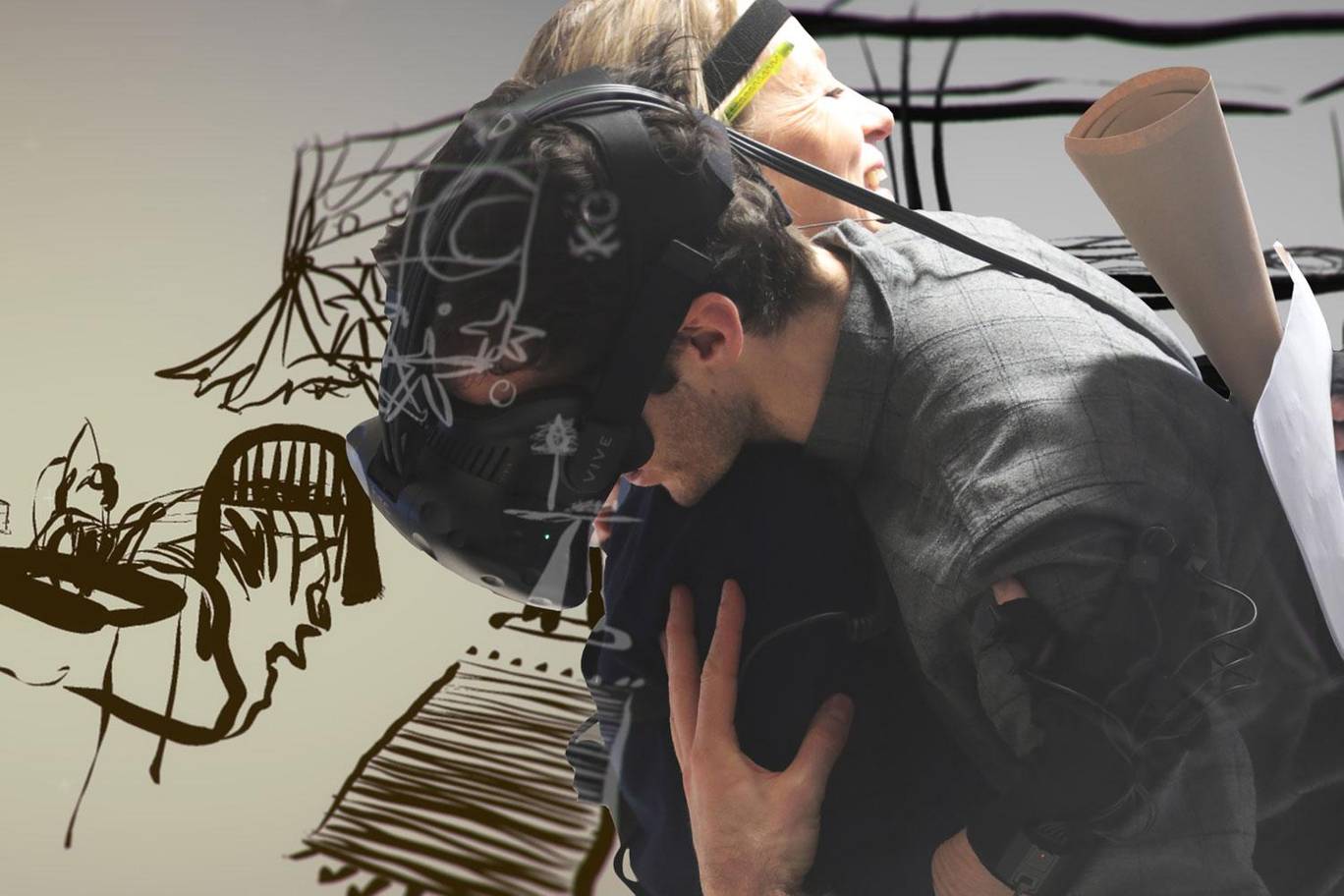 Immersive technologies are changing the boundaries of what can be experienced in theatre. Amelia Heathman goes to see virtual reality play Draw Me Close
 Can You Escape Your Fate?
 Five Major Problems to Solve for Mass Adoption of AR Headsets: