One Direction’s Liam Payne Plays Free Concert in VR This Wednesday (EXCLUSIVE)
 Liam Payne of One Direction fame will play a secret gig to a select audience of fans in London this Wednesday — and fans from around the world will be able to virtually join the gig’s audience: The concert is being broadcast live in virtual reality (VR) by MeldoryVR, free to watch for anyone who owns an Oculus Go or Samsung Gear VR headset via the MelodyVR app on the Oculus store.
See the full story here: https://variety.com/2018/digital/news/liam-payne-live-vr-concert-1203092015/
‘Angry Birds VR: Isle of Pigs’ Brings Mega-Franchise to Virtual Reality
 The “Angry Birds” franchise comes to virtual reality next year with the release of the upcoming “Angry Birds VR: Isle of Pigs,” Rovio Entertainment and developer Resolution Games announced today.
“We couldn’t be more excited to partner with Rovio to bring their beloved franchise to VR,” said Tommy Palm, CEO of Resolution Games. Stockholm-based studio Resolution Games is perhaps best known for the augmented reality fishing game “Bait! Under the Surface.” The developer secured $7.5 million in funding this October and is currently valued at $87.5 million.
See the full story here: https://variety.com/2018/gaming/news/angry-birds-vr-isle-of-pigs-brings-mega-franchise-to-virtual-reality-1203092797/
Hyped AR startup Blippar crashes into financial reality
The UK company lost $44 million last year and has now gone into administration
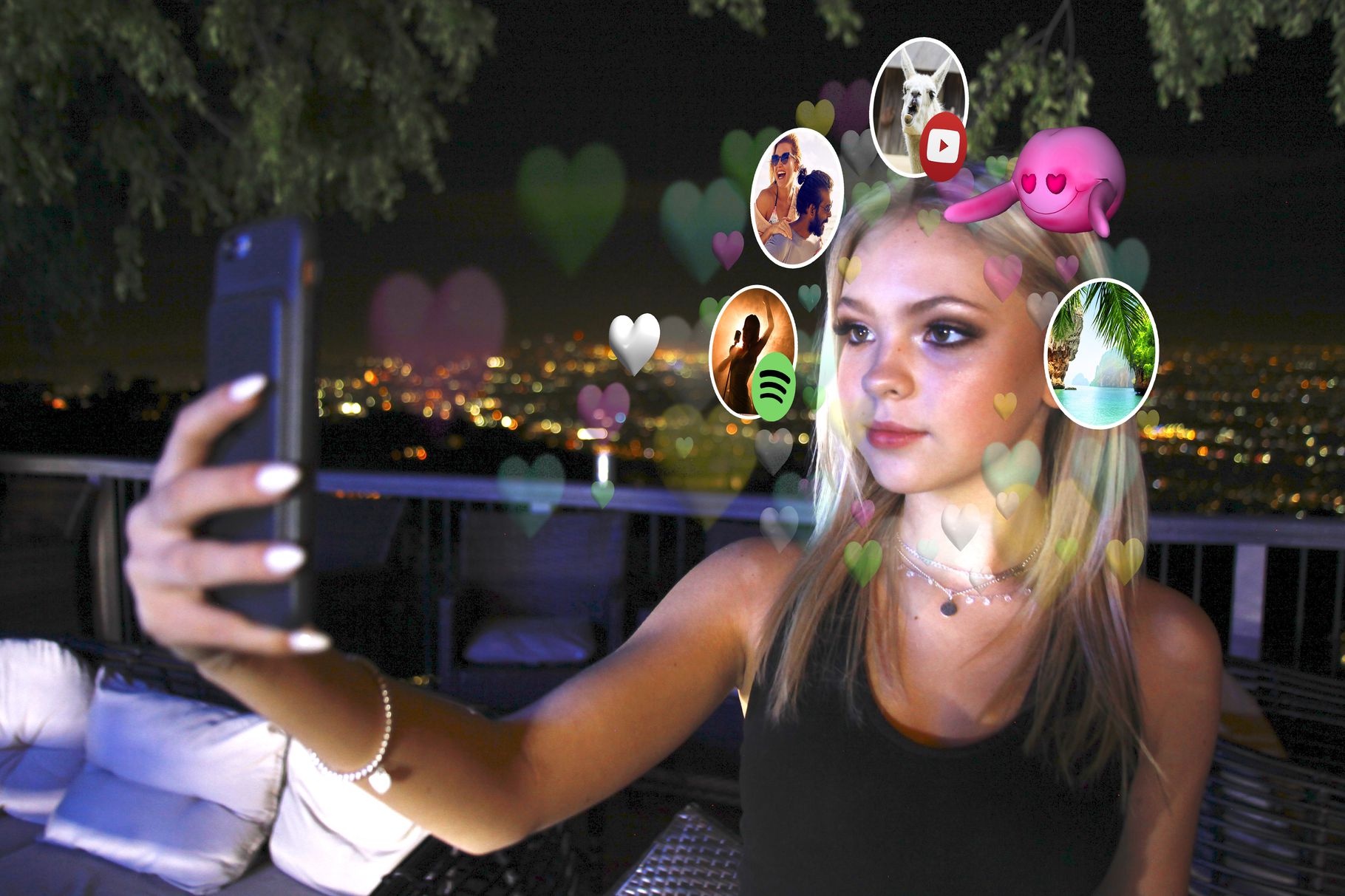
The company originally offered consumer AR products, with an app that recognized household products and landmarks, and a platform that let users turn their face into a “digital billboard.” It later pivoted to B2B, hoping to sell its technology to other firms.
This was not enough to save Blippar, though, and its fate reflects wider troubles for the AR and VR industries.
See the full story here: https://www.theverge.com/2018/12/18/18146069/blippar-augmented-reality-startup-administration-uk
Airmen take advantage of virtual reality paint booths
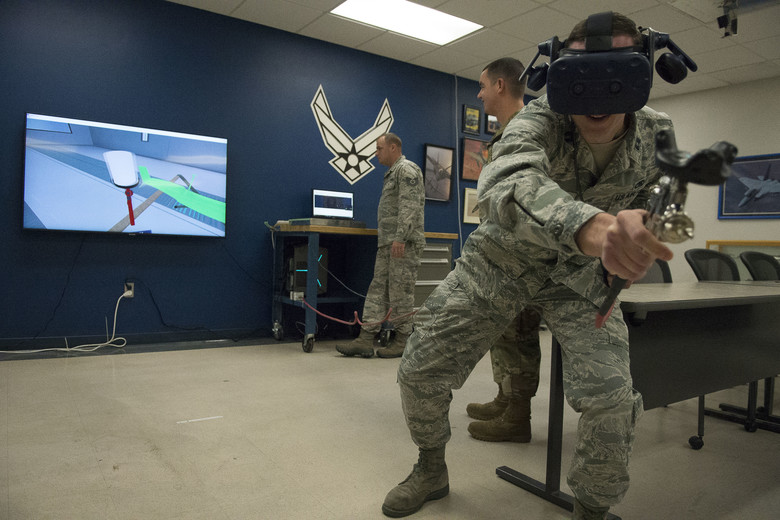
Capt. Patrick Britton, 359th Training Squadron Detachment 1 commander, right, uses a spray gun and HTC Virtual Reality goggles to apply paint to a virtual aircraft part in a 3D VR trainer Dec. 12, 2018, at the unit's schoolhouse on Naval Air Station Pensacola, Florida. The 359th TRS Detachment 1 recently installed two 3-D virtual reality paint trainers to create a safer and more efficient way of training Airmen. The detachment graduates about 1,200 Airmen annually in the aircraft structural maintenance, low observable aircraft structural maintenance, and non-destructive inspection career fields. (U.S. Air Force photo by Randy Martin)
NAVAL AIR STATION PENSACOLA, Florida – Teaching Airmen the how-to of protecting parts and planes just got safer and more efficient at the 359th Training Squadron’s Detachment 1 here thanks to virtual reality.
Members of the detachment recently installed two 3D virtual reality paint trainers in their schoolhouse, which graduates about 1,200 Airmen annually in the aircraft structural maintenance, low observable aircraft structural maintenance and non-destructive inspection career fields.
“The technology gap between using the virtual reality system and the real thing is almost one in the same, to the point where I train students here and I have to spend less time in the hazardous waste environment,” said Tech. Sgt. Kurt Brown, aircraft structural maintenance instructor.
Maintainers require a respirator, hearing protection, eye protection and a chemical protection suit when they are inside an actual paint booth. That equipment isn’t necessary for the detachment’s VR training, which focuses on spray gun techniques.
Until October 2018, Brown and fellow instructors alternated training between a two-dimensional simulator and two real paint booths. They thought VR could improve a student’s proficiency with spray guns, while simultaneously preserving resources and delivering motivated Airmen.
...
Each system costs about $32,000, which includes a computer, spray gun, HTC VR goggles, 65-inch television monitor, software and operator training with the system’s commercial vendor. This investment pays for itself within two years.
“Operating costs for our two paint booths is $35,000 annually,” said Capt. Patrick Britton, 359th TRS Detachment 1 commander.
See the full story here: https://www.aetc.af.mil/News/Article/1715619/airmen-take-advantage-of-virtual-reality-paint-booths/
Smart Footwear Brings Users’ Feet to Life In A Virtual Reality World
After
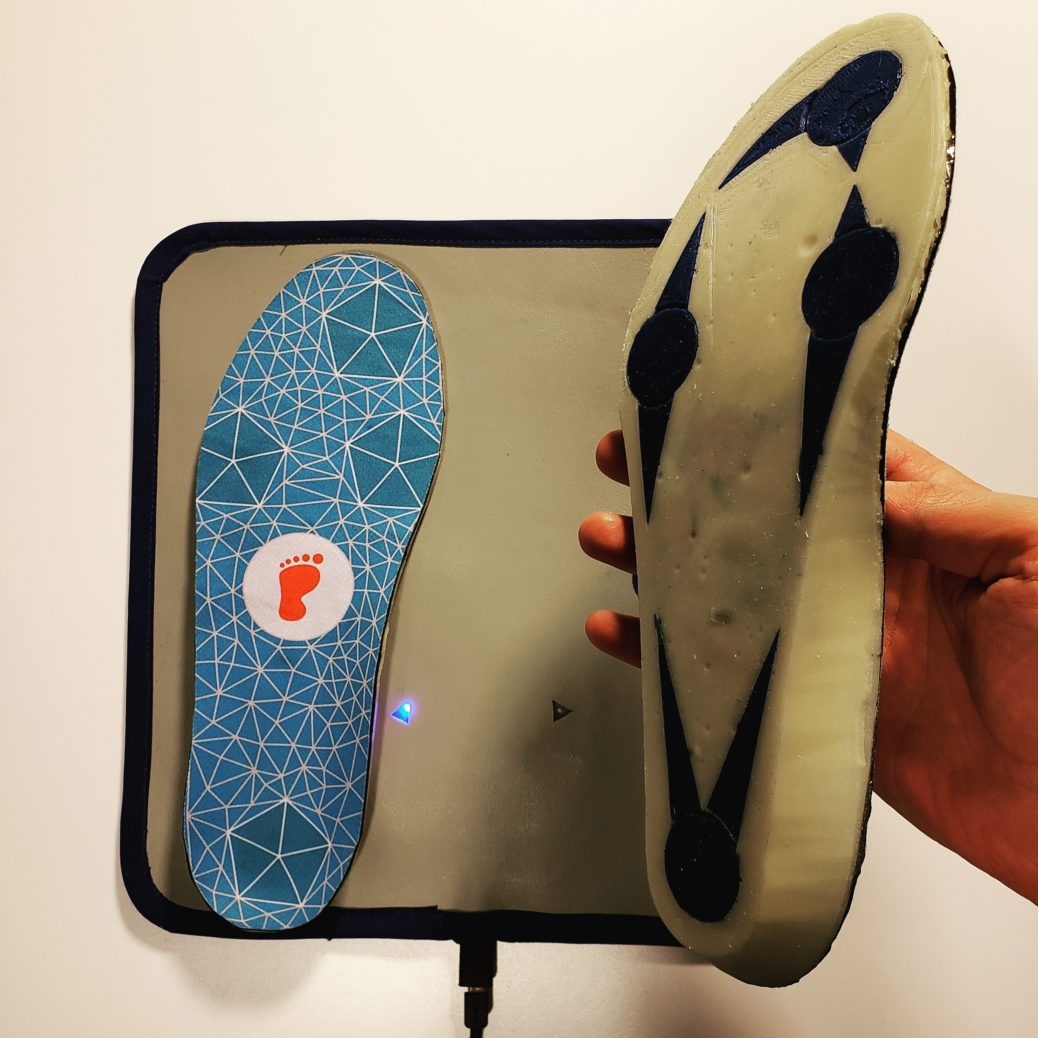
experimenting with a few microprocessors and sensors underneath a shoe insole, Guard wrote a simple program. The prototype ended up “emulating the movement keys” for PC games on a keyboard, allowing users to see their feet in the virtual environment and move more intuitively.
In the summer of 2016, he founded Brilliant Sole to take the product to market.
“We’re looking to work with both lower and higher-end VR products by putting your feet in virtual reality. Our system incorporates vibration motors in addition to measuring the force and motion of your feet. Everything is embedded in the shoe insole,” says Guard, who previously founded a payment startup.
The hardware charges wirelessly and offers a two-way communication system for developers to input data and customize the movement profiles. Embedded sensors track the foot’s force at specific pressure points to allow users to walk in place or in whatever direction they want to go, and two haptic motors help the user ‘feel’ the ground beneath them.
Guard and his team already have customers and will really enter the market in early 2019 with a crowdfunding campaign for direct-to-customer pre-orders model.
The Wilmington, North Carolina-based startup recently received a small investment from the Wilmington Angels for Local Entrepreneurs group, after bootstrapping to this point. This investment kicked off fundraising for the team as they’re currently raising a $500,000 seed round.
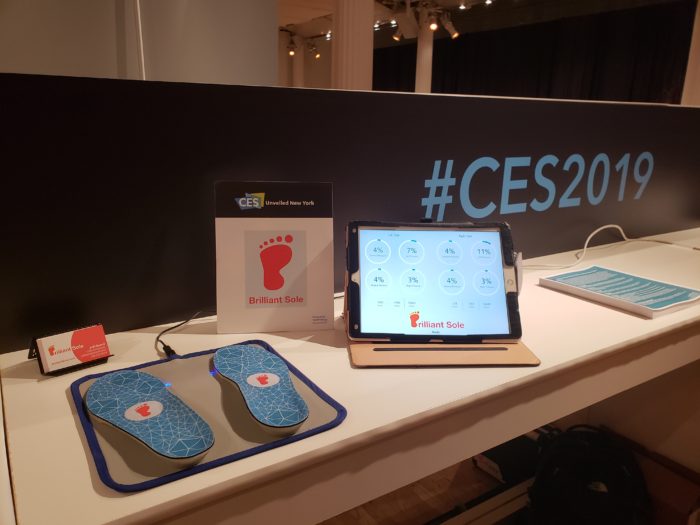
Guard and his team are preparing to present the demo at the 2019 Consumer Electronic Show after being selected through a CES Unveiled event.
See the full story here: https://hypepotamus.com/companies/brilliant-sole/
Former Hornets broadcaster Stephanie Ready goes VR full-time with Turner
 Long-time Charlotte Hornets broadcaster Stephanie Ready’s new job is a schedule of virtual reality telecasts of NBA games for Turner Sports.
Ready, who did some VR telecasts part-time last season, will work with former NBA All-Star Rip Hamilton on the telecasts, which begin Dec. 27 in Houston when the Boston Celtics play the Rockets. Ready’s schedule will include 10 games televised in the Virtual Reality format, plus All-Star Weekend events n Charlotte in February and some playoff games.
A 45-Year-Old German Film Knew Things About Virtual Reality We’re Just Discovering Today
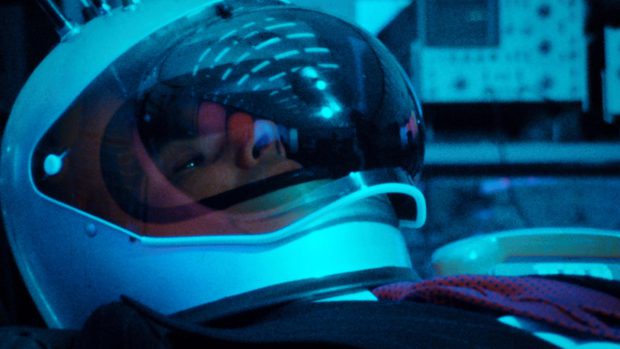 Nearly 50 years ago, German film maker Rainer Werner Fassbinder created a two-part sci-fi miniseries made for TV that was way ahead of its time. Combined, the parts created a movie that would be an entirely different genre for Fassbinder and a pioneering example of VR on the screen.
Based on the book Simulacron-3, written by Daniel F. Galouye in 1964, the movie is set within the Institute for Cybernetics and Future Science (IKZ). Engineers have created the Simulacron, a virtual world that looks just like the real world and contains more than 9,000 ‘identity units’ who all look like real people and think they’re living, breathing human beings - and, importantly, not generated AI living in a simulation.
In World on a Wire, Stiller begins to question the nature of his reality, realising that if the virtual world feels just like the real one, could the one he thinks is real be virtual too? What about his own identity, is that real or is he one of the many, many units inside the simulation?
See the full story here: http://www.gizmodo.co.uk/2018/12/a-45-year-old-german-film-knew-things-about-virtual-reality-were-just-discovering-today/
HTC THINKS CHRISTIANS ARE VR’S NEXT BIG AUDIENCE
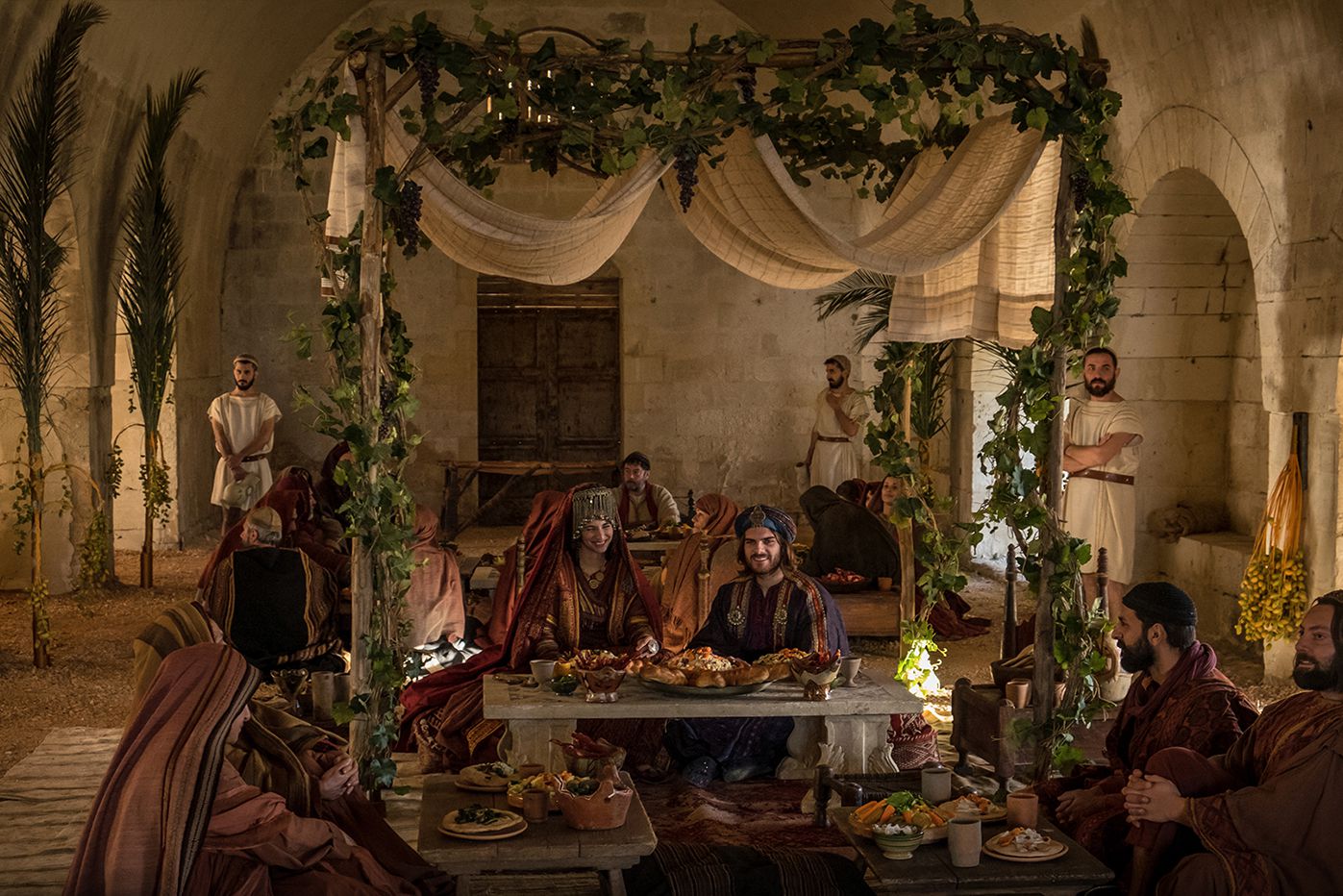 7 Miracles, a film from HTC’s own Vive Studios, isn’t just the latest example of this trend; it’s an acknowledgment on the part of one of the leading headset makers that religion might be a new opportunity for VR.
Although billed as the world’s first feature-length VR movie, it’s more accurate to think of 7 Miracles as a collection of seven 10-minute-long vignettes, each of them focused on one of Jesus’ miracles as described in the Gospel of John. It’s nothing if not a straight telling of one of the least controversial portions of the Bible that wouldn’t feel out of place as a special attraction in Sunday School.
Vive Studios isn’t trying to convert VR enthusiasts into Christians. Instead, it wants to convert Christians into virtual reality believers.
The result is a film devoid of blood, politics, and really of much in the way of conflict at all. It’s content to simply retell the popular stories rather than attempt to comment on them.
See the full story here: https://www.theverge.com/2018/12/16/18139134/htc-vive-studios-7-miracles-focus-virtual-reality-movie-raindance-film-festival