How to replicate physical objects in Virtual Reality on a smartphone
 A global team of computer scientists have developed a novel method to replicate physical objects in Virtual Reality using the point-and-shoot camera with a flash on a smartphone.

The novel algorithm, which does not require any input geometry of the target object, successfully captured the geometry and appearance of 3D objects with basic, flash photography and reproduced consistent results. Examples that were showcased in the work included diverse set of objects that spanned a wide range of geometries and materials, including metal, wood, plastic, ceramic, resin and paper, and comprised of complex shapes like a finely detailed mini-statute of Nefertiti.
Kim added: “Many traditional methods using a single camera can capture only the 3D geometry of objects, but not the complex reflectance of real-world objects, given by the SVBRDF. Using only 3D geometry cannot reproduce the realistic appearance of the object in the AR/VR environment. Our technique can capture high-quality 3D geometry as well as its material appearance so that the objects can be realistically rendered in any virtual environment.”
See the full story here: https://www.scitecheuropa.eu/objects-in-virtual-reality/91112/
and a better story is here: https://www.eurekalert.org/pub_releases/2018-11/afcm-trp112818.php
Microsoft Wins $480 Million Augmented Reality Army Contract Amid Employee Protests
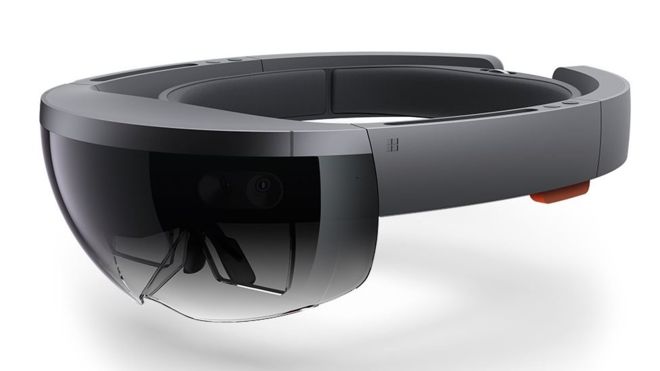 The Department of the Army awarded a $480 million contract to Microsoft msft on Nov. 28 for an advanced augmented reality system that will almost certainly build on the work the company has put into its HoloLens system.
The winning bidder has to deliver 2,500 systems within two years that can perform a set of basic capabilities. The contract could ultimately lead to a purchase of over 100,000 highly advanced head-mounted systems for offensive and defense use in operations.
The Integrated Visual Augmentation System has a series of stages through which the Army wants a company to proceed, starting with this first award to Microsoft that specifies a minimal set of capabilities could be achieved with commercially available technology today. However, the subsequent stages quickly stepping up to hardware that outstrips anything now available publicly or known to exist in government hands.
The initial request for proposals said the ideal weight of the gear would be no more than four pounds between head-mounted equipment—which must not require a helmet, but must also work with standard helmets—and any pack worn on the body. But the Army’s ideal is just over two pounds.
The system will need machine learning to identify objects and targets, and use artificial intelligence algorithms to suggest routes, detect threats (like tripwires), and alert a soldier to anti-electronic measures, like GPS jamming. It would also monitor health conditions and coordinate activities among large groups of soldiers.
The devices will both provide a form of artificial night vision that optimally would detect with 90% accuracy a human-sized object 150 meters away with illumination just by starlight, and provide augmented overlays that will ultimately have to be readable across all lighting conditions.
See the full story here: https://start.att.net/news/read/category/news/article/fortune-microsoft_wins_480_million_augmented_reality_army-rtime
Sony Pictures Takes Augmented Reality Users “Into the Spider-Verse” With Mobile Web AR Experience
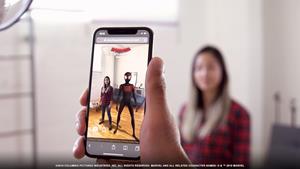 In anticipation of the nationwide release of Sony Pictures’ Spider-Man™: Into the Spider-Verse, in theaters December 14, 8th Wall and Trigger today announced the launch of the film’s Mobile Web AR Experience. The immersive AR camera is built using 8th Wall Web and Amazon Sumerian technology running on Amazon Web Services (AWS) and is designed to let users interact with Spider-Man in augmented reality (AR) where they can take pictures and share them with friends.
See the full story here: https://globenewswire.com/news-release/2018/11/26/1656936/0/en/Sony-Pictures-Takes-Augmented-Reality-Users-Into-the-Spider-Verse-With-Mobile-Web-AR-Experience.html
UCC study shows Virtual Reality can make men aware of testicular cancer risk
 Researchers in University College Cork are piloting a study which indicates that Virtual Reality (VR) could be successful in making men aware of the risk of testicular cancer.
Those behind the project, led by Dr Mohamad Saab, a lecturer in the UCC School of Nursing and Midwifery, designed a three-level VR experience and tested its feasibility and usability with 15 men recruited from a university.
Afterwards, the participants filled a 43-item questionnaire and agreed that the technology is comfortable to use, testicular disorders are well represented, the use of light humour is appropriate, and the scientific facts are easy to understand.
"Participants also agreed that the intervention was suited for men from different sociodemographic backgrounds and felt confident using VR," the study said.
A related article by the same authors said the game could be customised to run in a normal desktop environment for those with VR sickness or limited access to technology, and added: "VR can also be used to raise men’s awareness of a number of health topics such as sexually transmitted infections and cancer prevention."
See the full story here: https://www.breakingnews.ie/ireland/ucc-study-shows-virtual-reality-can-make-men-aware-of-testicular-cancer-risk-887914.html