Sony- and Disney-backed Littlstar launches blockchain media platform Ara
 Littlstar Media said it has launched Ara, a new blockchain-based platform designed to give creators and artists more control over their content.
“Right now, the audience is a draw, but third-party platforms have all the control. Ara puts control back into the hands of creators and their fans, enabling a more direct connection and a better way for fans to reward their favorite artists.”
Ara is a suite of blockchain-based protocols aimed at decentralizing ownership of content and using tokens to authenticate transactions between publishers and creators and consumers. The company envisions Ara being used to support content such as games, movies, music, and photos.
The company also believes consumers will benefit by retaining control over their data, rather than having it leveraged by third-party companies to help with content discovery and advertising models.
See the full story here: https://venturebeat.com/2018/11/01/sony-and-disney-backed-littlstar-launches-blockchain-media-platform-ara/
Breaking: Tether Opens $1.8 Billion Bank Account in the Bahamas
 Tether Limited, the issuer of controversial USD-pegged cryptocurrency stablecoin tether (USDT), has confirmed that it has established a banking relationship with a small financial institution based out of the Bahamas.
The cryptocurrency firm, notorious for its opaque operations, broke from standard practice on Thursday, announcing publicly that it has formed a banking partnership with Deltec Bank, a 72-year-old financial institution located in Nassau.
Writing in the announcement, Tether said that Deltec had only opened the account after a several month review that included evaluating whether the company could maintain the USDT token’s $1.00 peg. That, peg, as CCN reported, has faltered in recent weeks, even as Tether has redeemed more than $1 billion worth of the token at full face value since the beginning of October.
See the full story here: https://www.ccn.com/breaking-tether-confirms-its-banking-at-nassau-based-deltec-bank/
No Headset? A VR Space Like Star Trek’s “Holodeck” May Soon Become Reality
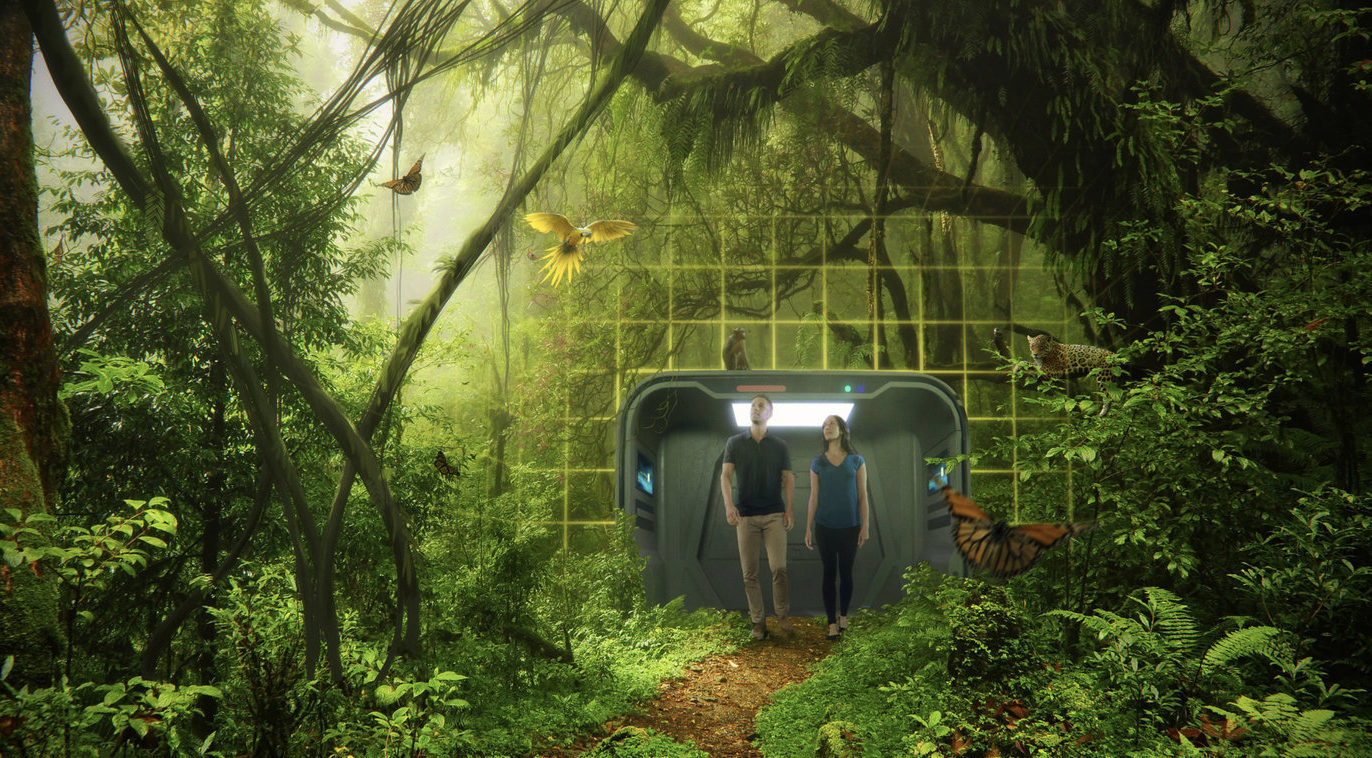 Light Field Lab promises the next generation of AR/VR with their headgear-free holographic system.
San Jose holographic display startup Light Field Lab and LA graphics company OTOY, which focuses on cloud-based high-end graphics, have officially announced a partnership that is “making the Star Trek Holodeck a reality” according to a recent press release.
This North-South California alliance will make use of Light Field Lab’s innovative headgear-free holographic system in conjunction with OTOY’s ORBX technology, which is the first no-royalty open-sourced format for this kind of display.
Currently, the prototype format consists of holographic display panels that are just 2 feet long. But the creators and investors are confident that this new holographic form of VR visible to the naked eye will soon develop into something like the long-desired ‘Holodeck.’
This team is not simply creating the VR space for a new step in content immersion; the partnership also came with an agreement from Endeavor and Roddenberry Entertainment to create original content designed specifically for the fledgling technology.
Apple’s Acquisition of Leap Motion Fails, While Snapchat & Magic Leap Make AR Fashionable
 This week, inside sources divulged details of how Apple nearly acquired Leap Motion, twice. Otherwise, companies offering or working on augmented reality technology had more successes than failures to talk about.
For instance, the AR industry's courtship with the fashion world took a few glamorous steps forward, with Levi's selling an exclusive Disney product through Snapchat and Magic Leap hitting the runway with Moschino and H&M.
On the investment front, LetinAR closed a funding round for its AR display technology. And, in mobile AR business, Travelocity and Walmart added AR experiences to their mobile apps to cater to their customers.
See the full story here: https://next.reality.news/news/market-reality-apples-acquisition-leap-motion-fails-while-snapchat-magic-leap-make-ar-fashionable-0189597/
Adidas is using augmented reality to sell limited-edition sneakers
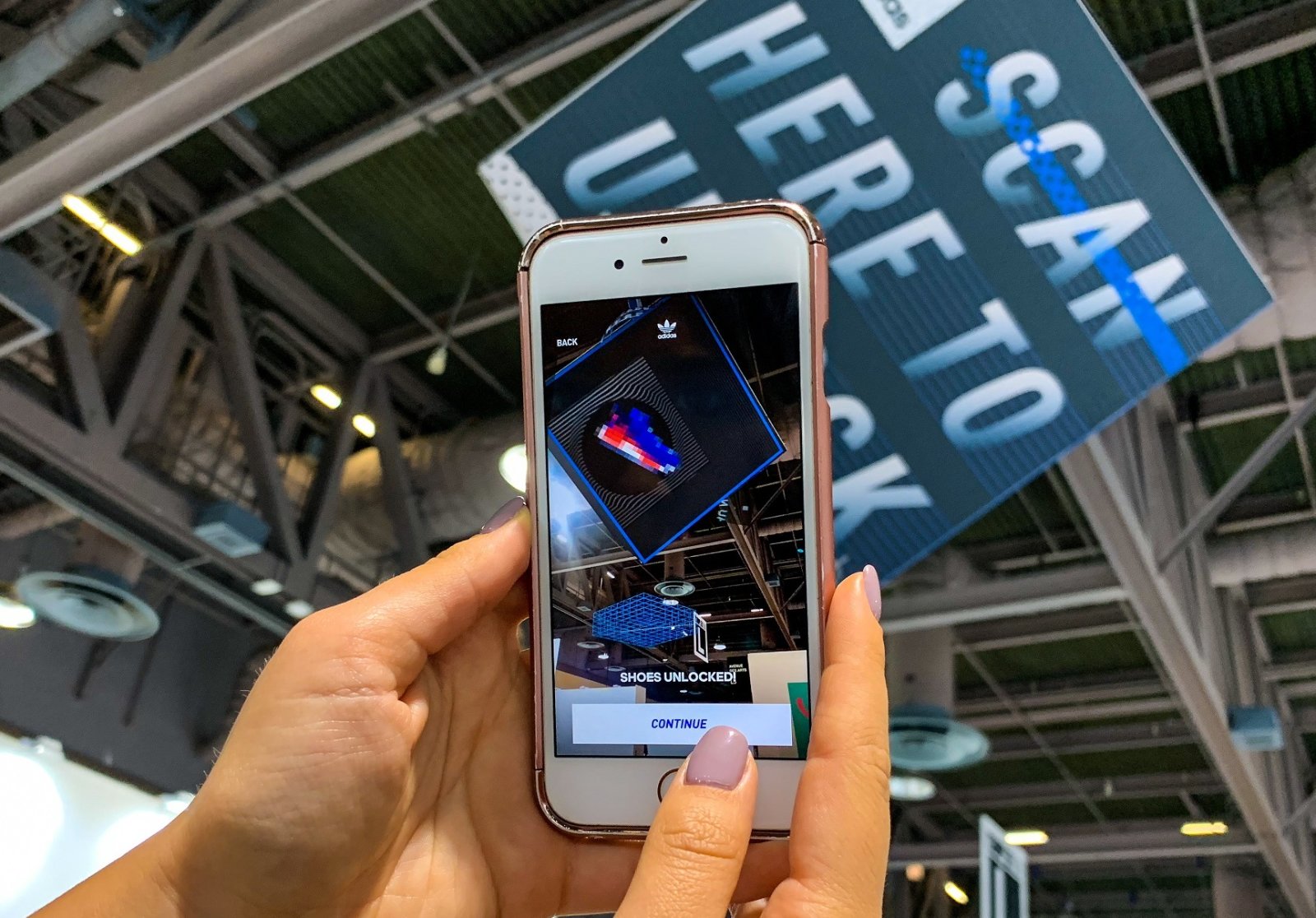 Now that Adidas is actually using the tech to sell its shoes, it's yet another example of how sportswear brands are serious about the potential of augmented reality as a tool to combat bots.
"A transaction that would have taken over two hours in the past is now served within minutes of the AR release," Chris Murphy, Adidas North America's senior director of digital activation, told Engadget. "At events like ComplexCon you have a very diverse mix of attendees that go from resellers, collectors to fashion enthusiasts and culture makers... and everyone gets a fair chance at the same release."
"Before the end of the year," Murphy added, "we aim to provide more access to our most desired product through the digital lens."
See the full story here: https://www.engadget.com/2018/11/02/adidas-originals-complexcon-drops-ar/
How artificial intelligence and virtual reality are changing higher ed instruction
 To learn more about the impact of these technologies, we attended a handful of panels on the topic led by higher education and technology leaders at Educause's annual conference in Denver this week. From teaching with VR to tracking student success with AI, we explore how colleges and universities are using new technologies to conduct research, teach students and create smarter campuses.
At Penn State University, researchers have built an immersive augmented reality program called First Class in which future teachers can engage with simulated students in a virtual classroom setting. And — just like real students — they may get bored or act out, providing teachers the opportunity to practice handling difficult or novel situations, said Kyle Bowen, director of innovation for Teaching and Learning with Technology at Penn State.
AI's growing role in the classroom
Breaking through faculty resistance to AI involves helping them understand that it will not replace their core responsibilities but instead "supplement the work we already do," said Jennifer Sparrow, senior director for Teaching and Learning with Technology at Penn State.
The university has developed a number of prototypes that implement AI for uses such as helping create courses, assembling textbooks from open-source materials and automating quiz and test production. These tools aren't meant to be a finished product but rather create a starting point that faculty can tailor to their needs, Bowen said.
Using AI responsibly
AI is not without its pitfalls, as some panelists noted, and higher education leaders should be careful about how they use it.
Without proper caution, bias can creep into AI technology.
Such risks can stem from a number of factors including AI pulling from incomplete or one-sided data or learning through bad interactions. To try to avoid these biases, it's important to consider the environment where the AI model will be and to design it to ignore undesired interactions, said Teddy Benson, the director of data integration at Walt Disney World.
See the full story here: https://www.educationdive.com/news/how-artificial-intelligence-and-virtual-reality-are-changing-higher-ed-inst/541247/
Virtual Reality arcade opens Nov. 10 in Tennessee
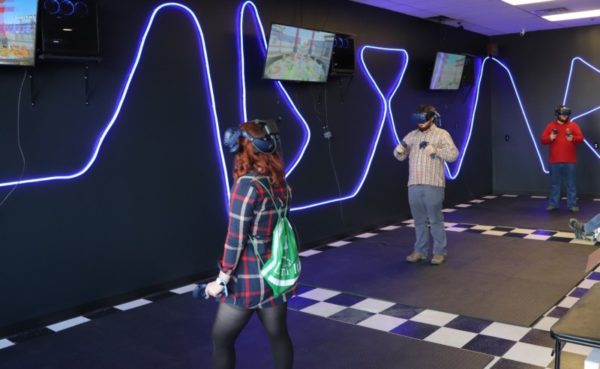 Digital Worlds VR arcade is located at 1945 Mallory Lane in Cool Springs, in the strip mall between Sprintz Furniture and Woody’s Smokes & Brews.
One station rents for $30 an hour. Corporate events and birthday parties begin at only $250 for two hours.
See the full story here: https://brentwoodhomepage.com/virtual-reality-arcade-opens-nov-10-near-sprintz-furniture-in-cool-springs/