Not being there: How augmented reality is changing the oil industry
A design engineer at Chevron’s sprawling El Segundo refinery in California used to travel from her office to the plant as many as five times a day to assess operations. Each time, she would bike to where she was needed, suit up with safety gear, assess the problem and bike back to the office, spending considerable time and energy in the process.
Not anymore. Plant workers outfitted with high-tech goggles equipped with a camera and connected to the internet now beam her in with a video call, allowing her to assess the problem on her computer screen and make the necessary recommendations. The goggles serve as holographic computers for the workers, allowing them to view a video call screen projected within their field of vision.
Chevron, which last year signed a separate, seven-year partnership with Microsoft to use its cloud platform, has deployed the HoloLens technology in the United States as well as Europe, Asia, Africa and Australia. Experts in Houston and elsewhere have remotely monitored pipeline tests, inspections, oil well completions, equipment building and other activities that often require in-person assessments.
Right now, the technology doesn’t come cheap: Each set costs about $5,000. But the company estimates that international travel to its facilities costs between $5,000 and $12,000 a trip, and perhaps thousands of dollars more if the destination is particularly difficult to reach.
See the full story here: https://www.houstonchronicle.com/business/energy/article/Not-being-there-How-augmented-reality-is-13300885.php
WEARVR Blockchain Virtual and Augmented Reality Project to Launch WEAVE Coin via ICO
 One of the biggest influencers on in the Virtual Reality (VR) and Augmented Reality (AR) industry, WEARVR has announced its plans to integrate blockchain technology on the platform and launch its WEAVE coin in a bid to solve the persistent issues troubling the industry.
However, the increasing levels of piracy and copyrighting issues faced in the art industry has crept in to VR and AR as well leading to WEARVR deciding to integrate blockchain on its platform to curb the problem. The company will further launch its own cryptocurrencynamed, WEAVE that will be used as a base currency on the platform.
Furthermore, WEAVE token will be the driving force of the payment and settlement systems on the platform enabling users security in content creation, digital rights management(DRM), transparency of ownership, and user rewards and incentives by integrating WEAVE into the existing centralized WEARVR app store. WEAVE coin will be available for fiat and crypto option to trade with.
See the full story here: https://bitcoinexchangeguide.com/wearvr-blockchain-virtual-and-augmented-reality-project-to-launch-weave-coin-via-ico/
Two Buddhist teachers and a cognitive neuroscientist debate the spiritual potential and shortcomings of VR
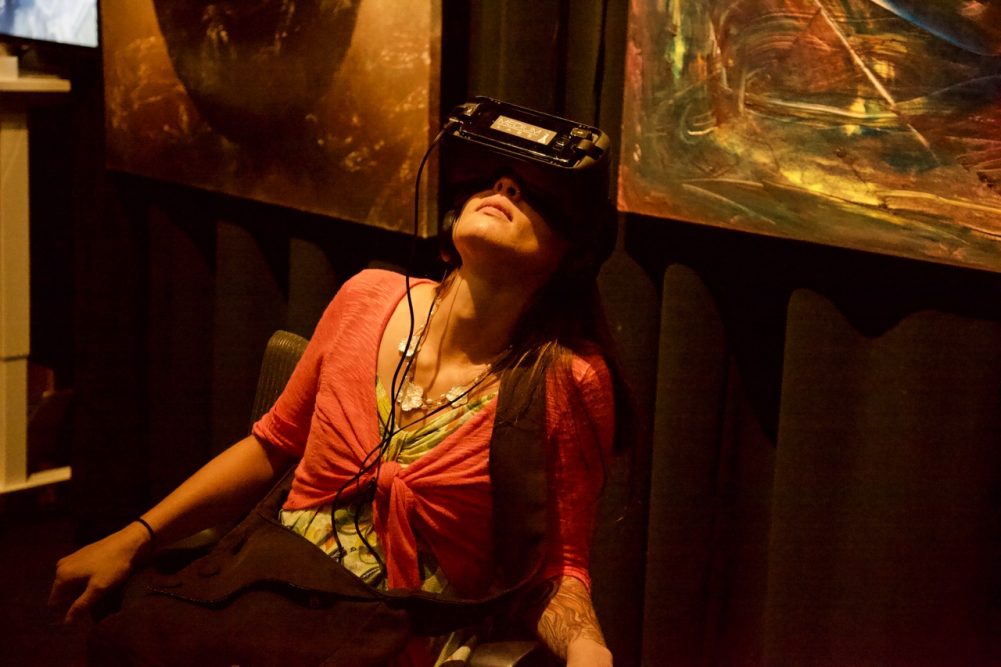 From a pedagogical view, virtual reality has a lot to offer. When it comes to how we absorb and remember information, the education researcher Edgar Dale has said that we retain roughly 10 percent of what we read; 20 percent of what we hear; 30 percent of what we see; and up to 90 percent of what we do.
There is a strong relationship between virtual reality and lucid dreaming, which is when you realize you are dreaming as it’s happening. It’s a fundamental Buddhist teaching that we have a delusional experience of the world around us, and to study the nighttime dream is to look head-on at a delusion inside of that even larger delusion.
When I first did VR, the most transformative and lingering aspect came when I removed the headset. I looked around and thought to myself, Wow, look at the resolution here. What a remarkable app design this is. When the headset comes off, you realize how hung up you get in the “display.”
See the full story here: https://tricycle.org/trikedaily/buddhist-virtual-reality/
Sports industry gears up for virtual reality revolution
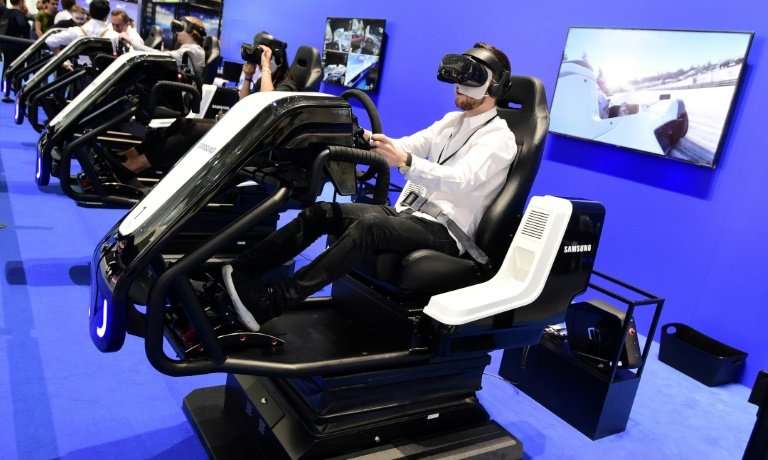 ...the two-day Leaders Sport Business Summit at Chelsea's Stamford Bridge stadium.
Ludden said that virtual and augmented reality—together known as mixed reality (MR)—would transform sport for professionals, amateurs and spectators.
Canadian company D-BOX Technologies, which designs and manufactures moving seats found in cinemas and theme parks, is now moving into sports, showing off their Formula One simulator at the London event.
Augmented stadiums
The technology can be adapted to help train athletes in other sit-down sports such as rowing, and Maheu said she had received interest from members of the horse-racing industry.
Telemetric sensors could also be placed on sports fields, balls and on players to remotely recreate the visceral reality of NFL, football or baseball, or even enhance reality.
The seats currently cost $10,000 each, putting them out of the reach of the armchair fan.
See the full story here: https://phys.org/news/2018-10-sports-industry-gears-virtual-reality.html
Virtual reality beaches in Antarctica beating isolation and helping future astronauts
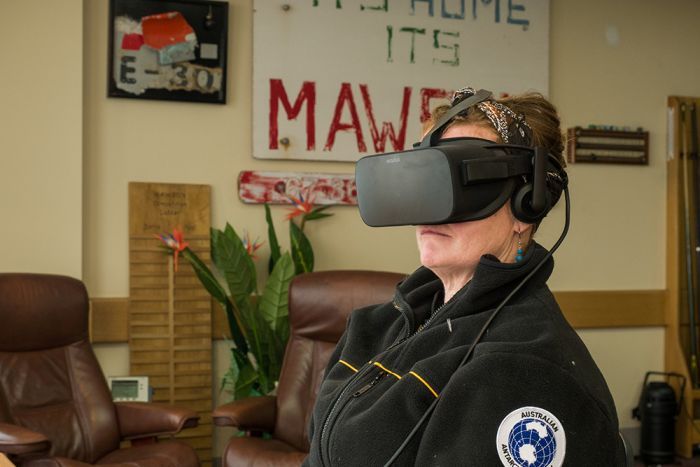 Expeditioners at Australia's Antarctic stations are using virtual reality to help them cope during months of isolation — and the research could be used for astronauts going to Mars.
"The virtual reality scenes they're looking at are Australian beach scenes, European nature scenes and North American nature scenes of forests and urban environments," he said.
"That's there to bring them back to reality, to give them a sense of being in a virtual space that is different from the isolation of the whiteness and silence of Antarctica."
See the full story here: http://www.abc.net.au/news/2018-10-10/virtual-reality-on-icy-continent-helping-astronauts/10356956
Young Latinos use virtual reality to reunite immigrant families separated by borders
 Alvaro Morales, 26, and Frisly Soberanis, 24, are the creators of the Family Reunions Project, an initiative that uses virtual reality, also known as VR, to "take" family members in the U.S. back to their homes and towns in Latin America through the use of immersive video.
Morales, a Peruvian-born former economic consultant and a graduate of Amherst College, originally came up with the idea after he showed his uncle a VR film. After watching it, his uncle told him he would give anything to have somebody film his home country so he could see it again. The interaction motivated Morales to quit his consulting job and partner up with Soberanis, a Guatemala-born video artist and a graduate of the Academy for Careers in TV and Film, to launch the project.
Through grants and donations, primarily from the organization Immigrants Rising and their Fund for Undocumented Social Entrepreneurs (FUSE), the Family Reunions Project has been able to do over a dozen virtual family reunions for people like Maria, who did not want to publish her last name due to her immigration status. She came from Arequipa, Perú over 20 years ago and still remembered the last time she hugged her siblings and mother.
According to Morales, the Family Reunions Project is innovative because it breaks with the assumption that VR technology is just for gamers and entertainment. And though the topic of immigration has been so polarizing politically, Morales hopes that technology can help humanize the issue.
See the full story here: https://www.nbcnews.com/news/latino/young-latinos-use-virtual-reality-reunite-immigrant-families-separated-borders-n917761
Can Jesus save virtual reality?
 Vive Studios just debuted its first "feature-length" virtual reality movie at the Raindance Film Festival in London. It's neither sci-fi nor twee endearing animation, however: it's a Christian film based on Jesus' seven miracles, captured in 360-degree video, and it was nominated for the Grand Jury Prize for Best Immersive Story. The majority of the tale is told in wrap-around 8K video, with each of the miracles taking roughly 10 minutes. The episodic structure makes sense: Virtual reality is still tiring, both because you're wearing the mask and because you have a screen so close to your eyes.
See the full story here: https://www.engadget.com/2018/10/09/can-jesus-save-virtual-reality-seven-miracles-htc-vive/
Weta Workshop launched AR shooter game ‘Dr. Grordbort’s Invaders’ during Magic LeapCon
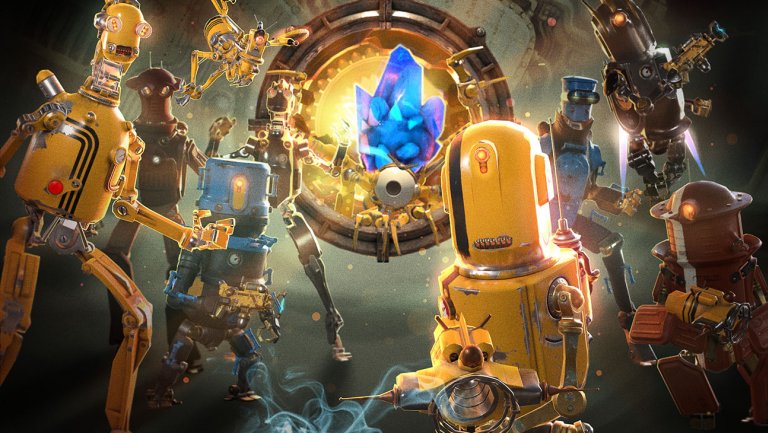 The project is based on original IP from, and created by, Weta Workshop. Magic Leap funded the development of the game, though the amount was not disclosed.
Weta Workshop is in the early stages of developing additional content for the headset, according five-time VFX Oscar winner Richard Taylor (The Lord of the Rings), co-founder and creative lead at Weta Workshop and a founding Magic Leap board member.
See the full story here: https://www.hollywoodreporter.com/behind-screen/weta-lucasfilm-debut-augmented-reality-content-at-magic-leap-developers-confab-1151060