THE HTC EXODUS BLOCKCHAIN PHONE COMES INTO FOCUS
 BLOCKCHAIN PHONES ARE coming, that much is certain. The Sirin Labs Finney and the HTC Exodus are both expected by the end of the year, each with its own, sometimes vaguely defined sense of what exactly that term means. HTC’s Phil Chen, who spearheaded Exodus development, has at least started to fill in the blanks of how the Exodus will pull off its most important trick: keeping your cryptocurrency safe.
The Exodus has loftier ambitions than mere storage, of course. “A few years down the road, we see a world where people own their own identities and data, where everyone understands the concept and economics of digital property,” says Chen, HTC's decentralized chief officer. For the moment, though, the primary concern for the Exodus’s intended audience is how well it works as a hardware wallet.
The HTC Exodus aims instead for something of a compromise. It isn’t quite cold storage, but at least it empowers users by allowing them to hold their own keys. It does so by placing them in a so-called trusted execution environment, a part of an ARM chip called TrustZone. The secure enclave sits apart from the operating system, designed to inoculate precious cargo even in the event of a broader breach. Think of it as a smartphone’s panic room.
The concept of a secure enclave isn’t new; Intel has offered one for PCs for some time, and Apple uses one to protect the biometric data—your fingerprint and face—that it uses to unlock the iPhone. Even TrustZone has been around for years, commonly used by studios and such to lock down DRM-protected content.
[If you lose your key] HTC’s proposed failsafe: You can split your key among three to five people you trust, all of whom will need to download an app for this to work. You won’t need their help to assign transactions, but you will if you lose your phone.
See the full story here: https://www.wired.com/story/htc-exodus-blockchain-phone-secure-cryptocurrency/
VR and AR will expand the limits of human perception
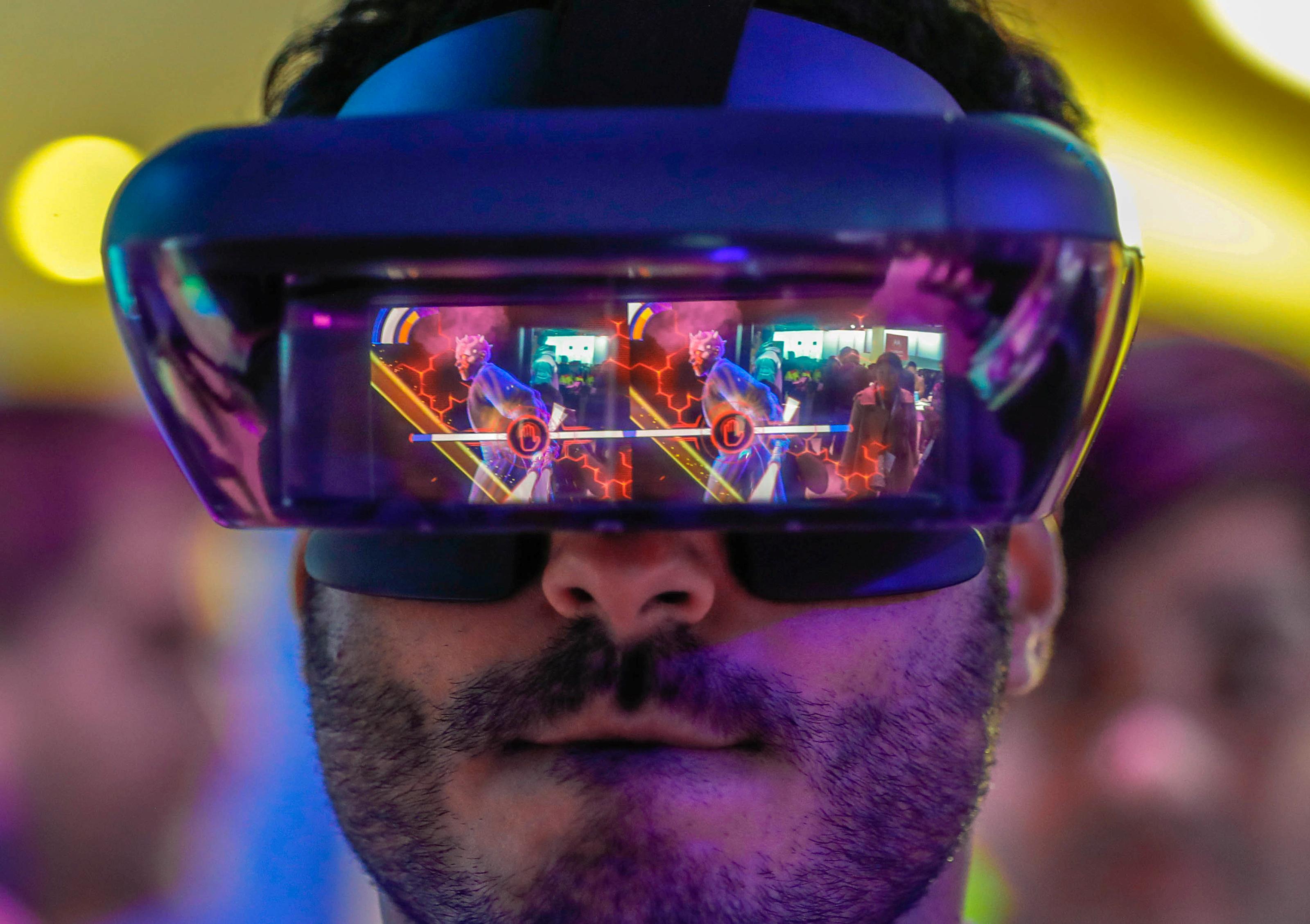 With AR on mobile devices and head-mounted displays, we’re well within the start of what it means to live an augmented life.
Instead of AR being the technology through which we see the world, humans will become the common device for the combined knowledge of the species. We will dive past display technology to deeper integration with AIs and instantly searchable databases. We will be able to intuitively read reactions based on the dilation of each other’s pupils and the pulse under our skin. The best judgment calls will be made through instantly accessible shared data.
While bioethicists, geneticists, and politicians debate the ethics of the human modifications, technologists have free reign. We can argue for the advantages of today’s level of augmentation, but there can be no doubt that the arms race is on to make this interface more seamless. The question is not if these technologies will change our experience of reality, but how quickly.
...many animals already sense things we can’t. Pit vipers “see” thermal radiation of their prey, salmon are sensitive to magnetic fields, and arctic reindeer see into the UV spectrum to distinguish between food and snow.
What you see and your understanding of it will soon be different from the person next to you, and we will no longer have a common experience of our shared environment. When AR arrives in its fuller and more integrated state, the challenge for our technologically tiered society will be how we stay in sync with one another.
See the full story here: https://qz.com/1383621/vr-and-ar-will-expand-the-limits-of-human-perception/
Southampton to install augmented reality advertising boards around the pitch at St Mary’s
 The revolutionary idea means the ad seen around the turf will appear differently depending on where you're watching
The augmented reality system - already used in the Bundesliga - means adverts will be specific to your country, rather than being completely generic.
Saints installed the ADI, Uefa-compliant hoardings this summer - becoming the tenth Premier League side to do so - to give themselves the chance to rake in more money through advertising streams.
See the full story here: https://www.thesun.co.uk/sport/football/7343959/southampton-augmented-reality-ad-boards-st-marys/
Augmented Reality Company Meta to Put 75% of Employees on Hiatus
 Silicon Valley-based augmented reality company Meta Company has put three-thirds of its employees on hiatus during the month of September. Meta announced a plan to restructure earlier this month, citing the “economics and dynamics" of the AR market and saying the move is set to ensure the company continues to operate “in the most cost and resource-effective manner possible while maintaining a competitive edge.”
Meta said that it would use the hiatus to open a second headquarters and innovation lab in China. Meta also said it intends to launch a third innovation lab in Israel, pending the close of an upcoming funding round.
See the full story here: https://www.calcalistech.com/ctech/articles/0,7340,L-3746520,00.html
Streamy Nominees Show Online Influence Flowing Far Beyond YouTube Source
 But the ecosystem long nurtured by YouTube (again this year's presenting sponsor and also distributor of this year's webcast) has increasingly fractured and moved far beyond Google's very long reach, as suggested by the many places you can watch Dobrik and Koshy, among many others.
Dobrik has piled up more than 3 billion views on YouTube and attracted 9 million subscribers there. He also has a huge presence on the hottest social-media platform, Instagram, with 5.9 million followers, another 2.6 million on Twitter, as well as a presence on Snapchat. Koshy is even more popular, with 16.1 million YouTube followers, 17.4 million on Instagram, and 2.9 million on Facebook.
Other nominees include names likely known even to the most out-of-touch parents of Dobrik and Koshy fans, including the WWE, NBA star Kevin Durant, actor/comedian Kevin Hart (for his sports series Cold As Balls) and long-time political talk show the Young Turks, which received three nominations, including for Show of the Year.
See the full story here: https://www.forbes.com/sites/dbloom/2018/09/25/streamy-nominees-show-online-influence-flowing-far-beyond-youtube-source/#1ead1bd877d2
I spoke with the CEO of Sennheiser about audio, virtual reality and the notion of legacy
 The probability's higher for you to have a good idea if you have many ideas. That's why we like to try new things. In the case of AR and VR it was really just connecting the dots in the industry trends that we were seeing. More than five years ago, neither were very wide spread, but what we saw was that everyone who was worrying about virtual reality was worrying about the picture. No one was worried about sound. You would have a 3D game, but you had mono sound. We saw an empty space. We felt that we could leverage some 3D audio technology that we had been researching for over 12 years.
At our San Fransisco research lab, we'd been experimenting with binaural 3D rendering and all kinds of fun stuff. At the time, we had no idea of how this could ever be commercialized. We just thought it was cool. That's the beauty of being a family-owned business. You can do things that you like and believe may have a future. As VR advanced and AR showed up, we saw saw that we could apply our technology to it. That was the first attempt with the VR mic that we made. The way that we brought this to the market was unique: we didn't develop a product to present. Instead, we brought our prototype of the mic to CES and asked everyone, "What would you do with that?" It was really a co-creation.
See the full story here: https://boingboing.net/2018/09/24/i-spoke-with-the-ceo-of-sennhe.html
Pixvana’s new virtual reality production software lets you edit VR content while wearing a headset
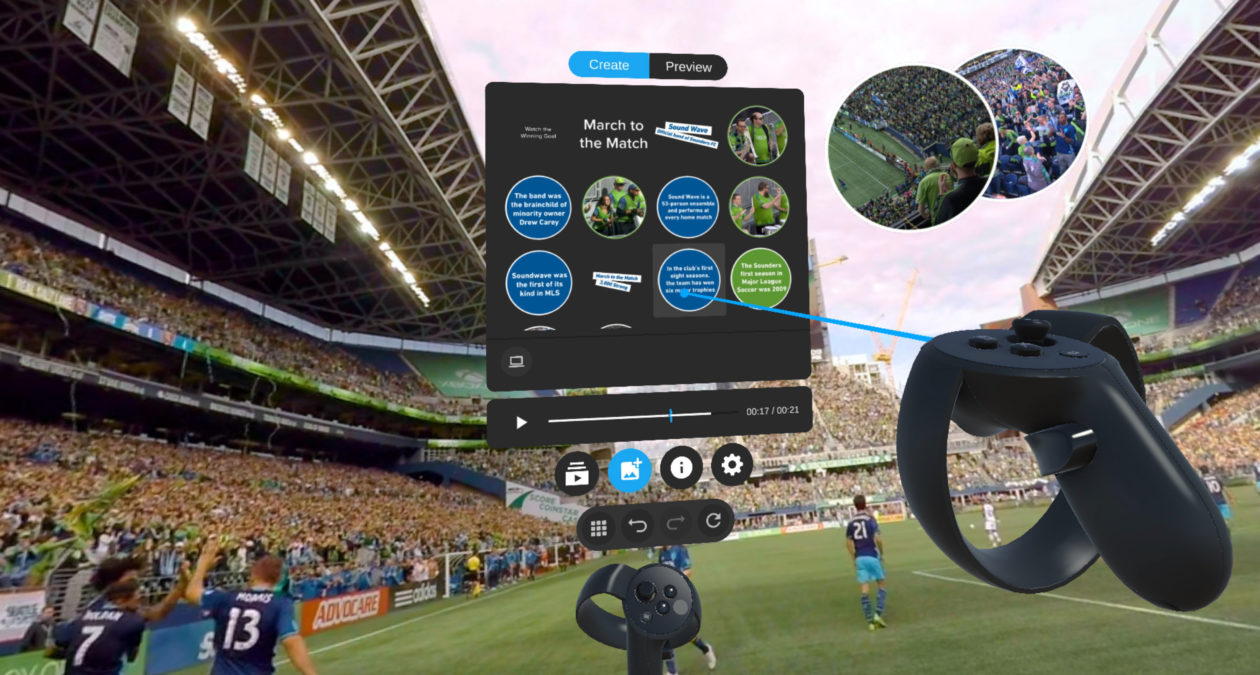 Seattle startup Pixvana today released the full version of its software platform SPIN Studio that helps virtual reality filmmakers edit, process, and deliver video at 8K resolution.
Perhaps the most notable update to SPIN is the ability to edit VR content while wearing an Oculus Rift headset. It lets users perform natural gestures and actions with their hands to move media, add editing effects, and create linear stories.
Pixvana also added improved stitching technology to SPIN, which can be used to stream and share content to other headsets.
Earlier this year, Pixvana created an in-house VR production studio called WunderVu. The 30-person company also launched new VR playback technology in June.
It still remains to be seen if and when VR and AR technology will go mainstream. Pixvana is one of several Seattle-area startups that have laid the groundwork and are ready to capitalize on the tech if it starts to reach critical mass.
See the full story here: https://www.geekwire.com/2018/pixvanas-new-virtual-reality-production-software-lets-edit-vr-content-wearing-headset/
3-D movies in the air? Alaska Airlines adds virtual reality to in-flight entertainment
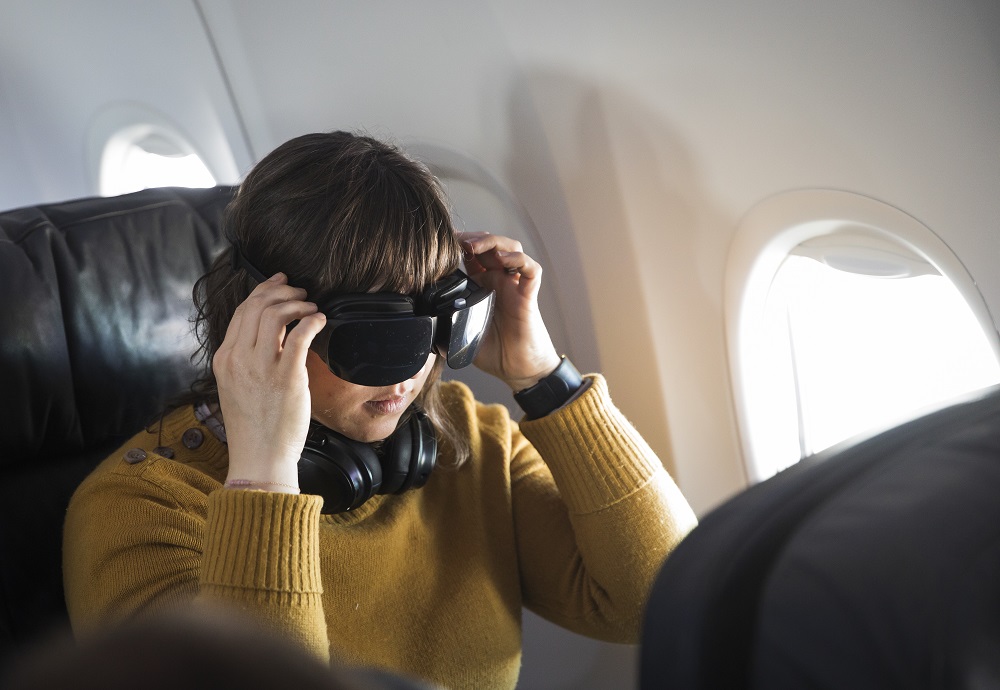 The Seattle-based airline has partnered with SkyLights, a French-American immersive-media company, to offer VR headsets and noise-canceling headphones to first-class customers on 10 flights that go between Seattle and Boston, and Boston and San Diego.
The users can watch 2-D and 3-D films such as “Three Billboards Outside Ebbing, Missouri” or “Ready Player One.” They can also click into 360-degree, head-tracking virtual-reality videos.
SkyLights’ lightweight Allosky VR headsets have been adopted for tryouts on other airlines, ranging from Joon and XL Airways to Lufthansa, but Alaska Airlines’ experiment ranks among the most ambitious yet. It follows months of testing and tweaking by Alaska’s Guest Advisory Board, which includes some of the airline’s most seasoned frequent fliers.
A SkyLights representative will be onboard for each of the flight tests to provide support for passengers and flight attendants.
“Before launching VR content, we ran in-flight user tests, in which there were no reports of a passenger that experienced VR sickness.”
See the full story here: https://www.geekwire.com/2018/3-d-movies-air-alaska-airlines-adds-virtual-reality-flight-entertainment/