A Hologram Hits the Runway
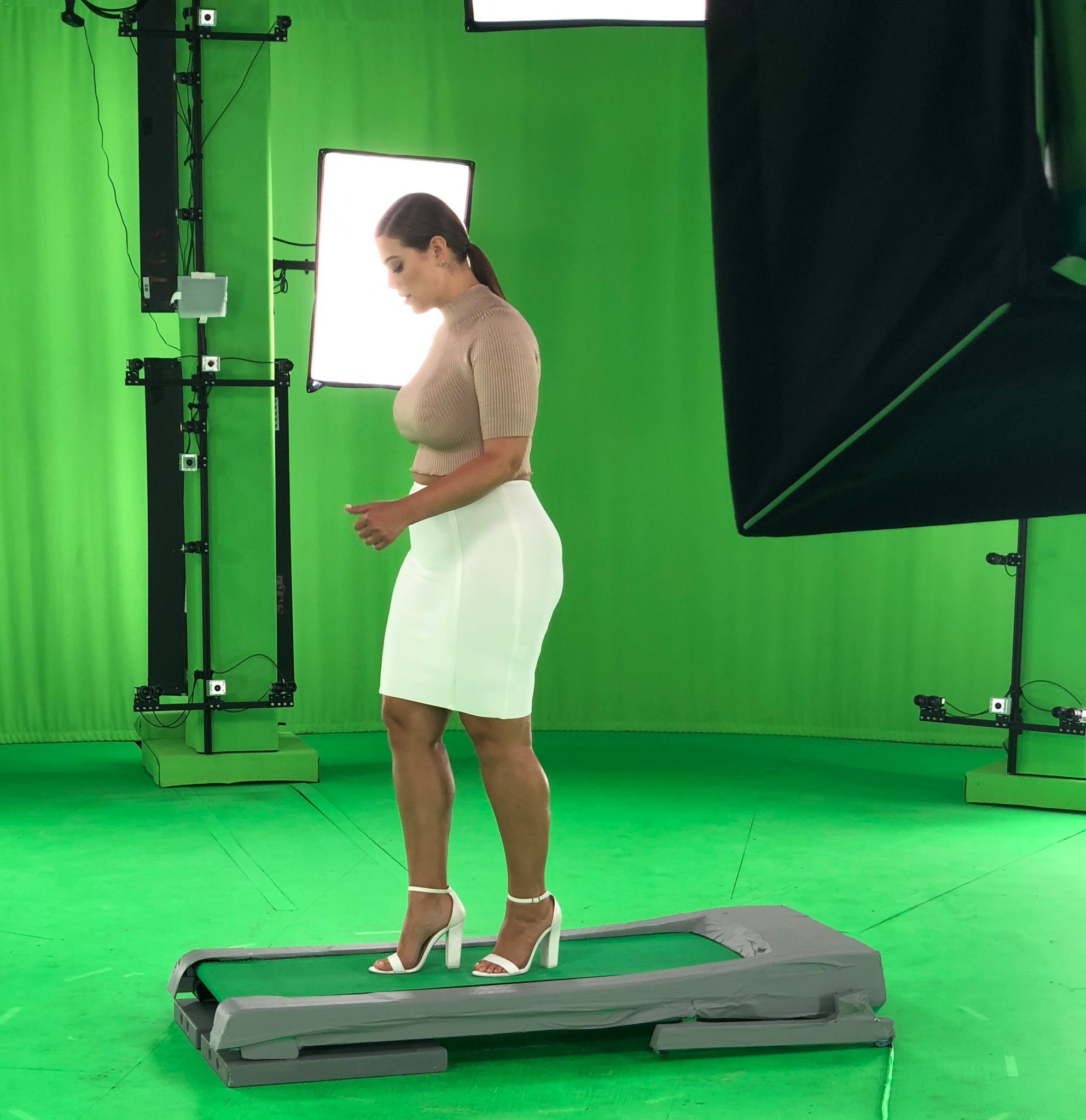 Our subject was the model and activist Ashley Graham. She had a strict cutoff at noon, and we were leaving extra time for things to go wrong.
As part of “Ashley Graham, Unfiltered” — an interview conducted by Joanna Nikas, a New York Times Styles editor, that explores issues around body image — readers who have downloaded the New York Times app (iOS) onto their iPhones or iPads can project a hologram of Ashley into their space as she demonstrates poses and her runway walk.
This is a new video format, with a new production process. Rather than record Ashley from just a few perspectives, she is captured from all angles using more than 100 cameras positioned around her on a stage that is essentially a giant green-screen in-the-round. The images from the cameras are then composited and processed together to create a single “hologram” that, when viewed through the screen on your phone or tablet, can be placed into your own physical environment.
We recorded Ashley Graham at Metastage, a brand new volumetric video studio in the Culver City Studios complex. “Having Ashley as one of our first captures was a testament to how far we’ve come with female empowerment in business,” said the studio’s chief executive, Christina Heller. “We had a strong, vivacious supermodel performing on a state-of-the-art volumetric capture stage run by women. The energy was fun and inclusive, just like it should be.”
The capture zone is confined to an 8-foot-diameter circular area, for instance, which required some creative problem solving — such as designing walk patterns that would fit and look natural in a small space. “It was like a math problem,” Joanna noted. Before she even stepped onto the stage, we worked with Ashley on a piece of circular carpet outside the dressing room area, drawing patterns and arrows on paper as if planning a football play.
We also needed to work within specific styling guidelines from the studio. No super-skinny stiletto heels, for example, and hair needed to be contained to a unified shape, as small flyaway strands are confusing to the capture system.
...personal space. We’ve solved this for now by having the hologram go transparent once a certain threshold of closeness is crossed.
To find other augmented reality projects, readers can choose the “Immersive AR/VR” tab in the NYTimes app.
See the full story here: https://www.nytimes.com/2018/09/05/insider/ashley-graham-hologram-augmented-reality-video.html
Video The waterslide with virtual reality
See the video here: https://www.bbc.com/news/av/technology-45348076/the-waterslide-with-virtual-reality
Virtual Reality Transporter – St. Louis Science Center
 Spacewalk: Danger in Orbit

Prehistoric Undersea Adventure
$10/experience, $9 for members.
See the full story here: https://www.slsc.org/exhibits-attractions/virtual-reality-transporter/
VR SPOTLIGHT: STIFLED BRINGS ECHOLOCATION TO VIRTUAL REALITY
 It seems a bit counterintuitive to play a VR horror game about losing the ability to see, but Stifled is proof that sometimes it’s what you can’t see that scares you the most.
Stifled is a game that forces you to navigate using sound. Although it’s not perfect, it’s an interesting concept to explore, even if the VR implementation isn’t as fleshed out as it should be.
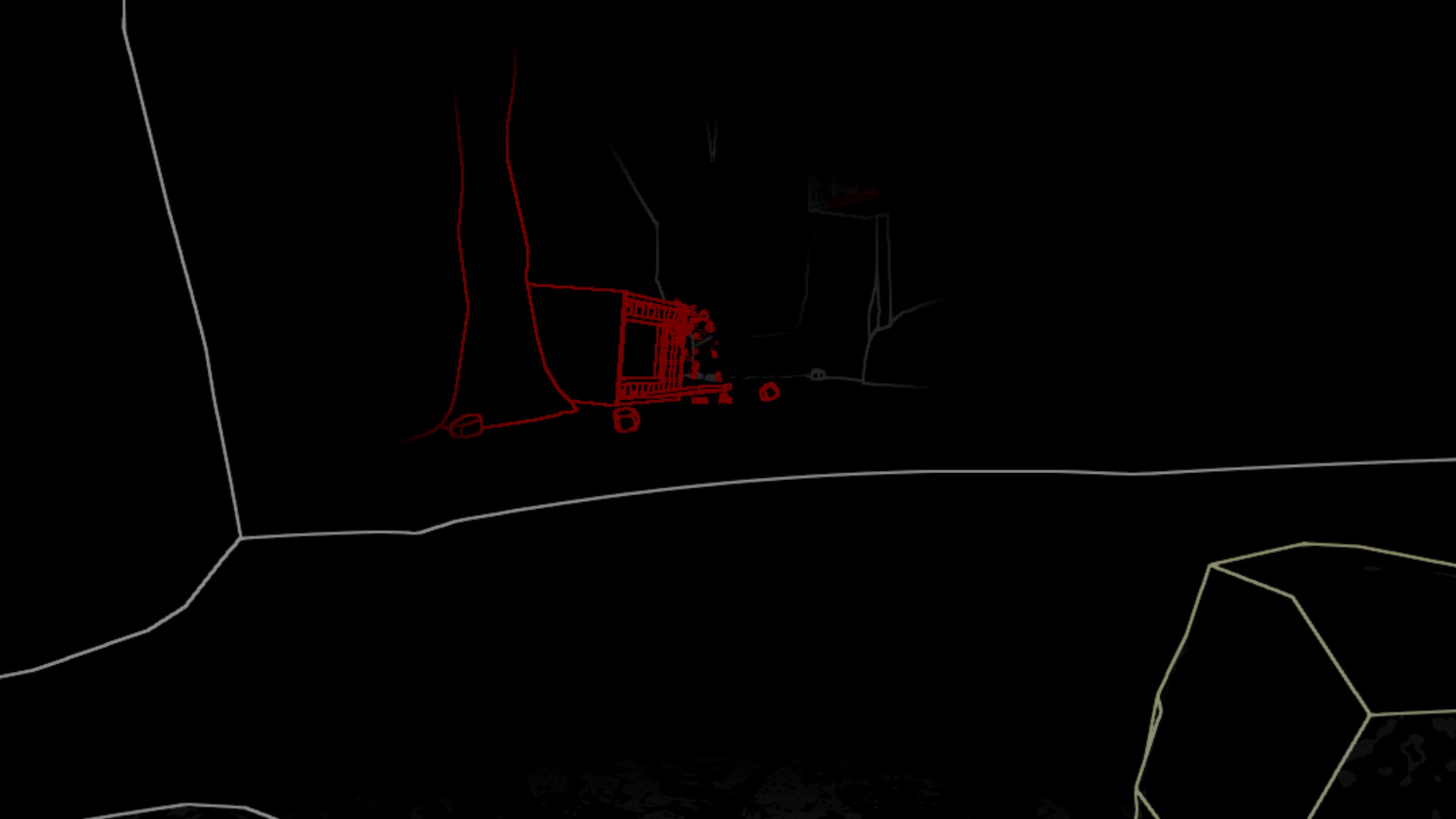
Stifled is about sneaking around in the pitch black with various nasty creatures that want to see you dead. The twist is that your character and the creatures are both equally blind in the darkness, but the moment anything makes a sound, the area around the source is illuminated, which allows you to see the environments in an artistic take on echolocation.
This system is incredibly cool in practice, especially when you enable the optional microphone support, which lets Stifled listen to every sound you make as you progress through the story.
Although the echolocation mechanic is undeniably unique, the groundbreaking game design kind of slows down from there.
See the full review here: https://www.gamecrate.com/vr-spotlight-stifled-brings-echolocation-virtual-reality/20648
‘Screaming nightmare’: William Shatner boldly goes into VR
 He is involved with Ziva Dynamics, a VR company, through which he has experienced “nightmarish footage” involving strange creatures that creep up on the user.
“It’s so real: it’s the stuff of nightmares … We’ve got to be really careful because you could put somebody into a psychosis,” he said.
See the full story here: https://www.theguardian.com/culture/2018/aug/31/a-screaming-nightmare-william-shatner-boldly-goes-into-vr
The Art of Virtual Reality
 Once the preserve of game developers, space agencies, and military training facilities, virtual reality (VR) is fast becoming a formidable means for artistic expression, as evidenced by a suite of new works by notable artists making waves at museums over the past year.
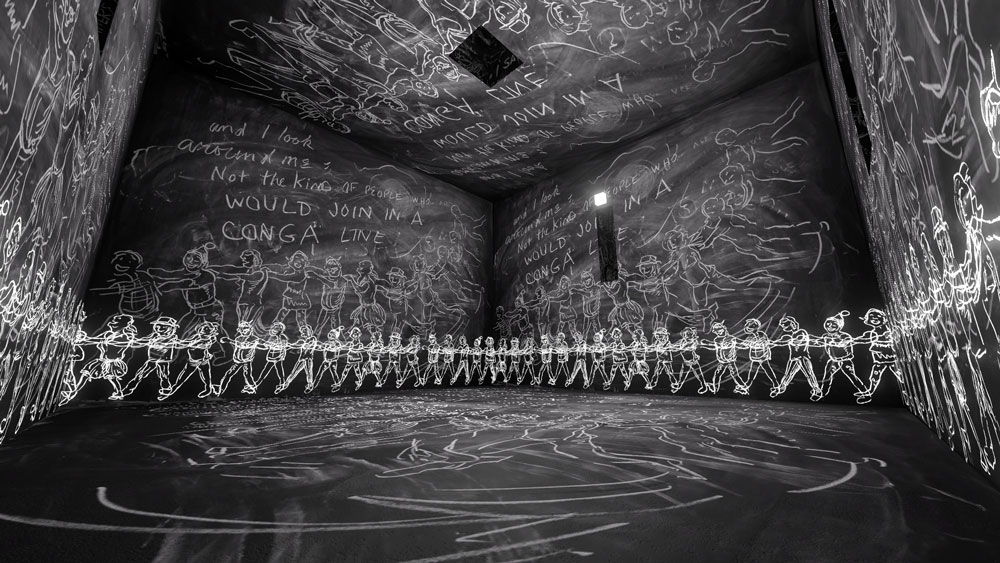
These include Laurie Anderson’s story-centric The Chalkroom, which debuted at the Massachusetts Museum of Contemporary Art (Mass MoCA)in 2017, and Jon Rafman’s apocalyptic View of Harbor—in which an incoming tsunami sweeps viewers out to sea—at the Institute of Contemporary Art in Boston this past spring. And at Art Basel Hong Kong in March, a pair of immersive works by Marina Abramović and Anish Kapoor were presented by Taiwanese company HTC, maker of the Vive Virtual Reality System, a top-of-the-line consumer market headset.
Victoria Chang, director of HTC Vive Arts
“VR has become increasingly important in the museum setting, primarily as a didactic tool enabling us to re-create known places and provide visitors with virtual visits to distant or fragile places or places that no longer exist,” says Mass MoCA curator Denise Markonish, citing the Ochre Atelier at Tate as a prime example. “It’s only recently that we’ve begun to consider the medium as a means in itself to create original and often surreal environments born of an artist’s imagination.”
“What has made VR so exciting for me as an artist is its neural and muscular interface and the relationship it forges between my brain and my physical activity,” says the Danish-Icelandic artist Olafur Eliasson, whose Rainbow (2017) is among the VR Museum’s offerings. “Instead of being merely a consumer or observer of art, VR encourages you to become a producer and participant.”
See the full story here: https://robbreport.com/shelter/art-collectibles/art-of-virtual-reality-2813207/