Britain Trials Virtual Reality Time Travel to Combat Dementia
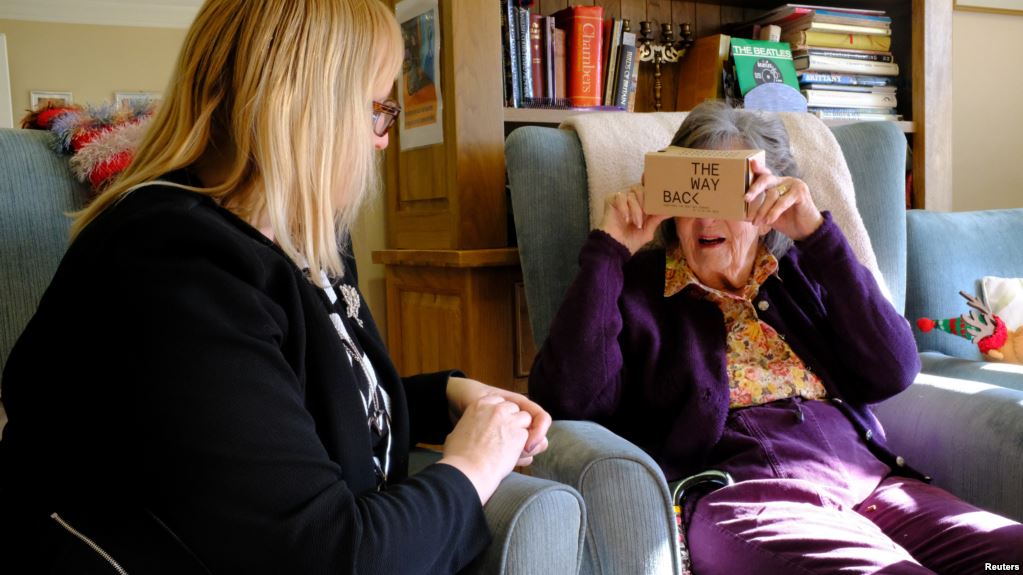 Virtual reality (VR) headsets allow people with dementia to watch films that take them to popular seaside resorts, a 1940s candy store or a 1950s street party, to recall thoughts and emotions and help them re-engage with relatives and caregivers.
"If people remember more of their past, remember more of themselves, it just helps with overall mental wellbeing," Arfa Rehman, co-founder of Virtue, which created the software, told the Thomson Reuters Foundation.
Britain's National Health Service (NHS) is testing the new form of reminiscence therapy - where films are played on a smartphone in an inexpensive virtual reality headset - in several hospitals and care homes across the country, she said.
Researchers have found that reminiscence therapy improves cognitive functions and reduces depressive symptoms in people with dementia and that it is more effective with those in care homes than those living independently.
See the full story here: https://www.voanews.com/a/britain-trials-virtual-reality-time-travel-to-combat-dementia/4465297.html
The future of household chores is an augmented reality bread maker
 Designers in London are mixing the real and digital worlds together in the home to assist with everyday tasks — without needing a screen or goggles.
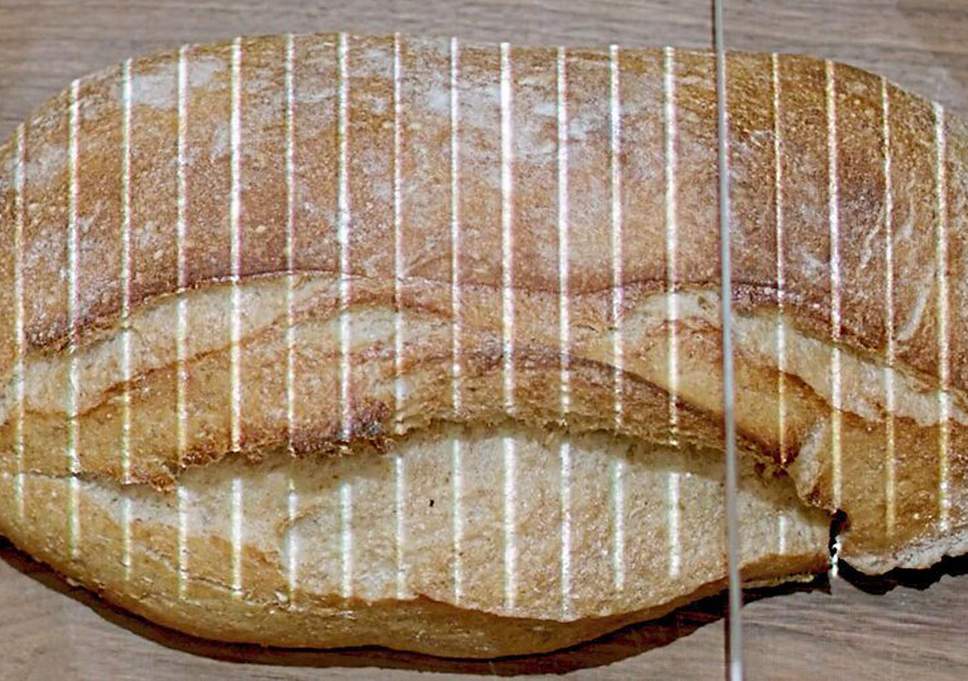
Swift Creatives, based in Marylebone, has built prototypes that overlay digital content on to rooms via beams of light to aid chores such as baking bread. They can even keep babies entertained.
Using overhead projectors and Xbox Kinect motion sensors, the “household AR” system “understands” objects.
The virtual breadmaker is said to help even the most amateur baker produce a good loaf by measuring ingredients and tracking the baking process.
Timers and scales are not needed, with light beams used to analyse mass and weight.
It communicates with the user via a voice assistant and visual cues beamed on to a work surface — such as rings showing how far dough must rise before it goes in the oven.
“Our work is tapping into the fundamental pleasures associated with everyday living,” he said. “It’s about creating things that are entertaining but also useful.
See the full story here: https://www.standard.co.uk/tech/swift-creatives-augmented-reality-future-chores-a3878141.html
CTA intros its first augmented reality and virtual reality standard
 The publication, CTA-2069 or “Definitions and Characteristics of Augmented and Virtual Reality Technologies,” houses various terms defining technologies such as AR, mixed reality, outside-in-tracking, VR video and VR images, room-scale VR and X reality (XR).
“Our first AR/VR standard represents an important step in addressing key emerging technology areas,” said Brian Markwalter, senior vice president of research and standards at CTA, in a statement.
The new standard arrives as CTA’s Sales and Forecasts report says virtual reality technology has become a $1 billion sector in the U.S. The organization estimates 4.9 million VR units will be sold in 2018—up 25% from 2017. The sales will generate $1.2 billion in revenues, up 18%. CTA attributes the growth to increasing popularity among gamers and a competitive market for AR/VR accessories.
“Standardized, market-centric definitions are an important first step for the industry,” said David McIntyre, senior vice president of strategy and standards for Xperi Corporation, and chair of the CTA AR/VR standards group, in a statement. “I look forward to increased industry involvement as CTA works on other areas of XR standardization in service of the industry and consumers.”
See the full story here: https://www.fiercecable.com/tech/cta-intros-its-first-augment-reality-and-virtual-reality-standard
The document can be downloaded for free here (you must have or create a free account on the CTA site): https://members.cta.tech/ctaPublicationDetails/?id=0207a0dd-5058-e811-bd6d-0003ff52710a&reload=timezone
Lucyd Files Blockchain Augmented Reality Smartglasses Patent Application
 The company is developing ergonomic smart glasses, blockchain apps and an eyewear eShop to enhance your visual experience. The Lucyd platform will make it easy for anyone to acquire the most advanced prescription eyewear available.
Lucyd said the patent application is targeted at AR smart glasses, with prescription lenses, and methods to improve control and display of information related to mobile device tasks and applications that can be performed with these devices.
See the full story here: https://bitcoinexchangeguide.com/lucyd-files-blockchain-augmented-reality-smartglasses-patent-application/
Can virtual reality help ward off ageing?
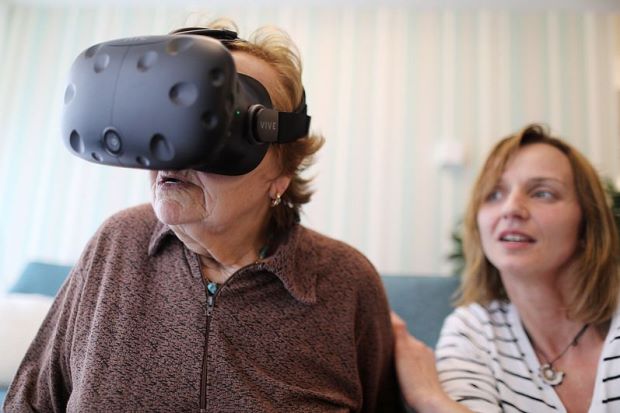 The St Maternus home likes to experiment with modern technology. They use video games and smart speakers connected to the Internet. The virtual reality glasses are part of the biography project, to help people explore their own personal history. Maria Hertwig, for example, spent her childhood in Bavaria.
There are still not enough studies yet to prove the positive effects. "In principle, however, the use of such electronic media can be viewed positively because it can increase the possibilities of compensating for physical or psychological limitations,” Kleinemas says.
Herbert Mauel, director of the Federal Association of Private Providers of Social Services (bpa), believes, however, that there has to be more research into whether these technologies help to maintain or even enhance cognitive abilities. "Virtual reality glasses alone can't do the job," he says. In recent years, however, some promising interactive instruments have been developed to train attention and mobility. Whether this can be translated into lasting success remains to be seen.
Hermann Brockenauer doesn't care about the long-term effects. The 77-year-old St. Maternus resident is a passionate racing car driver. He’s playing the rally video game Dirt 3 and is choosing his car colour. "Let's pick black," he says. "That way you can see the dirt better later." And a nice sound, "so you can hear the engine”.
See the full story here: https://www.thestar.com.my/tech/tech-news/2018/07/04/can-virtual-reality-help-ward-off-ageing/
Disney Releases Production Assets for R&D and Education
 The first data set is a realistic cloud that could be used for example in volume rendering research. The large and highly detailed volumetric cloud data set, is intended to be used for various purposes, including movie and game production as well as research. The entire data set is available in the "cloud" package from this Disney web site.
 The second data set is a massive data set consisting of the whole Moana island, it is directly the data that is used in the movie and includes all trees, ocean, corals, flora and other clutter in the scene. The data includes PTEX textures, shading information and some animation to represent the complexity of data sets that are encountered in feature animation production at the Walt Disney Animation studios" commented Ralf Habel, Sr. Software Engineer of Rendering at Walt Disney Animation Studios. Habel's own research has addressed much of these same areas including Real-time Rendering, Physically Based Rendering, Vegetation Rendering and Animation, Precomputed Lighting, Volume Rendering and Production Rendering.
Photorealistic VR Tour ‘Nefertari: Journey to Eternity’ Takes You Deep into a 3,000 Year-old Egyptian Tomb
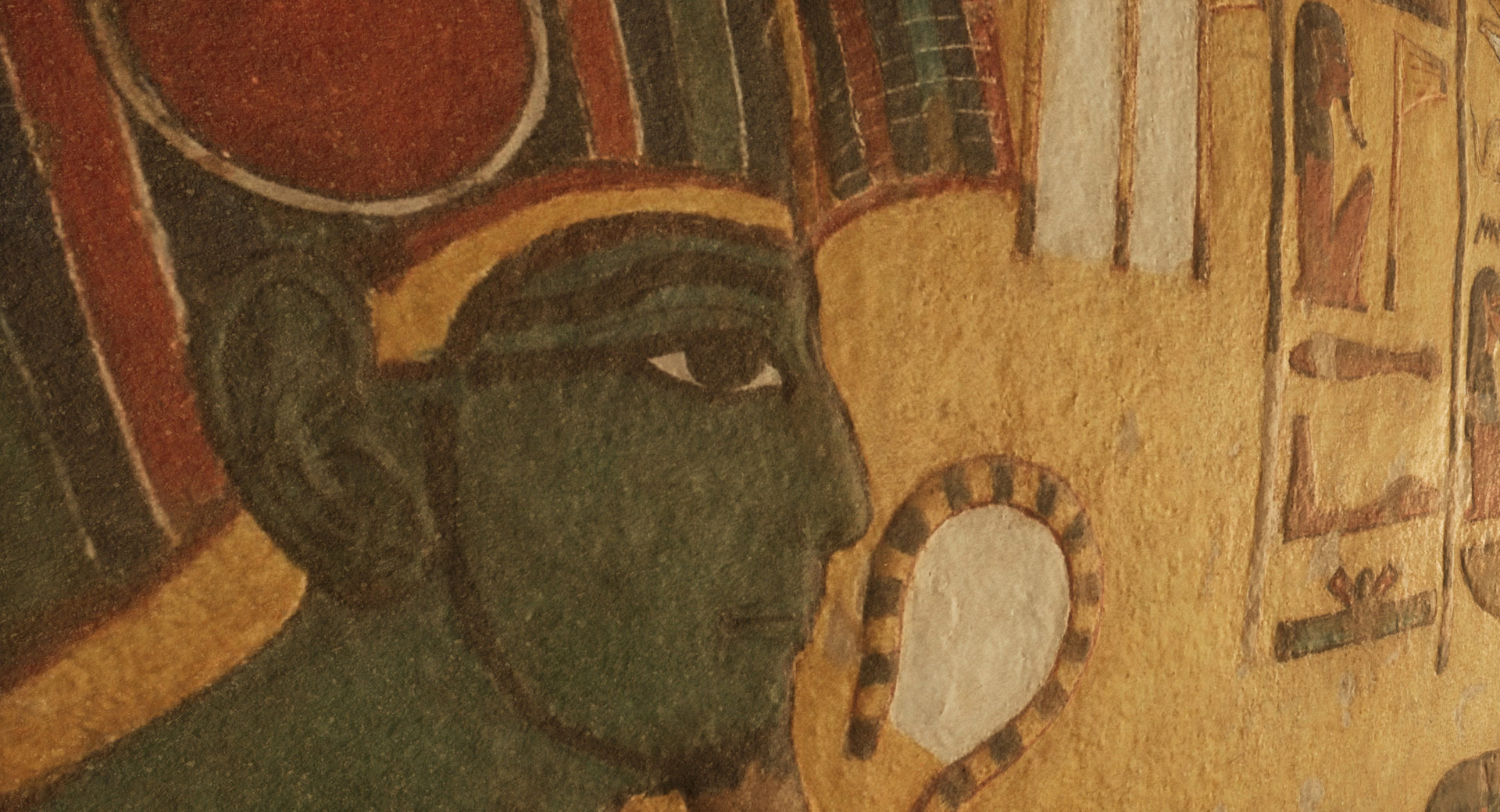 Using state-of-the-art photogrammetry technology with millimeter accuracy, Simon Che de Boer of Reality Virtual and Experius VR have digitally scanned Nerfertari’s tomb, letting owners of Vive, Rift, and Windows VR headsets step inside the fabled burial site and learn about the over 3,000 year-old Egyptian queen’s life, religion, and culture.
Nefertari was an Egyptian queen who died around 1255 BCE, and as the first of the Great Royal Wives of Ramesses the Great, her death was commemorated in the same way many Egyptian nobles were at the time: entombed in a lavish underground structure tucked deep into the hills of the Valley of the Queens in southern Egypt.
The VR tour shows you Queen Nefertari’s tomb in a way no other person has seen it in a century, lit by oil lamps and devoid of artificial lighting—except for your hand-held flashlights, giving you the sense that you’re truly discovering the 520 square meter tomb far away from modern-day tourist groups.
While the 360 video below is actual footage captured from within the tomb, VR users are treated to a decidedly more realistic version, replete with textured walls that appear so real you might actually be able to accidentally chip away the 3,000 year-old paint. As you teleport around the tomb, you can also activate a helpful guide who explains the more important images of both the gods and Nefertari and what they meant in her culture.
Nefertari: Journey to Eternity (2018) is free on Steam and Viveport, offering a prescient glance at what the future of photogrammetry can provide VR users.
See the full story here: https://www.roadtovr.com/photorealistic-vr-tour-nefertari-journey-eternity-takes-deep-3000-year-old-egyptian-tomb/