Pimax 8K headset will use Vaqso VR to emulate smells
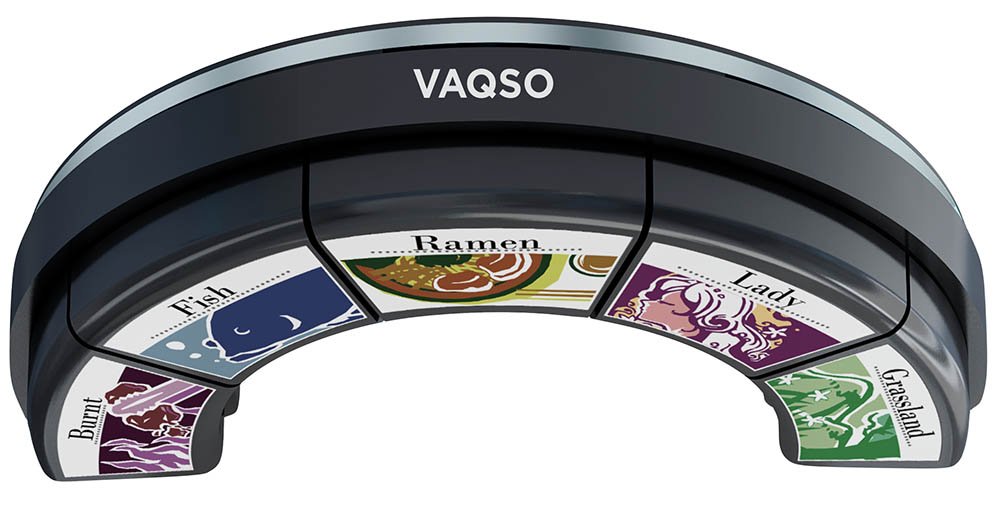
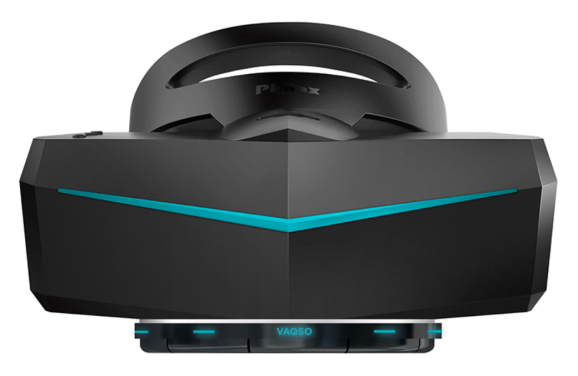 Chinese VR headset developer Pimax today announced a partnership with Japan’s Vaqso to bring a scent emitter module to the upcoming Pimax 8K headset, enabling users to experience multiple smells during VR experiences.
As has been shown off since last year, Vaqso’s scent module mounts multiple plastic cartridges under your eyes and just above your nostrils, using a fan to waft scented oils as they’re triggered by the game you’re playing. A two-hour rechargeable battery powers the unit and can be recharged using micro-USB.
The current generation shows five modules: “fish,” “ramen,” “burnt,” “lady,” and “grassland.” However, modules are interchangeable based on a specific game’s needs, and apparently each provides a month’s worth of scent if used for two hours per day.
See the full story here: https://venturebeat.com/2018/06/18/pimax-8k-headset-will-use-vaqso-vr-to-emulate-smells/
Moviebill Captures the Dinosaurs of ‘Jurassic World: Fallen Kingdom’ in Augmented Reality
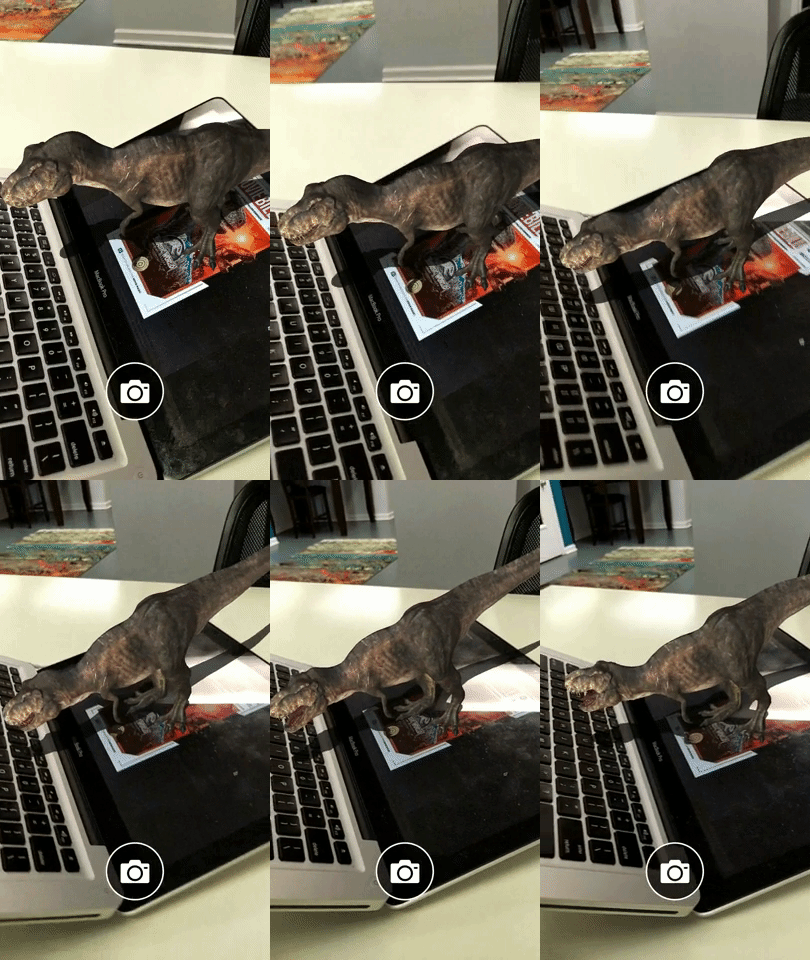
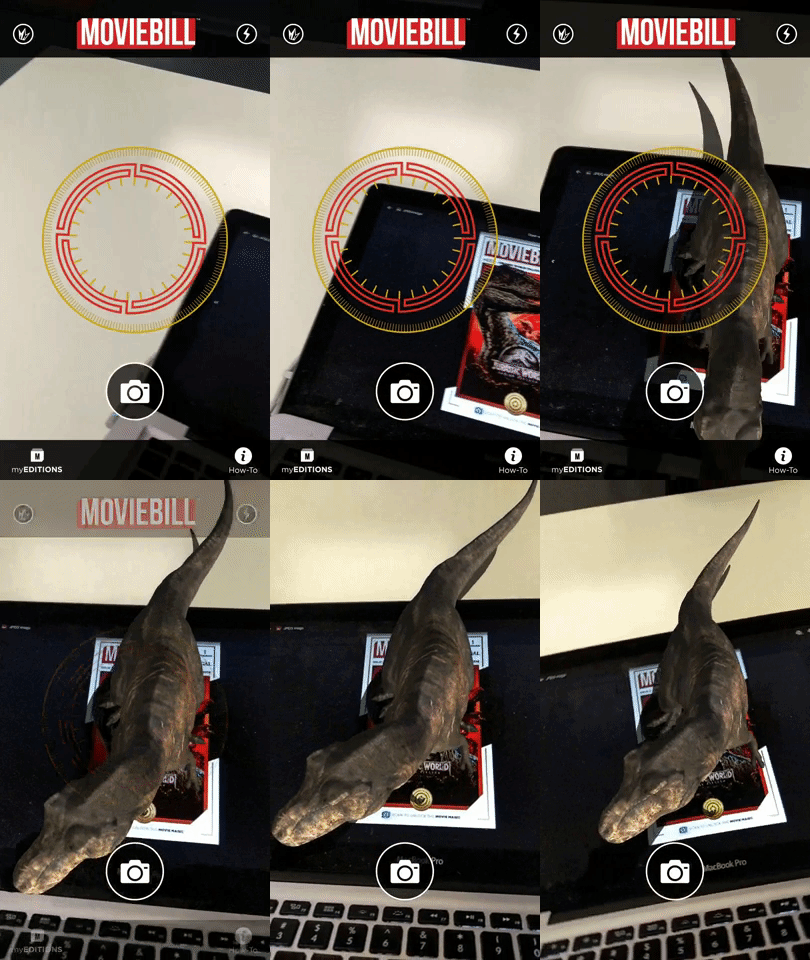
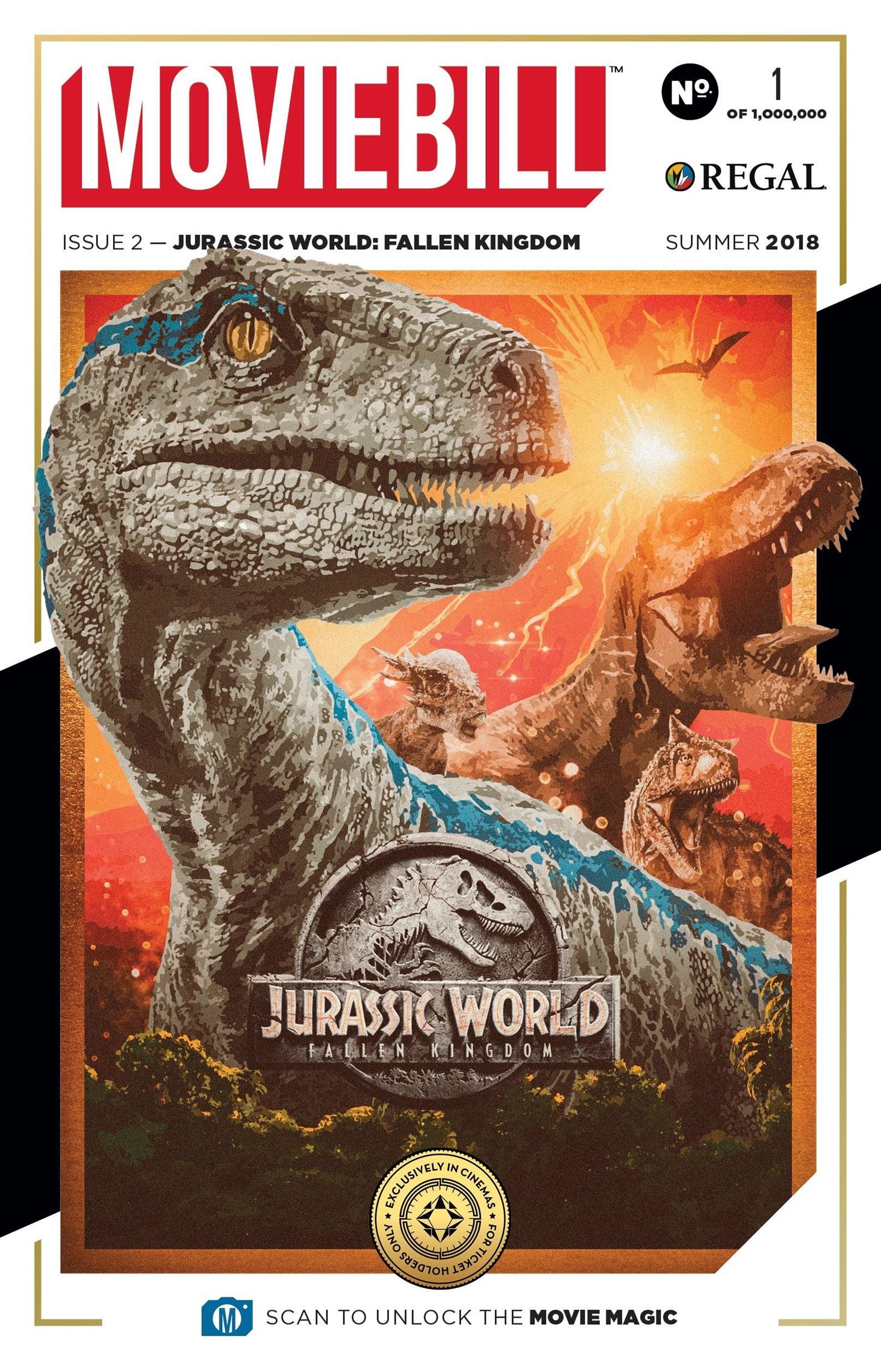 Regal Cinema's augmented reality magazine Moviebill enjoyed a big debut in April and it has its sights set on an even bigger (virtually) outing with its next edition.
Arriving in Regal theaters on June 22, the second issue of the publication will feature Jurassic World: Fallen Kingdom on its cover. Like the first issue, one million copies will be available for free to attendees of the featured film on its opening weekend.
See the full story here: https://next.reality.news/news/moviebill-captures-dinosaurs-jurassic-world-fallen-kingdom-augmented-reality-0185358/
Vauxhall welcomes augmented reality street art by Edward von Lõngus
Mysterious street artist Edward von Lõngus lands in London, bringing his augmented reality artworks to Vauxhall as part of the (R)estart Reality tour to celebrate the 100th birthday of the artist´s home country, Estonia. London is the ninth city in Europe to host von Lõngus´s quirky time-travelling stencil characters after Rome, Paris, Berlin, Copenhagen, Helsinki, Brussels, Budapest and Vilnius.
“At first site hanging peacefully on the walls of South Lambeth Place and Glasshouse Walk in Vauxhall, our characters invite Londoners to get to know them,” Kadri Uus, Coordinator of (R)estart Reality and one of the founders of NOAR art platform, explained, “Waking them to life via your mobile phone is much fun. The best part of this project is to see the genuine surprise on people´s faces when the artworks start moving!”
You can meet, f or example, Ats#Pets, electric bagpipe players, and Miina, who together with her husband Enn have been attacked by an anti-graffiti clean-up team in Tallinn, before they were shut up in an internet server due to a malfunction in a time-travel machine. Using a smartphone or tablet screen, they reveal their crazy stories full of humor and references to internet culture and Estonian history. The free (R)estart Reality app is available for download on the App Store or Google Play.
See the full story here: https://london.mfa.ee/vauxhall-welcomes-augmented-reality-street-art-by-edward-von-longus/
MIT researchers design a tiny computer chip for drones as small as a fingernail
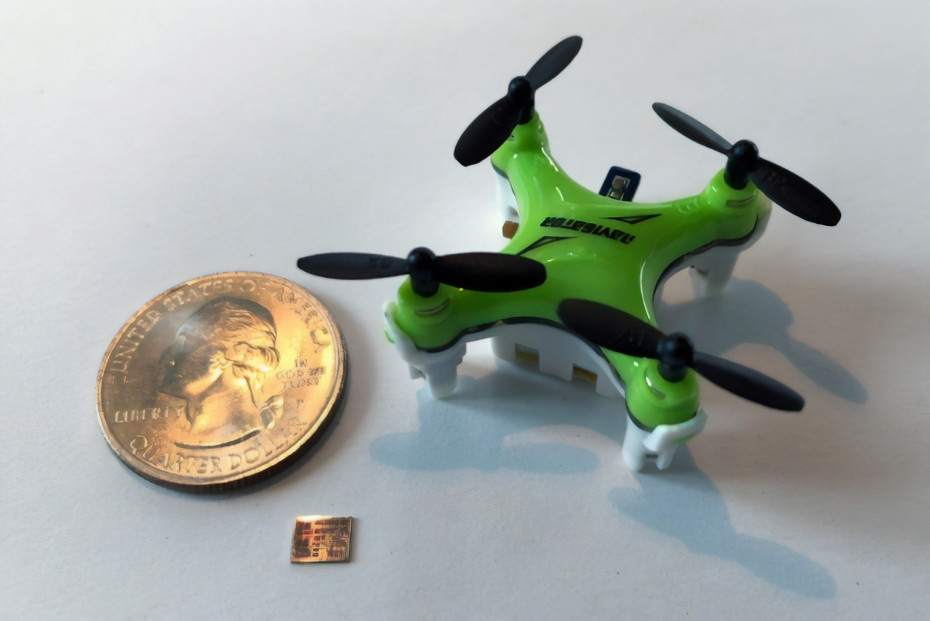 Drones as small as a fingernail may one day buzz overhead, thanks to research out of the Massachusetts Institue of Technology (MIT). A team in the Department of Electrical Engineering and Computer Science (EECS) designed a 20 square millimeter computer chip that can process inertial and camera images — two critical components of drone flight — in real time.
It isn’t the team’s first microchip rodeo. Last year, it used a field-programmable gate array (FPGA), a type of highly configurable integrated circuit, to develop a drone control chip that required just 2 watts of power and 2GB of memory. But shrinking the design wasn’t easy.
In the end, the researchers decided to build the new chip from the ground up. They found a way to minimize the amount of data that’s stored on its memory at any given time, reducing the chip’s power consumption to 24 milliwatts — 1 one-thousandth of the energy required to power a lightbulb — and the size of its memory to 0.8MB.
They also optimized the design for image processing. The new chip can handle up to 171 frames per second, a rate even faster than what the team projected.
The chip isn’t bound for mini-drones just yet. The team’s proof-of-concept will be a miniature race car with an onboard camera that’ll stream live video. Next, it’s planning to build it into an actual drone.
See the full story here: https://venturebeat.com/2018/06/20/mit-researchers-design-a-tiny-computer-chip-for-drones-as-small-as-a-fingernail/
Stanford researchers harnessed AI to generate memes
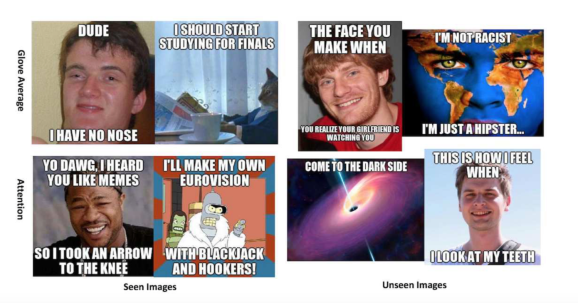 In a white paper titled “Dank Learning” (yes, really), Abel L. Peirson and E. Meltem Tolunay, the two lead scientists on the project, describe a neural network that ingests, gains an understanding of, and spits out internet in-jokes. The AI consists of a convolutional neural network (CNN) that takes images as inputs and translates them into mathematical representations called vector embeddings (an encoder), and a long short-term memory (LSTM) recurrent neural network (RNN) that creates captions (a decoder).
The verdict: Humans were able to pick out the algorithmically created memes about 70 percent of the time, but graded them fairly evenly on wittiness.
See the full story here: https://venturebeat.com/2018/06/15/stanford-researchers-harnessed-ai-to-generate-memes/
HOW MAPS BECAME THE NEW SEARCH BOX
 These small tweaks are part of Uber’s plan to transform from a ride-sharing service into a global logistics platform. If this strategy works, one day you’ll open to the Uber app’s city grid every time you want to figure out how to get yourself—or anything else—from one point to another. In other words, you’ll use Uber like you use Google Maps’ app: to find out what’s around you and how to reach it.
Search has always been partially about location: if Google knows you are in Indiana, you’ll get more meaningful results when you type “today’s weather” into your laptop. Traditionally, though, the physical and digital worlds have been divided. You use search when you need information, and a map when you need to get someplace.
But now, a number of companies are producing maps that decode the three-dimensional world. Have a toothache? Plug “dentist” into Google Maps.
But for Uber to become the de facto transportation and logistics app, it must be the most accurate: An error as minor as locating a passenger on the wrong side of a street might break a sale by adding extra wait time. These challenges will only grow.
See the full story here: https://www.wired.com/story/how-maps-became-the-new-search-box/
Cannes Lions Witnesses World’s First Augmented Reality Video Ad Format in Action
 This is just the latest innovation from Teads – in the last week the company announced a revolutionary new AI-enabled performance offering, Teads True Visits, and in 2017, the company was the first in the world to integrate chatbots into video ads.
The integration of AR is possible thanks to a partnership with DeepAR, a team of engineers and researchers from MIT and 3D designers previously involved with Candy Crush and Dreamworks. Through the partnership, Teads’ internal creative strategists and designers will use DeepAR’s AR and face-tracking SDK to enable the experience.
See the full story here: https://martechseries.com/sales-marketing/programmatic-buying/cannes-lions-witnesses-the-launch-of-worlds-first-augmented-reality-video-ads/
Globo Enhances 2018 Russia World Cup Coverage with Avid’s Augmented Reality Solutions
 Through a suite of augmented reality tools, Avid’s Maestro | AR provides the ability to create captivating 3D virtual objects that look like part of the actual environment. The solution allows the insertion and control of 3D virtual objects and graphics, as well as sophisticated real time multiple image manipulation. Avid’s Maestro | Designer is a powerful design tool used by graphics artists and designers to create the compelling graphics seen in the broadcast. Maestro l Designer can import stills, video, and graphics from other third-party programs while giving artists the flexibility to create and design compelling 2D and 3D content. Avid Professional Services provided valuable training and support for the project.
“Globo needed a powerful augmented reality solution to bring to life the world’s most prestigious football tournament for the millions of passionate fans in Brazil—the most successful country in the tournament’s history,” said Tom Cordiner, Senior Vice President, Global Sales at Avid. “We worked closely with Gearhouse to deliver an Avid Maestro solution that enables Globo to keep up with the fast-paced action on the pitch and create eye-catching graphics that boost ratings and engage viewers in exciting new ways.”
See the full story here: https://globenewswire.com/news-release/2018/06/20/1527276/0/en/Globo-Enhances-2018-Russia-World-Cup-Coverage-with-Avid-s-Augmented-Reality-Solutions.html
Future of art galleries includes virtual reality
 The future of art galleries is here.
Te Papa's Toi Art Gallery has a host of artworks to explore, including a virtual reality aspect which its creator hoped would become more common in New Zealand galleries.
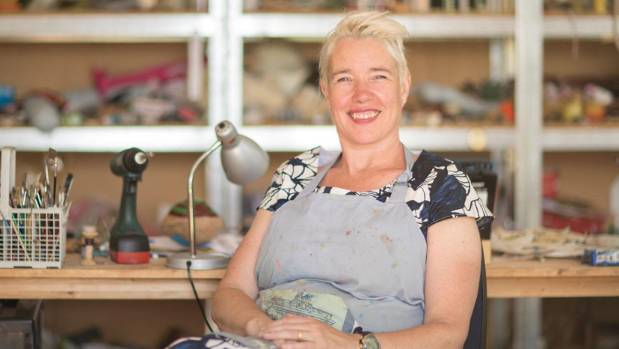
Jeweller Lisa Walker's exhibition, I want to go to my room but I can't be bothered includes a virtual reality tour of the Wellington artist's studio.
VR is being explored as a way to open up art to anyone coming through the gallery, allowing them to step into an artist's studio and see the creative process.
The VR experience contained about 35 minutes of content, he said. Within it, people could look around and focus on certain items or area. A small video clip would start playing, with Walker explaining a little bit about what the person was seeing.
As she talked, people could look around her studio and get a feel for what her creative space was like.
See the full story here: https://www.stuff.co.nz/dominion-post/capital-life/capital-day/104795550/future-of-art-galleries-includes-virtual-reality
5 developments shaping the future of augmented reality
 One of the major themes of this year’s show was the “AR Cloud,” a term coined by AWE cofounder Ori Inbar.
Aside from being a catchy sounding mashup of two technical terms, the AR Cloud represents the idea that augmented reality is evolving from a single-user experience into a shared digital layer on top of the physical world.
See the full story here: https://technical.ly/baltimore/2018/06/19/5-developments-shaping-the-future-of-augmented-reality/