Robinhood rockets to $5.6B valuation
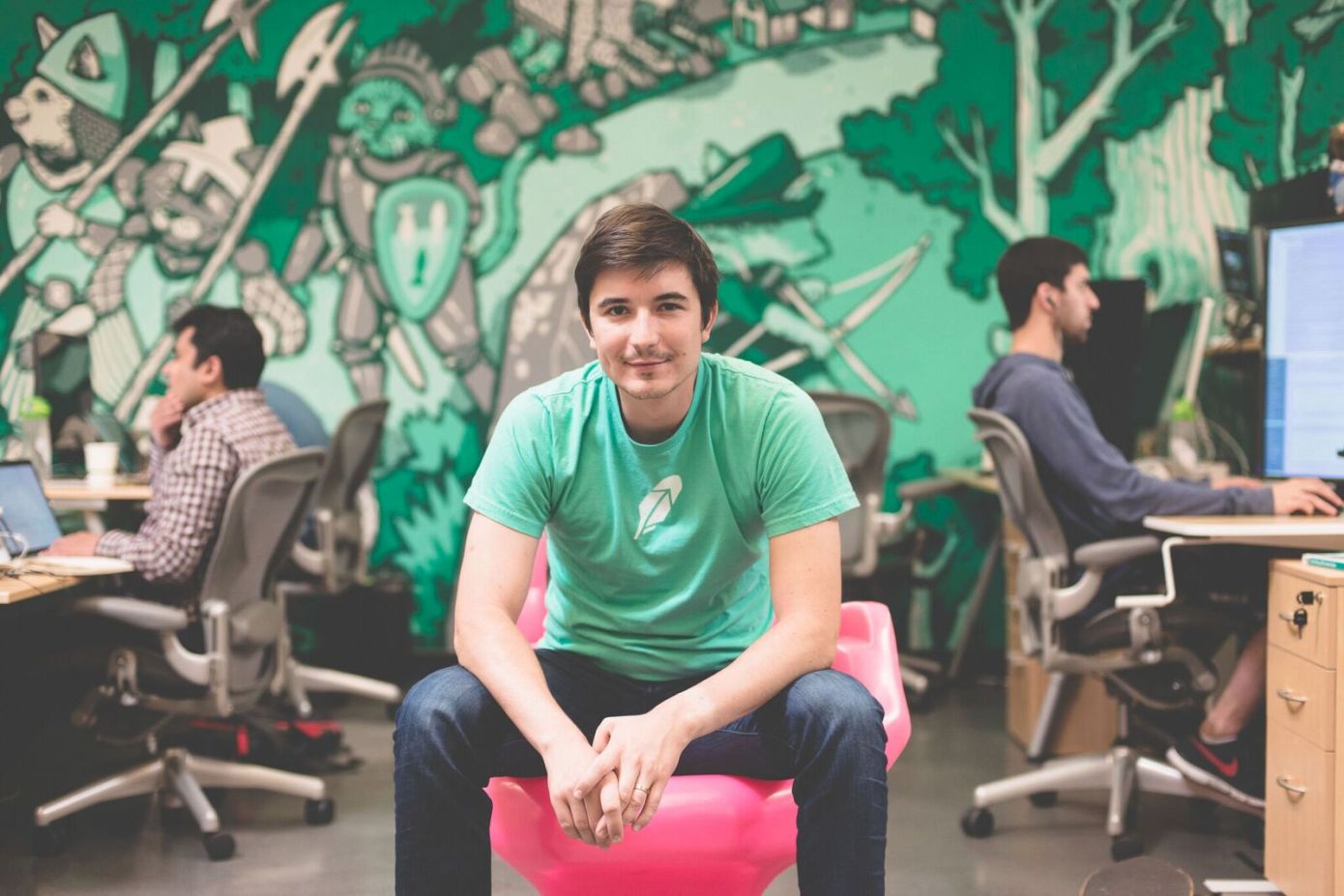 “It’s the only place right now where you can trade crypto, stocks, and options all in one place,” CEO Vlad Tenev said. “For us to construct an experience that feels seamless and natural for customers, that for example want to sell an equity and use the proceeds to buy crypto, seamlessly, that’s been challenging not just from a product and design standpoint, but also infrastructure standpoint. There’s complexity under the hood, and our goal is to make it as seamless as possible in the process and make that complexity go away.”
Robinhood has premium services like Robinhood Gold, where the company can find additional ways to generate revenue that offset the requirements of running a system that allows users to trade stocks for free.
“The political climate is uncertain, it sort of affects everyone, it doesn’t affect us uniquely,” Tenev said. “We’re a crypto business now. Not a lot of people have a ton of clarity on what that’s gonna look like in the future, it’s a new space that’s evolving really rapidly. I think that we’re confident we can adapt and evolve, and we’re operating the business in a responsible way. There’s only so much you can do, but I feel like we’ve done a lot to address any concerns.”
See the full story here: https://techcrunch.com/2018/05/10/robinhood-rockets-to-a-5-6b-valuation-with-a-massive-new-funding-round/?utm_medium=TCnewsletter
Augmented reality startup Blippar is abandoning Silicon Valley after losing 2 key execs and a board member
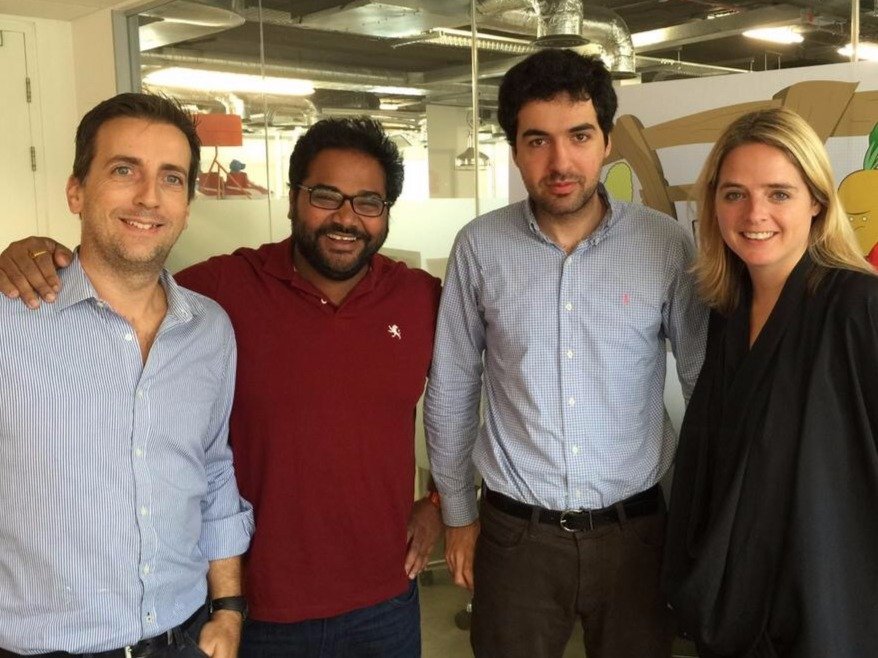
- One of the UK's best-funded startups, augmented reality firm Blippar, is abandoning Silicon Valley after shutting its third office in the space of two years.
- The startup announced that is closing its Mountain View, California, office in order to focus on making a viable augmented reality platform.
- Blippar has also lost two key executives in the past five months — its US commercial chief and global head of experience strategy. A board member also quit.
- Business Insider reported last year that the firm was struggling financially, had inflated its numbers, and was yet to establish a viable business model — all of which the startup denied.
- In a published statement, Blippar said the closure had not been an "easy decision."
See the full story here: https://www.sfgate.com/technology/businessinsider/article/Augmented-reality-startup-Blippar-is-abandoning-12900795.php
Overwatch League, Sansar Add Virtual Reality to Esports
 The Overwatch League is taking its players and fans from the two-dimensional to the three-dimensional.
On Wednesday, the league announced a partnership with Sansar, a free social virtual reality platform, to enable its gamers to more intimately interact with fans in virtual spaces.
Sansar says it has partnered with multiple professional teams from the Overwatch League, including the Houston Outlaws and the San Francisco Shock.
Sansar takes this a step further by using three-dimensional technologies to transport fans into the same virtual rooms as players, and can be used for customized streaming spaces for events or intimate meet and greets.
SportTechie Takeaway
With Overwatch’s partnership with Sansar, esports are now flirting for the first time with the three dimensional, taking fans into an even more intimate and interactive experience.
See the full story here: https://www.sporttechie.com/overwatch-league-sansar-add-virtual-reality-esports/
Stanford senior and university VR club co-founder creates pioneering augmented reality film with fellow undergraduate
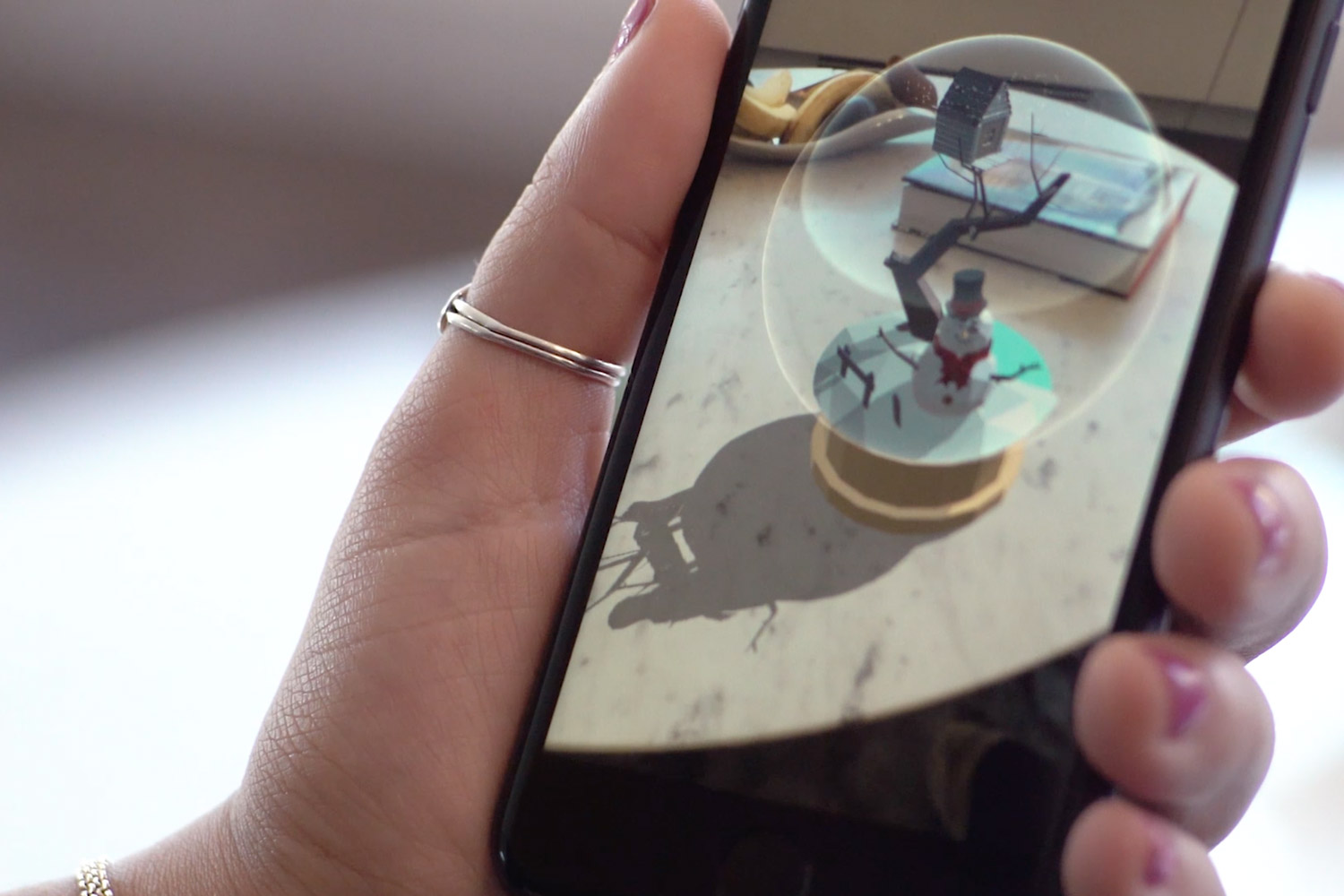
Image courtesy of Max Korman
Stanford undergraduates Max Korman, ’18, and Khoi Le, ’20, launched what may be the world’s first augmented reality narrative film. And they did it using their mobile phones.
Snowbird is a 3D-animated short movie about porcelain creatures that come to life in a snow globe. Viewers can place a snow globe into their surroundings at any time – which could be at work, or home, during their commute or on May 12 at Stanford’s first annual VR for Everyone conference.
VR for Everyone is hosted by Rabbit Hole, Stanford’s virtual reality club co-founded in 2015 by Korman with an objective to foster community among immersive reality enthusiasts. The conference is expected to attract hundreds of attendees from campus and community. As reflected in the event’s name, VR for Everyone, adoption and inclusion in the industry are key themes.
The conference will also be the first public screening of Snowbird.
“The premise of immersive technology is the ability for creators to completelycurate a person’s visual and auditory experience. So, I think it has the potential to transform any activity that relies on these senses.”
Korman and Le are already assessing different narrative premises for new AR films even without a clear distribution pipeline.
See the full story here; https://news.stanford.edu/2018/05/10/stanford-undergrads-create-pioneering-augmented-reality-film/
Cannes: Virtual Reality Plays Bigger Role on Croisette as Advocates Tout Platform and Possibilities

A still image from SPHERES: Songs of Spacetime by Eliza McNitt, an official selection of the New Frontier VR Experiences program at the 2018 Sundance Film Festival. Courtesy of Sundance Institute.
When Sundance sales were tallied this year, one title was left out of many stories: “Spheres,” a three-part virtual reality series from executive producer Darren Aronofsky’s Protozoa Pictures. VR financing/distribution outfit CityLights’ seven-figure acquisition of the project was reportedly a record for the fest’s 11-year-old New Frontier section.
“The sale signaled that there is a path for independent VR,” Aronofsky says of director Eliza McNitt’s work, which places viewers in the center of outer space with narration by Jessica Chastain and Patti Smith. “The most important films are often made outside the studio system, where creators have the freedom to advance the medium. We now know this can be true of VR, too.”
The sale was promising news for Next, the innovation hub at Cannes Market. The section will showcase more than 25 projects (including VR companion pieces for Christopher Nolan’s “Dunkirk” and Wes Anderson’s “Isle of Dogs”), a theater for VR market screenings equipped with Positron’s pod-like Voyager chairs (programmed to move viewers and literally shake up their senses) and a panel on Cinema VRE [Virtual Reality Experiences] and the Future of Immersive Technologies, moderated by Intel global content technology strategist Ravi Velhal.
Yet exhibitors are also beginning to fuel a market for new projects. Imax has launched seven VR centers, some in partnership with AMC Theatres and Regal Cinemas, in New York City; L.A.; Toronto; Manchester, England; Bangkok, and Shanghai. It has developed a $50 million fund for VR content and partnered with Warner Bros. Home Entertainment to co-finance and produce VR projects (including an exclusive “Justice League” presentation out now). AMC (joining 21st Century Fox, MGM, Warner Bros. and others) has reportedly invested more than $40 million in the tech startup Dreamscape Immersive to open up to six “virtual reality multiplexes” by next year. Cinemark will open its first “virtual reality experience” in its flagship West Plano, Texas, theater this summer. And in April, Regal Entertainment Group introduced Moviebill, a magazine featuring an interactive augmented reality (AR) platform with exclusive content, interviews and games that “come to life” when consumers scan it with an app.
Teenagers, he’s found, “are more interested in social networks, and the price point of VR is a bit too expensive for them right now.”
More stars are also expected to jump on the bandwagon. At Next this year, Alicia Vikander will voice a lead role in Penrose Studios’ animated VR sequel “Arden’s Wake: Tide’s Fall,” and a graphic novel adaptation from Will.i.am and the Black Eyed Peas will include the voice talents of Queen Latifah, Ice-T and Jamie Foxx.
See the full story here: http://variety.com/2018/film/spotlight/virtual-reality-cannes-2018-1202801543/
Virtual Reality Comes to Mainstream Cinema in South Korea
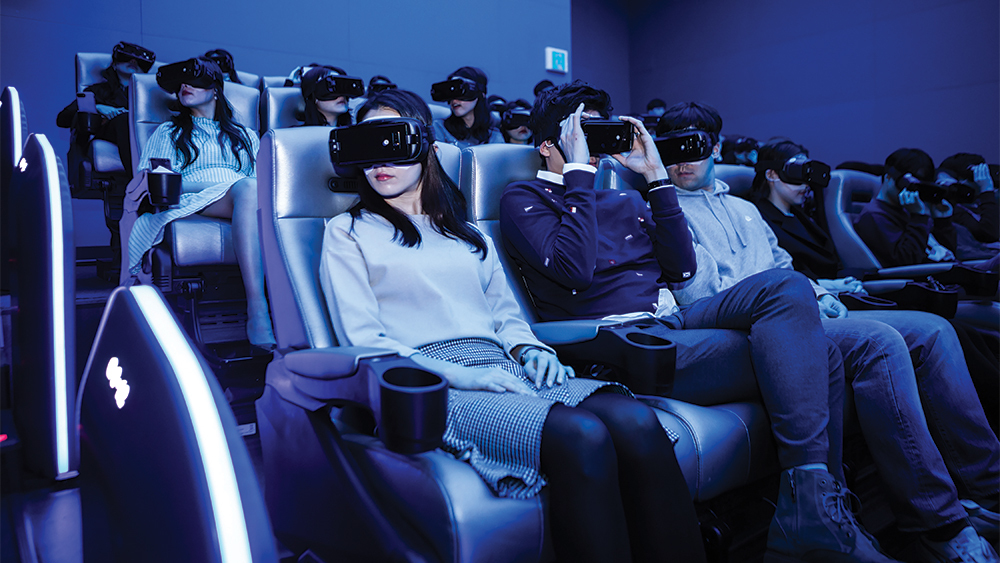 More recently, VR romance drama “Stay With Me” opened in the immersive 4DX format at the CJ-CGV cinema chain. Directed by Bryan Ku, “Stay” revolves around the relationship between a boy who dreams of becoming a musician but is too afraid to go on stage, and a girl who aspires to become an actress.
“4DX effects for VR should be different from those for other movies,” says Yoo Young-gun of CGV. “Visual elements are not enough to accomplish what VR is up to, which is to expand to a form of storytelling with its immersive characteristics maximized. With 4DX technology, the audiences can touch, smell and feel the films, meaning that virtual reality in its literal sense can be achieved.”
CJ CGV is aiming to globally introduce 4DX VR by applying VR technology to its 500 4DX theaters across the world.
On the other hand, Lotte Cinema, South Korea’s second-largest exhibition chain, arranged a special program dedicated to VR content earlier this year. The program’s selection included Patrick Kwon’s “Nine Days,” South Korea’s first VR movie designed for theatrical release.
Since VR is still at an early stage and barely has a stable market, most VR productions rely on support funds. The Ministry of Culture, Sport and Tourism and institutes such as Korea Creative Content Agency and National IT Industry Promotion Industry are funding VR projects. Also, the Korean Academy of Film Arts launched a special course for VR production.
At the same time, companies in the private sector are also making investments. Leading visual-effects house Dexter Studios is running a digital human virtual reality research lab and is working on a string of VR films that are set for theatrical releases at CGV within this year. The studio’s lineup includes sci-fi animation “From the Earth” and live-action horror picture “Trapped.”
See the full story here: http://variety.com/2018/biz/news/vr-virtual-reality-gina-kim-1202801584-1202801584/
I tried to get a date using augmented reality
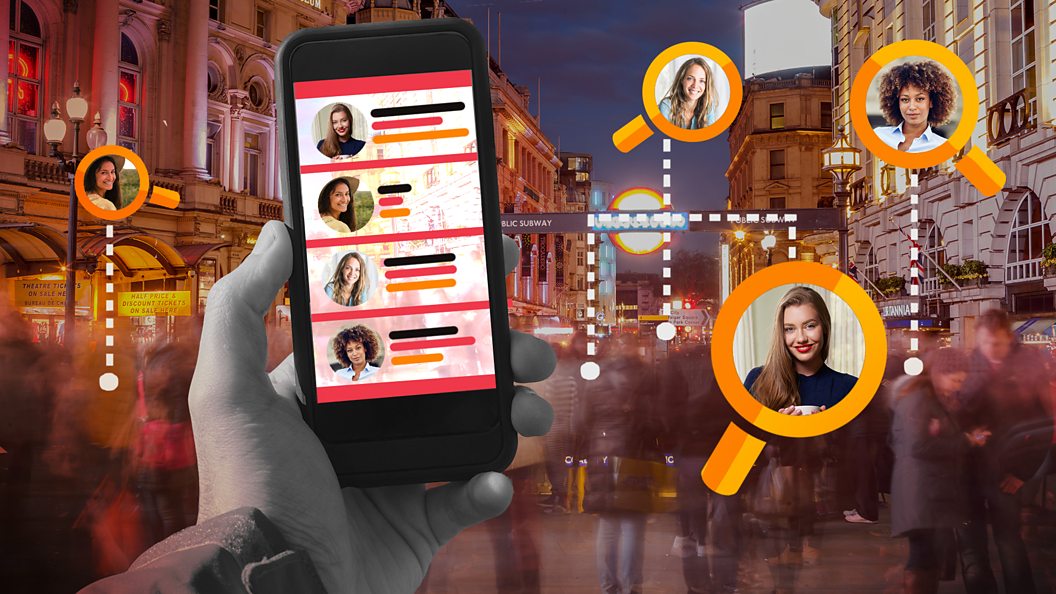 Sharing that much data could actually make it harder to find love. Too much information at the beginning could make us more judgemental about possible dates before we’ve had the chance to bond with one another, potentially making us more likely to turn people down who we might have fallen in love with.
“AR might be exciting, but most of us aren’t willing to give up the amount of privacy that using AR entails,” says Nick Saretzky.
I think he’s right. At the same time, though, after two weeks of walking London’s streets, looking out for the circled faces of all the hot singles around me, non-augmented reality dating feels like a boring step back.
See the full story here: https://www.bbc.co.uk/bbcthree/article/d342e05c-58a4-493d-92c7-c77bbc872ab5