 Metamucil, Australia’s number one fibre supplement brand, has taken a step into virtual reality (VR) to help education views on the journey their pills take through the digestive system and how they keep things ticking over smoothly.
The experience, titled Gutland, was shown off as a first-of-its-kind pop-up event hosted at the Darling Harbor, Sydney yesterday.
What sets Metamucil’s Gutlandexperience apart is that you can physically touch everything you see in the VR world. Everything you place your hands on real world is exactly matched by virtual objects inside Gutland.
See the full story here: https://www.vrfocus.com/2018/04/take-a-vr-trip-through-the-human-digestive-system-in-gutland/
 Blockchain enables accurate scarcity along with the true ownership of creatures and assets, making it a perfect platform for gaming. By using decentralised ledger, games enable gamers to battle, train and trade on a whole new level.
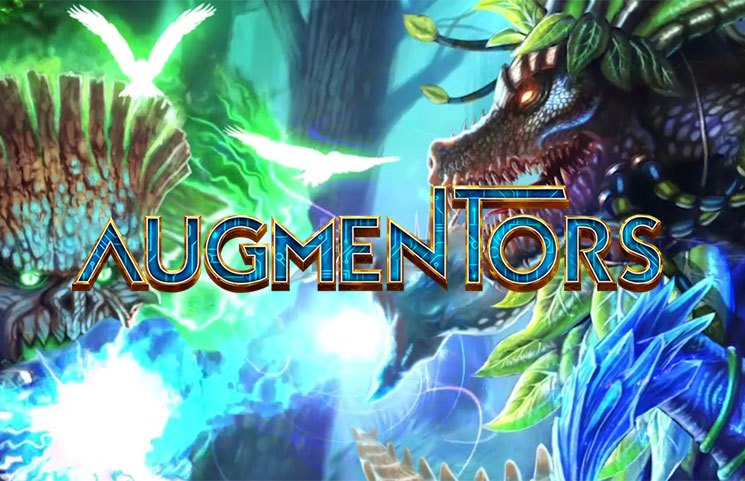
With the advent of Augmentors, a new dimension of gaming has arrived. It’s where reality and illusion collide as you summon your creatures into the real world to do bidding.
Augmentors DTB ICO Blockchain Augmented Reality Databits Details
Augmentors had raised $1 million USD(895 BTC) during the 30- day token sale, which ended on February 2017. At the time of the sale, it was the most successful token sale ever conducted by a mobile video game project and it was the first token sale that was conducted in South Africa.
The primary aim of this token, $DTBT, is to align the interest of the Augmentors business, the backers, the players and all participants in the network. The system uses Databits as the in-game currency, Databit Tetheres($DTBT). The $DTBT are locked to $DTB at a fixed ratio and. $DTBT are used in the internal virtual economy and in this economy, players will require $DTBT to utilize different game features. This means that the Augmentors business is highly incentivized to stabilize and grow the value of the network and $DTB can be traded into and out of $DTB.
See the full story here: https://bitcoinexchangeguide.com/augmentors-game-ico-dtb-token/
 The brand has installed its new AR (Augmented Reality) hotspots at key points around its shops for the next two weeks, and by downloading the corresponding app, customers are able to see virtual models showcasing the new Studio collection.
See the full story here: https://www.telegraph.co.uk/fashion/style/will-zaras-new-augmented-reality-experience-change-way-shop/
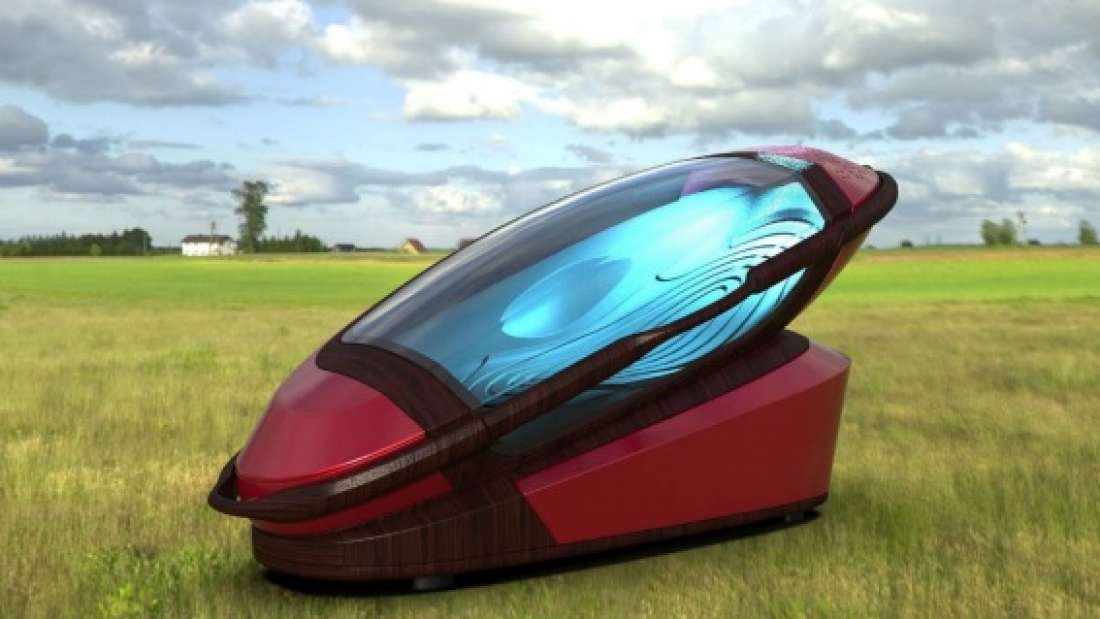
 You can try it out for yourself – at least, in virtual reality – by stepping inside a full-size depiction of the euthanasia capsule. VR glasses give the user a glimpse into how the death machine operates.
The Sarco will sit on a generator that uses liquid nitrogen that, when released, will bring down the level of oxygen in the capsule to induce hypoxia. The brain relies on oxygen to function. When put in environments with low levels of oxygen, the body slowly begins to shut down, resulting in confusion, increased heart rate, rapid breathing, shortness of breath, sweating, and wheezing. In the Sarco, however, Nitschke says death will have “style and elegance” – within one minute, the user loses consciousness. Death shortly follows.
To activate the process, a person simply steps inside, lies down and, when ready, presses a button.
“A Sarco death is painless. There’s no suffocation, choking sensation or 'air hunger' as the user breathes easily in a low-oxygen environment. The sensation is one of well-being and intoxication,” wrote the company’s founder Philip Nitschke for Huffington Post.
The Sarco made headlines last year after the state of Victoria in Australia voted to legalize euthanasia. Media outlets deemed Nitschke the “Elon Musk of assisted suicide” and his death machine his “Tesla”.
See the full story here: http://www.iflscience.com/technology/experience-in-virtual-reality-what-it-feels-like-to-die-in-worlds-first-suicide-machine/
 During a Destination NXT presentation at NAB Show, Media Sherpa managing director John Canning moderated a panel on “redesigning the consumer experience” with “AR Adventures, Gamified Gatherings and VR Vacations.” Canning asked the panelists what drew them to creating immersive media. Fulldome.pro chief operating officer Stephen Powers sees this “new media as having the unique power” to “lift the human spirit.” For Vari Parks chief executive Louisa Spring, it’s her love of VR and desire to bring the experience to more people.
In the U.K., Spring’s company is building a 3,000-seat eSports arena that will feature VR and AR “orbiting around it.” “VR was the first time I saw gaming and storytelling working together,” she said. “It’s also important to take it out of the home, because a lot of families can’t afford the gaming equipment.”
Adobe creative resident and experiential designer Craig Winslow said he fell for the combination of projection mapping and AR. He just launched “Brilliant” at the Neon Museum, which brings old neon signs back to life. “You can see physical relics and then see them change, without a headset,” he said. “For me, it’s a search to create that kind of magic.”
Canning noted that, “we can get hung up with the limitations of the technology.” “But if we don’t do the first iteration, we’ll never get where we want to go,” he said.
See the full story here: http://www.etcentric.org/nab-2018-immersive-leisure-with-ar-gamification-and-vr/
Kulczar defined the terms used in closed captioning. “It all starts with automated speech recognition (ASR), which creates a text output from an audio track,” he said. “This is not to be confused with speech-to-text, which extends ASR but is only focused on the spoken word.”
Transcription is the manual process of creating text output from audio. “And closed captioning is a service that allows audiences to interpret content accurately without audio to assist with full understanding of the presented content,” he said.
In addition to ASR, closed captioning systems need to be able to recognize and identify common sounds and noises, know when speakers shift languages, and identify and represent speaker transitions (called diarization). For the blind, audio description represents visual characteristics of the content. Closed captioning systems also need edit tools to accurately time-stamp caption data, present captions in an intelligent, coherent layout and provide an editing interface to allow for manual changes.
Today’s systems for closed captioning all offer pros and cons. Manual or human captioning is the most accurate for VOD files, but is the most expensive. Crowdsourced captioning is more cost effective and knowledge of most areas is likely, but it doesn’t support live content, is non-predictable and has the potential for malicious intent.
Machine-generated captioning is the most cost effective model and it’s consistent and trainable, but needs further development and includes the up-front costs of training. Hybrid systems offer a “safety net” to cover some of the other systems’ flaws, but don’t get rid of all of them.
See the full story here: http://www.etcentric.org/nab-2018-ibm-watson-on-refining-ai-for-closed-captioning/
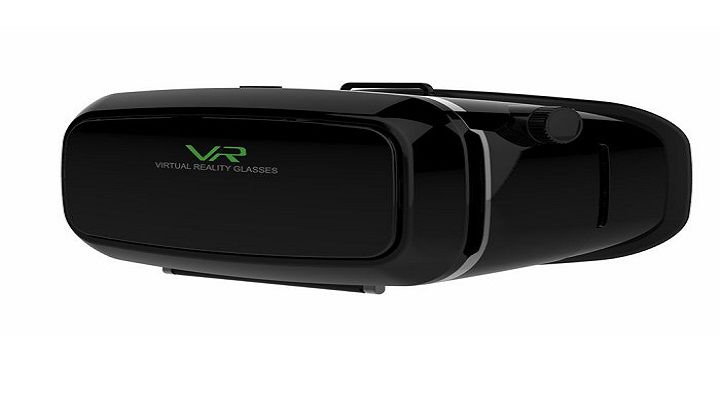
 The major leading players in China’s 3D VR virtual reality glasses industry are Samsung, Carl Zeiss, Baofeng, Sony, Razer, HTC, Epson, Daqri, AMD, Atheer, Meta, CastAR, Skully, HP, Antvr, Lumus, Fove, Sulon, Jinweidu,Virglass and Emaxv. China’s 3D VR virtual reality glasses are utilized in home use as well as in commercial use. The various types of 3D VR virtual reality glasses available in China are PC/Home Console, Headset AR and other types.
See the full story here: http://www.centraljersey.com/china-d-vr-virtual-reality-glasses-advanced-technology/article_31b1e6b4-3dff-11e8-9b8c-5cb9017b7710.html
 The government says 10 percent of all cars should be fully self-driving by 2030, and Qilu considers that an opportunity to deliver better traffic updates, more accurate mapping and on-the-go recharging of electric-vehicle batteries—all from the ground up.
“The highways we have been using can only carry vehicles passing by, and they are like the 1.0-generation product,” said Zhou Yong, the company’s general manager. “We’re working on the 2.0 and 3.0 generations by transplanting brains and a nervous system.”
The road has three vertical layers, with the shell of see-through material allowing sunlight to reach the solar cells underneath. The top layer also has space inside to thread recharging wires and sensors that monitor temperature, traffic flow and weight load.
The solar panels spread across two lanes, which feel no different to a driver than the regular road, and are thinner than a 1-yuan coin standing on its edge. The test road is too short to deliver wireless recharging at the moment, Zhou said.
China will have 30 million vehicles with different levels of autonomous features by 2025, said Yu Kai, founder of Horizon Robotics Inc., a Beijing-based startup developingsemiconductors for those types of cars.
Construction took 55 days on an existing part of the highway, and the road opened to traffic in December. Solar-powered heating elements keep the section snow- and ice-free.
See the full story here: https://www.bloomberg.com/news/features/2018-04-11/the-solar-highway-that-can-recharge-electric-cars-on-the-move

Fake new inquiry. File photo dated 03/11/15 of a woman using her phone under a Facebook logo, as the social network has told the Government's fake news inquiry it will expand its investigation into whether Russian agents attempted to influence the Brexit vote. Issue date: Wednesday January 17, 2018. In a letter to Damian Collins, chair of the Digital, Culture, Media and Sport (DCMS) Committee, Facebook's head of policy in the UK, Simon Milner, said the social media giant would now search for "clusters engaged in coordinated activity around the Brexit referendum" which appear to have originated in Russia. See PA story POLITICS Russia. Photo credit should read: Niall Carson/PA Wire URN:34504208
If approved, the ballot measure would enact a new law called the California Consumer Privacy Act, which aims to enforce more transparency over data stored by companies, and give consumers a way to opt out of companies selling their data. The measure, which is sponsored by local real estate developer Alastair Mactaggart, is on the November ballot in California.
It is being opposed by the California Chamber of Commerce. A campaign against the bill has gotten financial support from Facebook, Google, Comcast, AT&T and Verizon, with Facebook donating an initial $200,000. But on Wednesday afternoon, Facebook said that it was no longer going to back the opposition to the ballot measure.
See the full story here: http://variety.com/2018/digital/news/facebook-california-privacy-legislation-1202751054/