Virtual Reality Porn: The Next Greatest Threat to the Church?
 "While virtual-reality pornography may feel like something out of a science fiction movie, it already has a formidable, if underground, presence," the newspaper reported. "According to one porn site, views of VR porn are up 275 percent since it debuted in the summer of 2016. Now the site is averaging about 500,000 views."
"Is the church ready for this? No, because they are not aware of it," Josh McDowell of the Josh McDowell Ministry said in a press release.
That's why KingdomWorks Studios has produced a new DVD series titled 'The Conquer Series: A Battle Plan for Purity" that can help men and churches win the battle against sexual addiction. The Conquer Series is a powerful cinematic 12-disc DVD series which has already helped over 500,000 men conquer porn and walk in freedom. The series website also has resources to help churches set up Conquer groups.
See the full story here: http://www1.cbn.com/cbnnews/2018/february/virtual-reality-porn-the-next-greatest-threat-to-the-church
Spurious Correlations
See more plots here: http://www.tylervigen.com/spurious-correlations
A four-sentence Apple HomePod review (with appendices)
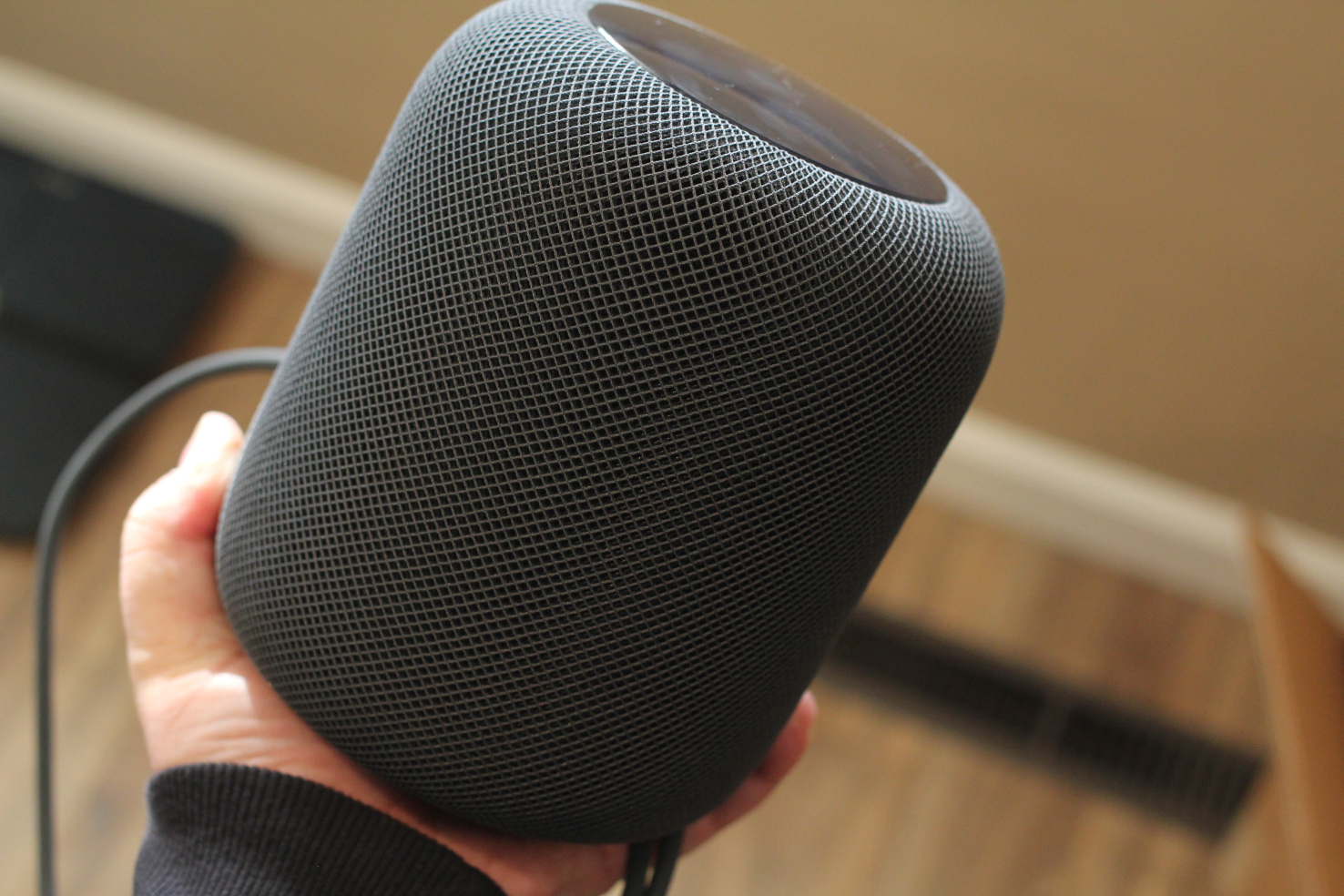 Buy a HomePod if you already have Apple Music or you want to have it and you’re in the market for a single incredibly over-designed and radically impressive speaker that will give you really great sound with basically no tuning, fussing, measuring or tweaking.
The HomePod has a single, upward-firing shock dampened sub. While the Home Max definitely bumps, it also requires the use of a separate rubber pad that you have to place like a bass trivet to prevent unwanted vibration while it’s on a surface. The HomePod transmits so little of the movement from the sub cone through the body that it’s in no need of anything more than the integrated rubber foot. It’s not as much boom, but it’s much better utilized.
See the full story here: https://techcrunch.com/2018/02/06/a-four-sentence-homepod-review-with-appendices/?utm_medium=TCnewsletter
Columbia Engineers Win $4.7M DARPA Grant to Revolutionize Augmented Reality Glasses
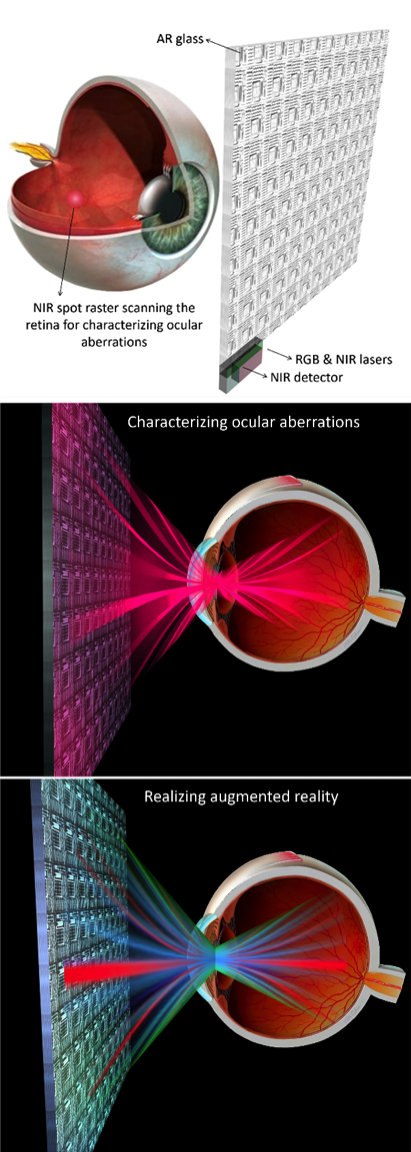 An interdisciplinary Columbia Engineering team is working with colleagues at Stanford, UMass Amherst, and Trex Enterprises Corporation to come up with an alternative solution. Thanks to a $4.7 million, four-year grant from DARPA, they are developing a revolutionary lightweight glass that is able to dynamically monitor the wearer’s vision and display contextual images that are vision-corrected.
“We are creating a game-changer, a completely novel glass design that enables high resolution projection and detection of light with no moving parts,” says Michal Lipson, Eugene Higgins Professor of Electrical Engineering at Columbia, a pioneer in nanophotonics who is leading the team. “Our design will be a key technology enabler for the Department of Defense, industry, and the general public. Our ultimate deliverable will be an ultrahigh-resolution, see-through, head-mounted display with a large field of view and vastly reduced SWaP (size, weight, and power consumption), coupled with the ability to correct users’ ocular aberrations in real time and project aberration-corrected visible contextual information onto the retina.”
The proposed AR glass relies on the ultrafast generation of arbitrary wavefronts, both in VIS and NIR. Fast arbitrary wavefront generation in these spectral ranges has been one of the major challenges in optics due mainly to a lack of actively tunable optical materials.
“We are proposing an ultra-compact platform for arbitrary wavefront generation with high speed that is based on tunable metasurfaces in the VIS and NIR,” says Yu, assistant professor of applied physics. “The metasurfaces are based on two critical innovations we’ve made at Columbia Engineering: our EnMats with highly tunable complex optical refractive indices and optical resonators that further enhance the electro-optic effect of the EnMats.”
“We will couple laser light into a bus waveguide, distribute it over a network of branch waveguides covering the entire surface of the AR glass, evanescently couple it into the SiN resonators, and then scatter it into the eye,” Lipson notes.
The team plans to develop a scalable fabrication process that is based on standard CMOS techniques, such as Deep UV lithography, and well-established procedures, such as dry transfer methods, to integrate the EnMats into the SiN integrated photonics platform.
See the full story here: http://engineering.columbia.edu/news/darpa-grant-augmented-reality-glasses
Intel may be the next company to jump into intelligent eyewear.
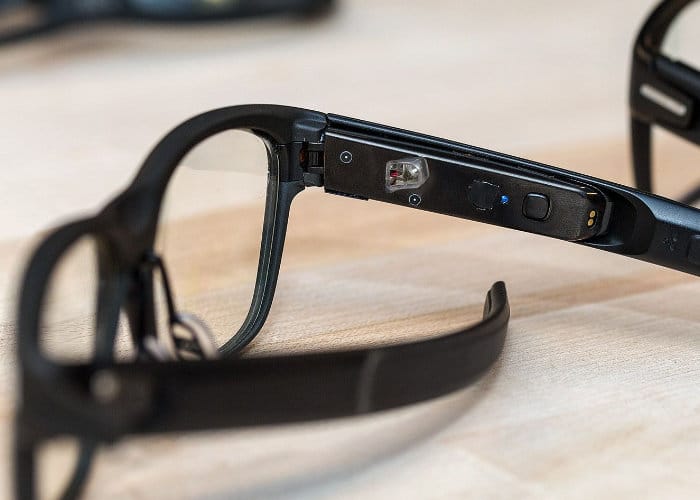 Intel's New Devices Group (which reportedly axed its wearables division last July) has been quietly working on just such a pair of glasses, dubbed Vaunt, and plans to offer them up to developers in an early access program later this year.
How has nobody thought to put smarts in normal-looking glasses before? Well, it's been pretty tough to fit a miniature display and a decent-size battery into traditional eyewear. But here, Intel has managed to combine a very low-power red laser and a holographic reflector to beam simple images directly onto your retina, according to The Verge.
(An executive tells the publication that Intel's targeting 18 hours of battery life, despite the fact that the battery -- and everything else -- has to fit into the glasses' stem.)
See the full story here: https://www.cnet.com/news/intel-vaunt-smart-glasses-prototype/
USC Backs A Record-setting March Immersive Hackathon
 The Creating Reality Hackathon, sponsored by USC, will inspire participants from USC and around the world to build original AR and VR applications. Over the course of four days (March 12-15), attendees will form interdisciplinary teams to design and create new experiences. The hackathon is sponsored by the USC School of Cinematic Arts, the Viterbi School of Engineering Game Pipe Lab and the Iovine and Young Academy.
See the full story here: https://uploadvr.com/usc-backs-immersive-hackathon/
VIBE (VIBE): The Coin Taking Live Music into Virtual/Augmented Reality
 It was only a matter of time until some startup out there started to fuse the concepts of blockchain technology with the possibilities that VR and AR have to offer – and that’s the VIBE (VIBE) coin.
What is Vibe (VIBE)?
This platform is being developed into a marketplace for artists, educators, and more to broadcast and monetize virtual and augmented reality streams directly to their fans. It’s a decentralized platform built on the Ethereum (ETH) network, where there is no middle man – and NO FEES or GAS.
See the full story here: https://theusacommerce.com/vibe-vibe-the-coin-taking-live-music-into-virtual-augmented-reality/