Managing Virtual and Augmented Reality Assets as Content
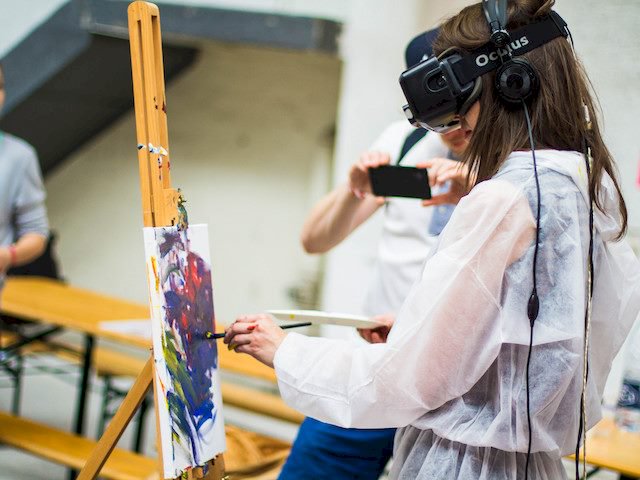 Google built Poly from the ground up with augmented reality (AR) and virtual reality (VR) developers in mind. ...managing 3D content is just as important as creating it. That's an important point for companies to remember as they rev up their own VR and AR initiatives.
“Some of our customers are already on top of this,” said Aaron Buchanan, vice president of emerging technology at HYFN. “They have identified console gaming opportunities, and they are organizing and digitizing their libraries in terms of the varying degrees of resolution, in terms of 3-D models and things like that.”
Larger File Sizes
New Standards
Industry watchers are predicting that ultimately there will be too many platforms and they will flood the market. Already there is fragmentation in the ecosystem just in terms of the number of ways users can experience content on Microsoft and Google platforms. Over time, it may be necessary to adopt new standards to make it easier to maintain and serve content across platforms.
New Modes of Content Discovery
New Mindset
See the full story here: https://www.cmswire.com/digital-experience/managing-virtual-and-augmented-reality-assets-as-content/
LinkedIn rolls out its Career Advice mentoring program to US, UK and India
 Career Advice, as the new product is called, is the full roll out of an online mentoring service that LinkedIn launched in a limited format this past summer, in San Francisco and Australia. The idea is to connect users with mentors who can help them figure out anything to do with their career, whether it’s ideas on how to find a new job, feedback for why they are not getting ahead or feeling satisfied at work, and maybe even to pivot to a new career altogether.
And ironically, we’re probably now at a point as a working society where mentoring and getting advice on how to steer your career needs to exist more than ever before. The idea of a career for life, let alone a job for life, is not the norm for many people in developed economies, due in part to the pace of technological development, and in part to other economic factors like globalization.
LinkedIn’s own survey of 6,000 people aged 25-33 found the majority of them have faced a “quarter-life” crisis, and job anxiety is the number-one reason for this, with 61 percent putting this at the top of their list above financial or social woes. This is what LinkedIn believes it can address with its online mentoring service.
See the full story here: https://techcrunch.com/2017/11/15/linkedin-rolls-out-its-career-advice-mentoring-program-to-us-uk-and-india/?utm_medium=TCnewsletter
HTC cancels plans to release wireless VR headset with Google in the U.S.
 HTC and Google both confirmed to TechCrunch that a Daydream-branded HTC standalone headset will no longer be coming to the U.S. market.
HTC says it will be focusing its resources on a Qualcomm-powered standalonefor the China market, which it is calling the Vive Focus. Pricing has not been disclosed.
While the US has been a slow struggle platform-wise for Vive, China has been a different story where the company has already grown its smartphone-based mobile VR brand thanks to a software launcher tied to its Viveport content store. At its Vive dev conference in Shanghai today, HTC announced the Vive Wave platform which pairs content development with syncing hardware partners behind their Viveport content store, which HTC is hoping to unify developers behind. The focus appears to be solely on China with this release as well.
See the full story here: https://techcrunch.com/2017/11/13/htc-cancels-u-s-release-of-wireless-vr-headset-built-on-google-tech/?utm_medium=TCnewsletter
PLNAR, APP GENERATES PLANS VIA AUGMENTED REALITY
 PLNAR, the first app to generate floor plans using augmented reality, will be released in the App Store once iOS 11 is made available. The PLNAR app—built using Apple’s ARKit, an augmented reality development tool—was created by SmartPicture Technologies, an Austin-based software-as-a-service company that creates solutions to digitally automate the traditional in-home measurement process.
See the full story here: https://marketscale.com/industries/aecd/plnar-app-generates-plans-via-augmented-reality/
Does The Industry Need A Virtual Reality Day?
 Is the industry doing enough to promote the technology to the masses? A grassroots movement by some individuals and organizations in the space are making their own effort by working to establish the industry’s first global Virtual Reality Day. An event they expect to run annually until VR and AR are as common as the smartphone.
Designated to take place on the last Saturday, November 18th, before America’s largest shopping day, Black Friday, the event is being leveraged to bring more awareness to the general public about the state of virtual and augmented reality, and to create excitement as the nation enters the holiday shopping season. Much of the existing VR/AR community does meet regularly in established meetup groups around the world, but the majority of those meetings take place during the week and in the evening. Virtual Reality Day has been specifically chosen to take place on the weekend, and during the day, so that parents can take time out with their children to learn about the technology together.
See the full story here: https://www.forbes.com/sites/charliefink/2017/11/13/does-the-industry-need-a-virtual-reality-day/#50354acb1a59
History of VR – 8 virtual reality milestones that took it from sci-fi to your living room
 Until fairly recently, the dream of donning a headset and dropping into a virtual world belonged purely in the realms of science fiction, like Star Trek‘s Holodeck or The Lawnmower Man. Thanks to the work of companies like Oculus, HTC, and others, that’s no longer the case. But virtual reality’s history goes back a whole lot further than that — so without further ado, here are our picks for eight of the major landmarks in tech history that made the VR dream a virtual reality.
See the full story with pictures and videos here: https://www.digitaltrends.com/cool-tech/history-of-virtual-reality/
Vuzix Wins 4 CES 2018 Innovations Awards for the Blade Augmented Reality Smart Glasses

Vuzix Blade (PRNewsfoto/Vuzix Corporation)
The Vuzix Blade leverages our intellectual property patent portfolio and leadership position in the area of optics, head mounted displays and smart glasses, which allows Vuzix to bring to market the world's smallest and most sleek pair of AR smart glasses ever developed. The Blade weighs in at less than 2.8 oz. and is expected to ship in early 2018. The Vuzix Blade represents the first pair of smart glasses that allows individuals to leave their phone in their pocket while presenting location aware content connected through the user's phone - among numerous other things.
See the full story here: https://www.broadwayworld.com/bwwgeeks/article/Vuzix-Wins-4-CES-2018-Innovations-Awards-for-the-Blade-Augmented-Reality-Smart-Glasses-20171110
From the Vuzix site: https://www.vuzix.com/Products/Series-3000-Smart-Glasses
The AR3000 will connect wirelessly via Wi-Fi and Bluetooth interfacing directly to the cloud or your mobile devices including smartphones, tablets and PCs. It is driven by a small tethered electronics and rechargeable battery pack that can be worn or stored in your pocket or purse.
Insights: What Does Entertainment Look Like In An Augmented Reality Version 2.0 World? or: The iPhone X Animojis Are Pretty Cool
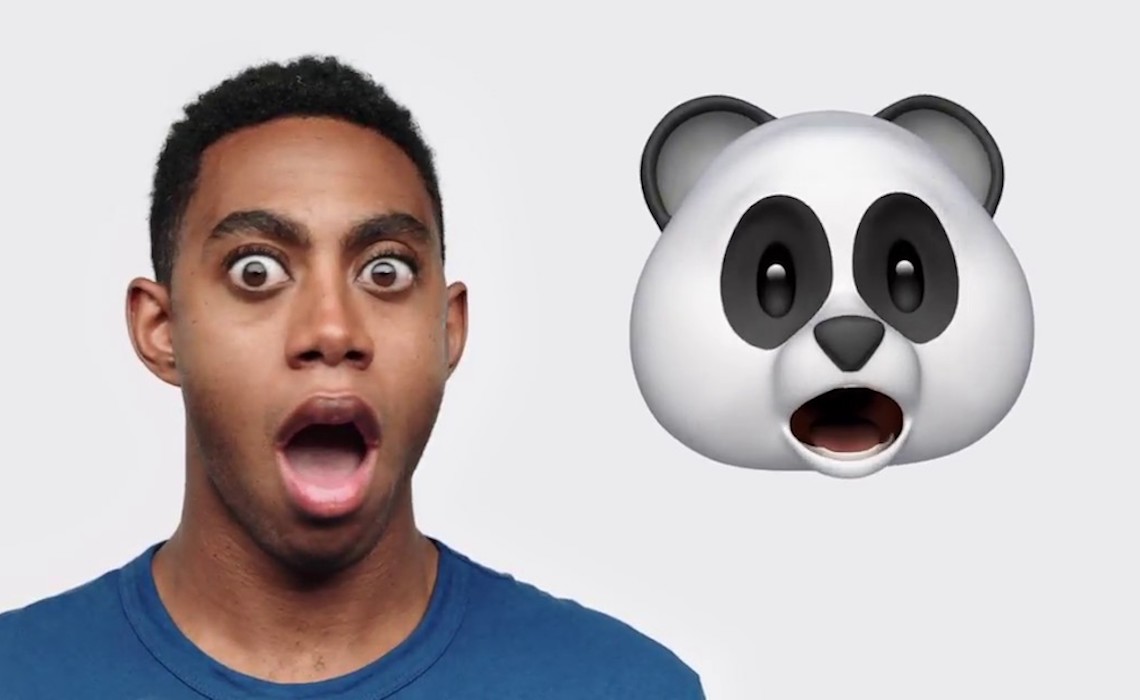 Long-time tech journalist/sensei Steven Levy, in fact, suggested the best feature right now to show off iPhone X capabilities was Animojis, which use the phones sophisticate facial-recognition technologies to map your expressions and speech to animated emojis.
Members of an AR/VR panel I moderated at the recent Digital Hollywood conference suggest that all those prosaic business uses will drive AR for the next few years while technology catches up, perhaps with smaller, cooler, more powerful glasses than those we’ve seen from Snap and Google.
In fact, said Shannon Norrell, a virtual-reality evangelist for HP, creative types should focus on enterprise-focused AR projects while the enterprise market develops. The production skills are the same, he said, and eventually entertainment AR will Become a Thing. When it does, AR should be a far, far bigger opportunity than VR.
What happens with Musical.ly and Live.ly, two thriving sites whose tweener audiences will certainly embrace cool AR content if it’s offered? Will they construct AR karaoke//singalong/live performances opportunities for their users? Virtual rooms filled with other fans singing along could take the notion on digital tipping to a whole new level.
See the full story here: http://www.tubefilter.com/2017/11/10/insights-augmented-reality-version-20-iphone-x/
A Cute Augmented Reality Angel Became the Face of Arcona’s ICO Campaign
 Arcona integrates the virtual and real worlds, providing a link between an augmented reality layer called the Digital Land and natural landmarks on the Earth’s surface. The project will allow users to position and manage content remotely. Arcona’s ICO is scheduled to take place from January 25 – February 25 with pieces of Digital Land starting at just $1 per square meter.
The first digitized zones will appear next year in New York, London, Paris, Tokyo, Beijing, Rome, Mexico City, St. Petersburg, Istanbul and Barcelona. It is planned that a layer of AR will cover the Earth’s surface by 2019.
Arcona will operate as a peer-to-peer network and an open marketplace, where producers and consumers of AR will exchange resources and pay for services using the platform’s internal tokens. Users will be able to sell content, software and the AR Digital Land layer via Arcona’s online platform.
The project is based on blockchain technology to increase transparency and identify who owns what, as well as who controls transfer rights. Through Arcona, Piligrim XXI will make its unique remote positioning algorithms and other technologies available to owners of the AR layer free of charge.
See the full story here: https://coinidol.com/a-cute-augmented-reality-angel-became-the-face-of-arcona-s-ico-campaign/