Next Gen VR HMD – This Veteran Designer Built A Better Oculus In His Free Time

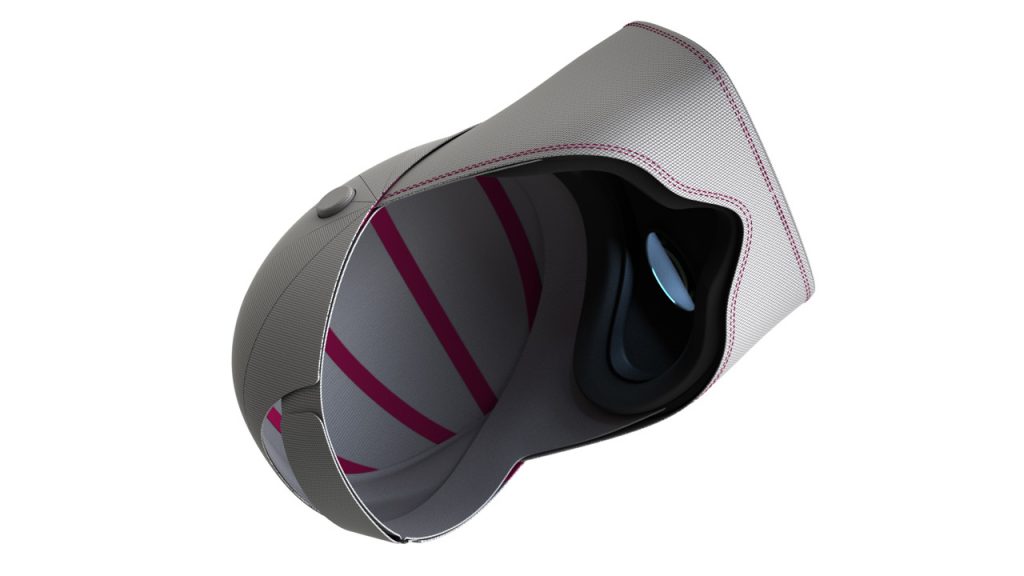
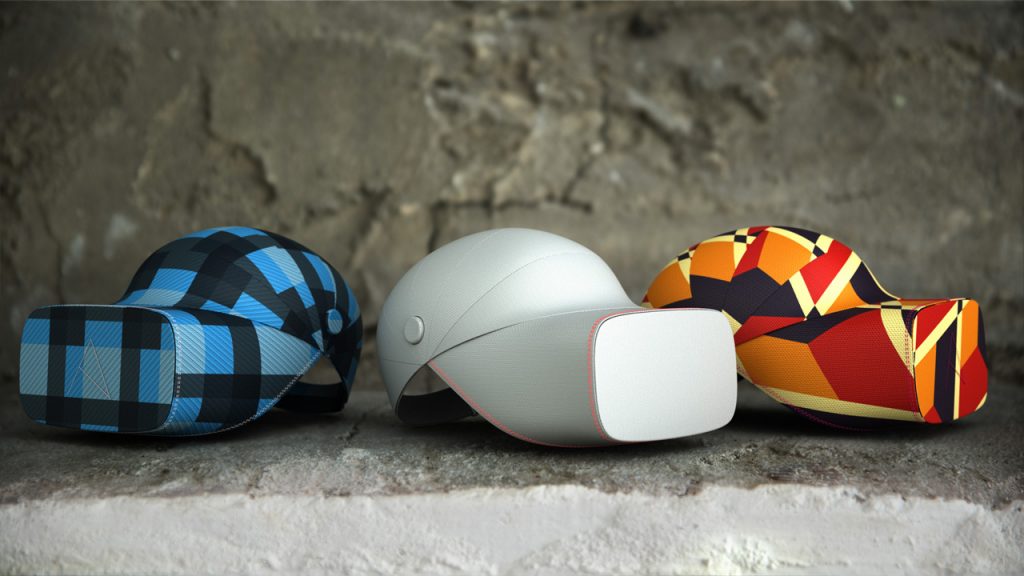
 Branko Lukic, a former lead industrial designer at both Ideo and Frog, who since founded Nonobject, thinks he can do better. His studio designed the hit Bluetooth speaker the UE Boom, which reimagined a rapidly-obsolescent gadget as something that might age proudly, like an heirloom watch or jacket. And for the past eight months, as an unpaid side project for their own amusement, Nonobject’s designers have focused on fixing the pain points of VR and AR in a project called Airhead. Their goal? To make this new frontier “as comfortable as possible.” That includes improving physical comfort, increasing social acceptance, and rethinking the intuitiveness of headsets.
Nonobject’s first idea feels so obvious, you’ll kick yourself for not thinking of it first. Kepi is a VR headset built into a baseball cap. “It’s a hat–not just physical comfort, but emotional comfort as well,” says designer Kevin Killpatrick. Self-explanatory by design, you slip it on much like a fitted cap, while adjustments on the sides ensure you can get a tight fit with the mask.
Split is a VR headset that, rather than slipping over your head, splits in the middle to wrap around it. The actual eyepiece is cut down the center and attached by magnets (and, perhaps, a clasp as well for more active use). All you have to do is pull it apart and the headset comes off. And thanks to the fact that the Rift uses two lenses and LCDs, it’s feasible to crack those components right down the middle–at least for any VR headset that doesn’t require a full, single-piece phone inside.
Much like eyeglasses, Spect is fit with two spring-loaded temples that can wing out, then clamp onto your head. As opposed to resting their weight on your ears, however, they grasp the back of your skull with two large, spoon-like pads. It’s all a bit odd to describe, but putting Spect on takes moments. And as a bonus, the rear of your skull is not as sensitive as the top of your head or face, so the headset is easy to forget about.
Of course, comfort comes in two forms. There’s the comfort of being inside VR. And then there’s the comfort of seeing someone in VR. Serene is designed to be the softest, most approachable shape Nonobject could imagine for a VR or AR headset.
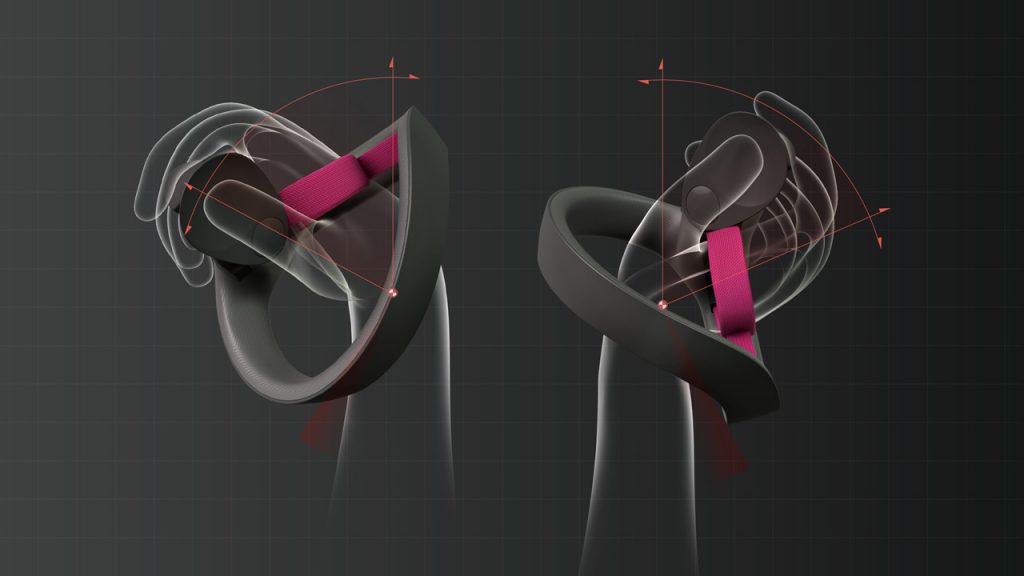
Without getting too into the weeds about the exact ergonomic and tracking considerations at play, Grasp encompasses two great ideas. First is that it actually grabs the hand with the equivalent of fabric brass knuckles. This means you can do something impossible inside the Touch–actually throw a virtual object (without chucking the real controller across the room). “We had this frisbee test,” says Killpatrick. “We put the frisbee test against all the controllers out there. You can’t do it. It’d fly away.”
These soft knuckles weigh on just the right part of your hand to avoid fatigue. To ensure a proper fit, their second great idea comes into play: All you do is pull down on a strap that runs down through the Grasp hardware, and they tighten.
See the full story here: https://flipboard.com/@flipboard/-this-veteran-designer-built-a-better-oc/f-dae0750e60%2Ffastcodesign.com
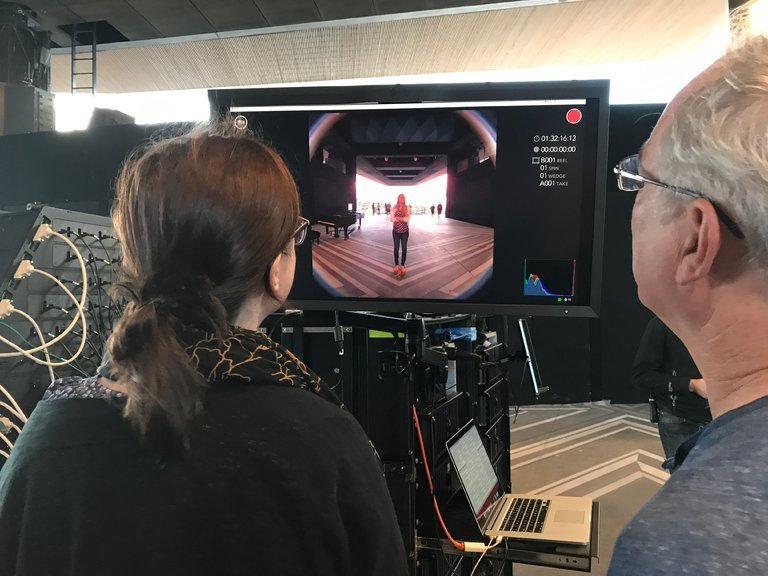
How We Used VR to Explore What Music Feels Like to a Deaf Person
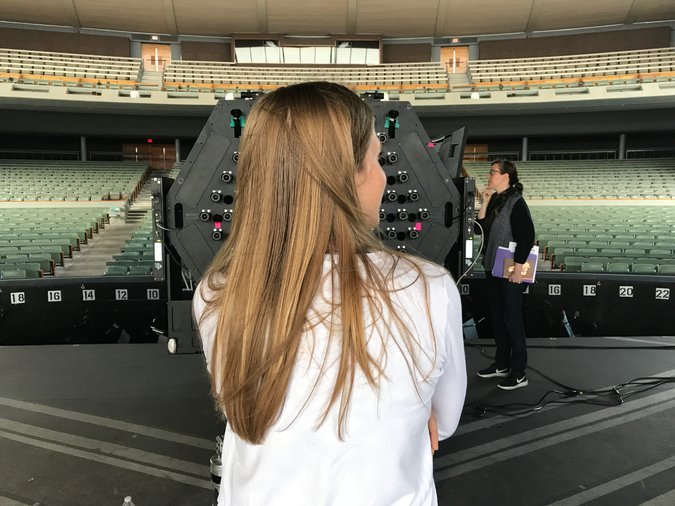
NYT worked with Lytro, Q Department, and profoundly deaf and partially hearing VR artists to create a VR experience that visualizes sound.
These augmented-reality glasses are helping the blind see again
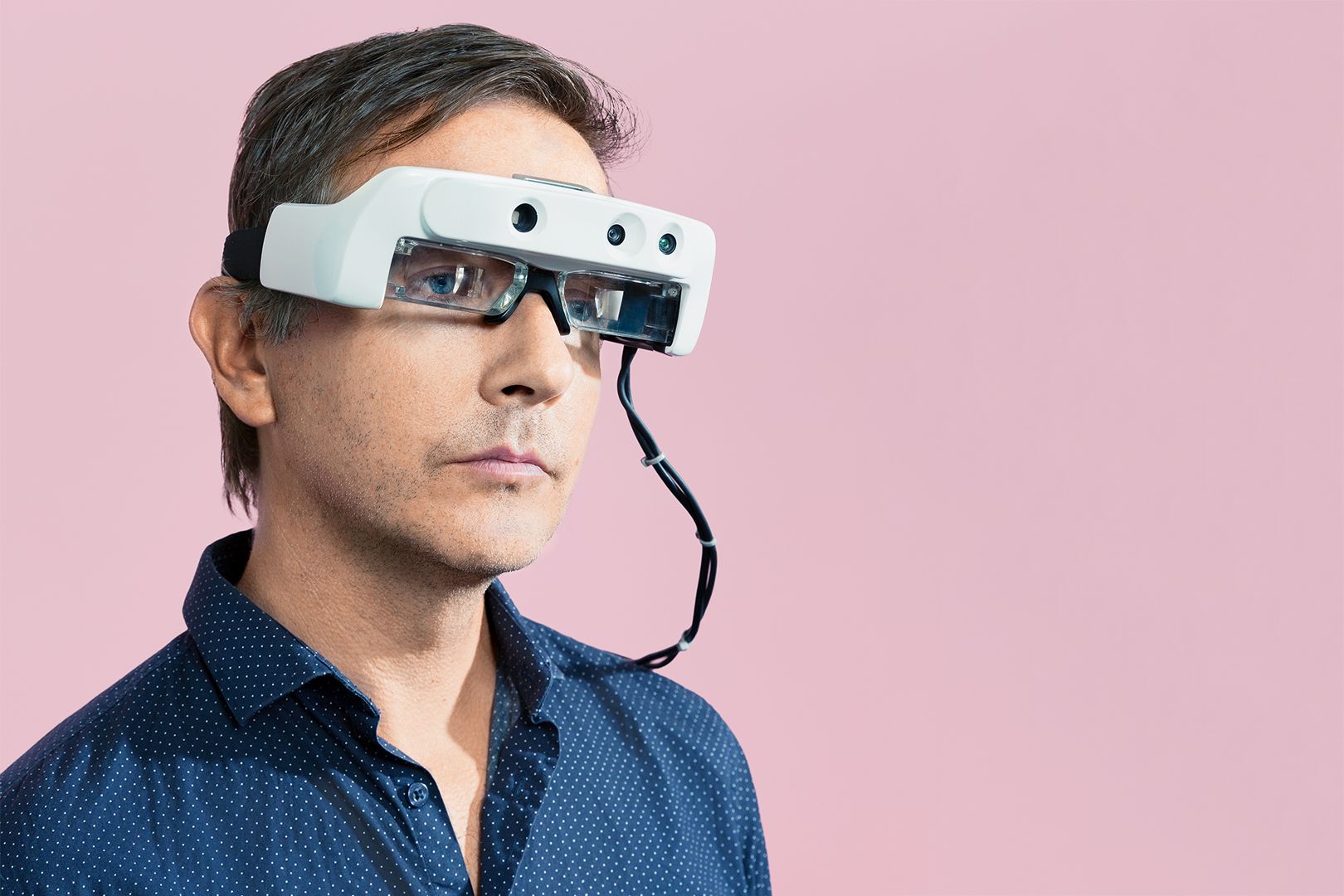 Hicks's startup, OxSight, is building augmented-reality glasses that render the physical world visible, even to the visually impaired.
The sense we experience as vision is the outcome of a constant jigsaw-assembling process in our brain: the eyes only need to pick up specific visual tidbits (colour, contrast, dimensions), and the occipital and parietal lobes will make sense of the overall picture. Having observed this through his research, Hicks teamed up with fellow Oxford computer-vision scientist Philip Torr to create OxSight, a spinout that launched in March 2016. The pair designed augmented-reality glasses that let partially sighted people make sense of their surroundings by spotlighting specific visual cues and overlaying them on the lenses in real time.
Using computer-vision algorithms and cameras, OxSight's glasses can increase image contrast, highlight specific visual features or create cartoonish representations of reality, depending on the eye condition they're being used to compensate for. "For instance, if you have tunnel vision and issues with colour perception, they'd emphasise colours," explains Hicks, 43. "If you have got glaucoma and your vision is blurry, the glasses will enhance the salience of certain objects."
Pilot users, who are suffering from diseases such as glaucoma, retinitis pigmentosa or diabetes, report that, due to the glasses, they can avoid obstacles, see blurry faces clearly again and read from slides.
See the full story here: http://www.wired.co.uk/article/oxsight-augmented-reality-glasses-eyesight-vision-blindness
EMMA, THE ROBOT IS GIVING PROFESSIONAL MASSAGES TO SINGAPOREANS
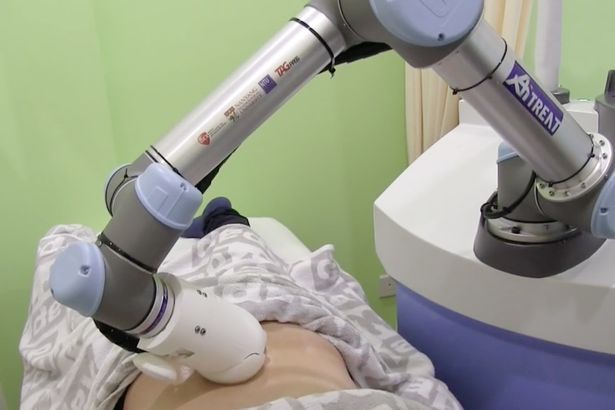 A robot masseuse named Emma is now offering Singaporeans high-tech back rubs with a gigantic metal arm and warm silicone tips which its creators say perfectly mimic the human touch.
The product of Singaporean startup AiTreat, and developed by Nanyang Technological University graduate Albert Zhang, Emma isn’t necessarily intended to replace human massage therapists. Instead, the idea is that as the population ages and therapists’ workloads thus increase, the technology will allow them to tend to two patients at once – they’ll work on one themselves, while Emma (as instructed by them) will work on another.
For about 60 to 150 dollars, patients can benefit a conventional package that includes consultation, acupuncture, and a 20-minute massage.
Emma 3.0 began service this Monday, at the NovaHealth Traditional Chinese Medicine clinic in Singapore.
See the full story here: https://vrworld.com/2017/11/06/emma-robot-giving-professional-massages-singaporeans/
Cleveland plays key role in virtual reality, voice-activated technologies: Tech Czar Talk
 Virtual reality and voice-activated technologies are the hot tech du jour. And Cleveland is unexpectedly playing a key role in both.
Visualizing NASA. The overlooked NASA Glenn Research Center in Cleveland is a world-class research and economic development engine. The campus includes more than 150 buildings that offer a dynamic collection of labs and test facilities. The facility was originally built in 1941 on Lewis Field as part of the National Advisory Committee for Aeronautics. NASA was formed on July 29, 1958, during the Eisenhower administration. Soon thereafter, the National Advisory Committee for Aeronautics was merged into NASA.
Voice Activated Entertainment. Voice-activated technology, think Siri or Alexa, is also beginning to influence our culture in profound ways, producing some cool innovations.
In a recent tour of Cox Communications' Parma facility, I saw how voice-activated technologies - i.e. - Siri (Apple), Alexa (Amazon) - are beginning to make a monumental change on how we use technologies for everyday tasks.
The facility has a built in "front room" where one can tinker and interactive with the Contour platform as displayed on a large screen TV.
See the full story here: http://www.cleveland.com/business/index.ssf/2017/11/cleveland_plays_key_role_in_vi.html
VR developers pivot to location-based entertainment
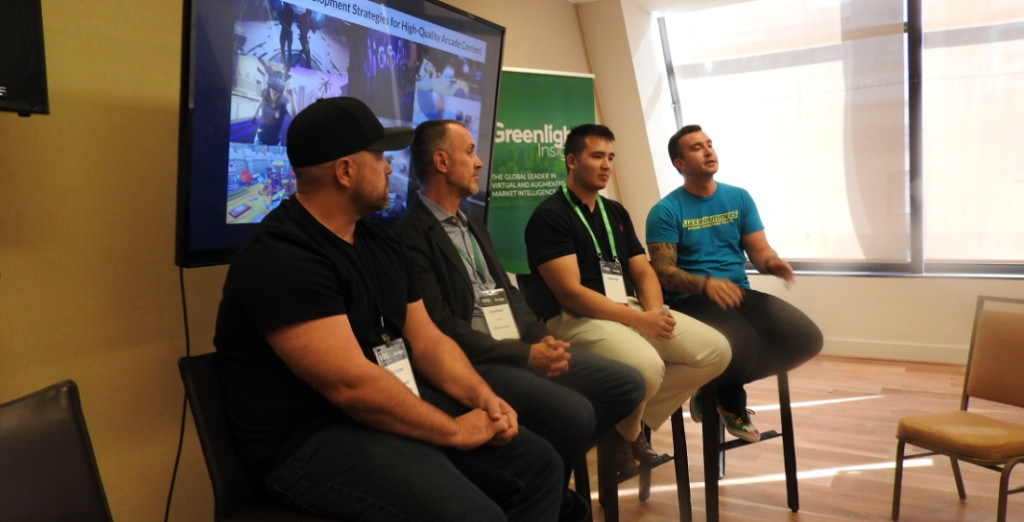
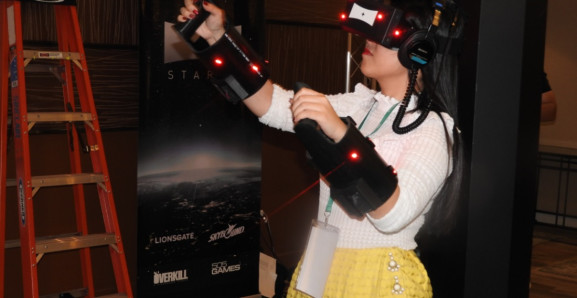 I moderated a panel on VR arcade development at Greenlight Insights’ VR Arcade Summit at the recent Virtual Reality Strategy Conference in San Francisco. Our panelists included Marc-Antoine Pinard, CEO of VR development studio Lucky Hammers in Montreal; Nick Cooper, chief creative officer at VR kiosk maker VRX Networks; Vien Ha, CEO of iSimu VR; and Jonathan Flesher, head of business development and partnerships at VR animation studio Baobab Studios.
See the full story here: https://venturebeat.com/2017/11/04/vr-developers-pivot-to-location-based-entertainment/
What’s holding back VR?
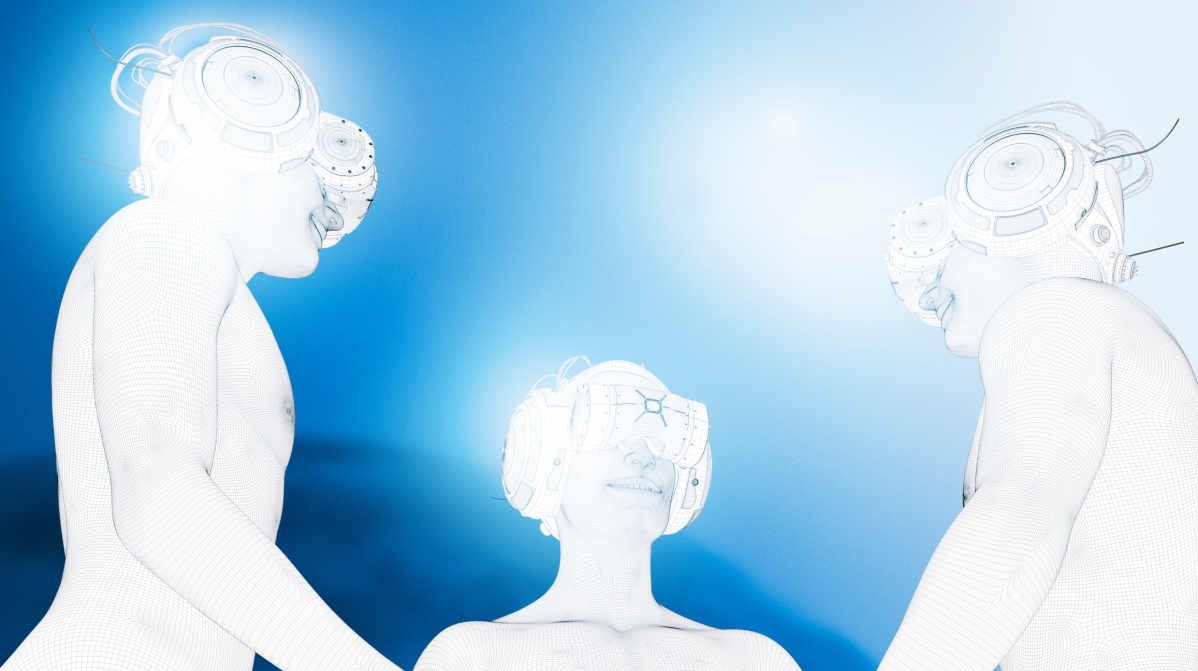
Virtual reality simulator, communnication.
Step one: Get that phone off your forehead
This industry knows how to create elegant designs. We know how to miniaturize components, dissipate heat and transfer high volumes of data at short range. Intel, for example, is making major efforts to drive down transistor sizes, ramp up vision-sensing technologies and add artificial intelligence and 3D sound processing to create true VR experiences. These kinds of efforts will help drive down costs and create the inflection point VR needs to drive mass adoption.
Step two: Create more VR gaming studios
BodyLabs, another startup we’ve funded (and which was recently acquired by Amazon), transforms photos, videos, body scans or physical measurements into accurate 3D body shapes. If you’re a gamer, you can capture your favorite touchdown dance or combat move and bring it into the field of play.
Step three: All roads lead to Hollywood
The highest wall VR must climb is the one separating it from Hollywood. To be sure, there’s a bit of A-List, goggle-friendly content, in many ways thanks to Travis Cloyd. He created “The Recall Abduction,” a 13-minute VR film based on the Wesley Snipes thriller. He is also soon releasing “Distorted“ with John Cusack; a John Travolta VR film; and the upcoming dystopian saga, “The Humanity Bureau,” starring Nicolas Cage.
Hollywood also needs to integrate VR into its existing production workflows. That means a full stack of protocols, techniques and tools. This software infrastructure is coming, but not yet in place. Getting the gaming industry to create VR-only titles will accelerate the process.
They’re likely watching early entrants such as One Touch, a VR distribution company working on generating cinematic entertainment in VR.
See the full story here: https://techcrunch.com/2017/11/05/whats-holding-back-vr/
A Boston landmark travels back in time, thanks to AR technology
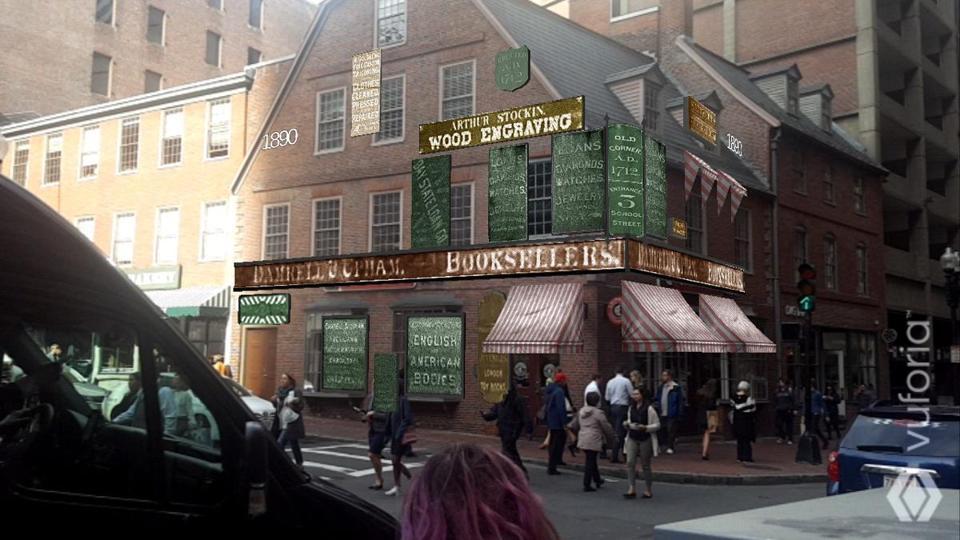 The Old Corner Bookstore, a two-story brick building on the corner of School and Washington streets in downtown Boston, was built in 1718 and now houses a Chipotle Mexican Grill. But it was first a private home with a drugstore on the ground floor. It also served as the headquarters of a famous publishing house, and later became a bookstore, jewelry store, and pizza parlor. From 1998 to 2002, The Boston Globe operated a retail store in the building, stocked with Globe-related books and memorabilia.
Now Historic Boston Inc., the nonprofit that saved the Corner Bookstore from demolition in 1960, is celebrating the building’s 300th birthday by letting visitors experience the space in several of its past incarnations by scanning it with their smartphones.
See the full story here: https://www.bostonglobe.com/business/2017/11/05/landmark-travels-back-time-thanks-technology/YSApXNeuk2oZl3Op8cHWKL/story.html
Will blockchain help make Virtual Reality more social?
 High Fidelity, VTime, RecRoom,...
With Mark Zuckerberg announcing a year ago a host of new Social VR features at the Oculus Connect 3 keynote (such as the ability to create ‘parties’ and ‘rooms’ wherein friends can gather in VR environments), appointing Rachel Rubin – previously vice president and executive producer of The Sims 4 at Electronic Arts – as the head of Social VR and subsequently channeling $250 million into VR development, it seems clear that Facebook itself is keen to step up to that plate.
The true potential of VR might be realized, and certainly surpass what already exists, if this power were put into the hands of the users instead,” believes Ariel Meilich, founder of blockchain-based virtual platform Decentraland.
Earlier this year, the company’s ICO (Initial Coin Offering) raised over $25M USD – in less than a minute. They are now planning to launch in early 2018 following its first land auction which will take place in December.
With Sansar, Linden Lab ...a more user-centric approach which also focuses on enabling monetization for individual users, who can earn Sansar Dollars (S$) for their VR creations.
What makes Decentraland fundamentally different from other emerging virtual platforms is that it’s not only the content that will be owned by users, but the platform itself. This means the community will also have collective responsibility for regulating it. According to its creators, the blockchain structure – which uses the Ethereum network – creates a mechanism for consensus among strangers that allows this to work at scale.
See the full story here: https://thenextweb.com/contributors/2017/11/06/will-blockchain-help-make-virtual-reality-social/