TRIPP Raises $4 Million to Develop ‘Mood Altering’ VR Experiences
 Los Angeles-based VR software development company TRIPP has announced a $4 million Series A round investment lead by venture capital firm Mayfield. TRIPP describe themselves as “mood architects”, aiming to create VR software that improves mindfulness.
Many types of VR experiences already function as powerful forms of escapism, but TRIPP believes their approach to creating ‘mindfulness’ VR software can deliver a more-focused brain stimulation that could improve a person’s well being and mental health. According to their website, the team will apply their decades of game development experience combined with “emerging mindfulness research” in VR experiences that affect the user “in deeply positive, and highly targeted ways that take you well beyond ‘fun’.”
Coming Soon to AMC Theaters: Virtual Reality Experiences
CULVER CITY, Calif. — It is easily Hollywood’s hottest start-up.
Steven Spielberg was an early investor. So were 21st Century Fox, Metro-Goldwyn-Mayer and Warner Bros. The venture’s leadership team includes the former chief of Disney’s theme park design division; the producer of the “Men in Black” movie series; and a live event kingpin.
And now AMC Entertainment, the world’s largest theater chain, has invested $20 million in the fledgling company and agreed to finance the rapid rollout of its product in the United States and Britain.
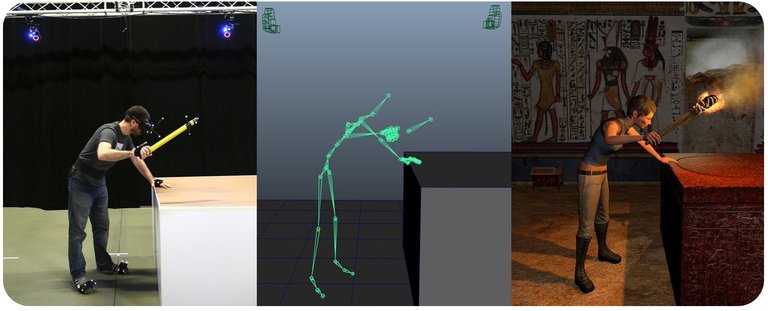
The fuss is over Dreamscape Immersive, which has been working in a warehouse here for the last year and a half on what it calls a “virtual-reality multiplex.” Instead of a variety of movies, Dreamscape Immersive locations will offer a variety of virtual-reality experiences. Its technology, developed by a Swiss motion-capture firm, allows up to six people to explore a virtual-reality environment at once, seeing fully rendered avatars of one another.
“We were mesmerized by what we saw,” said Adam Aron, chief executive of AMC Entertainment. “Their vision is to change what V.R. has been — away from just a heightened level of video game and toward cinematic storytelling — and we think it’s what consumers have been waiting for.”
“In many cases, we have surplus space, and we think Dreamscape will add energy and excitement to our theaters, especially during the week,” Mr. Aron said. “But this isn’t a replacement for movies. It’s a complement.” Tickets are expected to cost from $15 to $20.
Dreamscape joins a cluster of companies that are trying to take advantage of the still-untapped consumer promise of virtual-reality technology, the desperate need by shopping malls to reinvent themselves in the online retail age and the pressure on movie studios (and theater companies) to find new avenues of growth.
The Void, a Utah start-up, recently announced a partnership with the Walt Disney Company to open “Star Wars”-themed virtual-reality experiences at Disney malls outside theme parks in California and Florida. Already operating are two Imax V.R. Centres in Los Angeles and New York; tickets start at $7, and the Los Angeles location has attracted 50,000 people over the last nine months. Imax said it planned to expand the concept to Canada, Britain and Shanghai this fall.
The Hollywood players behind Dreamscape give it immediate cachet. Joining Mr. Spielberg are people like Hans Zimmer, the movie music composer, and the director Gore Verbinski. But their involvement does not guarantee success. Mr. Spielberg, for one, has been down this road before, with mixed results. In the late 1990s, his DreamWorks SKG invested alongside Universal Pictures in a heavily promoted venture called GameWorks, which was supposed to use new technology to revolutionize the arcade business. GameWorks never lived up to its billing.
Around the same time, Disney encountered similar disappointment with DisneyQuest, which was envisioned as a worldwide chain offering virtual-reality experiences. Only two were built.
Two members of the Dreamscape management team, Walter Parkes, a co-chairman, and Bruce Vaughn, the chief executive, are very familiar with those efforts. Mr. Parkes, a movie producer whose credits include the “Men in Black” series, worked for Mr. Spielberg as a senior DreamWorks executive at the time. Mr. Vaughn spent 23 years at Disney, most recently serving as chief creative officer of its Imagineering research and design unit.
“Even big-name brands can have a hard time getting people to go here instead of there,” Mr. Vaughn acknowledged.
Mr. Vaughn was sitting in the Dreamscape warehouse last week with Mr. Parkes and Kevin Wall, an Emmy-winning producer of world-spanning music events like Live 8 and another Dreamscape co-chairman. The men, together with Aaron Grosky, the chief operating officer, said Dreamscape’s fate would be different, partly because virtual-reality technology has advanced so significantly.
“This is truly the birth of a new storytelling medium,” Mr. Parkes said.
As if to prove it, Mr. Parkes took a reporter through a prototype Dreamscape experience. The company uses more than a dozen cameras and sensors to transport people into various settings — home plate in a sold-out baseball stadium, the spider-filled ruins of an ancient temple or a futuristic, neon-lit city flooded with water. You put on V.R. goggles and a pair of gloves. An attendant clips a small device to your shoes. And off you go.
Inside Dreamscape experiences, which will last about nine minutes and cost about $1.5 million to $2 million to produce, participants can handle objects and — as avatars — even pass them between each other.
“A shared experience is what makes the lasting emotional impact,” said Mr. Vaughn, noting his track record in creating Disney theme park attractions.
Dreamscape is developing original content. Mr. Parkes said the company was also negotiating with various studios and filmmakers to create experiences that put people inside movie franchises.
“If you enjoy our experience, you’ll be more likely to see the movie, and vice versa,” he said.
See the full story here: https://www.nytimes.com/2017/09/26/business/media/amc-theaters-virtual-reality.html
IF DATA IS THE NEW OIL, ARE TECH COMPANIES ROBBING US BLIND?
 “The defense of this practice is that these companies provide ‘free’ services, and that they deserve some reward for their innovation and ingenuity,” Dr. John Danaher, a lecturer at the School of Law at NUI Galway, who writes about the intersection of the law and emerging technology, told Digital Trends. “That may well be true, but I would argue that the rewards they receive are disproportionate. The other defense is that many companies provide for some revenue-sharing agreements with more popular users, such as YouTube. That’s becoming more true, too, but it’s only a handful of users who can make decent money from this.”
In his book Who Owns the Future?, Lanier suggests that users should receive a micropayment every time their data is used to earn a company money.
...a formula could easily be established to determine both where data originated and how important the data was in shaping certain decisions. Not all data is created equal. While some of the systems human data helps train just requires us to click a link or upvote a comedy special, other types require high levels of expertise. One illustration of this is translating a document from one language to another. Although tools like Google Translate are increasingly effective, the reason these machines are able to work as they do is because they draw on data that was previously provided by human users.
Hanna Lützen, who translates the Harry Potter books into Danish gets paid for that particular job by a publishing house, but Google then pays her nothing if those combined 1 million+ words help make its language translation system smarter so it can translate your love letter to a girlfriend in Denmark.
Precedents like the E.U.’s “right to be forgotten” ruling against Google show how laws are still catching up with the realities of new digital technology. But according to John Danaher, enforcing this may be a tough legal case to argue.
“The case I would make against the practice is moral, not legal,” Danaher continued. “General rules of contract law are taken to apply to the agreements that users click when signing up for a service like Facebook. As long as Facebook draws the user’s attention to their terms and conditions, and as long as those terms and conditions do not breach public policy and unfair terms rules, they are held to be binding on the user. In my opinion, this just shows the inadequacy of current approaches to contract law, since it is well-known that people are willing to accept even the most outlandish terms and conditions.” (During a 2014 experiment, unwitting participants in London agreed to give up their eldest child by agreeing to public Wi-Fi terms.)
See the full story here: https://www.digitaltrends.com/cool-tech/data-ownership-question/
‘Raw Data’ Devs Share Player Metrics & Insights Ahead of October’s v1.0 Launch
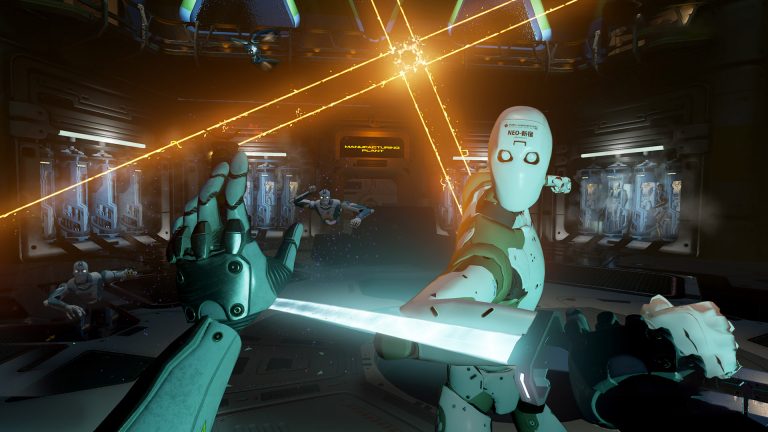 Speaking at VRDC Fall 2017 this week, Survios CTO Alex Silkin and Design Director Mike McTyre stressed to VR developers in the crowd that collecting proper player analytics should be a major priority. The pair said that it was a mistake to wait as long as they did before they began collecting and analyzing player data from Raw Data, but once they did they found a number of major surprises that disrupted their understanding of how players were playing, and prompted them to make changes.
About 80% of players played only the single-player mode, and while cooperative play was billed as a major selling point to the game, only 17% of players have played that mode.
When it came to the launch of one of one of the game’s new heroes, the developers thought players would be excited to play as ‘Boss’, the shotgun wielding street merc. But the data showed a palty 7.5% of players were choosing him. The team discovered that some of his abilities were overly complex and players weren’t using them, making the hero feel weaker than the others. The devs ended up altering the way the hero played to make him easier to understand and a more attractive choice.
Survios credited video game analytics firm Exostatic for helping to implement and analyze Raw Data metrics.
Blocker is a Revolutionary AR Application for Filmmakers
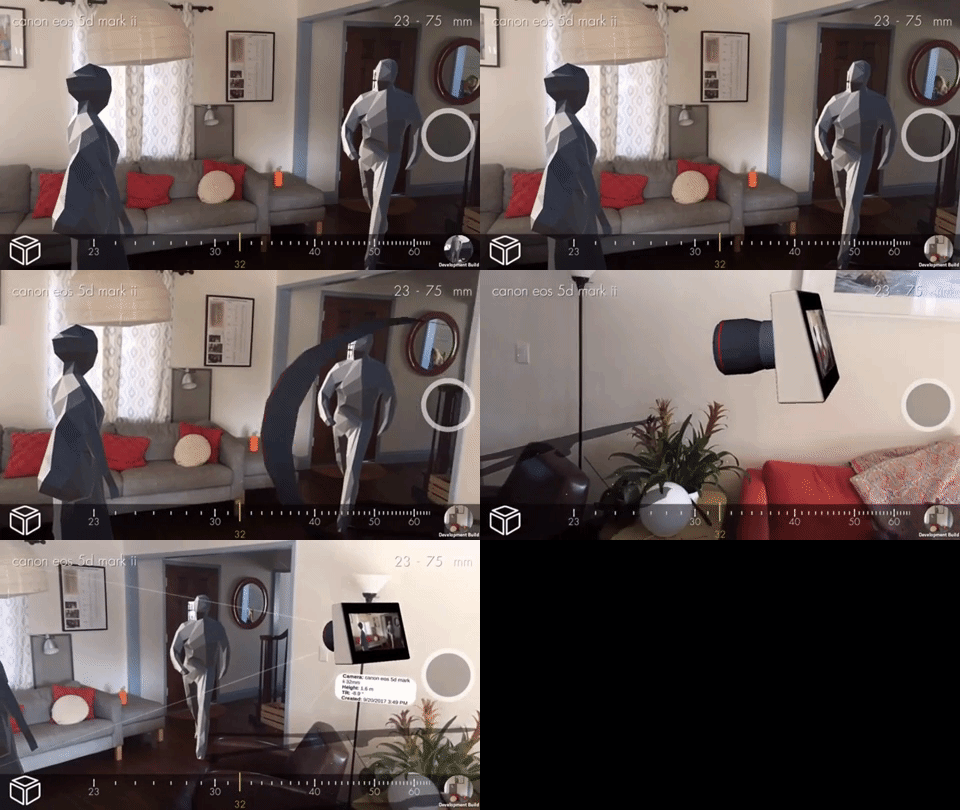

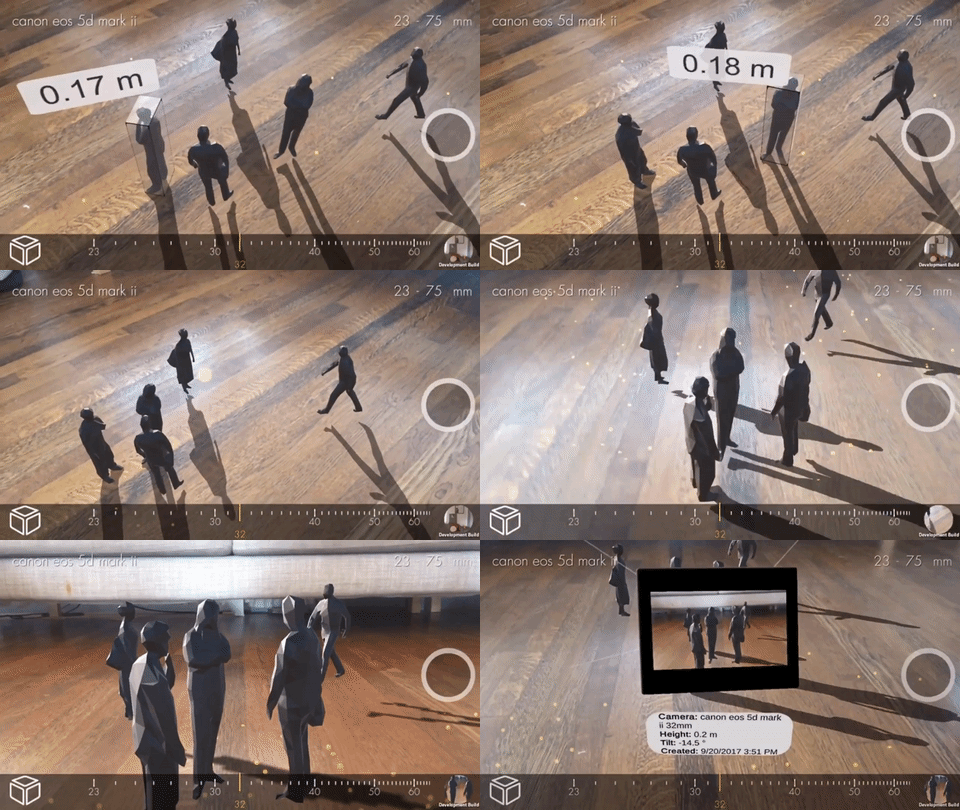 Blocker sets its sights on cinema, letting creatives worldwide optimize the filmmaking process by harnessing the power of mixed reality for conception, composition, and collaboration.
“Our goal is to pull storyboarding and shot blocking into the real world, so that it’s intuitive and expressive,” said Jesse Vander Does, the Director of Technology at AfterNow, the company behind the application, in a statement.
If AfterNow sounds familiar to you, it’s probably from the the line-around-the-building Mixed Reality Easter Egg Hunt the company put on at VRLA.
Of course, this tool provides viewfinder and storyboarding features through the camera, but the functionality of Blocker extend beyond basic recording of the world around you. Creators can augment their scenes with 3D models that allow them to actually see what the blocking of a given scene might look like—down to a surprising degree of detail.
As you can see in the image above, the app includes presets for cameras (400, to be precise) to let creators replicate the end result as closely as possible. This is an especially useful tool for directors wanting to block out their scenes without involving crew-members who don’t necessarily need to be there otherwise.
What’s more, the app includes a physical model of the sun to let creators simulate shadows and color—providing invaluable help in grasping what the basic lighting needs of a scene will be during production.
These stills can be sequenced into storyboards for export to any existing workflow—including all the important information in each, such as camera and lens type.
Blocker is now available for download on the Apple App Store for iPhone 6S and newer running iOS 11.
See the full story here: https://vrscout.com/news/blocker-ar-app-filmmakers-afternow/
Advancing Immersive Computing with Intel’s Virtual Reality Center for Excellence
 Intel is investing in the future of immersive computing through their Virtual Reality Center for Excellence. They’re pushing the boundaries of high-end of VR gaming experiences, pursuing initiatives to help VR reach critical mass, and exploring how RealSense depth sensor cameras and WiGig wireless technologies fit into the VR ecosystem. I was able to demo an early prototype demo of an HTC Vive game rendered on a PC and transferred wirelessly to a mobile headset, and it’s part of a research project to search for additional market opportunities for how high-end PCs could drive immersive experiences.
I was able to sit down with the Kim Pallister, the director of Intel’s VR Center for Excellence to talk about their various initiatives to advance immersive computing, their WiGig wireless technology, RealSense and Project Alloy, and some of the experiential differences between their lower-end and higher-end CPUs.
No Mercy / No Malice: The Worm Has Turned
 For the past decade, the loudest arguments waged regarding the Four(Amazon, Apple, Facebook, and Google) were about which CEO was more Jesus-like or should run for president. These platforms brought down autocrats, were going to cure death and put a man on Mars, because they are just so awesome. Media outlets were coopted into serving as the investors relations departments of the Four while drinking up the biggest lie in modern business — “Information wants to be free.” They let big tech crawl, parse, and resell their IP, catalyzing an extraordinary transfer in wealth from the creators to the platforms.
The biggest opportunity for the Four
The Four could pull off one of the greatest moments in business, addressing a huge social issue while disrupting an enormous, wildly profitable sector that hasn’t innovated in decades. One or more of the Four should launch a tuition-free university that blends offline and online learning, and charges firms to recruit. Student debt and corporate profits are at an all-time high, meaning we need to flip the model — charge firms, not students, for education.
See the full story here: https://www.l2inc.com/daily-insights/no-mercy-no-malice/the-worm-has-turned
Virtual reality technology could be a powerful tool in diagnosing social anxiety disorder
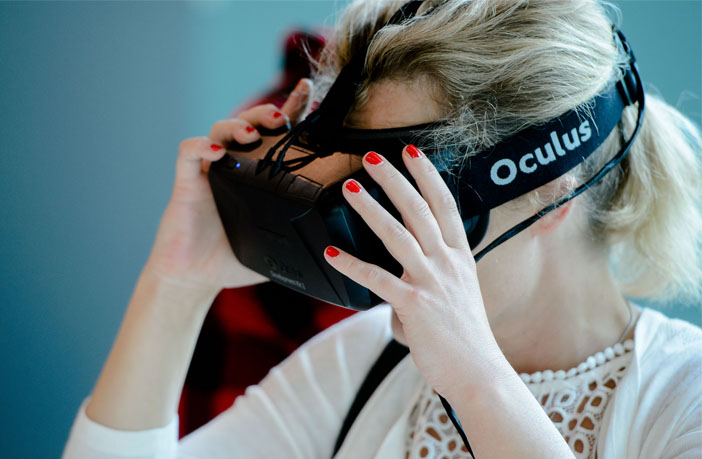 This is one of the first studies that used VR as a possible diagnostic tool (in this case for social fear),” explained study author Youssef Shiban of the University of Regensburg.
“Once validated in other studies, this could open new doors for us as therapists and researchers, as we can use behavioral and psychophysiological data to better diagnose.
The study of 19 low- and 18 high-socially-anxious participants used two different virtual social environments. One environment involved the participant obtaining a train ticket. The second virtually recreated the waiting room of a doctor’s office.
The researchers monitored the participants’ eye movements and skin conductance while they navigated the virtual worlds — but only observed a higher skin conductance response in high-anxious participants in the train scenario. However, they observed that in both virtual environments the high-anxious group concentrated their gaze for a significantly shorter time on the faces of the avatars.
Previous research has found that anxious individuals are quick to gaze at potentially threatening stimuli but subsequently avert their eyes, which serves as a defensive reaction to reduce anxiety.
The study, “Potential Of Virtual Reality As A Diagnostic Tool For Social Anxiety: A Pilot Study“, was also co-authored by Martin Dechant, Sabine Trimpl, Christian Wolff, Andreas Mühlberger.
See the full story here: http://www.psypost.org/2017/09/virtual-reality-technology-powerful-tool-diagnosing-social-anxiety-disorder-49717